
Physical agents
Shockwave therapy (ESWT)
Focused acoustic pulses applied to a tendon or heel to stimulate repair in tissue that has stopped healing on its own. The evidence is strongest, though of low certainty, in plantar fasciitis and mixed in tennis elbow; in calcific shoulder tendinopathy a Cochrane review found very few clinically important benefits. Shockwave works better alongside an exercise programme.
Mechanical energy delivered into tissue
Acoustic pressure waves are transmitted into the tissue through the skin. In chronic tendon problems this appears to restart a stalled healing response — increasing local blood flow, prompting cellular repair activity, and breaking down calcific deposits.
Treatment is typically three to five sessions a week apart. It is uncomfortable during application and there is often some soreness for a day or two afterwards.
Where the evidence is strongest
A systematic review of soft tissue conditions found focused shockwave effective in plantar fasciitis and calcific shoulder tendinopathy, while the evidence in lateral epicondylitis (tennis elbow) was mixed 1. In greater trochanteric pain syndrome, pooled trials show short-term pain relief, though most are at high risk of bias 5; in patellar tendinopathy, adding shockwave to eccentric exercise did no better than sham treatment 6.
The common factor is chronicity: shockwave is for problems that have persisted for months, not for acute injuries. Applied to an acute injury it is at best useless.
What it will not do on its own
Shockwave without an exercise programme underperforms: in chronic plantar heel pain, shockwave combined with a plantar fascia stretching programme did better at two and four months than shockwave alone, although the difference had gone by two years 7. Tendon adapts to progressive load, and that is what produces the lasting change; shockwave reduces pain enough to make the loading possible.
It is contraindicated over open growth plates, in the presence of infection or tumour, and in patients on anticoagulation. We check these rather than assume.
Where it belongs in the sequence
Shockwave therapy is used for tendon problems that have not responded to a genuine loading programme — plantar heel pain, calcific shoulder tendinopathy, tennis elbow, Achilles tendinopathy.
The ordering matters. Offered before loading has been tried it substitutes for the treatment that works; offered after, it is a reasonable next step for a resistant problem.
What happens over the weeks after the course
The effect is not immediate. Symptoms frequently worsen briefly after the first session and improvement is typically judged some weeks after the course ends rather than at the last appointment.
This timeline matters because people conclude it failed at week two and stop the loading programme alongside it — which is the part that determines whether anything lasts.
Does shockwave work for my condition?
It depends on the condition, and even the better results rest on low-certainty evidence. In plantar heel pain, a 2025 network meta-analysis of 22 trials found shockwave more effective than placebo at every intensity level, but rated the certainty of the evidence low to very low 2. In rotator cuff disease, with or without calcium deposits, a Cochrane review found very few clinically important benefits, while noting it could not tell whether some trials had used doses too low to work 3. In tennis elbow, a 2021 meta-analysis found, on low- to moderate-certainty evidence, no clinically meaningful benefit over sham treatment or steroid injection 4.
Dose matters too: an earlier systematic review found that where focused shockwave helps, the benefit appears greater with higher-dose regimens 1. The practical questions for a patient are therefore which condition is being treated, what dose is planned and which exercise programme runs alongside it.
Sources
- Speed C. A systematic review of shockwave therapies in soft tissue conditions: focusing on the evidence — British Journal of Sports Medicine (2014)
- Zhao P, He Y, Li M, Wang J, et al. Comparative efficacy and acceptability of different intensity levels of extracorporeal shock wave therapy in adults with plantar heel pain: a systematic review and network meta-analysis — PM&R (2025)
- Surace SJ, Deitch J, Johnston RV, Buchbinder R. Shock wave therapy for rotator cuff disease with or without calcification — Cochrane Database of Systematic Reviews (2020)
- Karanasios S, Tsamasiotis GK, Michopoulos K, Sakellari V, et al. Clinical effectiveness of shockwave therapy in lateral elbow tendinopathy: systematic review and meta-analysis — Clinical Rehabilitation (2021)
- Rhim HC, Shin J, Beling A, Guo R, et al. Extracorporeal shockwave therapy for greater trochanteric pain syndrome: a systematic review with meta-analysis of randomized clinical trials — JBJS Reviews (2024)
- Challoumas D, Pedret C, Biddle M, Ng NYB, et al. Management of patellar tendinopathy: a systematic review and network meta-analysis of randomised studies — BMJ Open Sport & Exercise Medicine (2021)
- Rompe JD, Furia J, Cacchio A, Schmitz C, et al. Radial shock wave treatment alone is less efficient than radial shock wave treatment combined with tissue-specific plantar fascia-stretching in patients with chronic plantar heel pain — International Journal of Surgery (2015)
- Rompe JD, Furia J, Maffulli N. Eccentric loading versus eccentric loading plus shock-wave treatment for midportion Achilles tendinopathy: a randomized controlled trial — The American Journal of Sports Medicine (2009)
Conditions this device is used for
The 21 conditions where this device is part of a routine programme, grouped by area. It is one tool inside the plan, never the plan itself.
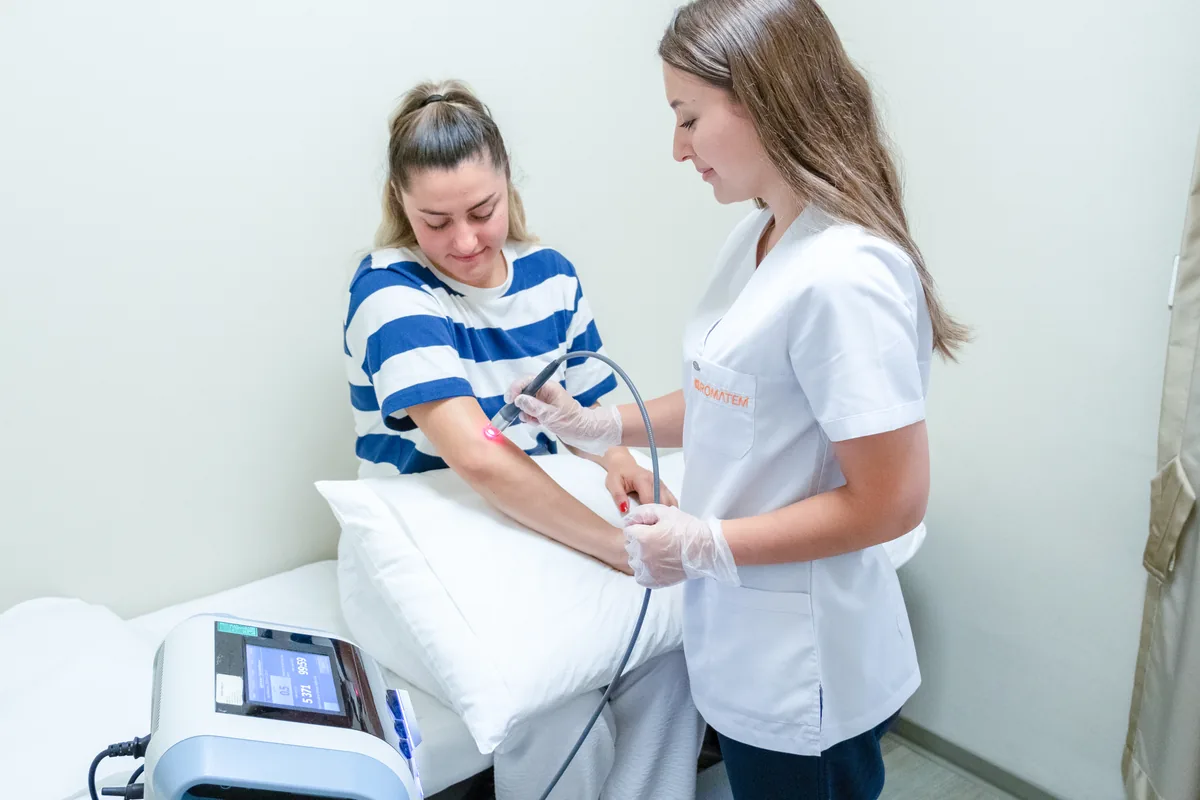 Tennis Elbow (Lateral Epicondylitis)
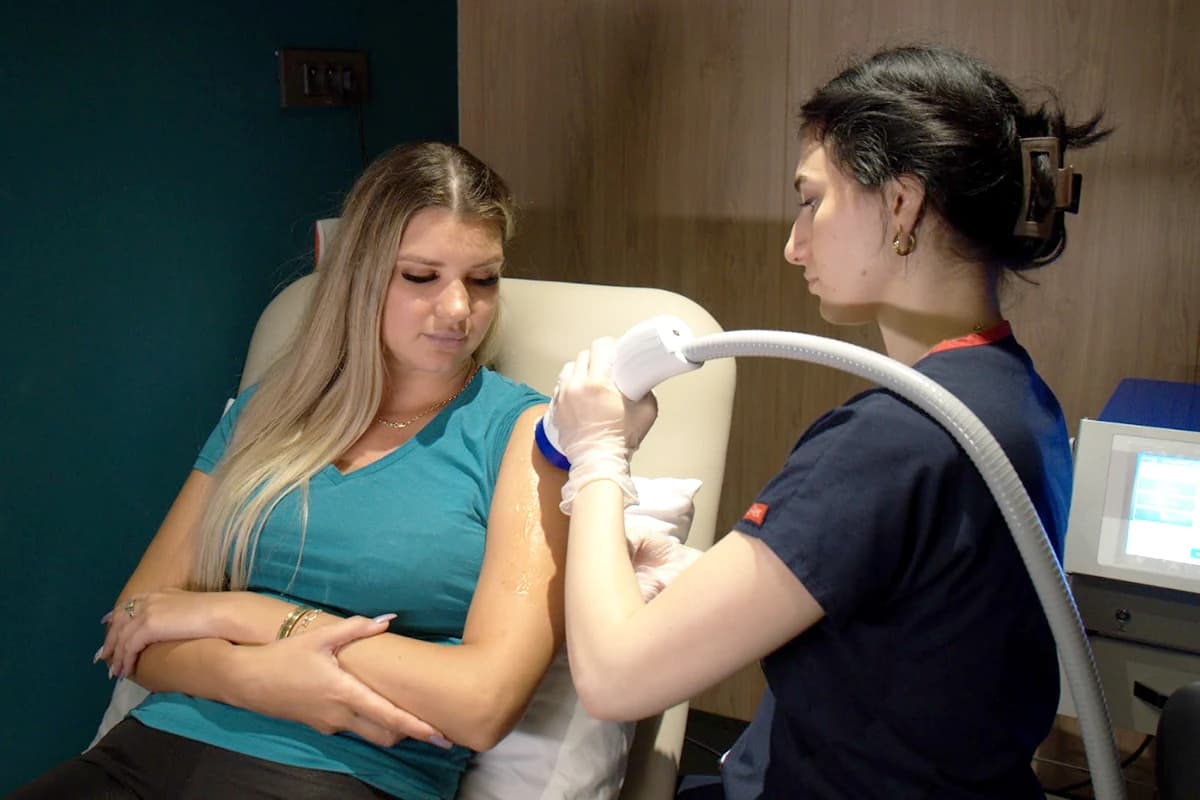 Shoulder Impingement and Rotator Cuff Pain
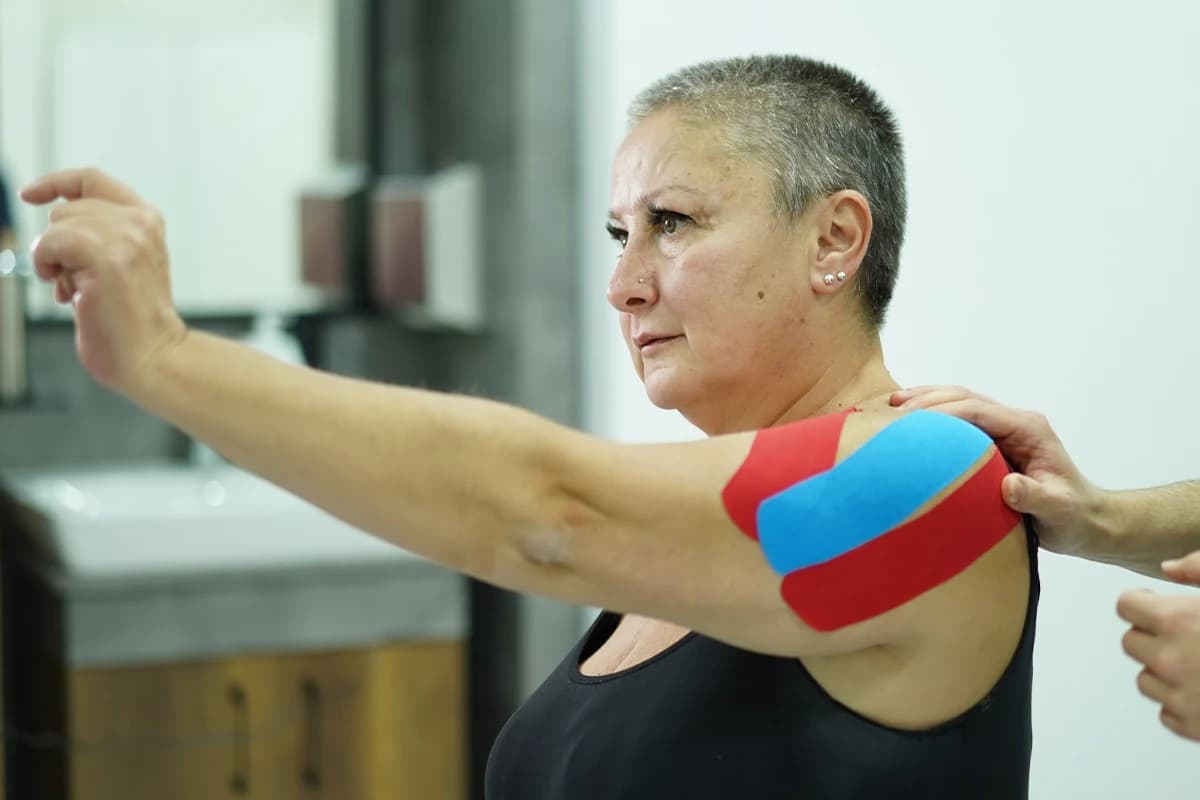 Rotator Cuff Tear
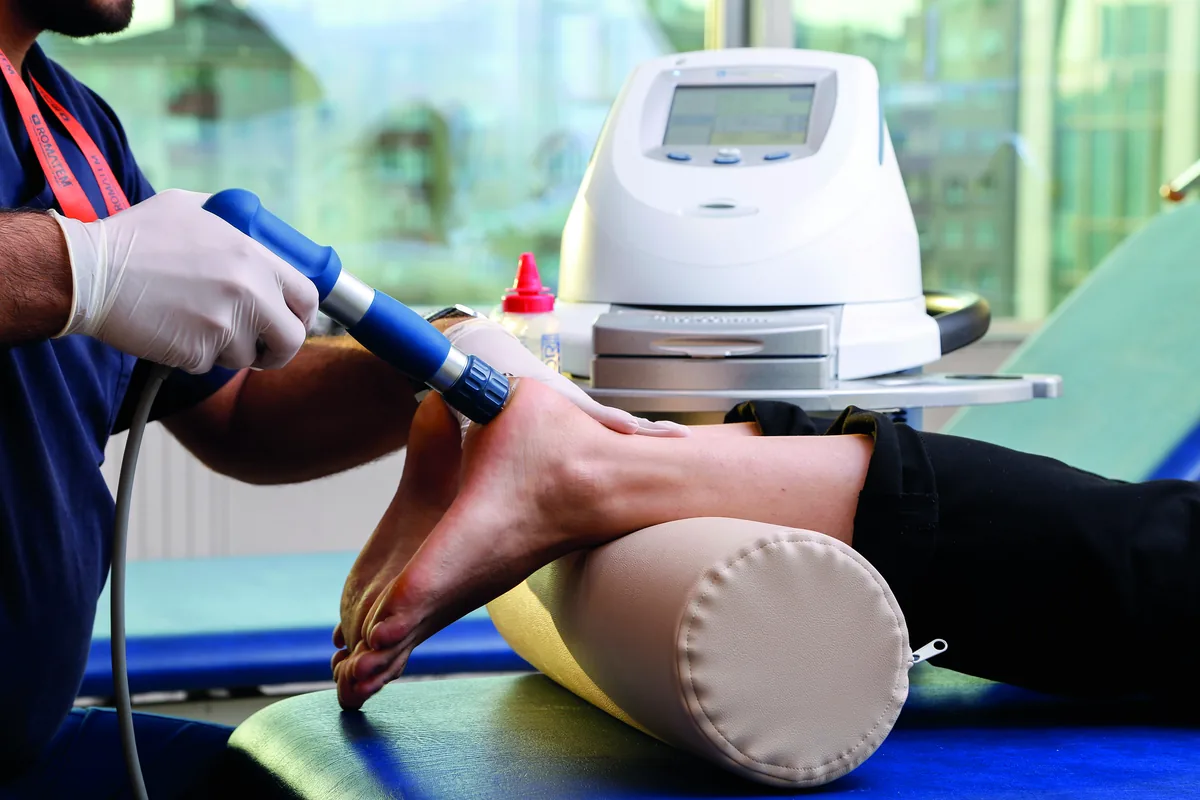 Plantar Fasciitis and Heel Spur
 Achilles Tendinopathy
 Patellofemoral Pain (Runner’s Knee)
 Meniscus Tear
 Carpal Tunnel Syndrome
 Cervical Disc Herniation
 Spondylolisthesis
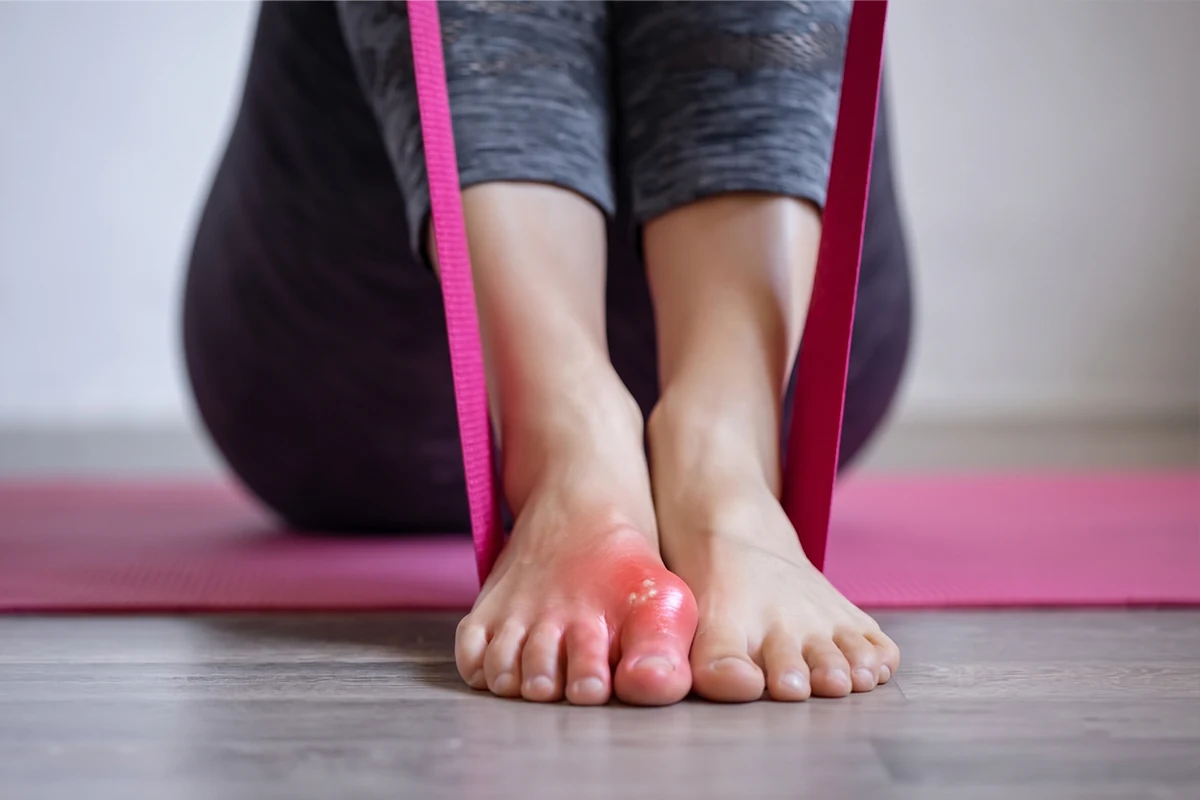 Gout
Gout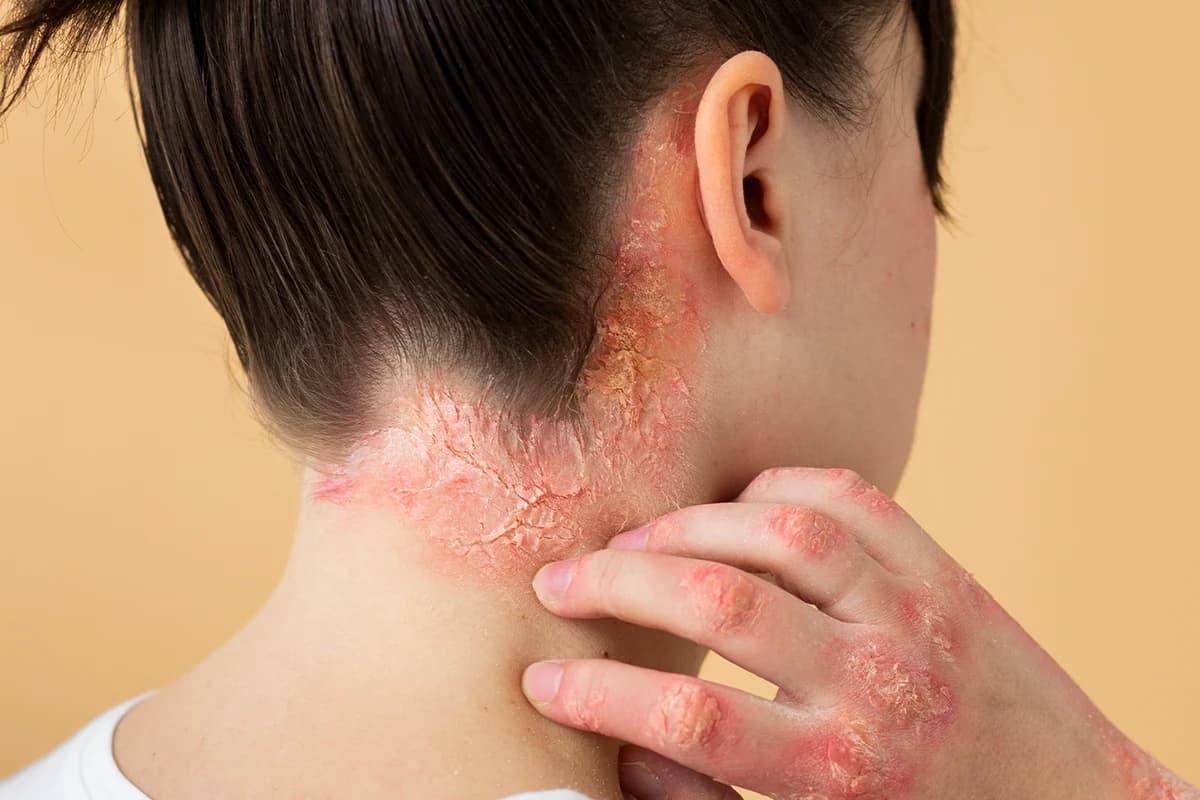 Psoriatic Arthritis
 Polymyalgia Rheumatica
 Inflammatory Myopathy (Myositis)
 Scoliosis
 Postural and Movement Disorders
 After Spinal Surgery
 Fracture
 Golfer's Elbow (Medial Epicondylitis)
 Bursitis and Myofascial Trigger Points
 Patellar Tendinopathy (Jumper's Knee)
Devices are used inside a programme and chosen after examination — they are not booked separately.
Your path to this treatment
Nothing here is booked from a page. You send the records you have, a rehabilitation physician reads them, and you get a written answer — including when the answer is that an intensive programme will not help.
4 steps, start to finish
1.Send your records
A discharge summary from the hospital that treated the original event, and any imaging of the affected area — CT, MRI or X-ray.2.A written plan in 48 hours
A rehabilitation physician reviews the case and returns the expected duration, the recommended programme and the centre. Free, no obligation.3.Travel and admission
Where a visa is needed we issue an invitation letter and treatment confirmation naming the dates and the facility. You are met at the airport and driven to the centre by private vehicle or ambulance; a bed for one companion and interpreting during therapy are arranged.4.Treatment, then home
The programme runs, then you leave with a discharge report and a written home exercise plan. Your return journey is organised before you go, with scheduled video reviews so progress does not stop.
In their words
What patients say after a programme
Short videos filmed during therapy: a child’s rehabilitation after a brain tumour, suspended gait training after spinal cord injury, and learning to walk again after a fall. Individual results vary.
Dave Evans on his physical therapy here
Musculoskeletal physiotherapy
Paediatric rehabilitation after a brain tumour
Inside a physiotherapy session
Spinal cord injury — the rehabilitation process
Suspension-assisted gait training
Walking difficulty and restricted movement after a fall
Regaining gait and range of motion
Locations
Centres that have this device — pick one.







Questions people actually ask
About this device
Does it hurt?
It is uncomfortable during the session and briefly afterwards. Intensity is adjusted to tolerance and no anaesthetic is needed.
How many sessions?
Typically three to five at weekly intervals. Effect is usually judged some weeks after the course rather than immediately.
Who should not have it?
Pregnancy, anticoagulation and bleeding disorders, local infection, malignancy in the area, and over growth plates in children.
Does it replace exercise?
No. It reduces pain enough for loading to proceed; the loading is what changes the tendon.
Should shockwave be combined with exercise?
Yes. In Achilles tendinopathy, eccentric loading plus shockwave gave better results at four months than loading alone, although the difference had gone by one year 8. In chronic plantar heel pain, shockwave with a stretching programme did better than shockwave alone 7. Exercise stays the core of treatment; shockwave is added to it.



