
Medical condition
Postural and Movement Disorders
Posture has not been shown to cause pain, and there is no single correct posture. What matters is movement variety and the capacity to sustain positions. Programmes here address strength, endurance and habit rather than trying to align you to an ideal. The useful instruction is not to sit up straight but to change position often.
The evidence on posture is weaker than the advice suggests
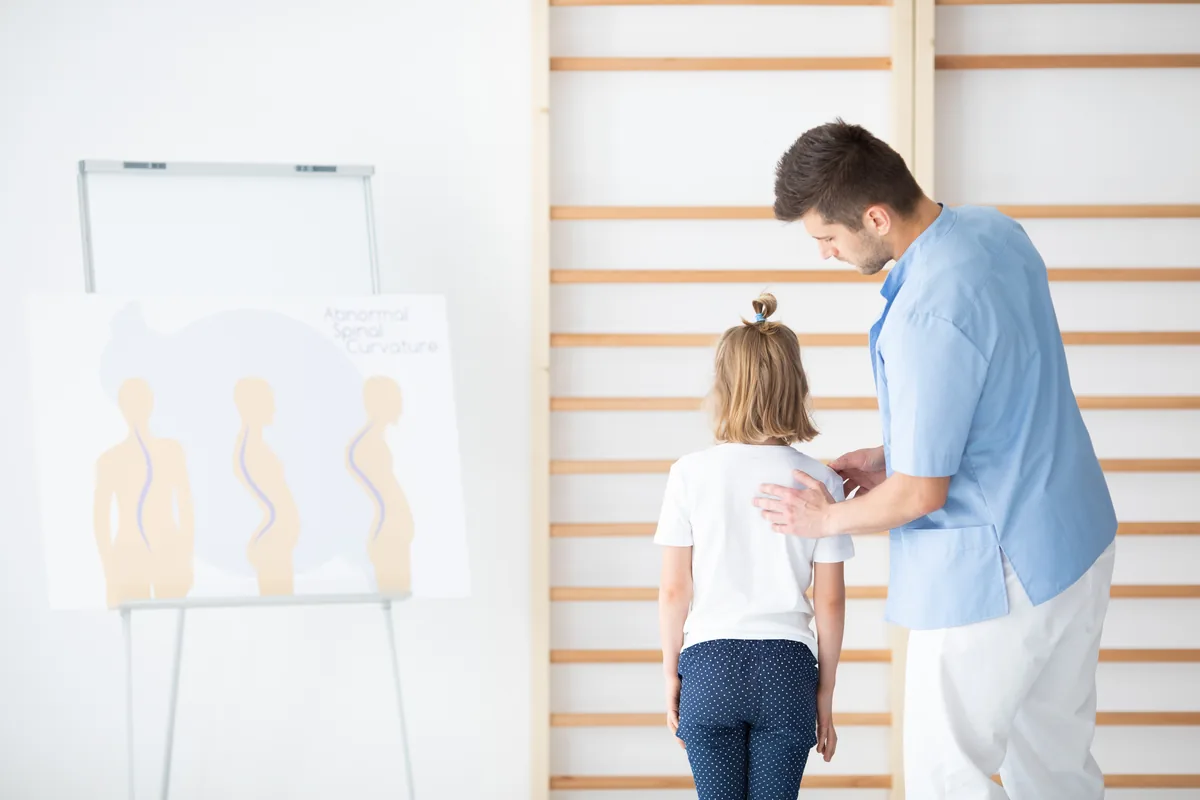
Reviews of the research have found the relationship between measured posture — forward head position, thoracic curvature, pelvic tilt — and pain to be inconsistent, and have not established that posture causes pain 12. People with markedly asymmetrical posture are frequently pain-free.
This matters because posture-focused advice can make people fearful of their own bodies and hypervigilant about position, which is associated with worse outcomes rather than better.
What does relate to symptoms
Sustained positions without variation. Low endurance in the muscles required to hold a position. Reduced overall movement volume. Sudden increases in a particular load.
The useful instruction is not 'sit up straight' but 'change position often and build the capacity to hold the positions you need'.
What a programme actually works on
Endurance and strength in the trunk, shoulder girdle and hip muscles. Movement variety through the day. Graded exposure to the positions and tasks that currently provoke symptoms. Workstation setup as one factor among several rather than the whole answer.
Where a specific structural cause exists — scoliosis, spondylolisthesis, vertebral fracture — that is treated on its own terms rather than as posture.
What we will not do
We will not tell you your posture caused your pain, and we will not sell a programme to correct alignment that the evidence does not support correcting.
If your main complaint is appearance rather than pain or function, that is a legitimate goal and we will say honestly what exercise can and cannot change about it.
Why we do not sell posture correction
The link between static posture and pain is much weaker than the industry around it suggests. People with markedly forward heads and rounded shoulders frequently have no pain, and people with textbook alignment frequently do.
What does relate to symptoms is sustained position without variety, low load tolerance and weakness. So we train those, and we decline to sell a course of treatment aimed at changing how someone stands.
What does the research show about posture and pain?
Mostly that the link is weaker and less direct than posture advice implies. A meta-analysis of 15 cross-sectional studies found that adults with neck pain held their heads further forward on average than adults without neck pain, while adolescents showed no such difference 2. Because studies of this kind measure posture and pain at the same moment, they cannot show which came first.
Sitting for long periods does tend to bring on back discomfort at the time, although it has not been established that it triggers clinical episodes of back pain 3. In controlled trials in healthy people, strengthening programmes changed posture measures in the upper back and neck, while stretching alone did not 4. For chronic low back pain, a Cochrane review of 249 trials found moderate-certainty evidence that exercise reduces pain compared with no treatment, usual care or placebo, although its effect on functional limitations was small 5.
Frequently asked questions
Is bad posture causing my neck pain?
Probably not directly. Sustained position without movement is a better explanation than any particular alignment, and the fix is variety rather than correction.
Do posture correctors work?
They provide feedback while worn and do not change posture durably. Worn constantly they contribute to weakness in the muscles they replace.
What about ergonomic chairs?
A reasonable setup helps comfort. No chair prevents symptoms produced by sitting still for hours, which is why movement breaks matter more than equipment.
Should I be told my posture is wrong?
Being told your spine is out of alignment tends to produce fear and guarding, which are associated with worse outcomes. We describe what to build rather than what is wrong.
What actually helps?
Strength, load tolerance, frequent position change and general activity. That is unglamorous and it is what the evidence supports.
Sources
- Swain CTV, Pan F, Owen PJ, Schmidt H, et al. No consensus on causality of spine postures or physical exposure and low back pain: a systematic review of systematic reviews — Journal of Biomechanics (2020)
- Mahmoud NF, Hassan KA, Abdelmajeed SF, Moustafa IM, et al. The relationship between forward head posture and neck pain: a systematic review and meta-analysis — Current Reviews in Musculoskeletal Medicine (2019)
- De Carvalho DE, de Luca K, Funabashi M, Breen A, et al. Association of exposures to seated postures with immediate increases in back pain: a systematic review of studies with objectively measured sitting time — Journal of Manipulative and Physiological Therapeutics (2020)
- Warneke K, Lohmann LH, Wilke J. Effects of stretching or strengthening exercise on spinal and lumbopelvic posture: a systematic review with meta-analysis — Sports Medicine - Open (2024)
- Hayden JA, Ellis J, Ogilvie R, Malmivaara A, et al. Exercise therapy for chronic low back pain — Cochrane Database of Systematic Reviews (2021)
Which therapies would I actually receive?
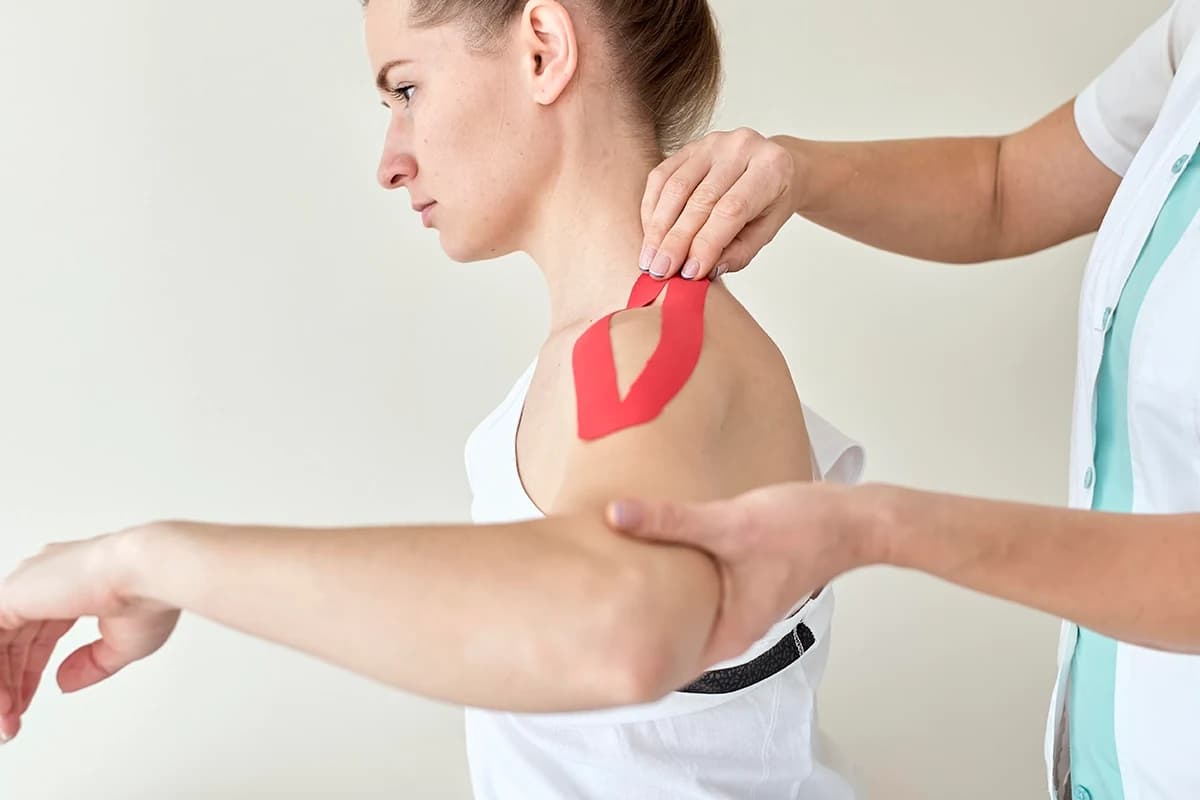
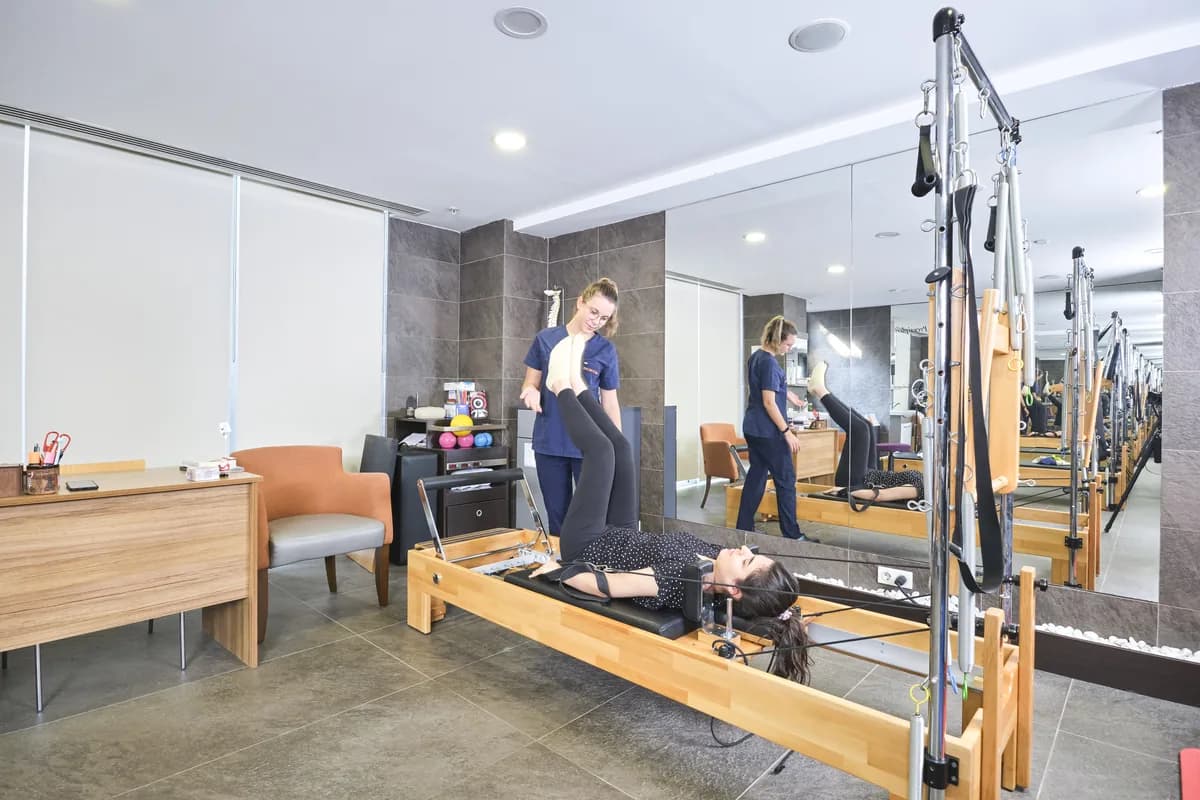
A therapy is a single method used inside a programme. It is measured in sessions and is not sold separately.

Technologies we use




Locations
Where you can receive this treatment






Related articles
Orthopaedic Can poor posture cause neck pain?
Staying in one position for a long time, such as looking down at a phone or laptop, can contribute to neck discomfort, but no single 'correct' posture prevents neck pain. Moving often, varying positions, building strength and staying active matter more than holding a perfect posture. Exercise and manual therapy are the main treatments for persistent neck pain.Read moreNeurological How long does it take to recover from a stroke?
Most recovery after a stroke happens in the early months, when the brain is most able to reorganise, and it continues more slowly for a longer period after that. How far someone gets depends mainly on how severe the stroke was, where it happened and how much active therapy follows.Read moreNeurological Can you walk again after a stroke?
Many people walk again after a stroke, including many who cannot stand at first. The chances are highest when some leg movement returns early and when walking practice starts as soon as it is safe. Walking often comes back before full arm recovery, sometimes with a stick, splint or other support.Read more



