
Medical condition
Cerebral Palsy (Adults)
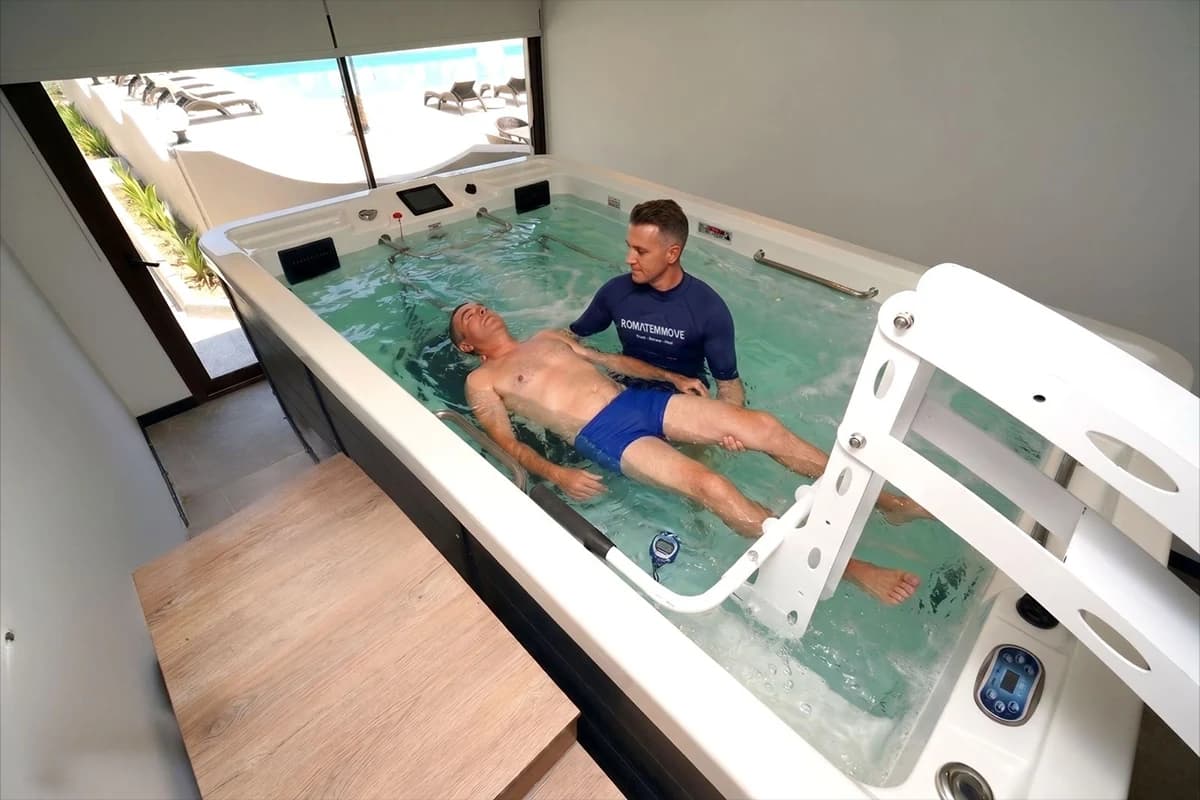
For adults with cerebral palsy the goal is usually to protect function rather than acquire it: managing spasticity, maintaining walking distance and preventing the joint contractures that reduce independence over time. Programmes run as two to four week intensive blocks, repeated.
What changes in adulthood
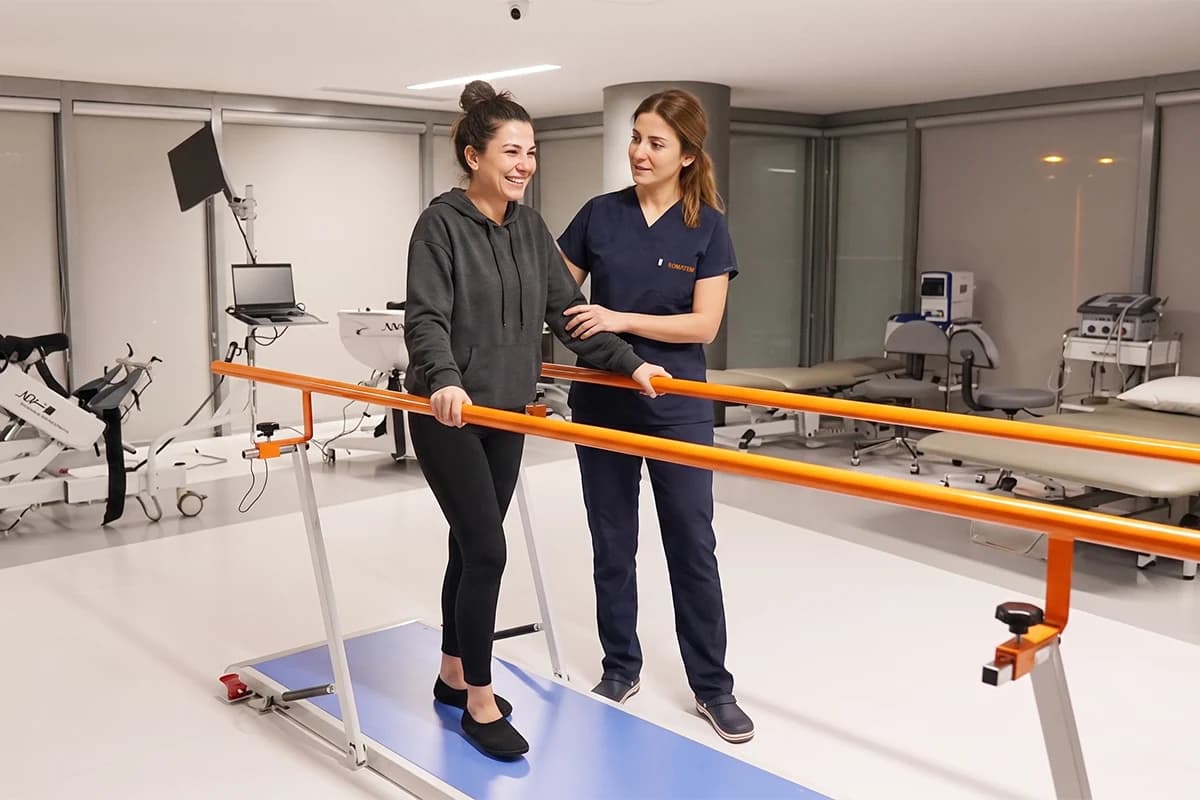
Cerebral palsy is not progressive, but its consequences are. Adults with cerebral palsy commonly experience earlier joint wear, increasing pain, loss of walking distance and rising fatigue — often from decades of compensatory movement patterns rather than from any change in the brain injury itself.
This means the goal in adult rehabilitation is usually different from childhood: protecting the function that exists rather than acquiring new function.
What a programme targets
Spasticity management to prevent contracture. Maintaining walking distance and efficiency. Joint protection and pain management. Strength and endurance, which decline faster in cerebral palsy than in the general population. Where walking has already been lost, transfers, seating and upper limb function become the priority.
Programmes are delivered as intensive blocks of two to four weeks, repeated. A single long admission produces less than the same hours spread across repeated blocks with a home programme in between.
It is not progressive, but the body around it changes
The brain injury that causes cerebral palsy does not worsen. What changes is the musculoskeletal system growing and ageing around it — muscles shorten, joints deform, and the energy cost of moving rises.
This is why a quarter or more of adults with cerebral palsy who walk see their walking decline, often earlier than peers without disability, despite a stable neurological condition 3. It is also why maintenance is a legitimate goal rather than an admission of defeat.
What the classification tells you
The Gross Motor Function Classification System describes what a person does rather than what is wrong: from walking without limitation at level one to being transported in a wheelchair at level five. It predicts trajectory better than the type of cerebral palsy does.
It matters practically because goals should match the level. Training independent walking in someone at level five is neither realistic nor kind, while accepting a wheelchair for someone at level two gives up something achievable.
Pain is common and under-treated
Pain is common in adults with cerebral palsy: in pooled individual data from 1,243 adults, 70% reported pain, most often in the legs 2. It is frequently attributed to the condition and left alone. Much of it is mechanical and treatable.
Hip surveillance in childhood prevents one painful cause, dislocation of the hip: in a Swedish population-based programme, dislocations fell from 8% of children to 0.5%, and every child whose hip did dislocate reported severe pain at least periodically 4. Where displacement has already occurred, management is about function and comfort rather than about the radiograph.
Does exercise still help an adult with cerebral palsy?
It builds strength, but trials have not yet shown that this changes walking. A meta-analysis of exercise trials in adults with cerebral palsy found improved leg muscle strength, but no faster walking over 10 metres and no greater distance in timed walking tests 5. Few of the trials measured quality of life 5.
How exercise affects what adults themselves rank as important — quality of life, pain, mood and fatigue — is still unknown, although the types of exercise studied appear safe 6. Practising walking itself has very low- to low-quality evidence of improving walking speed 7. A walking goal is therefore trained directly and measured, rather than assumed to follow from stronger muscles.
Frequently asked questions
Does cerebral palsy get worse?
The brain injury does not. Secondary problems — contracture, hip displacement, pain, reduced fitness — do progress, and those are what rehabilitation targets.
Can adults still improve?
Yes. Leg strength improves with training in adulthood, although trials have not yet shown faster or longer walking as a result 5. Adults are frequently discharged from services at eighteen and never seen again, which is why decline is often assumed to be inevitable when it is not.
What is GMFCS?
A five-level classification of gross motor function used internationally. It is stable over time and it is the most useful single piece of information when planning realistic goals.
Is surgery necessary?
Sometimes, for hip displacement, contracture or spinal deformity. Rehabilitation before and after determines much of the result, and surgery without it frequently disappoints.
Will my child walk?
GMFCS level assessed in early childhood predicts this reasonably well, and we give the honest answer rather than the encouraging one. Where walking is not realistic, independent mobility by other means is, and that is worth as much.
Sources
- Cerebral palsy in under 25s: assessment and management (NG62) — National Institute for Health and Care Excellence (2017)
- van der Slot WMA, Benner JL, Brunton L, Engel JM, et al. Pain in adults with cerebral palsy: a systematic review and meta-analysis of individual participant data — Annals of Physical and Rehabilitation Medicine (2021)
- Morgan P, McGinley J. Gait function and decline in adults with cerebral palsy: a systematic review — Disability and Rehabilitation (2014)
- Hägglund G, Alriksson-Schmidt A, Lauge-Pedersen H, Rodby-Bousquet E, et al. Prevention of dislocation of the hip in children with cerebral palsy: 20-year results of a population-based prevention programme — The Bone & Joint Journal (2014)
- Andreopoulou G, Meharry JB, Jagadamma KC, van der Linden ML. Physical activity and exercise interventions in adults with cerebral palsy: a systematic review of quantitative and qualitative studies — Disability and Rehabilitation (2025)
- Czencz J, Shields N, Wallen M, Wilson PH, et al. Does exercise affect quality of life and participation of adolescents and adults with cerebral palsy: a systematic review — Disability and Rehabilitation (2023)
- Januszyk D, Schafer E, Thompson HJ, Sargent B. Effect of exercise and motor interventions on physical activity and motor outcomes of adults with cerebral palsy: a systematic review — Developmental Neurorehabilitation (2023)
Which therapies would I actually receive?
A therapy is a single method used inside a programme. It is measured in sessions and is not sold separately.



Technologies we use
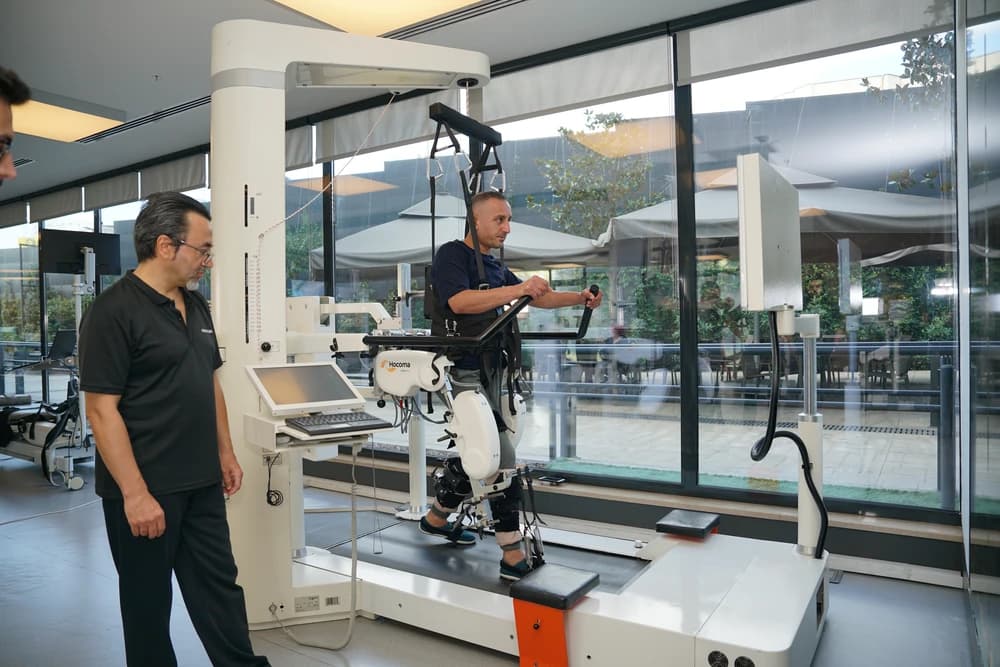
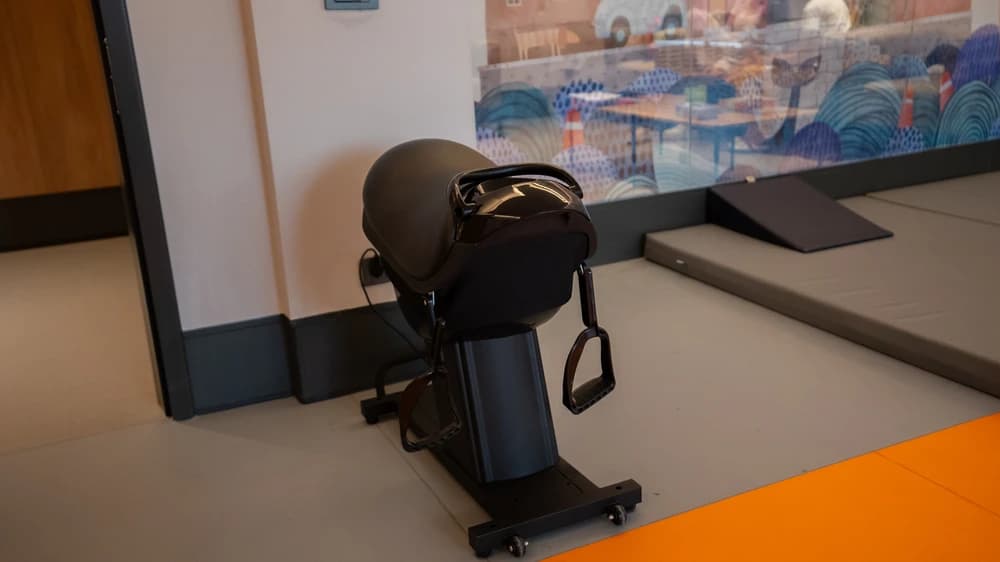

Locations
Where you can receive this treatment



Related articles
Neurological How long does it take to recover from a stroke?
Most recovery after a stroke happens in the early months, when the brain is most able to reorganise, and it continues more slowly for a longer period after that. How far someone gets depends mainly on how severe the stroke was, where it happened and how much active therapy follows.Read moreNeurological Can you walk again after a stroke?
Many people walk again after a stroke, including many who cannot stand at first. The chances are highest when some leg movement returns early and when walking practice starts as soon as it is safe. Walking often comes back before full arm recovery, sometimes with a stick, splint or other support.Read moreNeurological Will my arm and hand recover after a stroke?
Arm and hand recovery after a stroke varies more than walking recovery. Early return of some shoulder or finger movement makes useful recovery much more likely. Repeated, meaningful practice of reaching, grasping and releasing is what drives improvement, and even a partly recovered hand can be trained to help with daily tasks.Read more



