
Other systems
Hippotherapy horse simulator
A simulator that reproduces the three-dimensional movement of a walking horse. The trunk responds automatically, which trains postural control without the patient consciously exercising. The saddle moves the pelvis through the same pattern walking produces, and that reflexive trunk activation is very difficult to produce with voluntary exercise.
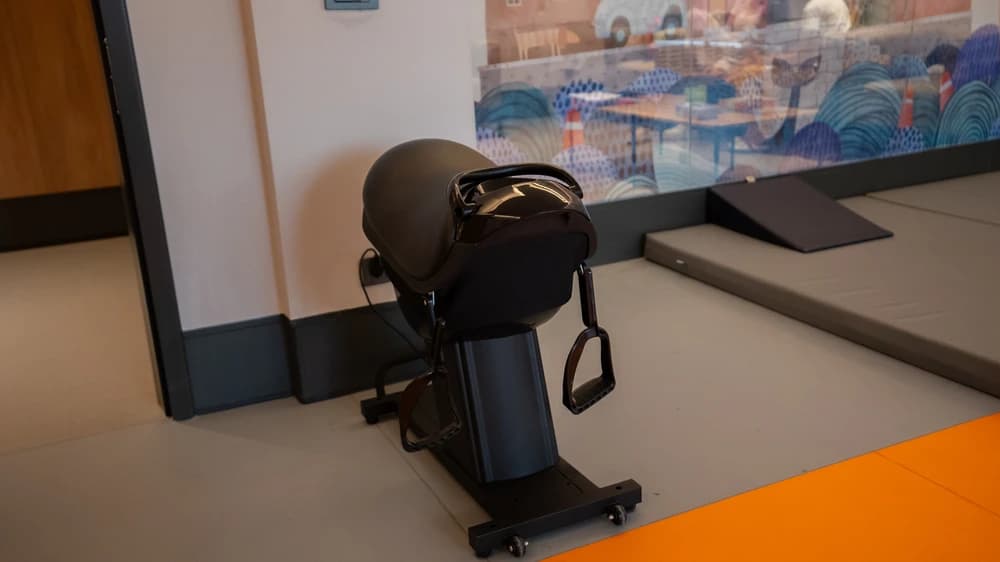
The mechanics of a horse, without a horse
A motorised saddle reproducing the three-dimensional movement of a walking horse — forward and back, side to side, and rotational. Sitting on it, the pelvis and trunk are moved through the same repeating pattern the pelvis produces during walking.
The rider's postural muscles respond continuously and automatically to keep them upright. That reflexive trunk activation is very difficult to produce with voluntary exercise, which is what makes the approach distinctive.
Who it is used for
Children with cerebral palsy, where trunk control and pelvic mobility are frequently the limiting factors for sitting and walking. Also developmental coordination difficulty, adults after stroke needing trunk control work, multiple sclerosis, and balance and posture disorders.
The simulator has practical advantages over a live horse: the movement is identical every session, speed and amplitude are adjustable, there is no allergy or animal-safety risk, and it is available year-round indoors.
What it is for, and what it is not
It works on trunk control, pelvic mobility, postural response and sitting balance. It is not a treatment for the whole condition and it does not train walking directly.
Children engage with it readily, which is a genuine clinical advantage — a session completed is worth more than a better exercise refused. But engagement is not an outcome, and we measure the trunk control it is supposed to change.
What the movement provides
The simulator reproduces the three-dimensional movement of a horse’s walk, which provides continuous trunk and pelvic input without an animal, a stable or the associated risk.
It is used mainly in children with cerebral palsy for trunk control and postural response. Evidence is more limited than for mainstream approaches and we describe it accordingly.
What have trials of the simulator actually found?
A 2022 meta-analysis gathered twelve small clinical trials involving 343 children with the spastic diplegic form of cerebral palsy 1. Adding simulator sessions to physiotherapy improved overall gross motor function, sitting ability and functional balance more than physiotherapy alone, and the simulator increased how far the hips could open compared with a sham treatment 1. Standing and walking scores, measured in two trials, did not improve more than with physiotherapy alone 1. Compared with sham, however, gains in sitting and overall motor function were not significantly greater, and no clear effect on spasticity was found 1.
Used instead of physiotherapy rather than added to it, the simulator did not produce significantly greater gains in overall motor function 1. Programmes lasted from one to twelve weeks, the risk of bias in the trials was moderate, and none of them followed children up after treatment ended 1. The fair summary is that the simulator can add useful practice of trunk and sitting control to a physiotherapy programme, but it has not been shown to replace active therapy.
Sources
- Obrero-Gaitán E, Montoro-Cárdenas D, Cortés-Pérez I, Osuna-Pérez MC. Effectiveness of mechanical horse-riding simulator-based interventions in patients with cerebral palsy: a systematic review and meta-analysis — Bioengineering (2022)
- Ramezani K, Kalantari M, Pashmdarfard M, Akbarzadeh Baghba A, et al. Impacts of hippotherapy simulation on balance, postural control, and spasticity of thigh adductor muscles in children with spastic bilateral cerebral palsy: a single-blind clinical trial study — Iranian Journal of Child Neurology (2025)
Conditions this device is used for
The 5 conditions where this device is part of a routine programme, grouped by area. It is one tool inside the plan, never the plan itself.
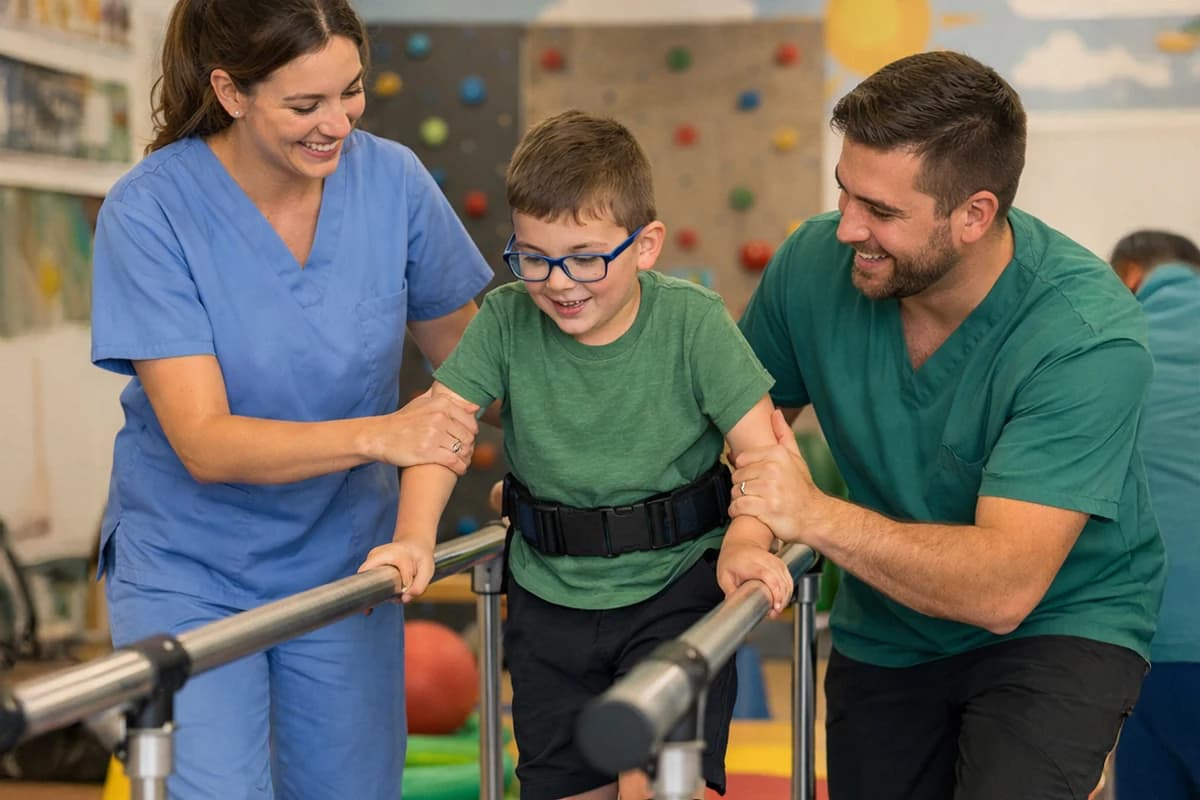
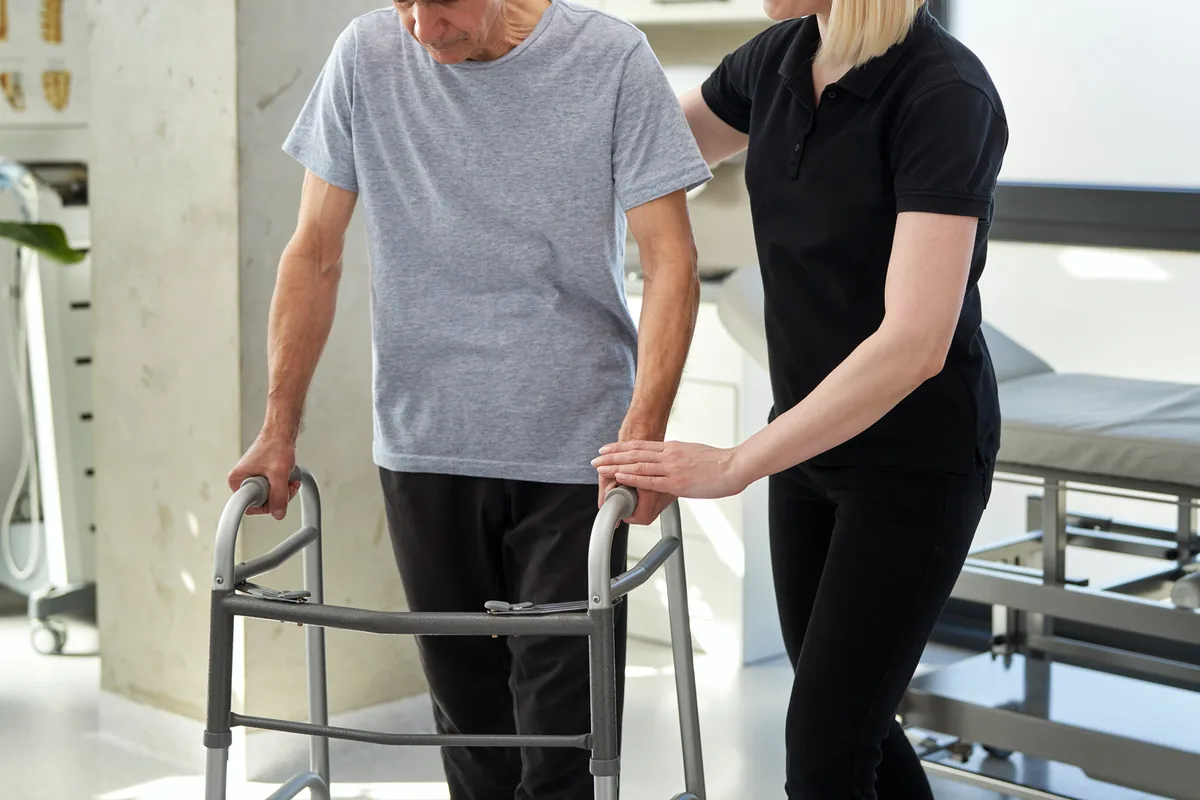
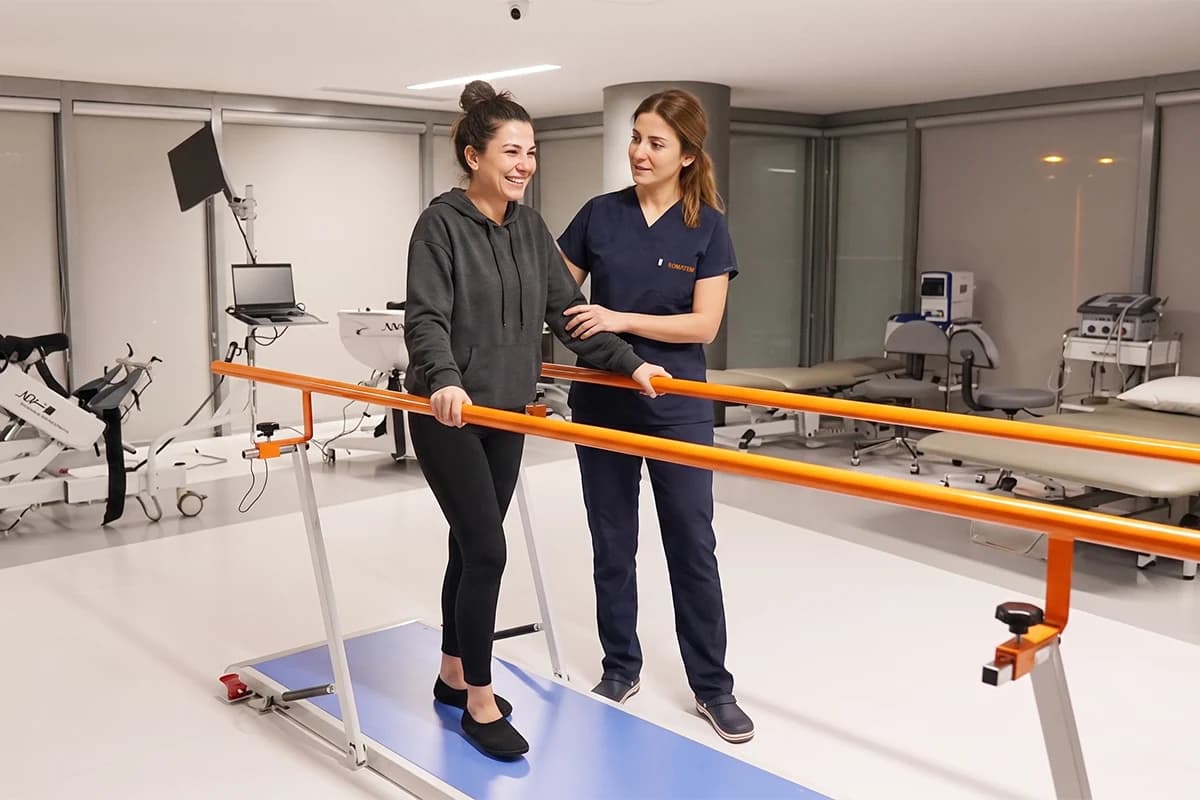
Devices are used inside a programme and chosen after examination — they are not booked separately.
Your path to this treatment
Nothing here is booked from a page. You send the records you have, a rehabilitation physician reads them, and you get a written answer — including when the answer is that an intensive programme will not help.
4 steps, start to finish
1.Send your records
A discharge summary from the hospital that treated the original event, and any imaging of the affected area — CT, MRI or X-ray.2.A written plan in 48 hours
A rehabilitation physician reviews the case and returns the expected duration, the recommended programme and the centre. Free, no obligation.3.Travel and admission
Where a visa is needed we issue an invitation letter and treatment confirmation naming the dates and the facility. You are met at the airport and driven to the centre by private vehicle or ambulance; a bed for one companion and interpreting during therapy are arranged.4.Treatment, then home
The programme runs, then you leave with a discharge report and a written home exercise plan. Your return journey is organised before you go, with scheduled video reviews so progress does not stop.
In their words
What patients say after a programme
Short videos filmed during therapy: a child’s rehabilitation after a brain tumour, suspended gait training after spinal cord injury, and learning to walk again after a fall. Individual results vary.
Dave Evans on his physical therapy here
Musculoskeletal physiotherapy
Paediatric rehabilitation after a brain tumour
Inside a physiotherapy session
Spinal cord injury — the rehabilitation process
Suspension-assisted gait training
Walking difficulty and restricted movement after a fall
Regaining gait and range of motion
Locations
Centres that have this device — pick one.



Questions people actually ask
About this device
Is it the same as horse riding therapy?
It reproduces the movement and not the animal. The relationship with a horse is part of what makes real hippotherapy valuable to some children, and that is not replicated.
Who is it used for?
Mainly children with cerebral palsy and other conditions affecting trunk control; occasionally adults after neurological injury.
What does the evidence show?
Some support for trunk control and gross motor function in cerebral palsy, from small studies 1. It is an adjunct rather than a core intervention.
Is it safe?
Yes, with supervision and appropriate support. Uncontrolled seizures, hip instability and unhealed fractures are exclusions.
Do the gains last after the sessions stop?
That is not yet clear. None of the trials in the main meta-analysis re-assessed children after treatment ended 1. In a later small randomised trial, the advantage in balance, standing and walking had disappeared two months after the simulator sessions stopped, while a smaller advantage in trunk control remained 2. That is a reason to continue trunk and sitting practice at home.



