

Medical condition
Ankylosing Spondylitis
In ankylosing spondylitis the spine stiffens progressively. Daily mobility exercise is the single intervention shown to influence long-term posture, which is why the programme is built to be continued at home for years. The intensive block teaches the routine and confirms it can be done correctly without supervision.

A spine that stiffens progressively
Ankylosing spondylitis is an inflammatory disease of the spine and sacroiliac joints. Over time inflammation can lead to new bone formation and progressive stiffening, reducing spinal movement and, in advanced cases, fixing posture in a forward-flexed position.
The characteristic pattern is back pain and stiffness that is worse with rest and better with movement — the opposite of mechanical back pain, and the most useful distinguishing feature in the history.
Daily exercise is the intervention with the strongest evidence
In ankylosing spondylitis, regular mobility exercise is the single non-pharmacological intervention shown to influence long-term posture and function. Not occasional therapy — daily practice, sustained for years.
This changes how the programme is designed. An intensive block establishes correct technique, builds range and sets the routine; the value is realised at home over the following decade. We therefore spend a disproportionate share of the programme on teaching the home routine and confirming that it can be performed correctly without supervision.
What the programme includes
Spinal mobility in all directions, chest expansion exercise to maintain rib cage movement, posture correction against the tendency to flex forward, hydrotherapy where land-based movement is limited by pain, and strengthening of the postural muscles.
Chest expansion is often overlooked and matters: rib cage involvement restricts breathing capacity, and it is measurable and trainable.
The pattern that separates it from ordinary back pain
Inflammatory back pain behaves in the opposite way to mechanical back pain: it is worse with rest and better with movement, it wakes people in the second half of the night, and morning stiffness lasts longer than thirty minutes rather than a few 3.
It usually begins before the age of forty-five and comes on gradually 3. Recognising this pattern matters because the average delay to diagnosis is measured in years, and those are years in which treatment would have changed the course.
Posture and mobility are measured, not estimated
Chest expansion, lumbar flexion, cervical rotation and the distance from the back of the head to the wall are recorded at the start and repeated. These numbers make gradual change visible, and gradual is how this condition progresses.
Without measurement, loss of movement is noticed only when it is already limiting daily life — which is late enough to be much harder to reverse.
Exercise works alongside medication, not instead of it
Biologic and other disease-modifying treatment controls the inflammation; exercise maintains the mobility and posture that inflammation threatens. Neither substitutes for the other, and the combination is what current recommendations describe.
The programme includes spinal mobility work, chest expansion, hip range, and strengthening — done daily rather than in occasional intensive blocks, because consistency is what preserves range in this condition.
What we watch for
Reduced chest expansion affecting breathing capacity, hip involvement that changes walking, and eye inflammation, which is common enough in this condition that any new red painful eye needs same-day assessment rather than a wait.
In long-standing disease with a fused spine, the fracture risk after even minor trauma is significantly increased. That changes what manual techniques are appropriate and it is why the treatment plan is adjusted rather than applied from a template.
Frequently asked questions
How long do I have to keep doing the exercises?
Indefinitely. This is an uncomfortable answer and it is the honest one — the evidence for exercise in ankylosing spondylitis is about sustained daily practice, not about a course of treatment. The programme is designed so the routine is short and can be done without equipment.
Will my spine definitely fuse?
No. Progression varies widely and modern treatment has changed the outlook substantially. Regular exercise and effective medical control both influence how much movement is retained.
Should I exercise during a flare?
Yes, at reduced intensity. Stopping entirely during flares is how mobility is lost, because range does not fully return afterwards. What changes is the load, not whether you move.
Is swimming better than other exercise?
It is well tolerated and useful for mobility, but it does not load bone or build the strength that matters for posture. It works best as part of a programme rather than as the whole of it.
Can rehabilitation replace my biologic treatment?
No, and nobody should suggest it can. They address different parts of the disease. Stopping medication because exercise is going well is how people lose the ground they gained.
Does it affect anything other than the spine?
It can involve hips and shoulders, the sites where tendons attach to bone, the eyes, and less often the bowel and heart. This is why it is managed by a rheumatologist rather than treated as a back problem.
Sources
- ASAS-EULAR recommendations for the management of axial spondyloarthritis — ASAS-EULAR (2022)
- Ramiro S, et al. ASAS-EULAR recommendations for the management of axial spondyloarthritis: 2022 update — Annals of the Rheumatic Diseases (2023)
- Spondyloarthritis in over 16s: diagnosis and management (NG65) — National Institute for Health and Care Excellence (2017)
Which therapies would I actually receive?
A therapy is a single method used inside a programme. It is measured in sessions and is not sold separately.
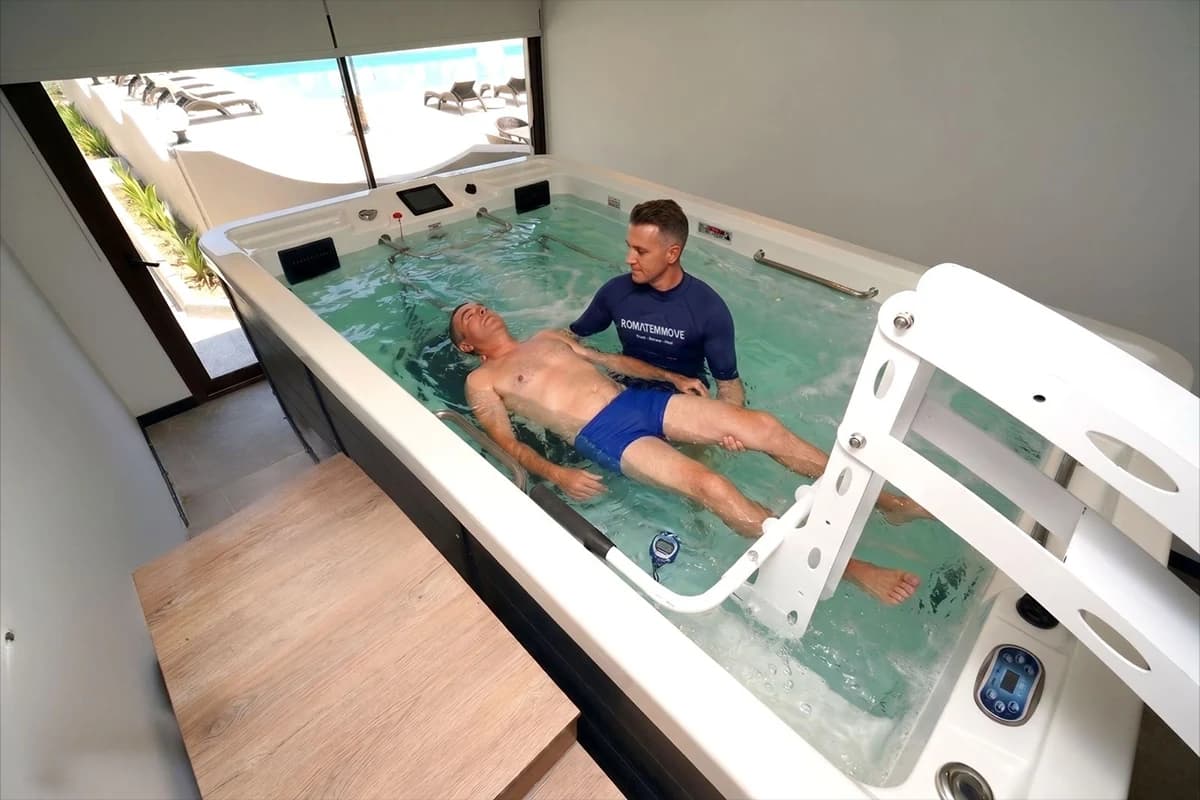
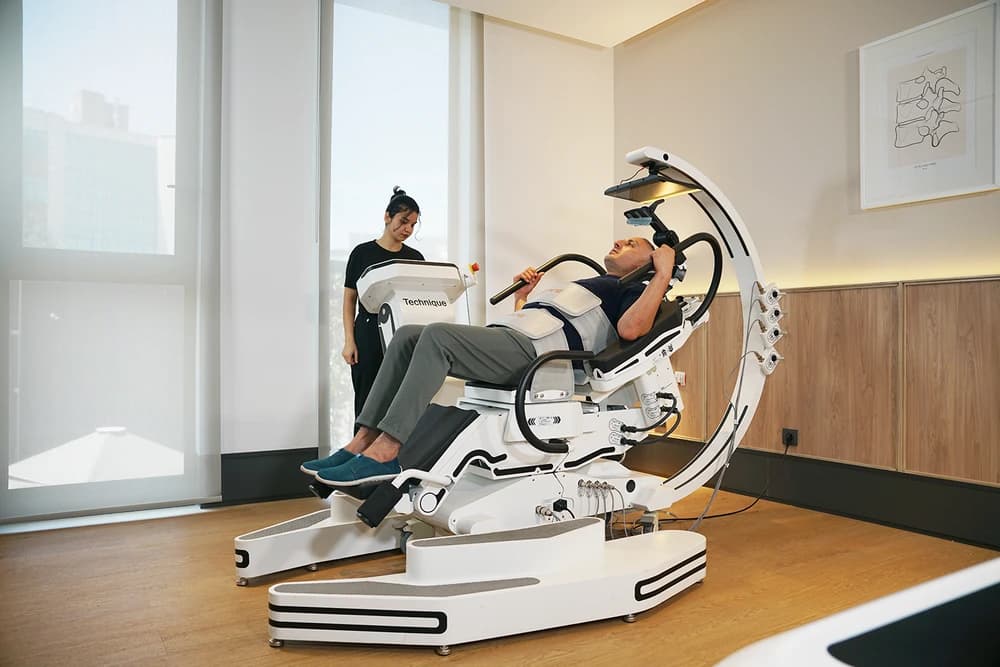
Technologies we use

Locations
Where you can receive this treatment




Related articles
Rheumatologic Should you exercise during a rheumatoid arthritis flare?
Yes, but not the same exercise. During a flare the work shifts to gentle range of motion, positioning and protecting the inflamed joint, while strengthening and loading wait. Stopping altogether costs strength that takes far longer to rebuild than the flare takes to settle.Read moreRheumatologic Which exercises help ankylosing spondylitis?
Regular exercise is a core part of managing ankylosing spondylitis alongside medication. Programmes that combine stretching, spinal mobility, strengthening, breathing and aerobic exercise can reduce pain and help maintain function. Exercise helps most when done consistently over the long term. Stiffness that improves with movement is typical of this condition.Read moreRheumatologic Is morning stiffness a sign of arthritis?
It can be. Under NICE guidance, morning stiffness lasting no longer than 30 minutes fits osteoarthritis. Stiffness lasting longer, especially with swollen, warm joints in the hands or feet, suggests inflammatory arthritis such as rheumatoid arthritis. Back pain with long morning stiffness that improves with exercise may indicate axial spondyloarthritis. Persistent symptoms deserve medical assessment.Read more



