

Medical condition
Stroke
A stroke happens when the blood supply to part of the brain is interrupted, and the abilities that area controlled — moving a limb, balance, speech, swallowing — are lost or weakened. Rehabilitation retrains them by working with neuroplasticity, the brain’s capacity to reorganise, which is strongest in the first months after the stroke but never closes completely.

What happens to the body after a stroke?
A stroke interrupts the blood supply to part of the brain. The functions that part controlled — moving an arm, keeping balance, forming words, swallowing — can be lost or weakened. Which abilities are affected depends on where in the brain the stroke happened, not on how severe it felt at the time.
The brain can reorganise itself and take over lost functions through neighbouring areas. This is called neuroplasticity, and it is the mechanism rehabilitation works with. It is strongest in the first months after the stroke, which is why the timing of rehabilitation matters as much as its content 2.
What are the warning signs of a stroke?
The signs appear suddenly. The face droops on one side, one arm drifts down when both are raised, and speech becomes slurred or muddled. Any one of the three is enough to call an ambulance — waiting to see whether it passes is the most common and most costly mistake families make 1.
Less familiar signs are missed more often: sudden loss or blurring of vision in one eye, sudden severe headache with no cause, sudden dizziness with loss of balance, or numbness down one side. Symptoms that resolve within minutes still matter — a transient ischaemic attack often precedes a larger stroke 1.
What causes a stroke, and who is at risk?
There are two mechanisms with the same name. In an ischaemic stroke — the large majority — a clot blocks an artery supplying the brain. In a haemorrhagic stroke a vessel bursts and blood presses on the tissue around it. The distinction is not academic: it decides the emergency treatment, and it shapes what the first weeks of recovery look like.
The risks that matter most are the ones that can be changed: high blood pressure above all, then atrial fibrillation, diabetes, smoking, high cholesterol, physical inactivity and excess weight. Age and family history add to the picture but cannot be altered. Someone who has had one stroke is at higher risk of another, which is why secondary prevention runs alongside rehabilitation rather than after it 3.
How is a stroke diagnosed?
Brain imaging comes first and comes fast. A CT scan is usually done within minutes of arrival because it separates a bleed from a clot, and the two are treated in opposite ways. MRI shows the damaged area in more detail and is often added later, particularly when the stroke is small or the timing is unclear 1.
Alongside imaging, the cause is investigated: blood pressure, blood glucose and cholesterol, an ECG and often longer heart-rhythm monitoring to look for atrial fibrillation, and ultrasound of the neck arteries. For rehabilitation the imaging matters less than the functional assessment — what the person can and cannot do now — but the discharge summary and the scans are what let a rehabilitation physician judge a case from abroad.
How soon should rehabilitation start?
As soon as the person is medically stable. International stroke guidelines recommend beginning rehabilitation in the acute hospital and continuing it without a gap 4. In practice, the gap between discharge and the start of intensive rehabilitation is where recovery is most often lost — not because the treatment is wrong, but because the waiting time is long.
This is the single reason most international patients contact us. If you are currently waiting for an inpatient place, it is worth asking two questions of any provider, including us: when can you actually start, and how many hours of therapy will there be each day.
What does recovery look like over time?
Recovery is fastest in the first three to six months, continues more slowly for the next two to three years, and further gains remain possible after that 5. The early period is a window in which the same effort produces more change — not a deadline after which nothing can be gained.
Progress is rarely even. The leg usually recovers ahead of the arm, because walking can be retrained with body weight and repetition while hand function needs finer control. Fatigue, low mood and difficulty concentrating are common and are part of the condition rather than a lack of effort. What predicts outcome most reliably is the starting severity and how early intensive therapy begins 2.
What does a day of stroke rehabilitation look like here?
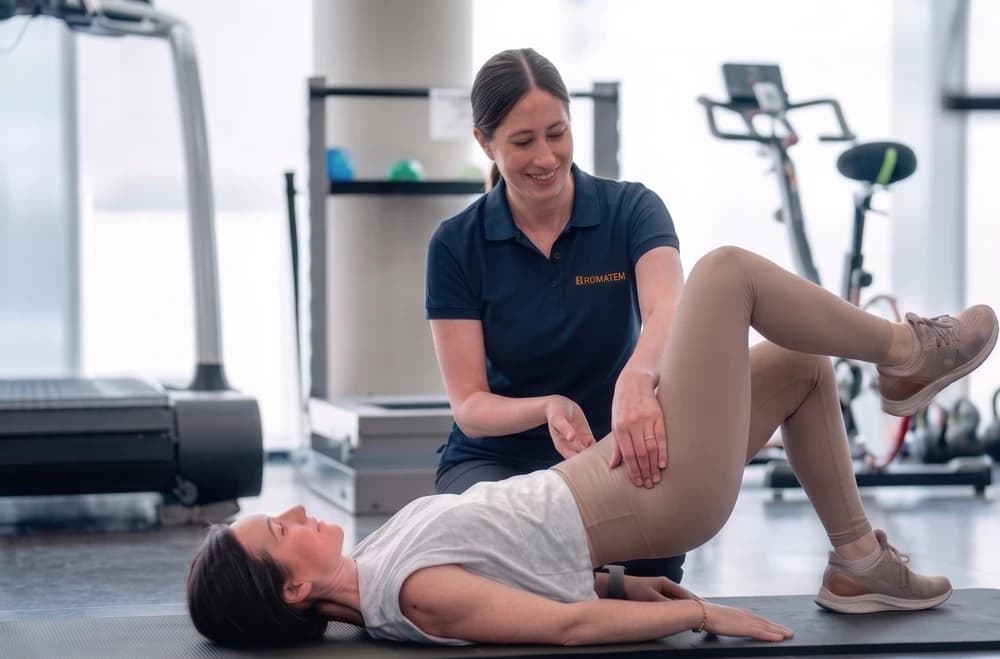
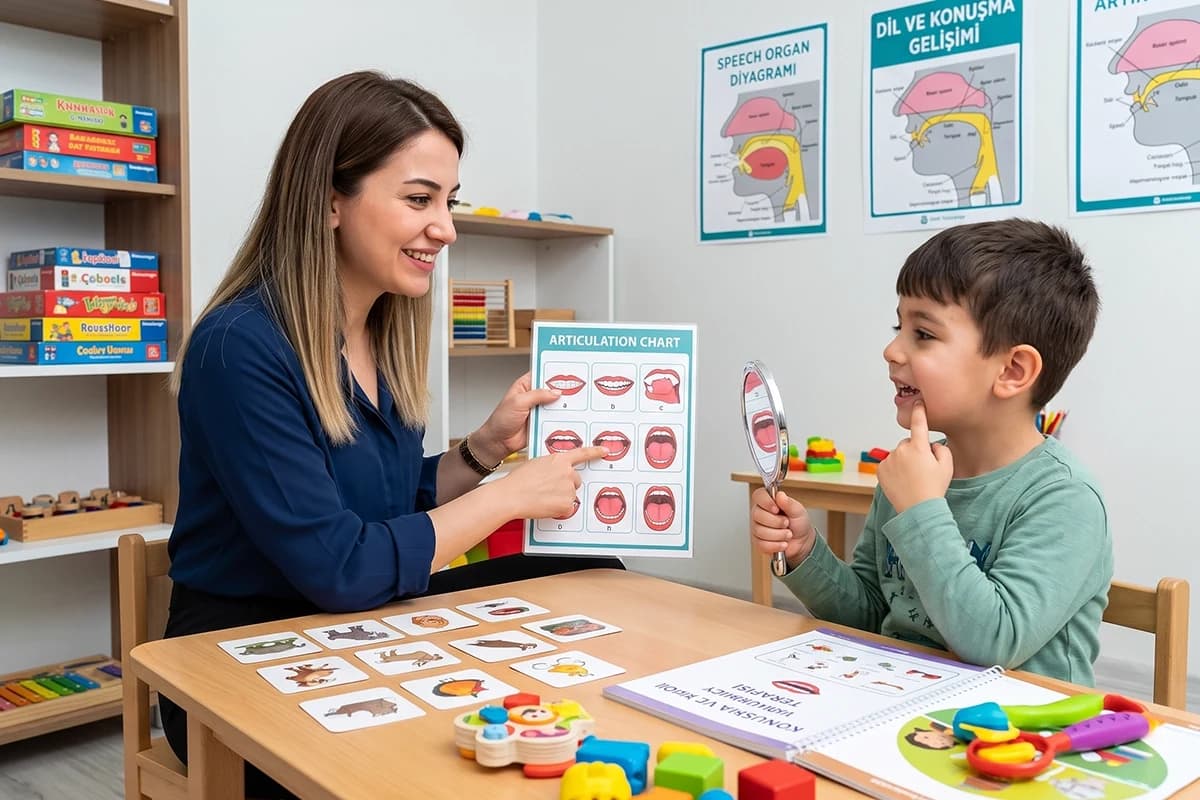
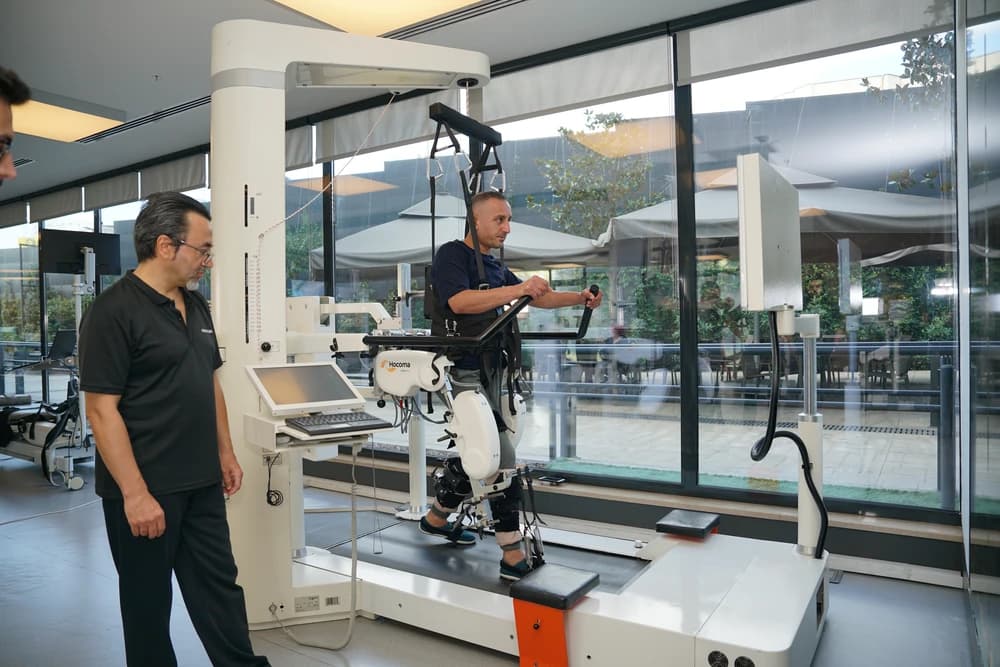
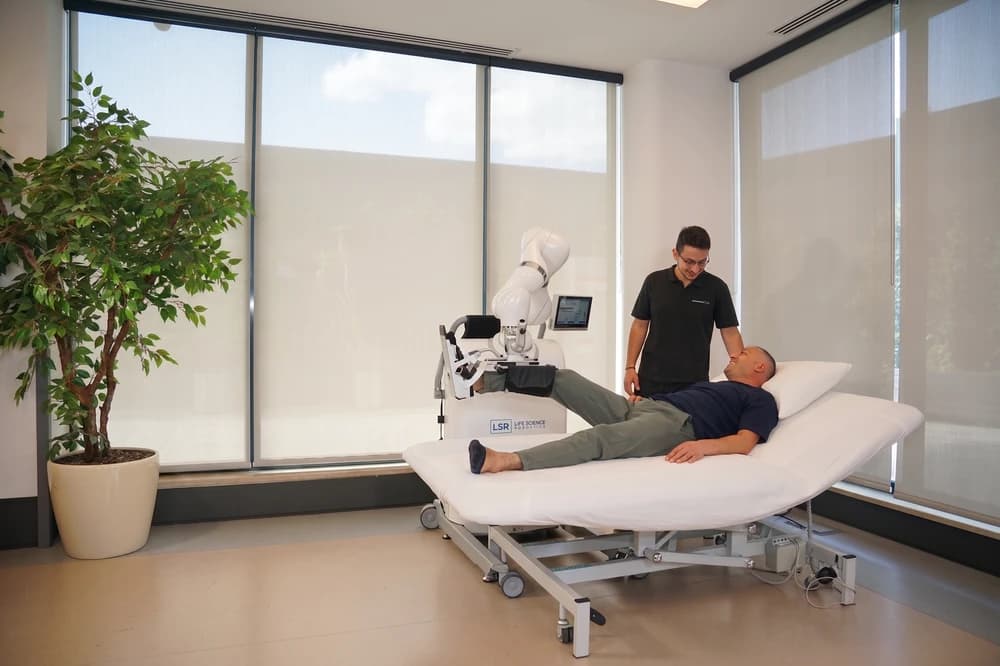
A typical inpatient day runs from morning assessment through to late afternoon, with four to six hours of active therapy split into sessions of 30 to 45 minutes. Sessions alternate between physiotherapy, robotic gait training, occupational therapy for arm and hand function, and where needed speech and swallowing therapy.
A companion can stay with the patient throughout. For families travelling from abroad this is not a comfort detail: the person who will support recovery at home learns the exercises alongside the therapist during the stay.
Understanding Stroke
Before treatment, the questions people actually ask first — what happens, how recovery behaves over time, and whether it is ever too late. Each opens the full article.
- Understanding strokeWhat a stroke does to the brain, how recovery actually unfolds, and why the arm so often lags behind the leg.
- How we treat strokeWhat the programme actually contains, hour by hour, and why it is built the way it is.
- What to expectA realistic timeline, what a day looks like, and where progress usually slows.
- Questions families ask
Frequently asked questions
Is it ever too late to start stroke rehabilitation?
No. Recovery is fastest in the first months, but improvement in strength, balance, walking distance and independence is still achievable years after a stroke. What changes is the goal: later programmes focus more on function and independence in daily life than on restoring the original movement pattern.
How long does recovery after a stroke take?
It is fastest in the first three to six months, continues more slowly for the next two to three years, and further gains remain possible after that 5. How far it goes depends most on the starting severity and how early intensive therapy begins — which is why recovery is measured against goals set at assessment, not against a calendar.
Can the arm and hand recover after a stroke?
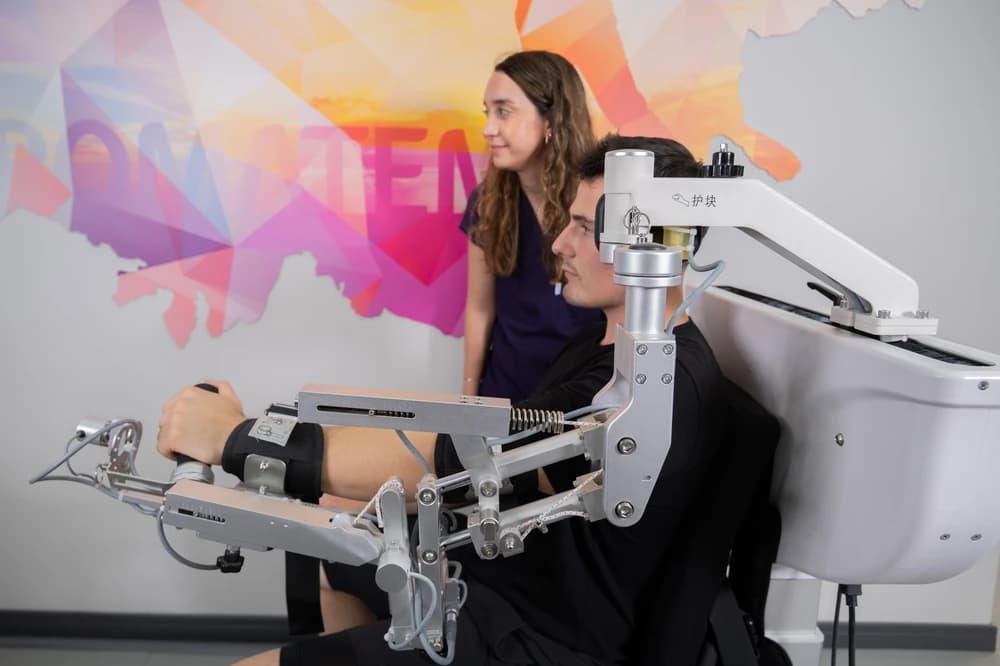
Often, but more slowly than the leg. Walking can be retrained with body weight and repetition, while the hand needs finer control, so arm recovery takes longer and needs intensive, task-specific practice — reaching, grasping, manipulating real objects — often supported by robot-assisted repetition.
How can another stroke be prevented?
Secondary prevention runs alongside rehabilitation: controlling blood pressure, treating atrial fibrillation as prescribed, managing diabetes and cholesterol, stopping smoking, and staying physically active. These are medical decisions made with the treating doctor — rehabilitation supports them but does not replace them.
Sources
- Stroke and transient ischaemic attack in over 16s: diagnosis and initial management (NG128) — National Institute for Health and Care Excellence (2022)
- Winstein CJ, Stein J, Arena R, et al. Guidelines for Adult Stroke Rehabilitation and Recovery: A Guideline for Healthcare Professionals From the American Heart Association/American Stroke Association — Stroke (2016)
- Kleindorfer DO, Towfighi A, Chaturvedi S, et al. 2021 Guideline for the Prevention of Stroke in Patients With Stroke and Transient Ischemic Attack — Stroke (2021)
- National Clinical Guideline for Stroke for the UK and Ireland — Intercollegiate Stroke Working Party (2023)
- Stroke Recovery Is a Journey: Prediction and Potentials of Motor Recovery after a Stroke from a Practical Perspective — Life (Basel) (2023)
- Time is brain--quantified. — Stroke (2006)
- Predictors of stroke outcome using objective measurement scales. — Stroke (1990)
- Observation of amounts of movement practice provided during stroke rehabilitation. — Archives of Physical Medicine and Rehabilitation (2009)
- Translating animal doses of task-specific training to people with chronic stroke in 1-hour therapy sessions: a proof-of-concept study. — Neurorehabilitation and Neural Repair (2010)
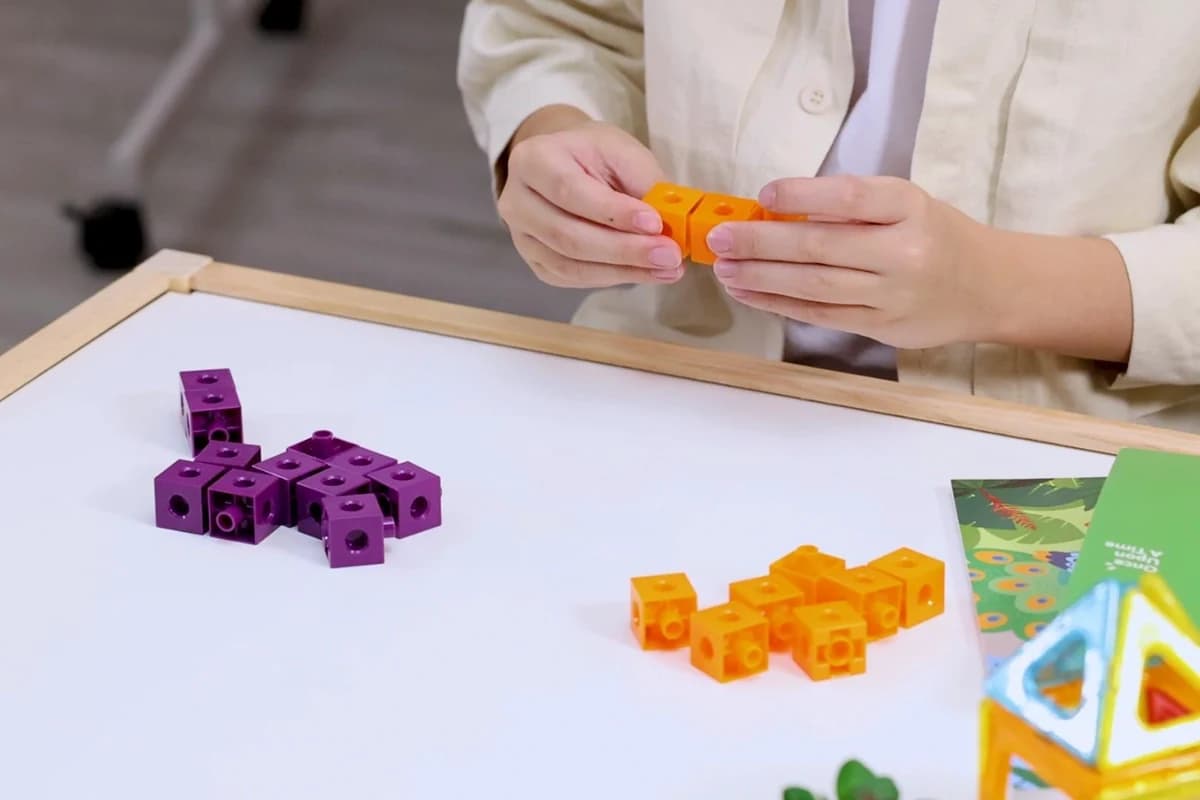
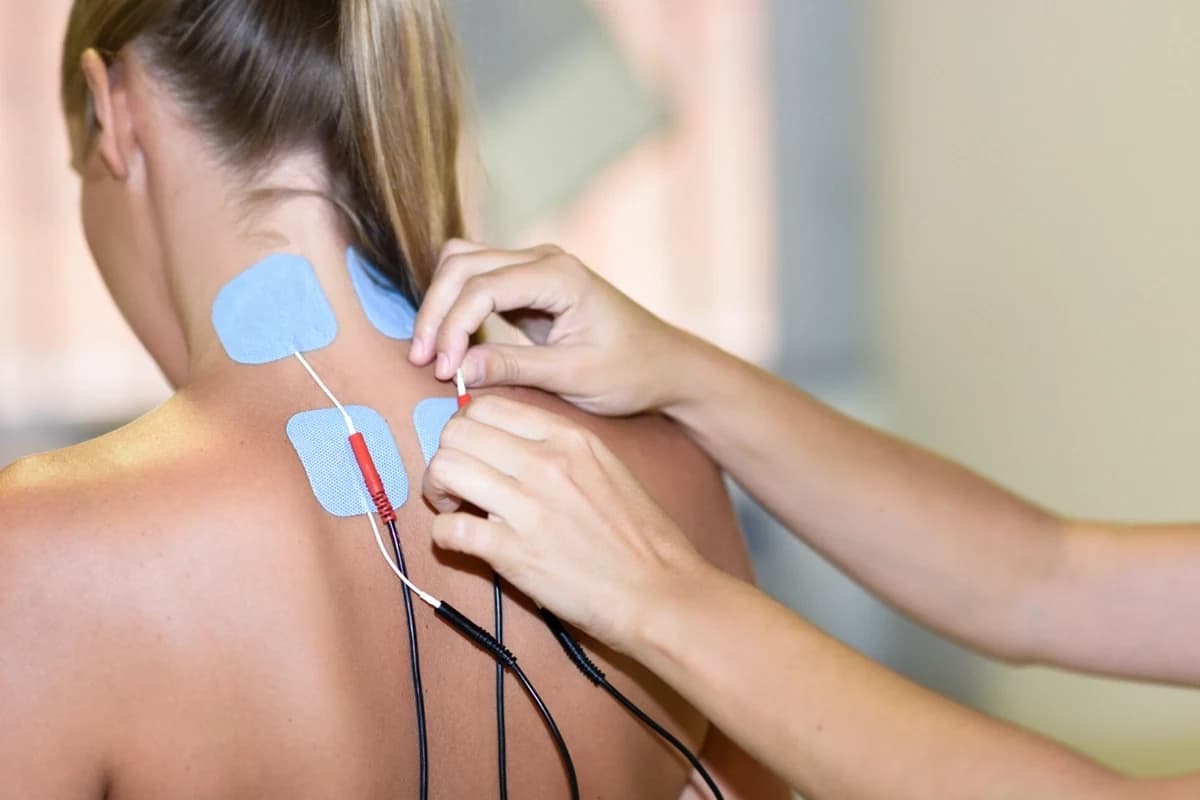
Which therapies would I actually receive?
A therapy is a single method used inside a programme. It is measured in sessions and is not sold separately.


Technologies we use
Locations
Where you can receive this treatment





Related articles
Neurological How much therapy after a stroke is enough?
There is no single number, but the question has a shape: how many hours of active therapy a day, on how many days a week, and for how long. Guidelines converge on more than most services deliver, so it is worth asking your own provider for their figure before comparing anyone else.Read more Neurological
When should rehabilitation start after a stroke?
Rehabilitation starts in the stroke unit, within days, as soon as the patient is medically stable. What the evidence cautions against is very high-dose out-of-bed activity in the earliest hours after stroke. The practical question for families is not whether to start early but what the programme delivers once it has started.Read moreCognitive Can memory and attention improve after a brain injury?
Yes, though not usually by restoring the damaged function itself. The approaches with the strongest evidence teach strategies and train attention in the tasks that matter, so the person manages daily life better even where the underlying memory has changed permanently. That distinction shapes the whole programme.Read more



