

Medical condition
Traumatic Brain Injury
Brain injury rehabilitation combines physical, cognitive and communication therapy in one programme lasting four to eight weeks. Attention, memory and planning are treated as directly as walking and arm function, because they determine whether a return to work or school is possible. A companion is trained alongside the patient.
What is damaged, and why the effects vary so much
A brain injury is rarely one injury. There is the damage at the point of impact, damage on the opposite side as the brain moves inside the skull, and diffuse injury to the long fibres that connect regions to each other. The third kind explains why two people with similar scans can have entirely different problems.
This is also why brain injury is harder to describe than stroke. A stroke usually damages one territory and produces a recognisable pattern. A brain injury can leave walking intact and destroy the ability to hold a plan in mind for ten minutes — and the second disability is the one that decides whether someone works again.
Post-traumatic amnesia: the number that predicts most
After a significant brain injury there is a period during which the person is awake but not laying down continuous memory. They may talk, follow instructions and even walk, and remember none of it afterwards. This is post-traumatic amnesia, and its duration is the single most useful severity measure available.
The relationship is close to linear: the odds of returning to productive activity fall by around 14 per cent for each additional week that post-traumatic amnesia continues 5. Where it resolves within 24 hours, the probability of returning to work or study is strong 5.
International guidance recommends measuring it daily with a validated scale until it resolves, rather than estimating it afterwards. If your relative is still in this phase when you contact us, that measurement is more useful to a rehabilitation physician than any imaging.
Agitation and confusion are a phase, not a personality change
During post-traumatic amnesia many people are restless, repetitive, sometimes aggressive with people they love. Families read this as the person having changed permanently. Usually it is the injury passing through a stage, and it settles as memory returns.
It is managed mostly by the environment rather than by medication: a quiet room, the same faces, the same order of the day, and less stimulation rather than more. Sedating someone through this phase is easy and it slows the recovery it is supposed to help.
We tell families what this phase looks like before it starts, because the ones who were warned cope with it very differently from the ones who were not.
Why cognitive therapy sits inside a physical programme
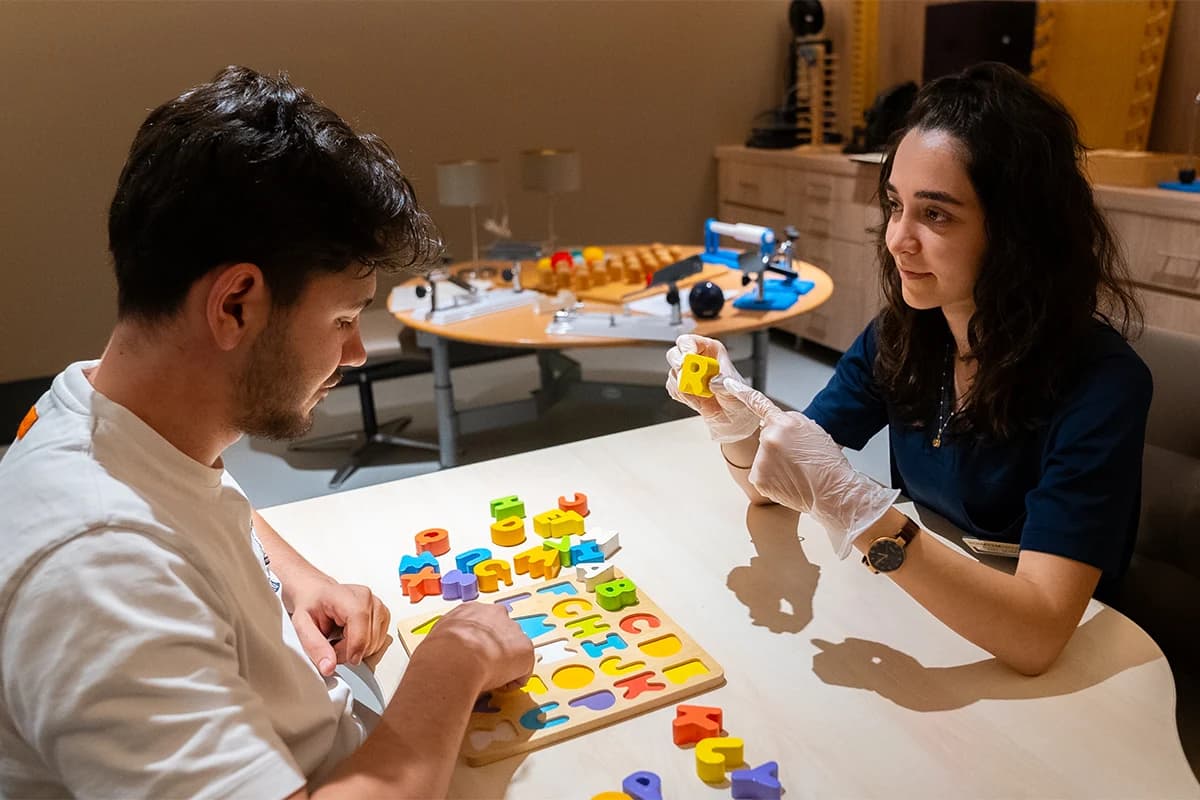
Attention, memory and planning are treated in the same programme, on the same days, by a team that talks to each other. Splitting them is common and it produces a person who can walk down a corridor but cannot remember why they set out.
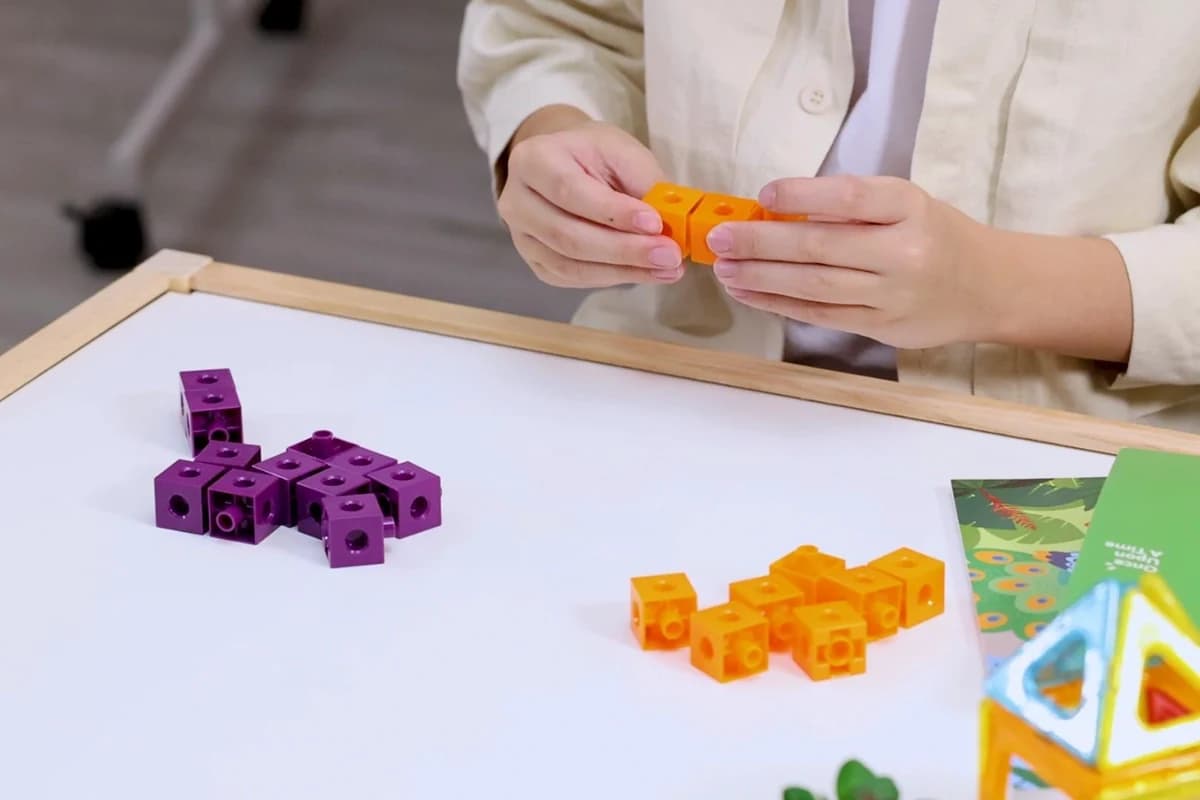
In practice this means the physiotherapy session doubles as attention training, and the occupational therapy session works on sequencing a real task — making a drink, managing medication — rather than on abstract exercises. Skills learned in context transfer better than skills learned at a desk.
Disorders of consciousness: why we reassess rather than accept a label
Some families arrive having been told their relative is in a vegetative state. That diagnosis is wrong more often than most people realise: in one widely cited study, when the diagnosis was made by clinical impression rather than a standardised assessment, 41 per cent of patients thought to be vegetative were in fact minimally conscious 4.
The reason is that awareness can be masked by everything else the injury has caused: the person cannot speak, cannot move reliably, cannot see well. A standardised, repeated assessment finds responses that a single bedside conversation does not.
So we reassess rather than inherit the label. What we cannot do is promise that reassessment changes the answer — in most cases it confirms it. It is a better diagnosis, not a treatment, and we will not let it be sold as hope.
The recovery timeline is longer than for stroke
Meaningful change continues for longer after brain injury than after stroke: follow-up studies of survivors five to ten years after injury still find more improvement than decline 6. This changes what a four to eight week programme is for. It is not the whole recovery; it is an intensive block inside a longer process, designed to be repeated.
It also changes how goals are set. A goal that is out of reach this month may be reasonable next year, and saying so is more useful than either false optimism or premature closure.
The family notices the change before any test does
Relatives are usually the first to detect that someone is more alert, more able to follow a conversation, or more irritable than yesterday. In brain injury this is not sentiment — it is clinically useful information, and it is collected rather than politely acknowledged.
The companion is also the person who will manage the routine at home: the memory aids, the fatigue limits, the structure of the day. They are trained during the stay rather than briefed at the end of it.
What the programme covers
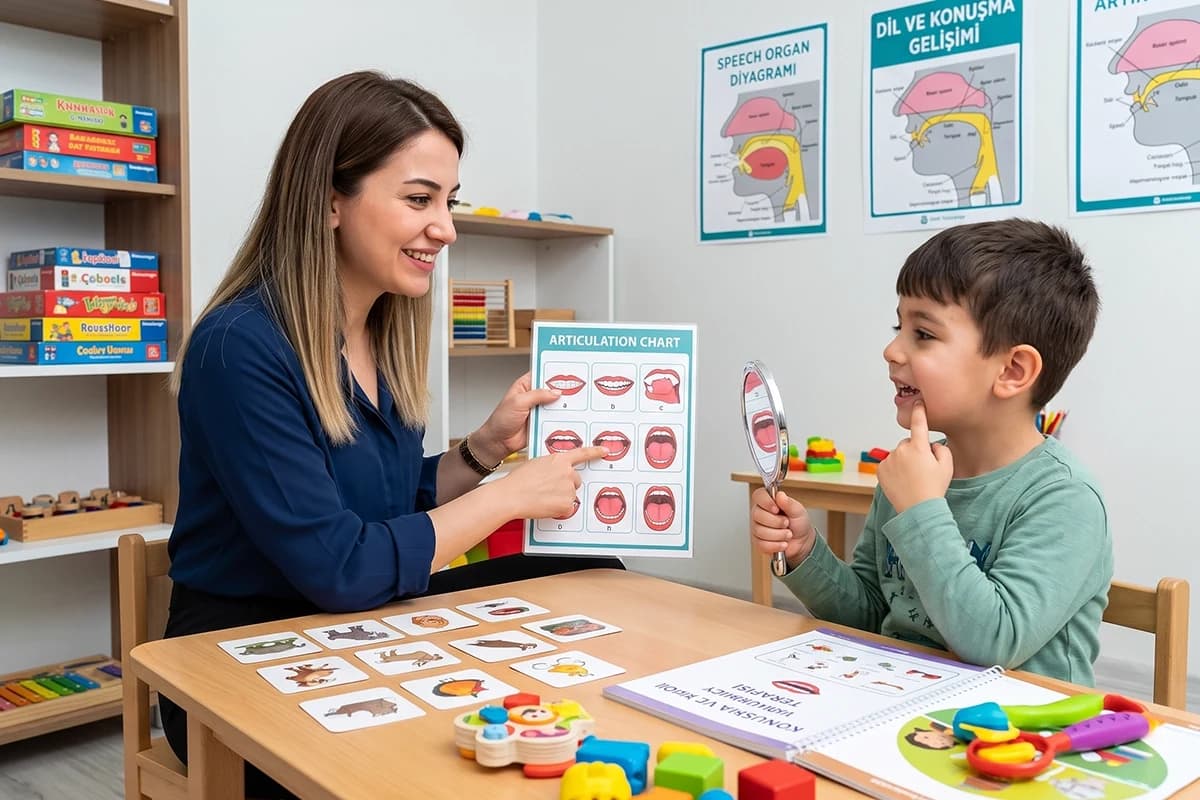
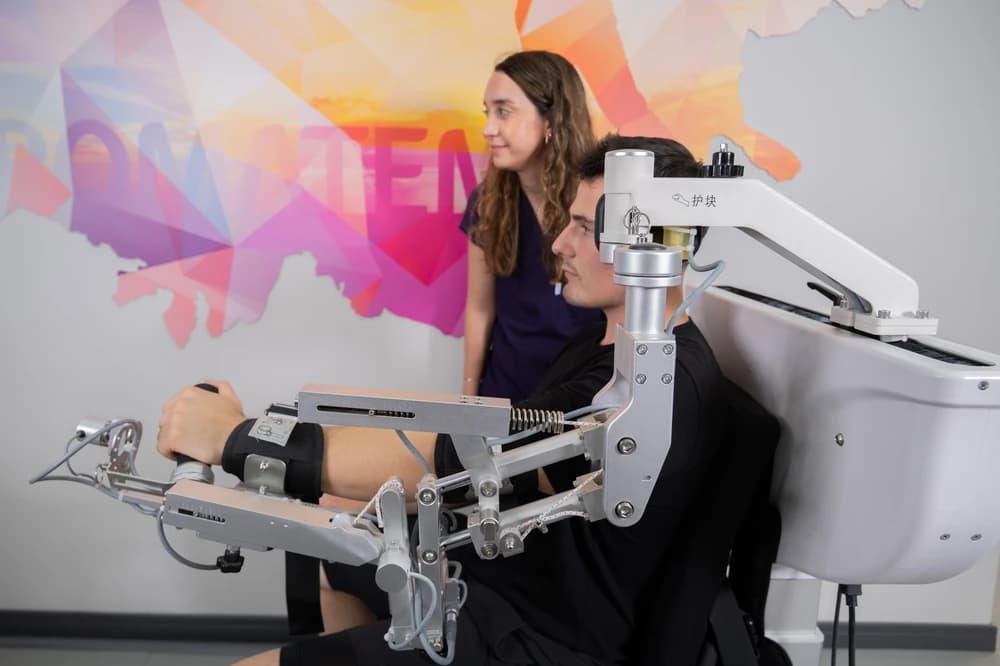
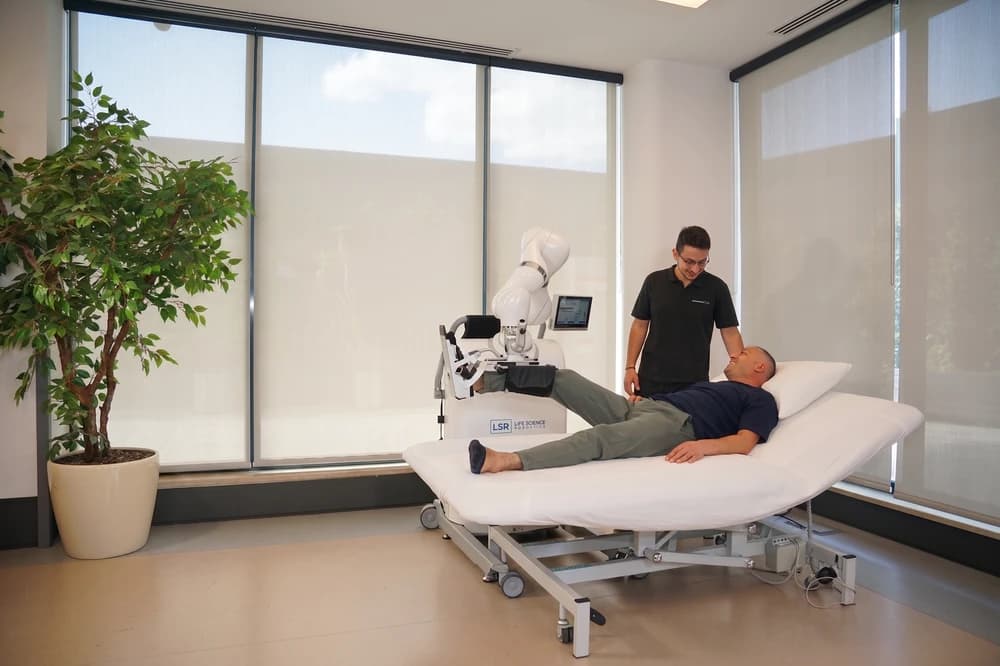
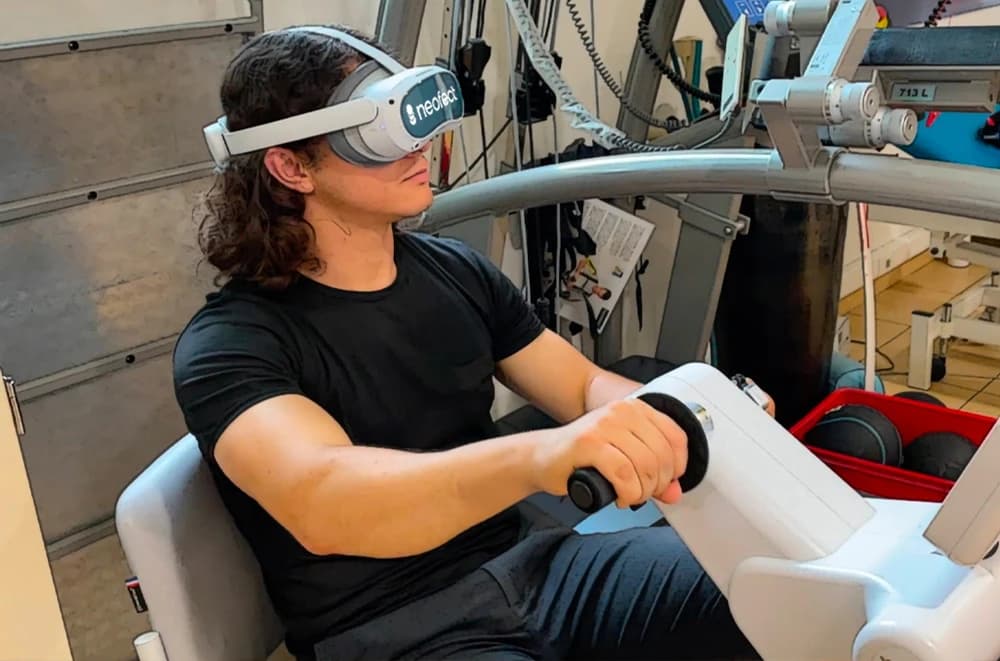
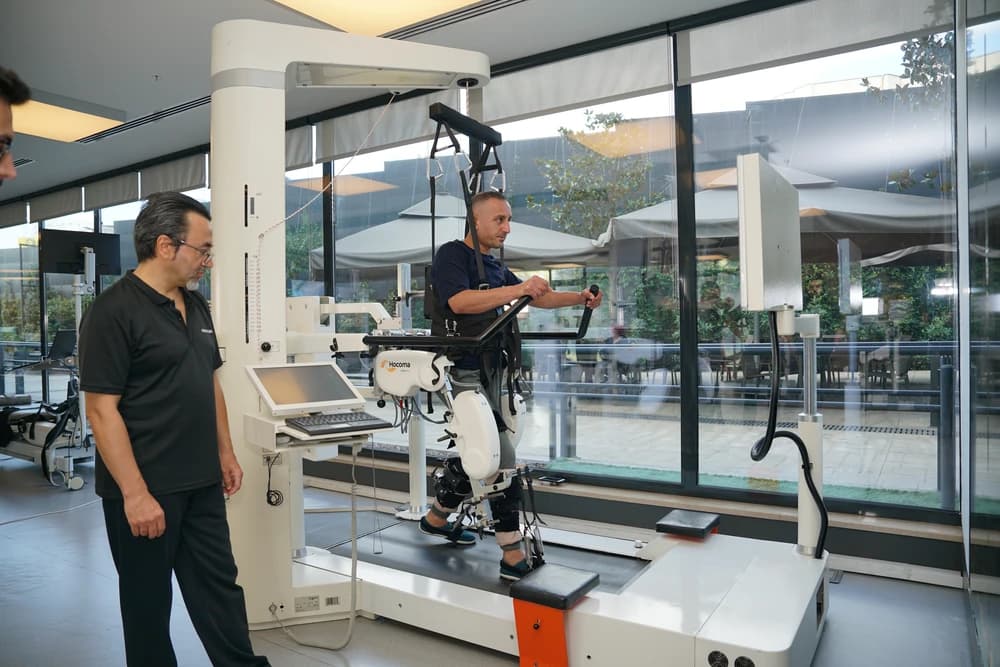
Four to eight weeks as an inpatient, four to six hours of active therapy a day. Physiotherapy for balance, walking and arm function; occupational therapy for daily tasks and the cognitive work embedded in them; speech and language therapy where communication or swallowing is affected; and robotic or virtual-reality sessions where they fit the plan.
Fatigue is planned for rather than pushed through. After brain injury it is a symptom, not a lack of effort, and a schedule that ignores it produces worse outcomes than a lighter schedule that respects it.
Understanding Traumatic Brain Injury
Before treatment, the questions people actually ask first — what happens, how recovery behaves over time, and whether it is ever too late. Each opens the full article.
- Understanding traumatic brain injuryWhat happens after the injury, why the fatigue is not ordinary tiredness, and what the consciousness terms mean.
- How we treat brain injuryOne team, one plan, and cognitive work built into the physical session rather than bolted onto it.
- What to expectFrom the records arriving to the home programme starting — including the phase nobody warns families about.
- Questions families askThe questions that come up in the first conversation.
Frequently asked questions
How much recovery is possible?
The strongest single predictor available is how long post-traumatic amnesia lasted. Beyond that, age, the type of injury and what function is present at the start of rehabilitation all matter. A rehabilitation physician can be specific once the records are available, and vague before then.
My relative is awake but does not remember anything. Is that permanent?
Usually not. That is post-traumatic amnesia and in most people it resolves. Continuous memory returns as it clears. What is left afterwards varies, and the length of the amnesia is the best guide to it.
He has become aggressive and he was never like that. Will he stay this way?
Agitation during post-traumatic amnesia is a stage of the injury and it usually settles. It is managed with a quiet, consistent environment rather than by sedation where that can be avoided. It is distressing to watch and it is not a new personality.
We were told it is a vegetative state. Is a second opinion worth it?
It can be. In one widely cited study, when the diagnosis was made by clinical impression rather than a standardised repeated assessment, 41 per cent of patients thought to be vegetative were in fact minimally conscious 4. We will reassess with a standardised scale. In most cases it confirms the original answer, and we will tell you that plainly rather than keeping hope open to keep you here.
Why does the programme include cognitive therapy when the problem looks physical?
Because after brain injury the cognitive problem is usually the one that decides whether someone returns to work, school or independent living. Walking matters and it is rarely the limiting factor.
Is four to eight weeks enough?
No, and nobody honest will tell you otherwise. Recovery after brain injury can continue for years — follow-up studies of survivors five to ten years after injury still find more improvement than decline 6. The stay is an intensive block within that, designed to be repeated after a period of work at home.
What do you need from us before you can answer?
Imaging, the discharge summary from the acute hospital, the duration of unconsciousness and of post-traumatic amnesia if it was recorded, and a description of what the person can do now — communication, walking, feeding, attention span. With those a physician can be specific.
Can a companion stay?
Yes, and in brain injury it matters more than in most conditions. A bed for one companion is provided in the patient's room, and the companion is trained in the routines that will hold the recovery together at home.
What happens after discharge?
You leave with a written home programme, a discharge document intended for clinicians in your own country, and a realistic statement of what to expect over the following months. Remote follow-up is available, and a second block after several months is common rather than exceptional.
Sources
- INCOG 2.0 Guidelines for Cognitive Rehabilitation Following Traumatic Brain Injury, Part I: Posttraumatic Amnesia — Journal of Head Trauma Rehabilitation (2023)
- Practice Guideline Update: Disorders of Consciousness — American Academy of Neurology (2018)
- The misdiagnosis of prolonged disorders of consciousness by clinical consensus compared with repeated Coma Recovery Scale–Revised assessment — BMC Neurology (2020)
- Diagnostic accuracy of the vegetative and minimally conscious state: clinical consensus versus standardized neurobehavioral assessment — BMC Neurology (2009)
- Utility of post-traumatic amnesia in predicting 1-year productivity following traumatic brain injury: comparison of the Russell and Mississippi PTA classification intervals — Journal of Neurology, Neurosurgery & Psychiatry (2011)
- Patterns of Functional Change Five to Ten Years after Moderate-Severe Traumatic Brain Injury — Journal of Neurotrauma (2021)
- Natural history of recovery and long-term outcome in critically ill patients with brain injury. — Current Opinion in Critical Care (2025)
Which therapies would I actually receive?
A therapy is a single method used inside a programme. It is measured in sessions and is not sold separately.


Technologies we use
Locations
Where you can receive this treatment



Related articles
 Neurological
When should rehabilitation start after a stroke?
Rehabilitation starts in the stroke unit, within days, as soon as the patient is medically stable. What the evidence cautions against is very high-dose out-of-bed activity in the earliest hours after stroke. The practical question for families is not whether to start early but what the programme delivers once it has started.Read moreCognitive Can memory and attention improve after a brain injury?
Yes, though not usually by restoring the damaged function itself. The approaches with the strongest evidence teach strategies and train attention in the tasks that matter, so the person manages daily life better even where the underlying memory has changed permanently. That distinction shapes the whole programme.Read moreNeurological What are the stages of recovery after a traumatic brain injury?
Recovery after a moderate or severe traumatic brain injury often moves through stages: reduced consciousness, a period of confusion called post-traumatic amnesia, active rehabilitation, and return to home and community life. People move through these stages at different speeds, and the length of post-traumatic amnesia is one of the most useful guides to severity.Read more



