
Inpatient
Inpatient neurological rehabilitation
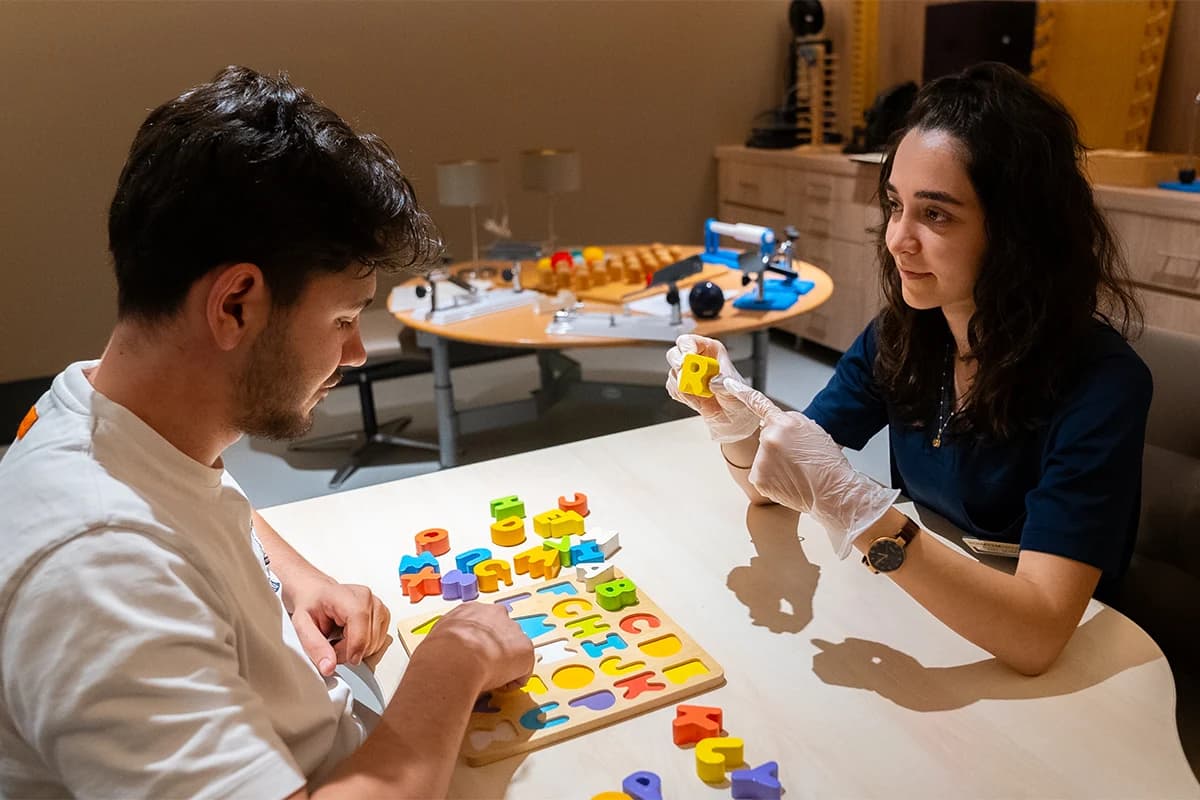
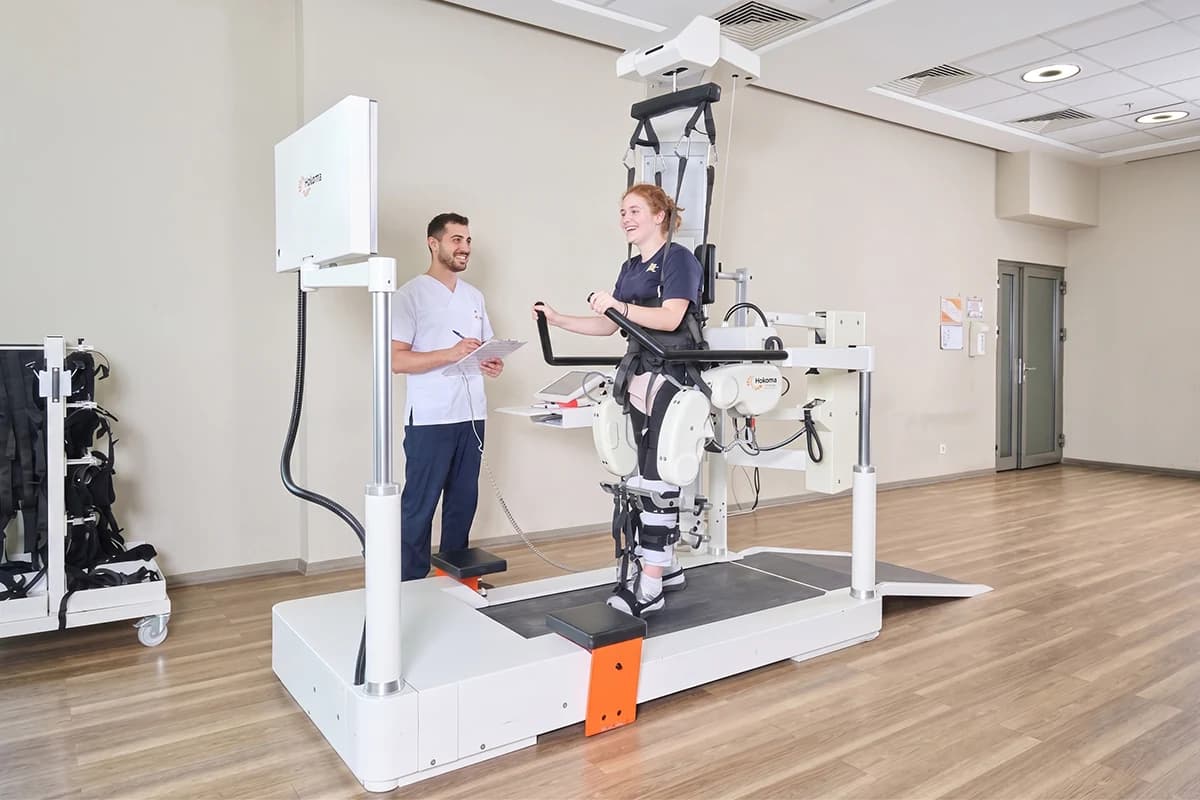
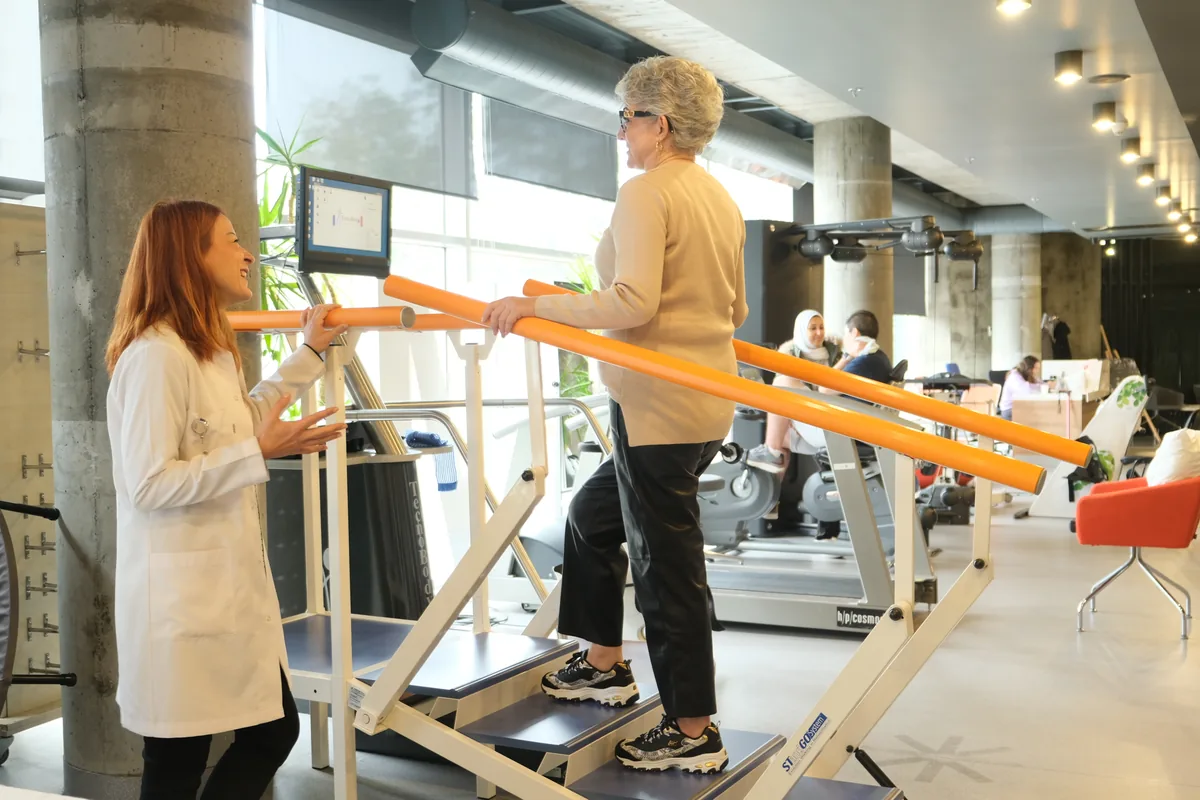
A residential programme for recovery after stroke, brain injury or spinal cord injury. Physiotherapy, occupational therapy, speech therapy and robotic training run under one plan, four to six hours a day. A physician in physical medicine and rehabilitation leads the case, and ward nursing is rehabilitation-trained so the day reinforces the therapy.
What a day looks like
Three to five therapy sessions a day, five to six days a week, each 45 to 60 minutes: physiotherapy, occupational therapy, speech and language therapy where needed, and robotic or technology-assisted sessions. Between sessions there is a structured programme of independent practice on the ward rather than unfilled time.
A physician in physical medicine and rehabilitation leads the case and reviews weekly. Nursing is rehabilitation-trained, which matters more than it sounds — how a patient is transferred, positioned and helped to dress on the ward either reinforces or undoes what happened in therapy.
Who this is for
Patients after stroke, traumatic brain injury, spinal cord injury, or in the recovery phase of other neurological conditions, who need daily multidisciplinary therapy and are not yet safe or independent enough to travel to appointments.
It requires medical stability, sufficient endurance to tolerate several sessions a day, and enough alertness to participate. Patients who do not yet meet the endurance requirement start at a lower intensity and build, rather than being turned away.
How goals are set and progress measured
Goals are agreed with the patient and family in the first week and written down in concrete terms — walking a stated distance, transferring independently, managing a specific daily task. Vague goals produce vague programmes.
Standardised measures are recorded at admission, at review points and at discharge. You receive those numbers, not a narrative. If a goal was not met, the discharge report says so and explains why.
What happens at discharge
A written home programme, equipment recommendations, and a clear statement of what to continue, for how long, and what should be reassessed. For international patients this includes what can be sourced in your own country and what you should take with you.
Remote follow-up is arranged before you leave rather than offered afterwards. After a moderate to severe brain injury, there is moderate-strength evidence that therapy continued after discharge helps to hold on to the gains of early rehabilitation 2.
What the companion is asked to do
For most patients on this programme a companion is required rather than suggested. They are trained in transfers and handling, shown the home programme and asked to practise it under supervision, and taught when not to help — because a person assisted with everything they can nearly do stops being able to do it.
They are not in therapy sessions as a rule; sessions go better without an audience. They are brought in for the parts they need to learn and for the family training blocks.
If the programme has to change
The plan written before arrival is a proposal based on records. The assessment on day one is what settles it, and where the two differ we say so immediately rather than proceeding with a plan we no longer believe in.
Length can be extended where progress justifies it and shortened where a plateau is genuine. Both are discussed with a reason attached, not presented as a fixed package.
Does more therapy each day mean a better recovery?
Not automatically. A Cochrane review of 21 trials with 1,412 people after stroke found that adding more time to the same type of rehabilitation made little or no difference to daily activities, with a small benefit for movement impairment; the certainty of that evidence was low to very low 1. Trials in which the extra time was large showed greater benefit, but there is not yet enough evidence to set a minimum daily amount 1.
After moderate to severe brain injury in adults of working age, the picture is clearer: a Cochrane review of 19 studies with 3,480 people found strong evidence that more intensive programmes bring functional gains sooner 2. Hours matter, then, but so does what fills them, which is why the timetable is built around the patient's goals and what they can sustain.
Sources
- Clark B, Whitall J, Kwakkel G, Mehrholz J, et al. The effect of time spent in rehabilitation on activity limitation and impairment after stroke — Cochrane Database of Systematic Reviews (2021)
- Turner-Stokes L, Pick A, Nair A, Disler PB, et al. Multi-disciplinary rehabilitation for acquired brain injury in adults of working age — Cochrane Database of Systematic Reviews (2015)
Conditions this programme treats
The 4 conditions this programme is built for, grouped by area.

The programme is chosen after a rehabilitation physician has read your records — not from this page.
Your path to this treatment
Nothing here is booked from a page. You send the records you have, a rehabilitation physician reads them, and you get a written answer — including when the answer is that an intensive programme will not help.
4 steps, start to finish
1.Send your records
A discharge summary from the hospital that treated the original event, and any imaging of the affected area — CT, MRI or X-ray.2.A written plan in 48 hours
A rehabilitation physician reviews the case and returns the expected duration, the recommended programme and the centre. Free, no obligation.3.Travel and admission
Where a visa is needed we issue an invitation letter and treatment confirmation naming the dates and the facility. You are met at the airport and driven to the centre by private vehicle or ambulance; a bed for one companion and interpreting during therapy are arranged.4.Treatment, then home
The programme runs, then you leave with a discharge report and a written home exercise plan. Your return journey is organised before you go, with scheduled video reviews so progress does not stop.
In their words
What patients say after a programme
Short videos filmed during therapy: a child’s rehabilitation after a brain tumour, suspended gait training after spinal cord injury, and learning to walk again after a fall. Individual results vary.
Dave Evans on his physical therapy here
Musculoskeletal physiotherapy
Paediatric rehabilitation after a brain tumour
Inside a physiotherapy session
Spinal cord injury — the rehabilitation process
Suspension-assisted gait training
Walking difficulty and restricted movement after a fall
Regaining gait and range of motion
Locations
Where this programme runs — pick a centre.





Questions people actually ask
About this programme
How soon after a stroke can this start?
As soon as the patient is medically stable and can tolerate several hours of therapy a day. Earlier is generally better, but stability comes first and we will say when someone is not yet ready.
Is a companion compulsory?
For most neurological programmes, yes. Beyond the practical help outside therapy hours, the companion is the person who will deliver the home programme for the rest of the year.
What if the patient cannot manage four to six hours?
Then the day is built to what they can tolerate and increased as endurance improves. Fatigue is a starting point rather than a barrier, and forcing a full timetable onto someone who cannot sustain it produces poor-quality repetitions.
What happens if there is a medical problem during the stay?
Internal medicine cover is on site for problems that can be handled in the building. Escalation to acute hospital care is arranged where needed; ask before booking how such an admission is handled in your plan.
What do we take home at the end?
A discharge document with the admission and discharge measurements named by instrument, the written home programme, and the follow-up schedule. That document is what a clinician in your own country needs.



