
Neurological and cognitive
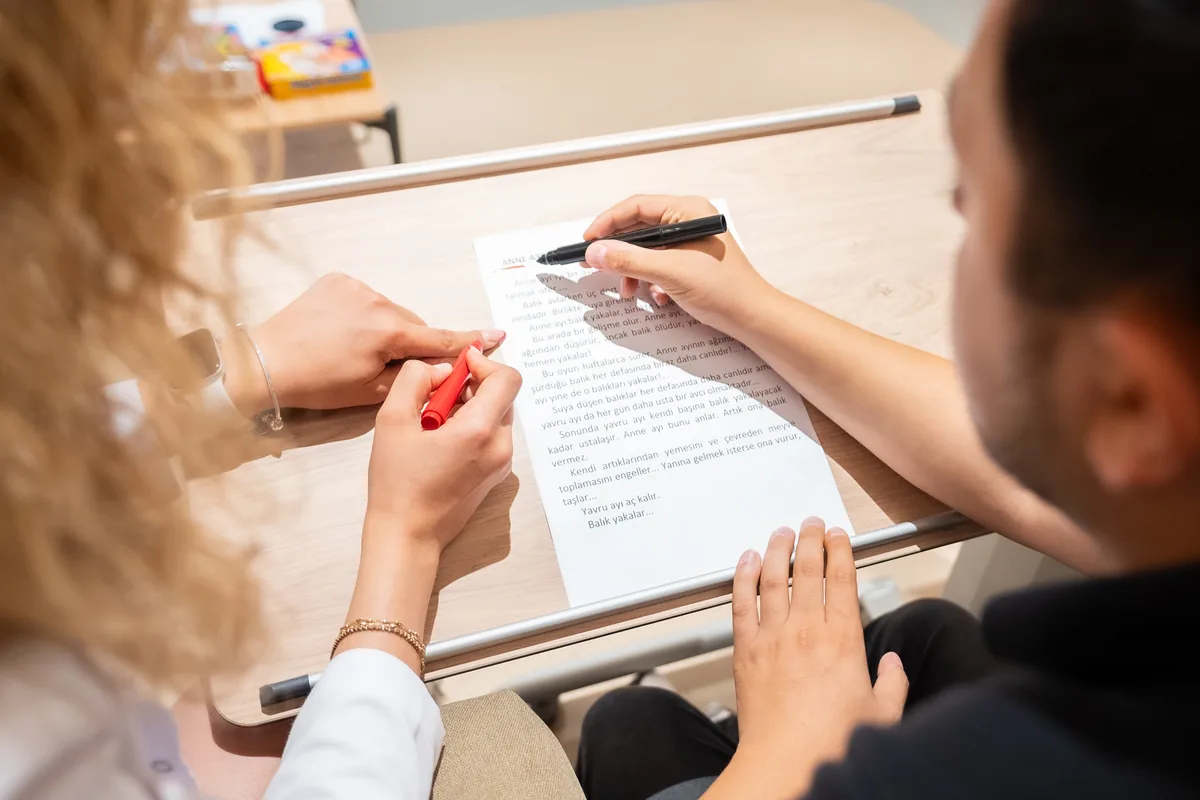
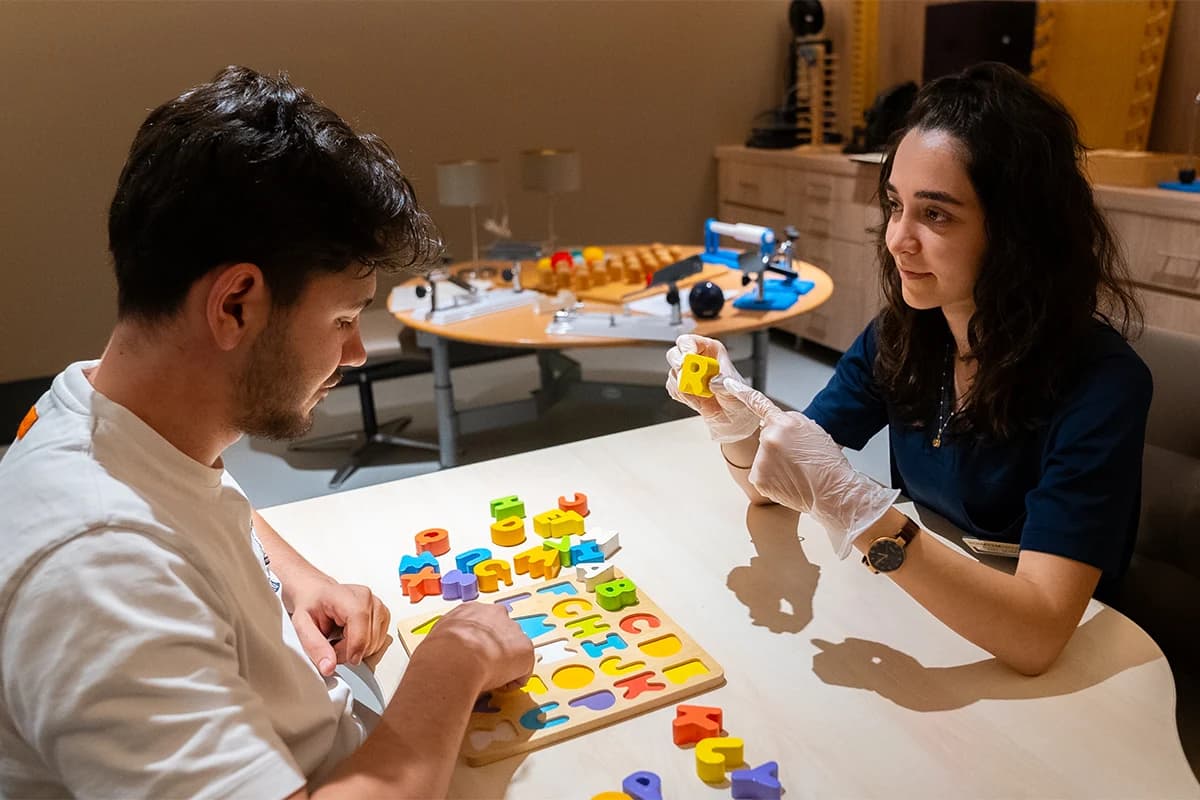
Cognitive rehabilitation
Structured training of attention, memory and planning after brain injury or stroke, combined with strategies that compensate for what does not fully return. These difficulties decide return to work more often than physical impairment does, and compensation — diaries, phone systems, routines — delivers most of the real-world benefit.
Thinking, treated as systematically as movement
After brain injury or stroke, attention, memory, planning, processing speed and insight can all be affected. These difficulties determine whether someone returns to work and manages independently far more often than physical impairment does, and they are far less often treated.
Cognitive rehabilitation works in two ways: restorative training of the underlying function, and compensatory strategies that work around it. In practice, compensation delivers most of the real-world benefit.
What is treated
Attention and concentration. Memory, principally through external strategies — structured diaries, phone systems, routines — because these work better than internal memory training. Executive function: planning, sequencing, problem-solving and self-monitoring. Processing speed. Visual neglect after right hemisphere stroke. Awareness of one's own difficulties, which is itself frequently impaired and is the hardest to treat.
Fatigue management sits alongside all of it, because cognitive performance after brain injury collapses with fatigue and is often mistaken for a fixed deficit.
Where the evidence is strongest
Attention training after traumatic brain injury, compensatory memory strategies, and structured problem-solving training for executive difficulty have reasonable support 1. Neglect rehabilitation has moderate support.
Computerised brain training programmes largely improve performance on the trained games and transfer poorly to daily life 2. They can be one component, never the programme.
Why it must be done in real contexts
Improvement on clinic tasks transfers poorly to a workplace or a household. Training has to happen in, or closely simulate, the environment where the skill is needed.
That means practising with the patient's own diary, their own kitchen, their own work tasks — and involving family, because the strategies only survive if the people around the patient understand and support them.
Restoring and compensating, in the right proportion
Some functions recover with training; others are better managed with strategies and external aids. A programme built entirely on drills ignores the second half, and one built entirely on compensation gives up on the first too early.
Which balance is right depends on the injury, the time since it and what the person needs to do. It is set at assessment and revisited.
Why computer exercises alone are not enough
Improvement on a task tends to stay on that task. Gains from repeated computerised training frequently do not transfer to daily activities, which is the outcome that matters 2.
So training is embedded in real contexts — managing appointments, following a recipe, planning a journey — and the family is taught the strategies too.
How are planning and problem-solving trained?
Mostly by teaching a routine for stopping and thinking before acting. In goal management training, for example, the person learns to pause, state the goal, break it into steps, carry them out and check the result against the goal — first on simple tasks, then on real ones such as cooking a meal or organising a day.
A meta-analysis of 19 treatment groups found small to moderate improvements in executive function, including on everyday tasks, usually maintained at follow-up — except in patients' and relatives' own ratings, where the gains did not last 3. The routine helps only if it is used outside the session, which is why it is practised on the person's own tasks and taught to the family.
Sources
- Cicerone KD, Goldin Y, Ganci K, Rosenbaum A, et al. Evidence-based cognitive rehabilitation: systematic review of the literature from 2009 through 2014 — Archives of Physical Medicine and Rehabilitation (2019)
- Simons DJ, Boot WR, Charness N, Gathercole SE, et al. Do “brain-training” programs work? — Psychological Science in the Public Interest (2016)
- Stamenova V, Levine B. Effectiveness of goal management training in improving executive functions: a meta-analysis — Neuropsychological Rehabilitation (2019)
- Cicerone KD, Mott T, Azulay J, Sharlow-Galella MA, et al. A randomized controlled trial of holistic neuropsychologic rehabilitation after traumatic brain injury — Archives of Physical Medicine and Rehabilitation (2008)
Conditions this is used for
The 10 conditions where this method is part of a routine programme, grouped by area. It is never the whole plan on its own.


Methods are combined inside a programme and chosen after examination — they are not booked separately.
Your path to this treatment
Nothing here is booked from a page. You send the records you have, a rehabilitation physician reads them, and you get a written answer — including when the answer is that an intensive programme will not help.
4 steps, start to finish
1.Send your records
A discharge summary from the hospital that treated the original event, and any imaging of the affected area — CT, MRI or X-ray.2.A written plan in 48 hours
A rehabilitation physician reviews the case and returns the expected duration, the recommended programme and the centre. Free, no obligation.3.Travel and admission
Where a visa is needed we issue an invitation letter and treatment confirmation naming the dates and the facility. You are met at the airport and driven to the centre by private vehicle or ambulance; a bed for one companion and interpreting during therapy are arranged.4.Treatment, then home
The programme runs, then you leave with a discharge report and a written home exercise plan. Your return journey is organised before you go, with scheduled video reviews so progress does not stop.
In their words
What patients say after a programme
Short videos filmed during therapy: a child’s rehabilitation after a brain tumour, suspended gait training after spinal cord injury, and learning to walk again after a fall. Individual results vary.
Dave Evans on his physical therapy here
Musculoskeletal physiotherapy
Paediatric rehabilitation after a brain tumour
Inside a physiotherapy session
Spinal cord injury — the rehabilitation process
Suspension-assisted gait training
Walking difficulty and restricted movement after a fall
Regaining gait and range of motion
Locations
Our centres











Questions people actually ask
About this treatment
Do brain training apps work?
They improve performance on the trained task. Transfer to everyday function is limited, which is why they are not the programme 2.
How long after a brain injury can this help?
Cognitive rehabilitation can still help after the first year: in a randomised trial in which more than half the participants were over a year past a traumatic brain injury, intensive cognitive rehabilitation improved community integration and quality of life more than standard rehabilitation did 4. Recovery slows but does not stop at a fixed point.
What is actually treated?
Attention, memory, planning and organisation, processing speed, and awareness of deficit — the last being both the hardest and the most important where it is affected.
Is it different from psychological therapy?
Yes. It addresses thinking processes rather than mood, though the two interact and both are often needed. Distinguishing them requires assessment.
How is progress measured?
With standardised cognitive assessment repeated over time, and by whether the specific real-world tasks the person identified have become manageable.



