

Medical condition
Cancer
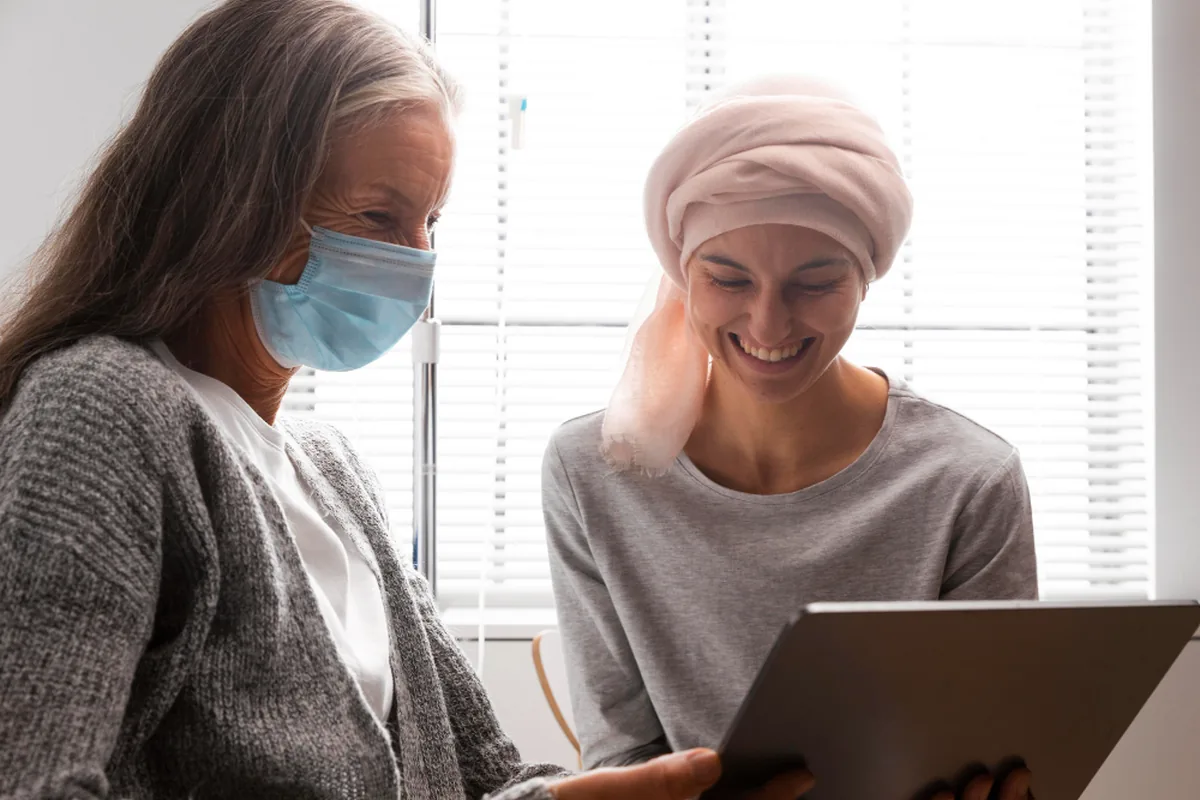
Cancer rehabilitation treats what the disease and its treatment leave behind: fatigue, loss of strength, reduced fitness, nerve damage from chemotherapy and swelling. Exercise is the most effective treatment for cancer-related fatigue, and it is safe during and after treatment when it is prescribed rather than guessed.
What this treats, and what it does not
Cancer rehabilitation does not treat cancer. Chemotherapy, radiotherapy, surgery and immunotherapy belong to your oncology team, and nothing in this programme replaces, delays or interferes with them.
What it treats is what the disease and the treatment leave behind: exhaustion that sleep does not fix, muscle lost during months of treatment, reduced fitness, numb or painful hands and feet after chemotherapy, restricted shoulder movement after breast surgery, swelling, and the loss of confidence that comes with all of it.
These are often dismissed as the price of survival. Most of them are treatable, and several respond better to exercise than to anything else available.
The advice to rest was wrong, and it is still being given
For a long time people in cancer treatment were told to rest and conserve energy. That advice has been reversed by a substantial body of evidence, and the reversal has not reached every clinic or every patient.
International consensus guidance now holds that exercise improves physical fitness, physical function, quality of life and cancer-related fatigue, and that the general population activity targets are appropriate for most cancer survivors — around 150 minutes of aerobic activity a week, resistance training on two or more days, and daily stretching, adapted for treatment side effects 1.
Rest has its place during the worst days of a chemotherapy cycle. As a general instruction across months of treatment, it produces deconditioning that is then mistaken for the cancer.
Chemotherapy-induced neuropathy
Some chemotherapy agents damage peripheral nerves, leaving numbness, tingling, burning or clumsiness in the hands and feet. It affects balance, walking and fine tasks like buttons and keys, and it is frequently under-treated because it is regarded as permanent.
It often improves slowly over months, and balance training, strengthening and task practice improve function even where the sensation itself does not fully return. Falls risk rises when the feet cannot feel the floor, so balance work is part of the programme rather than an optional extra.
Bone metastases do not rule out exercise
Many patients with bone metastases are told to avoid activity entirely. Expert consensus does not support that: the standard exercise recommendations continue to apply, with greater emphasis on postural alignment, controlled movement and correct technique, and with the programme adapted to the location and behaviour of the lesions.
What changes is how, not whether. Loading is chosen carefully, high-impact and heavy axial loading are avoided where the lesion makes that unwise, and safe movement patterns for daily activities — how to get out of bed, how to lift, how to turn — are taught to everyone.
This requires the imaging and the oncology team's input before the programme starts, which is why we ask for both.
After breast cancer surgery
Shoulder movement, chest wall tightness, cording and scar restriction are common after breast surgery and radiotherapy, and they respond well to targeted therapy. Left alone, restricted shoulder movement becomes a long-term problem in its own right.
Where lymphoedema is present or the arm is at risk, it is managed through the lymphoedema programme, which is a separate and more specialised pathway.
What is monitored, and when we stop
Sessions are monitored for joint pain, unusual fatigue, dizziness, palpitations, muscle pain or weakness, breathlessness and any incontinence with movement. Exercise tolerance is reassessed continually rather than fixed at the start — because it genuinely changes week to week during treatment.
Blood counts matter: sessions are adapted around low haemoglobin, low platelets and neutropenia rather than pushed through them. We ask for recent results and we ask again during the block.
What the programme covers
Three to six weeks, two to four hours a day — shorter than the neurological programmes because fatigue governs the schedule. Prescribed aerobic and resistance training, balance work where neuropathy is present, shoulder and scar work after surgery, aquatic sessions, breathing work, and dietitian assessment where weight or muscle loss is a concern.
The programme is coordinated with your oncology treatment schedule rather than around ours, and the discharge document goes back to your oncology team.
Understanding Cancer
Before treatment, the questions people actually ask first — what happens, how recovery behaves over time, and whether it is ever too late. Each opens the full article.
Frequently asked questions
Is exercise safe while I am still having chemotherapy?
For most people, yes, and it is beneficial. International consensus guidance supports exercise during treatment, with the programme adapted to side effects and blood counts. It is prescribed and monitored rather than left to you to judge, and it is adjusted around the difficult days of each cycle.
I am exhausted. Surely I should be resting?
This is the hardest thing to accept and the most important. Cancer-related fatigue is the symptom that responds best to exercise — better than to any drug — and rest deepens it. The programme starts gently and builds; it does not ask you to push through a bad day.
I have bone metastases. Am I allowed to exercise?
Almost certainly yes, with adaptation. Expert consensus keeps the standard recommendations in place with more attention to posture, control and technique, adapted to where the lesions are. We need the imaging and your oncologist's input before starting, and safe movement training is included for everyone in this situation.
Will this interfere with my cancer treatment?
No. The programme is scheduled around your treatment and never instead of it. If your oncology team wants something changed, they decide and we adapt.
My hands and feet are numb since chemotherapy. Can that be treated?
Function can be improved even when the sensation itself recovers slowly or incompletely. Balance training, strengthening and task practice reduce falls risk and restore practical use of the hands. It is treated here rather than accepted as permanent.
When should I come — during treatment or after?
Both are legitimate. During treatment the aim is to limit the loss of fitness and function; afterwards it is to rebuild. Where surgery is planned, preparing beforehand is also worthwhile. Tell us where you are in the pathway and the reply will address timing.
I have swelling in my arm after breast surgery.
That is lymphoedema and it has its own specialised programme rather than being handled inside a general cancer block. See the lymphoedema page; the assessment and the treatment are different.
Can a companion come?
Yes. A bed for one companion is provided in the patient's room, and where fatigue is significant the companion is trained in the home programme so that it continues after discharge.
What do you need from me before you can answer?
Your diagnosis and stage, current and planned treatment with dates, recent blood counts, imaging if there are bone metastases, surgical history, and your main functional difficulties. Your oncologist's contact details are useful too.
Sources
- Exercise Guidelines for Cancer Survivors: Consensus Statement from International Multidisciplinary Roundtable — Medicine & Science in Sports & Exercise (American College of Sports Medicine) (2019)
- Exercise Recommendation for People With Bone Metastases: Expert Consensus for Health Care Providers and Exercise Professionals — JCO Oncology Practice (2022)
- Translating 2019 ACSM Cancer Exercise Recommendations for a Physiatric Practice: Derived Recommendations from an International Expert Panel — PM&R (2022)
Which therapies would I actually receive?
A therapy is a single method used inside a programme. It is measured in sessions and is not sold separately.


Technologies we use


Locations
Where you can receive this treatment




Related articles
Lymphoedema and lipoedema How likely is lymphoedema after breast cancer, and can it be prevented?
Arm lymphoedema is a recognised risk after breast cancer treatment, with higher risk after removal of many lymph nodes and in people who are overweight. Keeping a healthy weight, gradually building strength and recognising early swelling help. Carefully progressed weight training did not increase lymphoedema risk in a randomised trial.Read moreOncologic Is it safe to exercise during chemotherapy?
For most people, yes. International cancer exercise guidelines conclude that exercise is generally safe during and after treatment and that everyone should avoid inactivity. Exercise can reduce fatigue, anxiety and depression and help maintain fitness. Programmes are adjusted around treatment cycles, blood counts and symptoms, and some situations need medical advice first.Read moreOncologic What helps cancer-related fatigue?
Exercise and psychological approaches have the strongest evidence for relieving cancer-related fatigue. A large meta-analysis found that exercise, psychological therapy and the combination reduced fatigue during and after treatment, while medicines did not significantly help. Pacing, sleep routines and treating causes such as anaemia also matter.Read more



