
Neurological and cognitive
Spasticity management
Reducing the involuntary muscle tightness that follows injury to the brain or spinal cord, using botulinum toxin, oral medication or intrathecal baclofen — always to open a window for therapy, never as the treatment itself. Not all spasticity should be reduced, because some people stand and transfer using that stiffness.
What spasticity is, and when it needs treating
After damage to the brain or spinal cord, muscles can become involuntarily tight — resisting movement more the faster you try to move them. It develops over weeks rather than immediately, and it is not the same as weakness, though the two usually appear together.
Not all spasticity should be reduced. Some people stand and transfer using the stiffness in their legs, and removing it leaves them less able, not more. Treatment is offered when tightness limits function, prevents washing or dressing, causes pain, or is pulling a joint towards a fixed contracture.
What is available, and what each is for
Botulinum toxin is injected into specific overactive muscles. It suits focal problems — a clenched hand, an inturned foot, a flexed elbow. Weakening begins within days, reaches full effect in one to three weeks, and wears off over roughly three months, at which point it can be repeated 1.
Oral medication such as baclofen or tizanidine acts on the whole body, which is why it suits widespread spasticity and why its main limitation is drowsiness. Intrathecal baclofen delivers the drug straight to the spinal cord through an implanted pump, giving a much smaller dose for much less sedation, and is considered when spasticity is severe and generalised. Serial casting and splinting are used where a joint is already losing range.
Why the injection is not the treatment
Botulinum toxin makes a muscle weaker. It does not teach a limb to move, lengthen a tendon that has already shortened, or restore a grip. What it does is create a period of several weeks in which stretching, splinting and functional training can achieve something they could not achieve against the tightness.
If that therapy is not arranged, the window closes unused and the injection is repeated indefinitely with nothing accumulating between rounds. We do not inject without the programme that follows it already scheduled.
How it is targeted and measured
Muscles are located with ultrasound or electrical stimulation rather than by surface landmarks alone. Which muscle is producing a given posture is often not obvious, and injecting the wrong one wastes both the dose and the three months that follow it.
Tone is scored with the Modified Ashworth Scale before treatment and again afterwards, alongside what actually changed — whether the hand opens for washing, whether the foot clears the floor when walking. A tone score that improves while nothing else does is not a result worth repeating.
What happens on injection day
The muscles are located with ultrasound or electrical stimulation, the toxin is injected, and the appointment takes under an hour. Most people notice nothing immediately.
Weakening begins within a few days, reaches full effect at one to three weeks, and wears off over roughly three months 1. The therapy block is scheduled into that window rather than left to chance.
What we tell families before the first injection
That this weakens muscles rather than restoring control, that the effect is temporary by design, and that repeating it indefinitely without therapy in between accumulates nothing.
And that some spasticity is useful — a person who stands using the stiffness in their legs may be less able after it is removed. That possibility is assessed before injecting rather than discovered afterwards.
Sources
- Injectable neuromuscular blockade in the treatment of spasticity and movement disorders — Journal of Child Neurology (2003)
Conditions this is used for
The 10 conditions where this method is part of a routine programme, grouped by area. It is never the whole plan on its own.
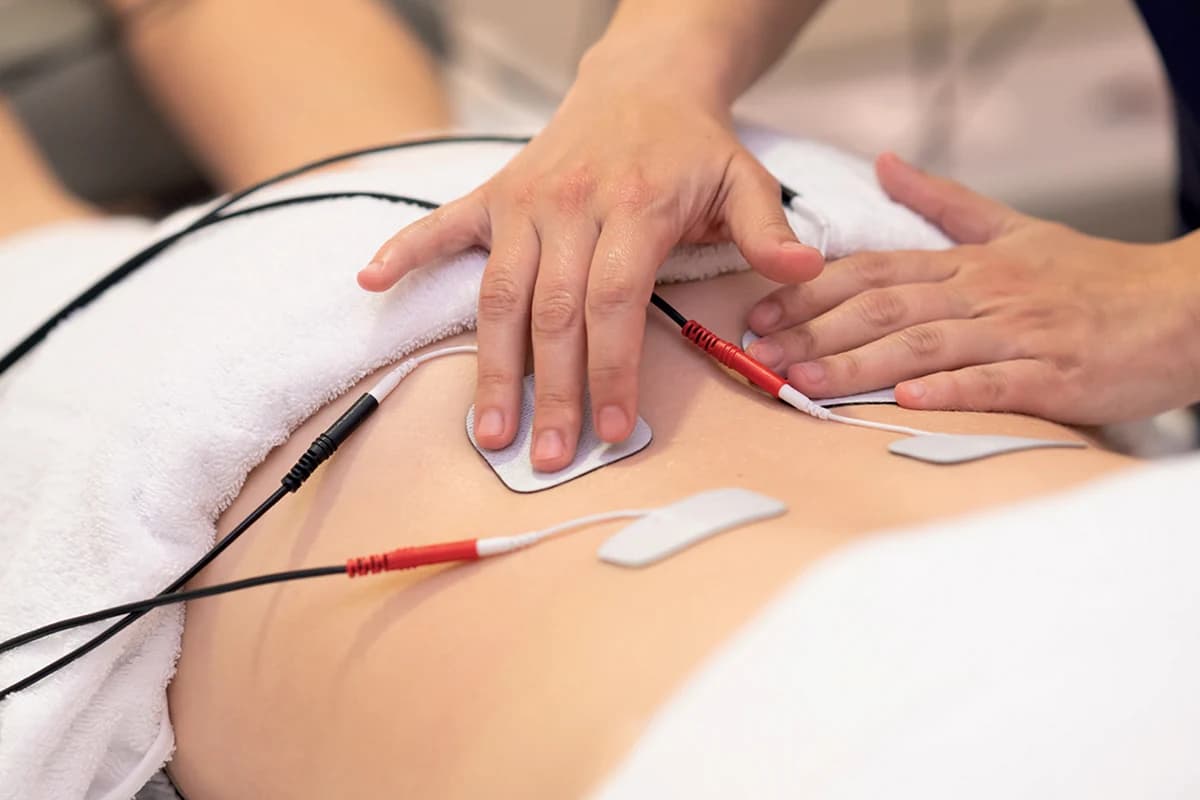


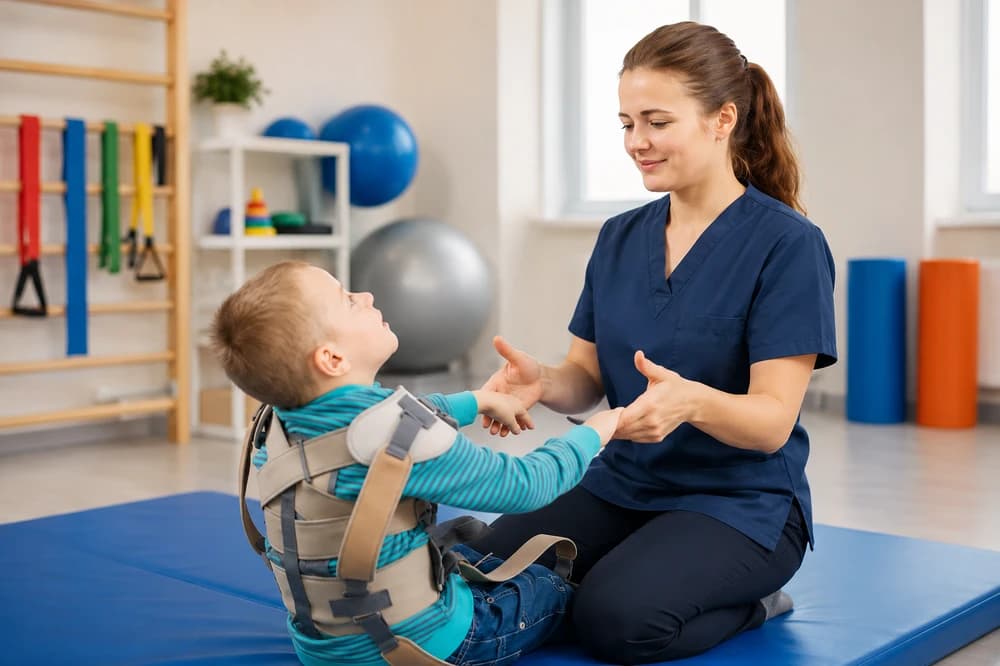
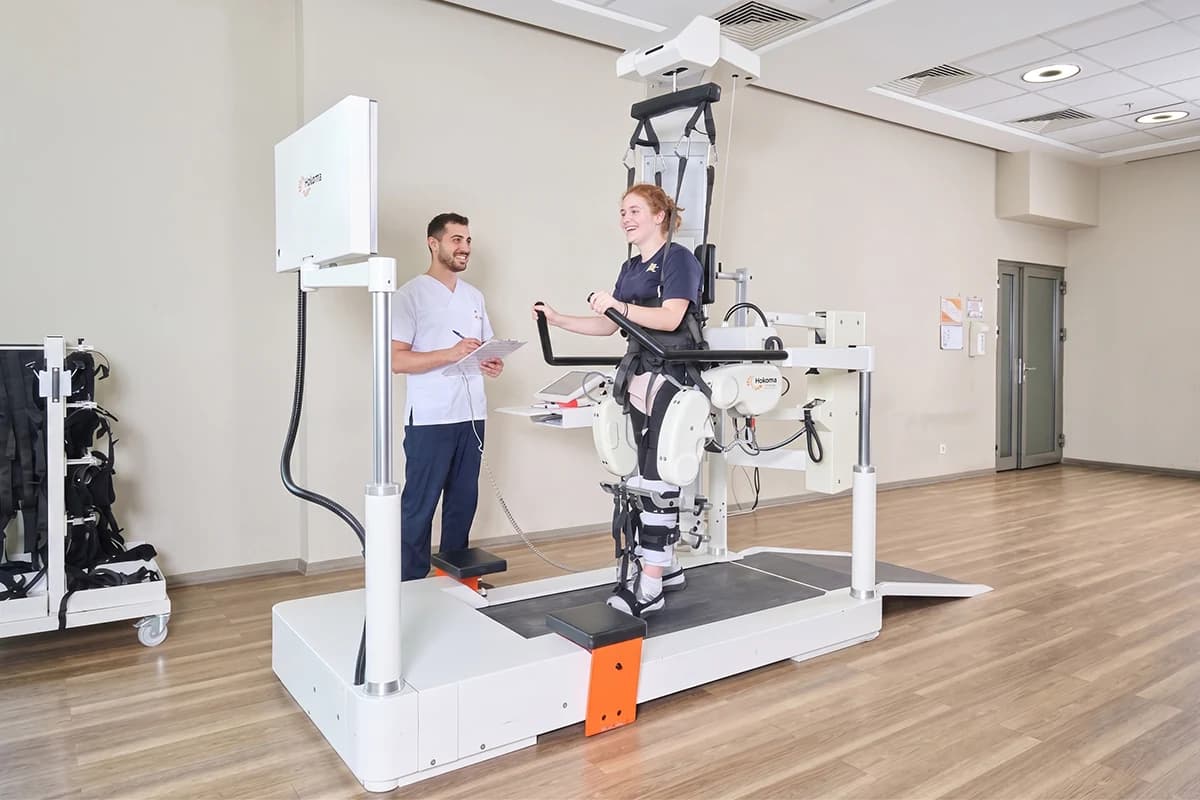

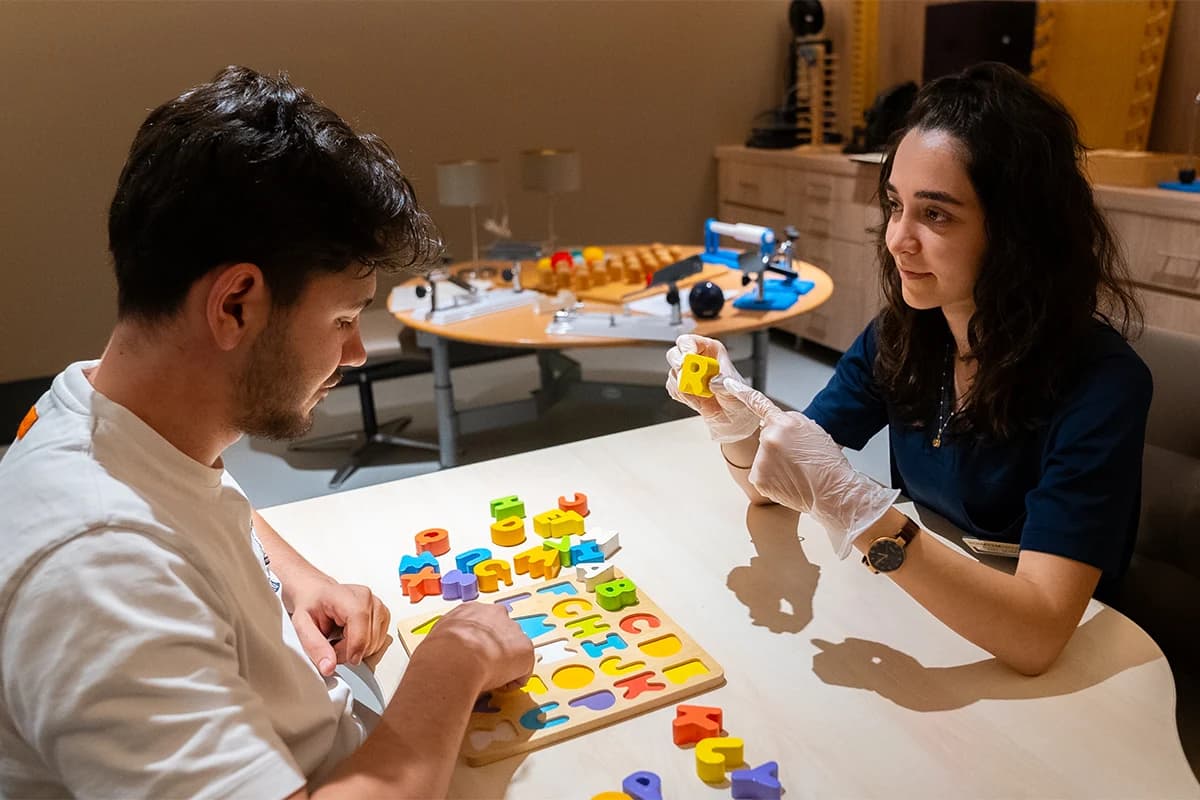
Methods are combined inside a programme and chosen after examination — they are not booked separately.
Your path to this treatment
Nothing here is booked from a page. You send the records you have, a rehabilitation physician reads them, and you get a written answer — including when the answer is that an intensive programme will not help.
4 steps, start to finish
1.Send your records
A discharge summary from the hospital that treated the original event, and any imaging of the affected area — CT, MRI or X-ray.2.A written plan in 48 hours
A rehabilitation physician reviews the case and returns the expected duration, the recommended programme and the centre. Free, no obligation.3.Travel and admission
Where a visa is needed we issue an invitation letter and treatment confirmation naming the dates and the facility. You are met at the airport and driven to the centre by private vehicle or ambulance; a bed for one companion and interpreting during therapy are arranged.4.Treatment, then home
The programme runs, then you leave with a discharge report and a written home exercise plan. Your return journey is organised before you go, with scheduled video reviews so progress does not stop.
In their words
What patients say after a programme
Short videos filmed during therapy: a child’s rehabilitation after a brain tumour, suspended gait training after spinal cord injury, and learning to walk again after a fall. Individual results vary.
Dave Evans on his physical therapy here
Musculoskeletal physiotherapy
Paediatric rehabilitation after a brain tumour
Inside a physiotherapy session
Spinal cord injury — the rehabilitation process
Suspension-assisted gait training
Walking difficulty and restricted movement after a fall
Regaining gait and range of motion
Locations
Our centres











Questions people actually ask
About this treatment
How often can botulinum toxin be repeated?
Typically no more often than every three months. Shorter intervals raise the risk of antibody formation, which reduces the response to future treatment.
Does the injection hurt?
Briefly, similar to any injection. In children, topical anaesthetic or sedation is used depending on age and the number of sites.
What if the toxin does not help?
Then either the wrong muscle was targeted, the problem is fixed contracture rather than spasticity, or the dose was insufficient. Each has a different answer, and reassessment comes before repeating.
Is oral medication better?
It suits widespread spasticity rather than focal, and its main limitation is drowsiness. Focal problems are better served by injection, which is why the pattern determines the choice.
What is an intrathecal baclofen pump?
An implanted device delivering the drug directly to the spinal cord, giving a much smaller dose with far less sedation. It is considered for severe generalised spasticity, usually of the legs.



