

Medical condition
Spasticity
Spasticity is treated as a movement problem, not only a muscle problem: positioning, stretching, robotic guided movement and where indicated injection therapy, combined so that reduced tone is converted into usable function. Tone is always measured alongside function, because some people rely on stiffness to stand and walk.
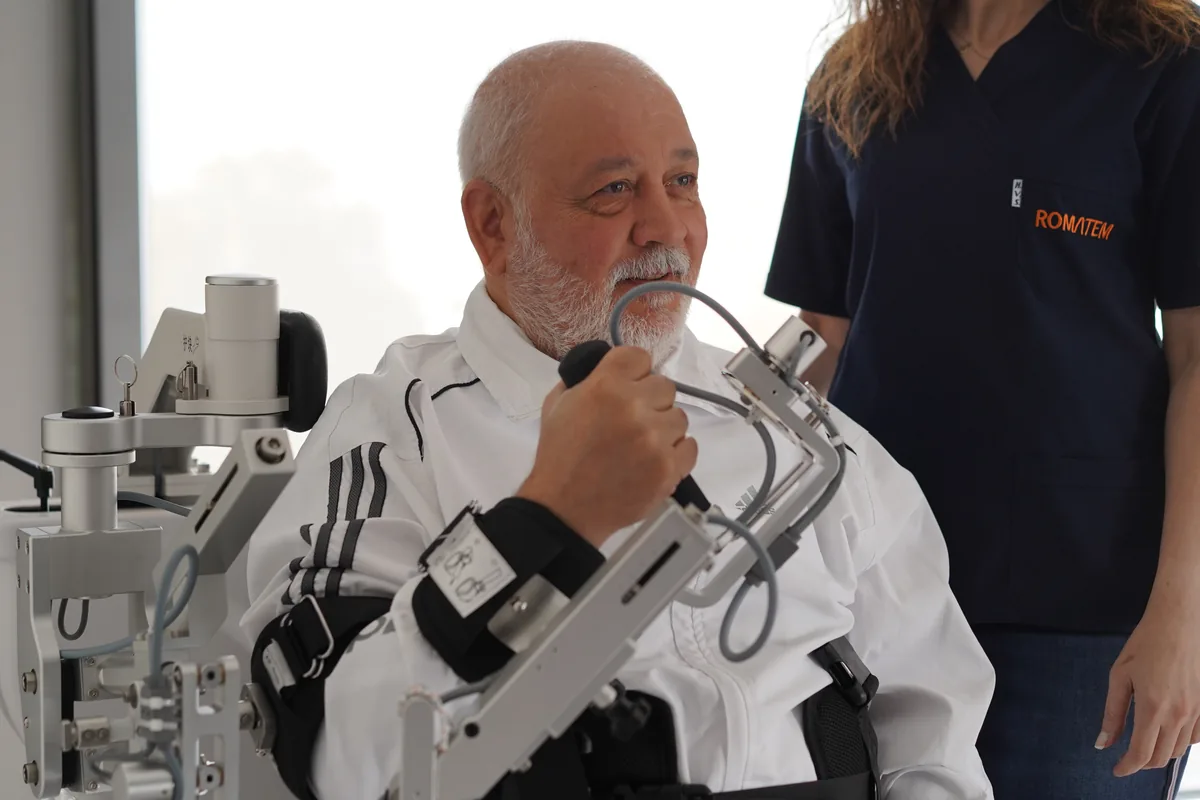
What spasticity is
After damage to the brain or spinal cord, muscles can remain involuntarily contracted — tone increases and the muscle resists being stretched. Normal movement depends on muscles contracting and relaxing in turn; in spasticity the relaxation does not happen properly, so movement becomes stiff, effortful and sometimes impossible.
Left unmanaged it leads to permanent joint restriction, deformity, pain and loss of independence in daily activities.
Where it comes from and how it is graded
Spasticity follows central nervous system damage: stroke, traumatic brain injury, spinal cord injury, multiple sclerosis and cerebral palsy. The level and pattern depend on the site and severity of the damage.
It is graded with the Modified Ashworth Scale, which scores resistance to passive movement. Because grading depends on the examiner and on the speed of movement, serial measurements should be taken by the same assessor wherever possible.
Reducing tone is not automatically the goal
Some patients stand and walk on spastic tone, and reducing it removes the stiffness they were relying on. This is the reason we never report a tone measurement without a function measurement beside it — so a fall in tone that costs walking is visible rather than presented as progress.
The aim is controlled, pain-free, usable movement. Sometimes that means reducing tone; sometimes it means working around it.
What the programme includes
Positioning and stretching as part of daily care, although in trials lasting up to seven months stretching alone made no clinically important difference to joint range 3. Guided and robotic movement to keep joints moving through their full arc. Splinting where indicated. Manual therapy. Gait and functional training so that any gain in range is converted into something the person can do.
Where tone is focal and blocking a specific function, injection therapy is considered as part of a plan rather than as a treatment on its own — the injection creates a window, and the therapy has to use it.
Measuring it, and measuring what it costs
Tone is scored with the Modified Ashworth Scale, but the score alone decides nothing. What matters is what the tightness prevents: washing a hand, clearing the floor when walking, sitting comfortably, sleeping without pain.
Both are recorded before treatment and after, because a tone score that improves while nothing functional changes is not a result worth repeating.
Contracture is the deadline
Spasticity that is left long enough stops being a neurological problem and becomes a mechanical one: the muscle shortens permanently and no injection will lengthen it.
That transition is why the window for tone management is not open indefinitely. Stretching alone does not prevent it: in trials of stretch lasting up to seven months, high-quality evidence showed no clinically important effect on joint mobility 3.
Does botulinum toxin improve how the arm works?
It depends on the goal. A meta-analysis of 40 randomised trials with 2,718 people after stroke found robust evidence that botulinum toxin reduces resistance to passive movement and improves self-care of the affected hand and arm 4. It also reduced spasticity-related pain and involuntary movements, and improved passive range of motion 4.
What it did not do was improve active use: there was robust evidence of no effect on the arm and hand's capacity for tasks at follow-up 4. That is why the injection is planned around a specific goal, and why a goal of better active use is pursued through training rather than expected from the injection itself.
Understanding Spasticity
Before treatment, the questions people actually ask first — what happens, how recovery behaves over time, and whether it is ever too late. Each opens the full article.
Frequently asked questions
Should all spasticity be treated?
No. Some people stand and transfer using the stiffness in their legs, and removing it leaves them less able. This is assessed before treating rather than discovered afterwards.
How long does botulinum toxin last?
Weakening begins within days and builds gradually before fading over several months. The therapy block is scheduled into that window.
Is spasticity the same as stiffness?
No. Spasticity is velocity-dependent — resistance increases the faster the limb is moved. Fixed stiffness that does not vary with speed is contracture, and it needs different treatment.
Can spasticity return after treatment?
Yes, by design — the toxin effect is temporary. What should accumulate between rounds is the range and function gained through therapy in each window.
What about a baclofen pump?
It delivers the drug directly to the spinal cord, giving a much smaller dose with far less sedation. It is considered for severe generalised spasticity, usually of the legs.
Sources
- Spasticity in adults: management using botulinum toxin — Royal College of Physicians (2018)
- When can maximal efficacy occur with repeat botulinum toxin injection in upper limb spastic paresis? — Brain Communications (2020)
- Harvey LA, Katalinic OM, Herbert RD, Moseley AM, et al. Stretch for the treatment and prevention of contractures — Cochrane Database of Systematic Reviews (2017)
- Andringa A, van de Port I, van Wegen E, Ket J, et al. Effectiveness of botulinum toxin treatment for upper limb spasticity poststroke over different ICF domains: a systematic review and meta-analysis — Archives of Physical Medicine and Rehabilitation (2019)
Which therapies would I actually receive?
A therapy is a single method used inside a programme. It is measured in sessions and is not sold separately.

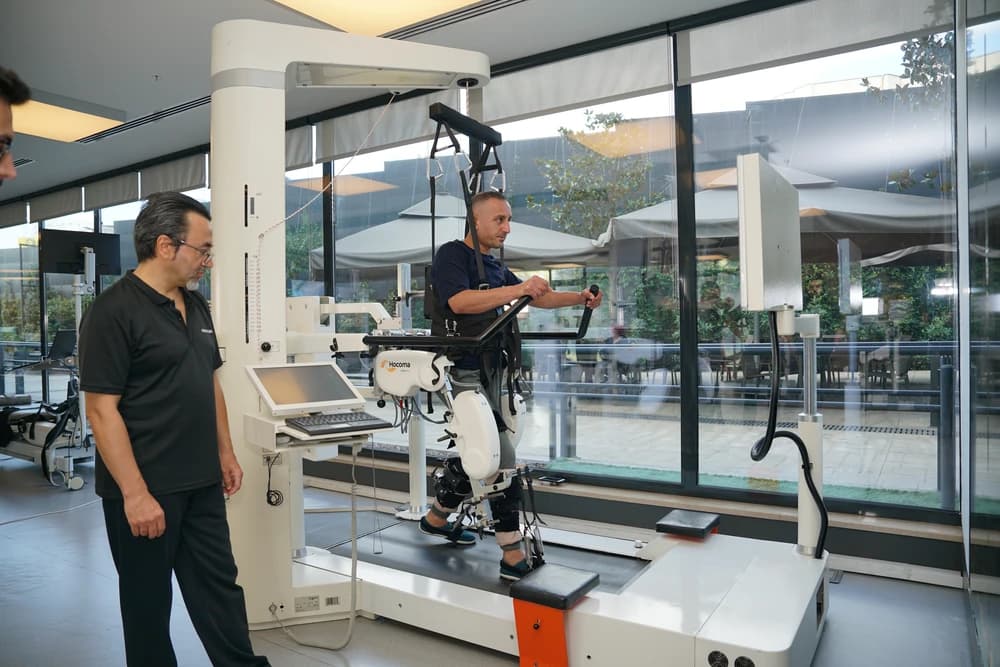
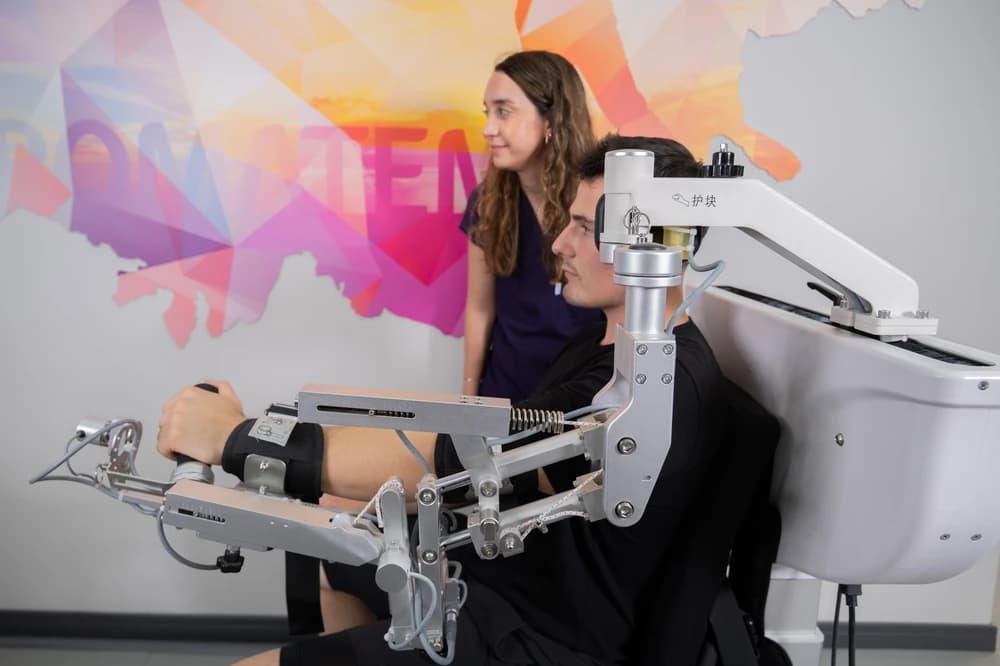
Technologies we use

Locations
Where you can receive this treatment



Related articles
Neurological What causes shoulder pain after a stroke, and how is it treated?
Shoulder pain on the weak side is common after a stroke. It usually comes from a combination of muscle weakness that lets the joint slip, stiffness, strain from lifting or pulling the arm, and spasticity. Careful positioning and handling help prevent it, and treatment targets the specific cause found on examination.Read moreNeurological How is spasticity treated, and does botulinum toxin help?
Spasticity is muscle stiffness caused by damage to the brain or spinal cord. It is treated when it causes pain, limits movement or care, or risks permanent shortening of muscles. Stretching, positioning and exercise come first; tablets help widespread stiffness, and botulinum toxin injections reduce stiffness in specific muscles for several months at a time.Read morePaediatric How does botulinum toxin help children with cerebral palsy?
Botulinum toxin injections temporarily relax overactive muscles in children with spastic cerebral palsy. They can improve walking pattern and ankle movement, especially when combined with physiotherapy, casting or orthoses. Effects wear off over several months, so injections are part of a wider plan. The goal is to support function, comfort and care, not to remove spasticity permanently.Read more



