
Medical condition
Rheumatoid Arthritis
Rheumatoid arthritis is an inflammatory disease of the joint lining, not wear. Rehabilitation protects joint function and hand use alongside medical treatment, and it is most effective when started before deformity develops. Occupational therapy, joint protection and hand splinting change what a person can do on a bad day.
Inflammation, not wear
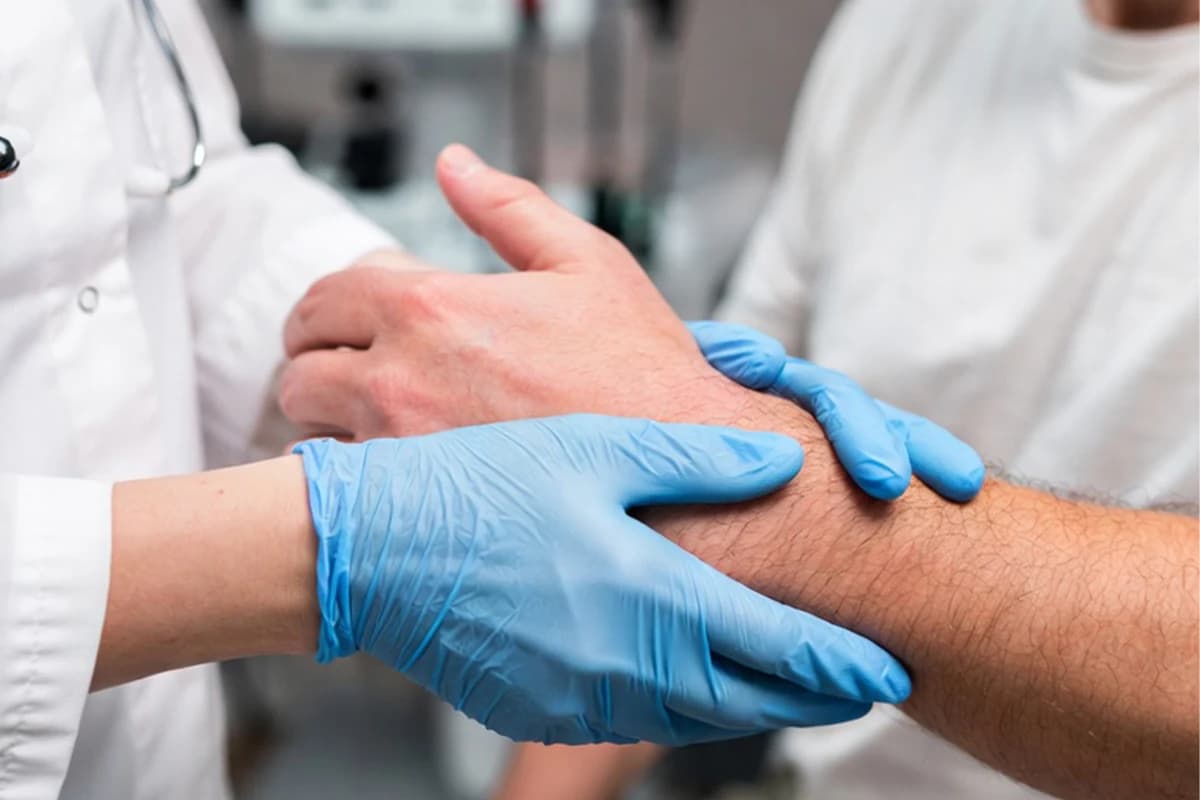
Rheumatoid arthritis is an autoimmune disease in which the immune system attacks the lining of the joints. This is a different mechanism from osteoarthritis, where the joint surface wears. The distinction matters practically: RA is typically symmetrical, affects small joints of the hands and feet early, and produces morning stiffness lasting more than thirty minutes 1.
Untreated inflammation damages joints permanently, which is why medical treatment leads and rehabilitation runs alongside it rather than instead of it.
What rehabilitation adds to medication
Medication controls the inflammation. Rehabilitation protects what the inflammation has already affected and preserves the function medication alone does not restore: hand function and grip, joint range, muscle strength lost through inactivity, and the daily activities that determine independence.
Occupational therapy is central here rather than peripheral. Joint protection technique, adapted tools and hand splinting change what a person can do on a bad day, and they are learned rather than intuited.
Exercising with a fluctuating disease
The question we are asked most is whether exercise is safe during a flare. The answer is that the type changes rather than stopping: during a flare the programme moves to gentle range-of-movement work and joint protection, and returns to loading as the flare settles.
Stopping entirely during flares and restarting from zero afterwards is the pattern that costs the most function over years.
Hands, and why they get the most attention
The small joints of the hands and feet are affected earliest and most often, and hand function determines a very large part of independence — dressing, eating, writing, working.
Occupational therapy addresses this directly: grip and pinch strength, joint protection technique, splinting where a joint needs support, and adaptation of the tasks that matter most to the person. Grip strength is measured rather than described.
Exercising during a flare
During an active flare, intensity comes down but movement does not stop. Gentle range-of-movement work maintains what would otherwise be lost, and joints held still during flares stiffen in ways that do not fully reverse.
Between flares the programme is genuinely progressive. Strength training in rheumatoid arthritis was avoided for years on the assumption that it damaged joints; the evidence does not support that, and inactivity carries the larger cost.
Fatigue is a symptom, not a character trait
Fatigue in rheumatoid arthritis is a feature of the disease rather than a consequence of poor effort, and it is often the symptom people find hardest to explain to others. It responds to graded activity, sleep work and pacing — not to pushing through.
It is asked about specifically at assessment, because people frequently do not raise it, assuming it is not a medical matter.
Joint protection without joint avoidance
Joint protection means changing how load is applied — using larger joints for heavier tasks, distributing load across the hand, adapting tools and handles — rather than avoiding use.
The distinction matters. Protected joints stay usable; avoided joints lose the muscle around them, and the weakness that follows leaves them less protected than before.
Frequently asked questions
Does rehabilitation replace my medication?
No. Rehabilitation protects joint function and hand use alongside medical treatment; it does not control the underlying inflammation. The two work together and neither substitutes for the other.
Is exercise safe during a flare?
The type changes rather than stopping altogether. During a flare we move to gentle range-of-movement work and joint protection, and return to loading as the flare settles.
Will exercise damage my joints?
No. Appropriately loaded exercise does not accelerate joint damage in rheumatoid arthritis, and it improves strength, function and fatigue. What harms joints is uncontrolled inflammation, which is what medication addresses.
What should I do during a flare?
Reduce intensity, keep moving through range, and use heat or cold for comfort. Complete rest for more than a few days costs strength and mobility that take much longer to rebuild.
Can rehabilitation reduce my medication?
That is a decision for the rheumatologist managing your disease, and it is driven by disease activity rather than by how the exercise programme is going. Rehabilitation improves function; it does not control inflammation.
Are hand splints useful?
For specific purposes — resting a painful joint, supporting an unstable one, positioning during the night. Worn continuously without a reason they contribute to weakness, so they are prescribed for a defined role and reviewed.
Sources
- Rheumatoid arthritis in adults: management (NG100) — National Institute for Health and Care Excellence (2020)
Which therapies would I actually receive?
A therapy is a single method used inside a programme. It is measured in sessions and is not sold separately.


Technologies we use


Locations
Where you can receive this treatment




Related articles
Rheumatologic Should you exercise during a rheumatoid arthritis flare?
Yes, but not the same exercise. During a flare the work shifts to gentle range of motion, positioning and protecting the inflamed joint, while strengthening and loading wait. Stopping altogether costs strength that takes far longer to rebuild than the flare takes to settle.Read moreRheumatologic Is morning stiffness a sign of arthritis?
It can be. Under NICE guidance, morning stiffness lasting no longer than 30 minutes fits osteoarthritis. Stiffness lasting longer, especially with swollen, warm joints in the hands or feet, suggests inflammatory arthritis such as rheumatoid arthritis. Back pain with long morning stiffness that improves with exercise may indicate axial spondyloarthritis. Persistent symptoms deserve medical assessment.Read moreRheumatologic How is psoriatic arthritis different from rheumatoid arthritis?
Both are inflammatory types of arthritis, but psoriatic arthritis usually occurs with psoriasis and may cause swollen whole fingers or toes, nail changes, tendon pain and spine involvement, often affecting joints unevenly. Rheumatoid arthritis typically affects small joints of both hands and feet symmetrically and is often linked with specific blood antibodies.Read more



