

Medical condition
Multiple Sclerosis
MS rehabilitation is a three to six week programme working on walking, balance, strength and fatigue management. Exercise is now known to help rather than harm in MS, and the programme is built around heat sensitivity and fatigue rather than ignoring them. It is repeated periodically rather than completed once.
What MS does, and what rehabilitation is for
Multiple sclerosis damages the insulating sheath around nerve fibres in the brain and spinal cord, and later the fibres themselves. Signals slow, scatter or fail. Which functions are affected depends on where the damage is, which is why no two people with MS have the same problems.
Rehabilitation does not treat the disease. Disease-modifying therapy is your neurologist's work, and nothing in this programme replaces it or slows the underlying process. What rehabilitation treats is the consequence: walking, balance, strength, fatigue, bladder function, and the daily tasks these make difficult.
That distinction matters when you are choosing where to spend money. A centre implying that intensive therapy alters the disease course is describing something rehabilitation does not do.
The advice about exercise has reversed, and many patients never heard
For decades people with MS were told to avoid exertion, on the reasoning that heat and fatigue make symptoms worse. That advice is now known to have been wrong, and it produced a generation of patients who were deconditioned on medical instruction.
The evidence now shows exercise improving cardiorespiratory fitness, muscle strength, balance, fatigue, cognition and quality of life in MS. Low to moderate intensity aerobic training is safe and tolerable for most people with an EDSS below 7, and physical fitness appears to help rather than hinder 1.
If you were told years ago to rest and have followed that advice since, this is probably the single most important paragraph on this page.
Uhthoff's phenomenon: what heat does, and what it does not do
Raising body temperature — through exercise, a hot bath, fever or hot weather — can temporarily worsen MS symptoms. Vision blurs, a leg becomes weaker, fatigue deepens. This is Uhthoff's phenomenon and it frightens people into stopping.
It is temporary and it is reversible. It reflects nerve conduction being slowed by heat, not new damage being done. When the body cools, function returns to where it was. It is not a relapse and it is not a reason to stop exercising.
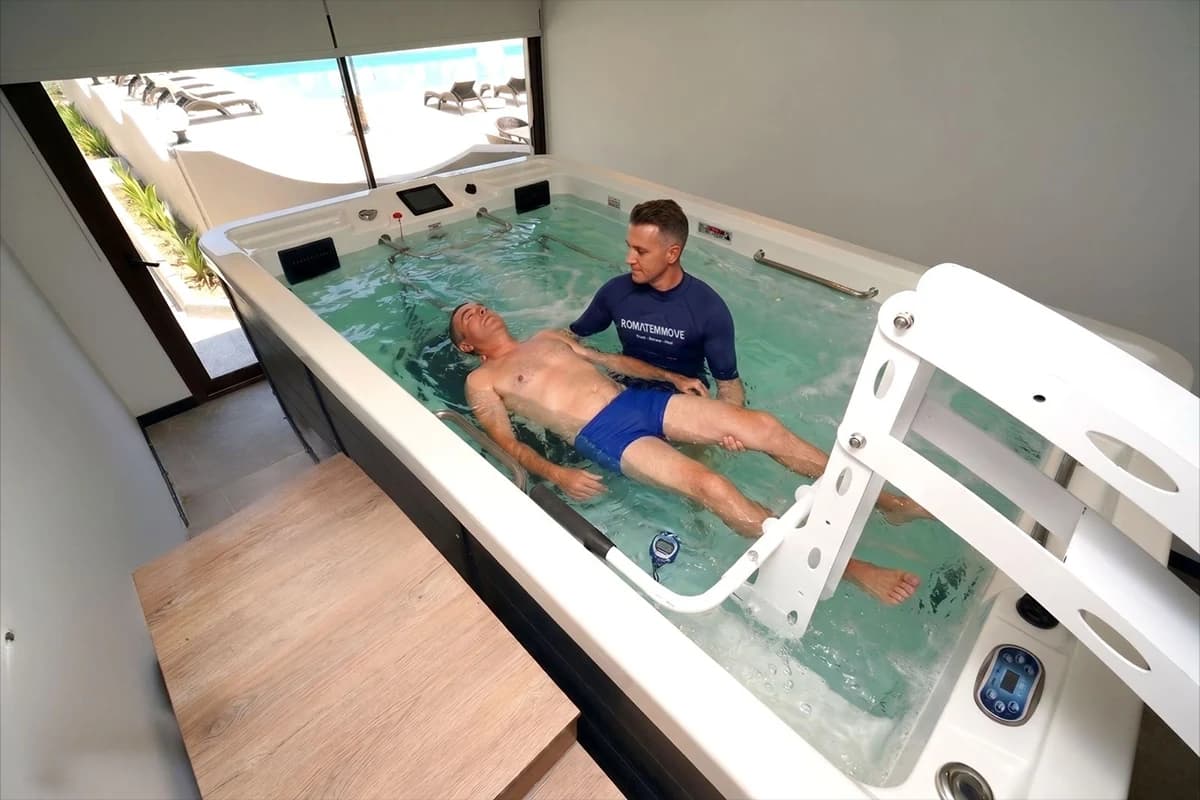
It is managed rather than avoided: exercising in a cooler environment, in water, in shorter bouts, with cooling before and during. Cooling the room has been shown to reduce the loss of central drive during exercise in heat-sensitive people. That is why aquatic work features heavily in this programme — the water is cool and it unloads the joints at the same time.
Fatigue is the constraint that shapes the whole programme
MS fatigue is not ordinary tiredness and it does not respond to willpower. It is one of the symptoms patients rate as most disabling, and a programme that ignores it produces a person who improves at first and then collapses.
So the schedule is built with it: shorter sessions, planned rest, the hardest work early in the day, and energy conservation taught as a skill — how to sequence a day so the important things happen when the capacity exists.
Aquatic exercise and low-impact aerobic work have both been shown to reduce fatigue, which is one of the few interventions that improves the symptom rather than working around it.
Walking, balance and the things that cause falls
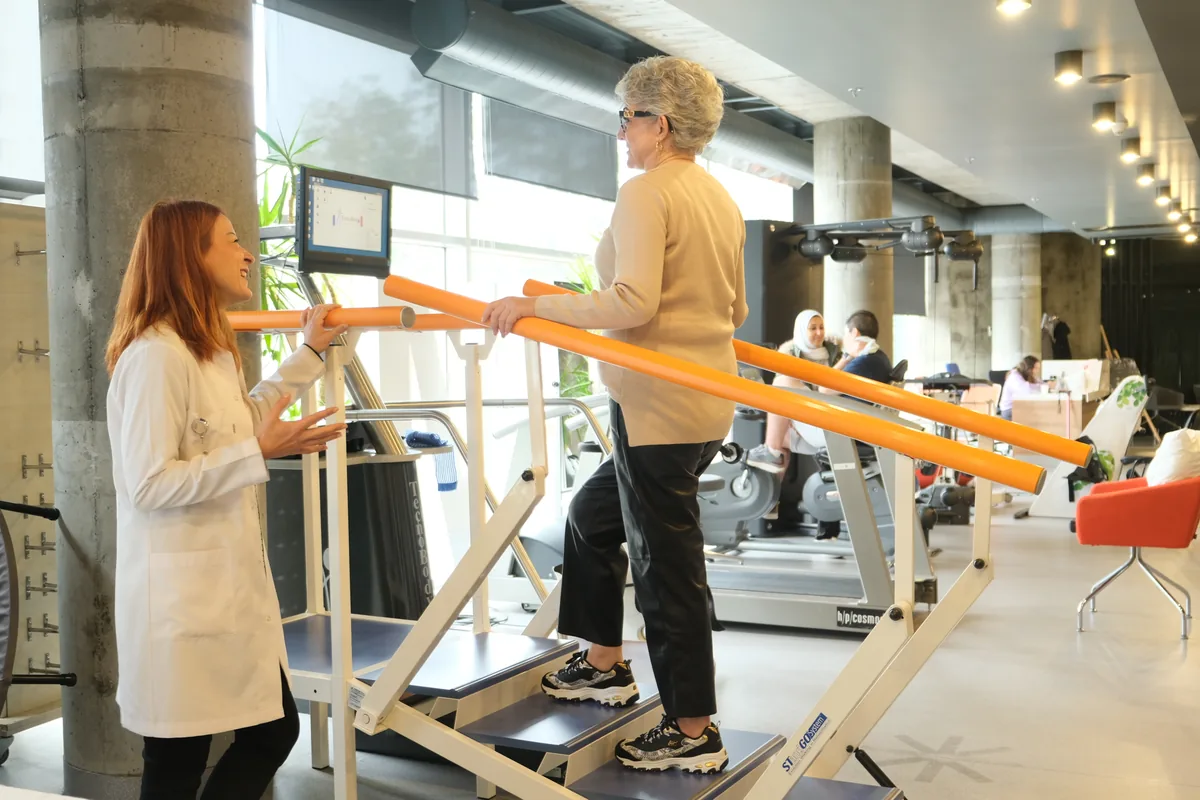
Walking difficulty in MS usually combines weakness, spasticity, poor balance and reduced sensation from the feet. Each is treated differently, which is why the assessment separates them rather than treating "walking" as one problem.
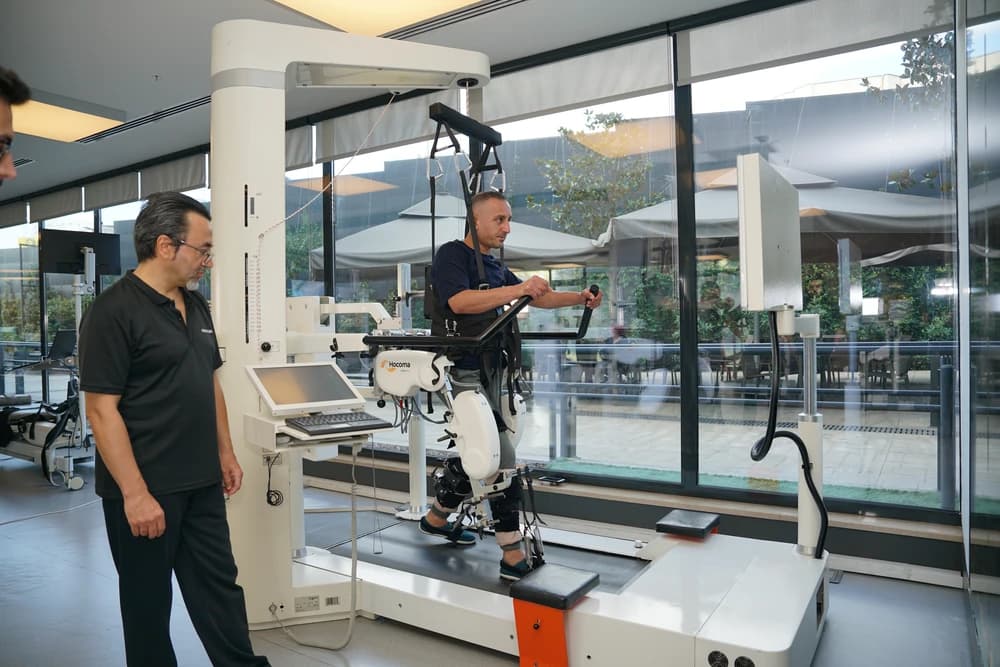
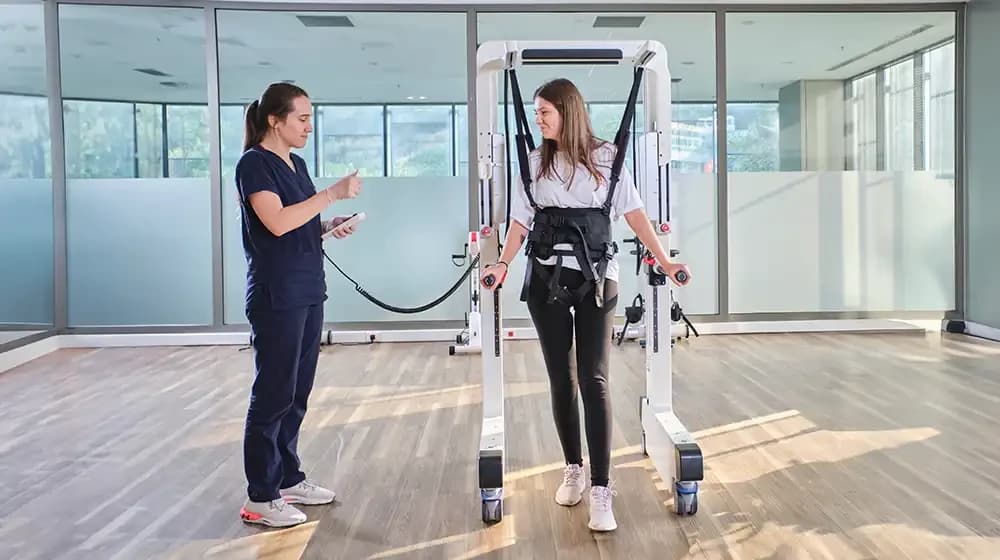
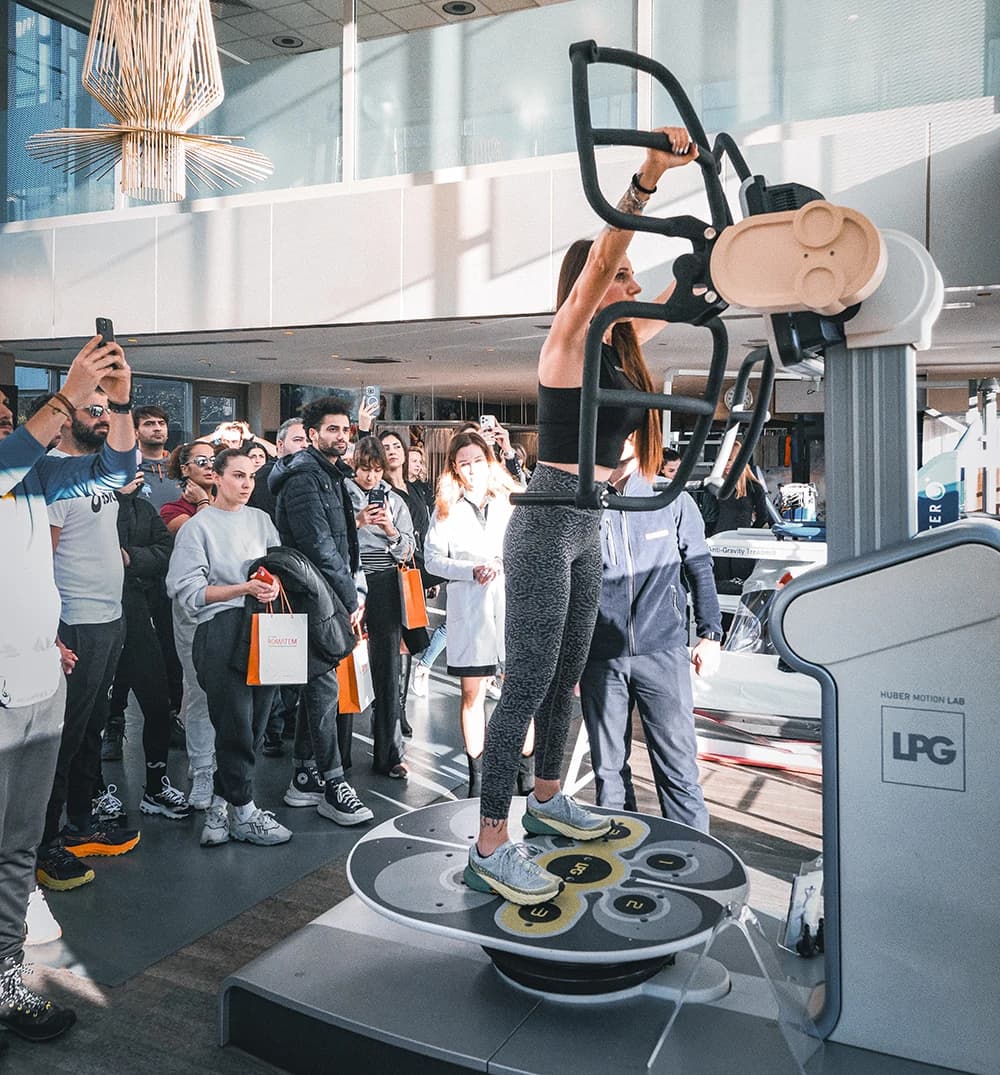
Robotic gait work delivers a volume of correctly patterned stepping that fatigue would otherwise cut short. Balance and posture analysis identifies whether the instability is coming from the ankle, the trunk or the vestibular system — and the answer changes the training.
The parts that get left out of MS programmes
Bladder symptoms are common in MS and are among the least discussed. They are treatable, they respond to assessment and training, and they are asked about here rather than waited for.
Cognitive change — processing speed, attention, word finding — is also common and often missed because it is subtle and because people compensate. It is screened, and where present it is worked on rather than mentioned.
Why programmes are repeated rather than completed
MS is a long-term condition with a variable course. A block of rehabilitation raises function; without maintenance it drifts back. Blocks are usually planned every one to two years, with a home programme between them.
Timing matters too. Rehabilitation during an acute relapse is different from rehabilitation in a stable phase, and a block booked in the middle of a relapse often achieves less than the same block once the relapse has settled. Tell us where you are in the disease and the reply will address timing directly.
What the programme covers
Three to six weeks, three to five hours a day, adjusted continuously to fatigue. Aerobic and strength training at controlled intensity, aquatic sessions, robotic gait work where walking is a goal, balance training, spasticity management, energy conservation, and assessment of bladder and cognitive symptoms.
The programme is coordinated with your neurologist rather than around them, and the discharge document is written to be usable by the team that manages your disease-modifying treatment at home.
Understanding Multiple Sclerosis
Before treatment, the questions people actually ask first — what happens, how recovery behaves over time, and whether it is ever too late. Each opens the full article.
Frequently asked questions
Is exercise safe for me?
For most people with MS, yes, and it is beneficial. Low to moderate intensity aerobic exercise is safe and tolerable for most people with an EDSS below 7 and improves fitness, strength, balance, fatigue and quality of life 1. The old advice to avoid exertion has been reversed.
Exercise makes my symptoms worse. Does that mean it is damaging me?
No. Temporary worsening with heat is Uhthoff's phenomenon: nerve conduction slows as body temperature rises, and it returns to baseline as you cool. It is not new damage and it is not a relapse. It is managed by exercising cooler, in water, in shorter bouts.
Will rehabilitation slow my MS?
No. Disease-modifying treatment is your neurologist's domain and rehabilitation does not replace or affect it. Rehabilitation improves function, fitness and fatigue — which is worth a great deal, and is not the same claim.
I am in the middle of a relapse. Should I come now?
Usually it is better to treat the relapse first and rehabilitate afterwards, because a programme during an acute relapse achieves less. Send your current status and the reply will give you a specific recommendation on timing rather than a general one.
How often should I come back?
Blocks are usually planned every one to two years, with a home programme between. The right interval depends on your course and on how well the gains hold, which is one of the things reviewed at follow-up.
I use a wheelchair. Is a programme still worth it?
Yes. The goals change to transfers, upper limb function, posture and seating, spasticity, skin protection and independence at home. Walking is not the only thing worth improving, and framing it that way excludes the people with most to gain.
What about my bladder symptoms?
They are common in MS, they are treatable, and they are asked about as part of the assessment. Many people never raise them because they assume they are untreatable or are embarrassed to mention them.
Can a companion come?
Yes. A bed for one companion is provided in the patient's room, and where fatigue or mobility mean help is needed at home, the companion is trained in the home programme too.
What do you need from me before you can answer?
Your MS type and approximate EDSS if known, current disease-modifying treatment, relapse history over the last year, what you can currently walk without stopping, and your main difficulties. That is enough for a physician to be specific about goals and timing.
Sources
- Exercise prescription for patients with multiple sclerosis; potential benefits and practical recommendations — BMC Neurology (2017)
- Exercise-induced heat sensitivity in patients with multiple sclerosis: definition, prevalence, etiology, and management — a scoping review — Multiple Sclerosis and Related Disorders (2024)
- Thermoregulation in multiple sclerosis — Journal of Applied Physiology (2010)
Which therapies would I actually receive?
A therapy is a single method used inside a programme. It is measured in sessions and is not sold separately.




Technologies we use

Locations
Where you can receive this treatment



Related articles
Neurological What kind of exercise is safe with multiple sclerosis?
Exercise is safe for most people with multiple sclerosis and does not trigger relapses. Aerobic activity, strength training, balance work and stretching can improve fitness, walking, fatigue and mood. The key is to start at a comfortable level, progress gradually, manage heat sensitivity and adapt activities to mobility.Read moreNeurological Is it an MS relapse or a pseudo-relapse?
Under NICE guidance, an MS relapse is new or clearly worsening symptoms lasting more than 24 hours, caused by new inflammation in the nervous system. A pseudo-relapse is a temporary return of old symptoms triggered by heat, infection, stress or fatigue, without new inflammation. This matters because treatment differs: triggers are treated, and steroids are reserved for true relapses.Read moreTreatments and technology Who benefits from exercise in water?
Water-based exercise suits people whose pain, weight, weakness or balance problems make land exercise difficult, including those with knee and hip osteoarthritis and fibromyalgia. Trials show small improvements in pain and function with aquatic exercise, similar to land-based exercise. Warm water can ease stiffness, while people with heat sensitivity may need cooler pools.Read more



