
Manual and hands-on
Kinesio taping
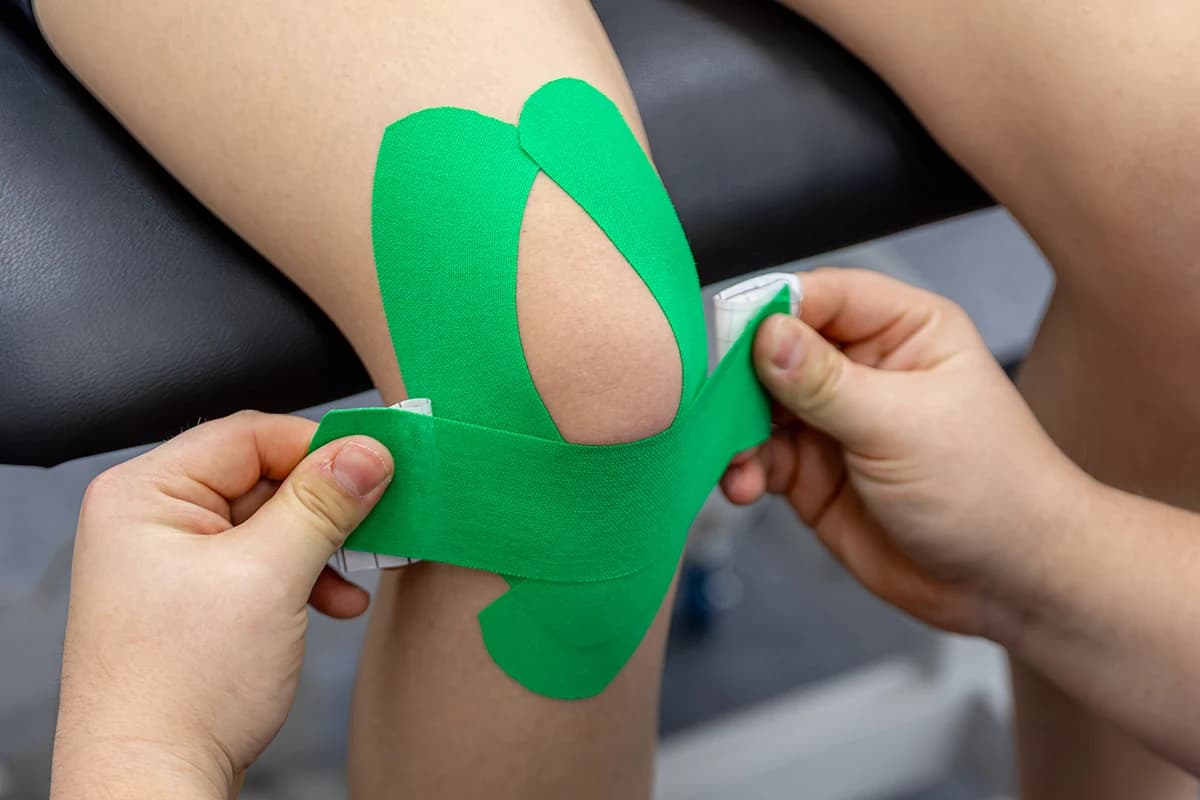
Elastic tape applied to support a joint or offload a tendon between sessions. It is an adjunct that extends the effect of treatment into daily activity, not a treatment on its own. Evidence beyond sham taping is weak in most conditions; swelling management is the main exception.
What the tape does
Elastic cotton tape applied to the skin over a muscle or joint, stretched to varying degrees depending on the intended effect. It lifts the skin slightly, which is proposed to alter sensory input, support circulation and lymphatic drainage, and provide proprioceptive feedback about position.
It does not restrict movement the way rigid strapping does, so it can be worn during activity and left on for several days.
An honest account of the evidence
The evidence for kinesiology tape is weak. In trials lasting at least a week, tape was not clearly better than sham taping for pain and function in low back pain and knee osteoarthritis, and the evidence is of low quality 1. Where an effect is found it is small and short-lived 2.
The one area with more support is lymphoedema and swelling management, where the tape appears to assist drainage 3. Even there, it is not better than compression bandaging, it can cause skin problems, and it should be used with caution, only where bandaging cannot be tolerated 45.
Why we still use it, and how
As a low-cost, low-risk adjunct that some patients find gives useful positional feedback or reassurance during a return to activity. That is a legitimate reason to use something harmless and cheap.
It is never charged as a treatment in its own right, never presented as a substitute for exercise or manual therapy, and never used to justify additional appointments. If it does nothing for you after a couple of applications, we stop.
Practical points
Skin reaction is the main issue — a patch test is worth doing if you have sensitive skin. It should not be applied over broken skin, active infection, or an area with impaired sensation.
Tape applied incorrectly does nothing. If you are shown how to apply it yourself for a home programme, we will check your technique rather than assume it.
What we use it for in practice
Short-term symptom relief while active treatment does the work, feedback about position for someone learning a movement pattern, and swelling management in specific situations.
It is cheap, it is low-risk, and some patients respond well to it. Those are honest reasons to use something; they are not reasons to build a treatment plan around it.
When tape becomes a problem
When it substitutes for loading, when a course is sold around it, or when the patient comes to believe the shoulder only works because the tape is on. That last one is common and it is a real obstacle to progress.
We use it as a temporary adjunct with a stated purpose and a stated end.
Can tape replace compression for lymphoedema?
Not as a first choice. In breast cancer-related lymphoedema, swelling fell with taping in all seven trials of one meta-analysis, but not by more than with the comparison treatments 3. Another meta-analysis found no significant difference in limb volume between tape and compression bandaging or garments 4. A 2025 review of bandaging methods found the same for tape against multilayer bandaging 5.
The meta-analysis comparing tape with compression also found skin complications in 10% to 21% of patients in the studies that reported them, and tape was not more comfortable than bandaging 4. Its authors advised using tape with great caution and only where bandaging cannot be used, for example by someone who cannot tolerate compression in hot, humid weather 4.
Sources
- Ramírez-Vélez R, Hormazábal-Aguayo I, Izquierdo M, González-Ruíz K, et al. Effects of kinesio taping alone versus sham taping in individuals with musculoskeletal conditions after intervention for at least one week: a systematic review and meta-analysis — Physiotherapy (2019)
- Aldalati AY, Hussein AM, Hammadeh BM, Alrabadi B, et al. Effectiveness of Kinesio taping without physical therapy for knee osteoarthritis: a systematic review and meta-analysis of randomized controlled trials — Rheumatology International (2025)
- Kasawara KT, Mapa JMR, Ferreira V, Added MAN, et al. Effects of Kinesio Taping on breast cancer-related lymphedema: a meta-analysis in clinical trials — Physiotherapy Theory and Practice (2018)
- Gatt M, Willis S, Leuschner S. A meta-analysis of the effectiveness and safety of kinesiology taping in the management of cancer-related lymphoedema — European Journal of Cancer Care (2017)
- García-Chico C, López-Ortiz S, Lorenzo-Crespo C, Pinto-Fraga J, et al. Wrapping up the evidence: bandaging in breast cancer-related lymphedema — a systematic review and meta-analysis — Breast Cancer (2025)
Conditions this is used for
The 7 conditions where this method is part of a routine programme, grouped by area. It is never the whole plan on its own.

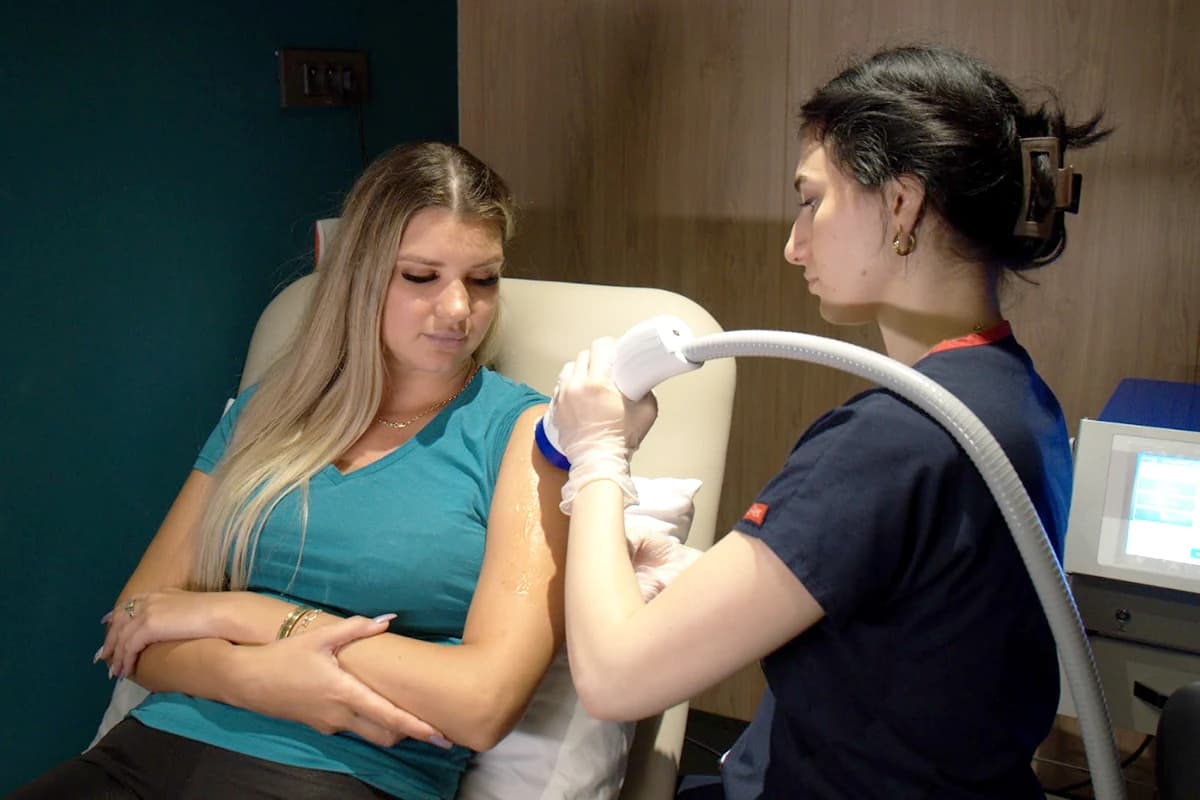
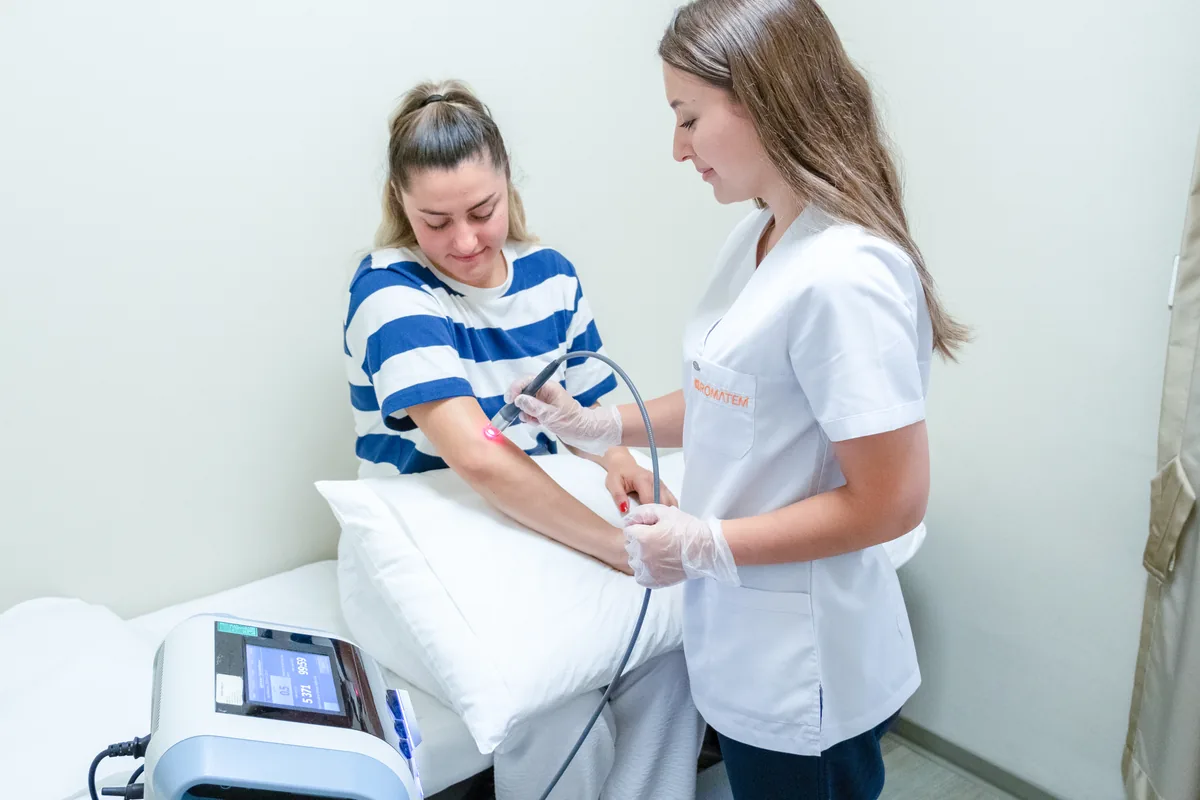
Methods are combined inside a programme and chosen after examination — they are not booked separately.
Your path to this treatment
Nothing here is booked from a page. You send the records you have, a rehabilitation physician reads them, and you get a written answer — including when the answer is that an intensive programme will not help.
4 steps, start to finish
1.Send your records
A discharge summary from the hospital that treated the original event, and any imaging of the affected area — CT, MRI or X-ray.2.A written plan in 48 hours
A rehabilitation physician reviews the case and returns the expected duration, the recommended programme and the centre. Free, no obligation.3.Travel and admission
Where a visa is needed we issue an invitation letter and treatment confirmation naming the dates and the facility. You are met at the airport and driven to the centre by private vehicle or ambulance; a bed for one companion and interpreting during therapy are arranged.4.Treatment, then home
The programme runs, then you leave with a discharge report and a written home exercise plan. Your return journey is organised before you go, with scheduled video reviews so progress does not stop.
In their words
What patients say after a programme
Short videos filmed during therapy: a child’s rehabilitation after a brain tumour, suspended gait training after spinal cord injury, and learning to walk again after a fall. Individual results vary.
Dave Evans on his physical therapy here
Musculoskeletal physiotherapy
Paediatric rehabilitation after a brain tumour
Inside a physiotherapy session
Spinal cord injury — the rehabilitation process
Suspension-assisted gait training
Walking difficulty and restricted movement after a fall
Regaining gait and range of motion
Locations
Our centres











Questions people actually ask
About this treatment
Does kinesio tape actually work?
The evidence for any specific mechanism is weak, and reviews generally find small short-term effects on pain that do not persist. We are straightforward about that.
How long can it stay on?
Usually three to five days. Remove it earlier if the skin becomes itchy, red or blistered.
Can I shower with it?
Yes. Pat it dry rather than rubbing, and do not use a hairdryer on it.
Does the colour matter?
No. Colours are identical in composition and any difference reported is placebo.
Will it fix my injury?
No. It may make movement more comfortable while the exercise programme changes the underlying problem.



