
Medical condition
Ankle Sprain and Chronic Ankle Instability
An ankle sprain tears the ligaments on the outside of the ankle. The injury itself heals; the problem is that a substantial proportion of patients go on to repeated sprains and a giving-way ankle because balance and control were never retrained. That retraining is the part rehabilitation exists to provide.
The injury everyone underestimates
A sprained ankle is treated as trivial, rested until it stops hurting, and then returned to sport. That sequence is why re-injury rates are so high and why chronic instability is one of the commonest reasons an active adult stops playing.
The ligament heals with disorganised tissue and, more importantly, the position sense in the joint is disrupted. The ankle stops knowing where it is, which is a control problem rather than a strength problem.
What the evidence supports
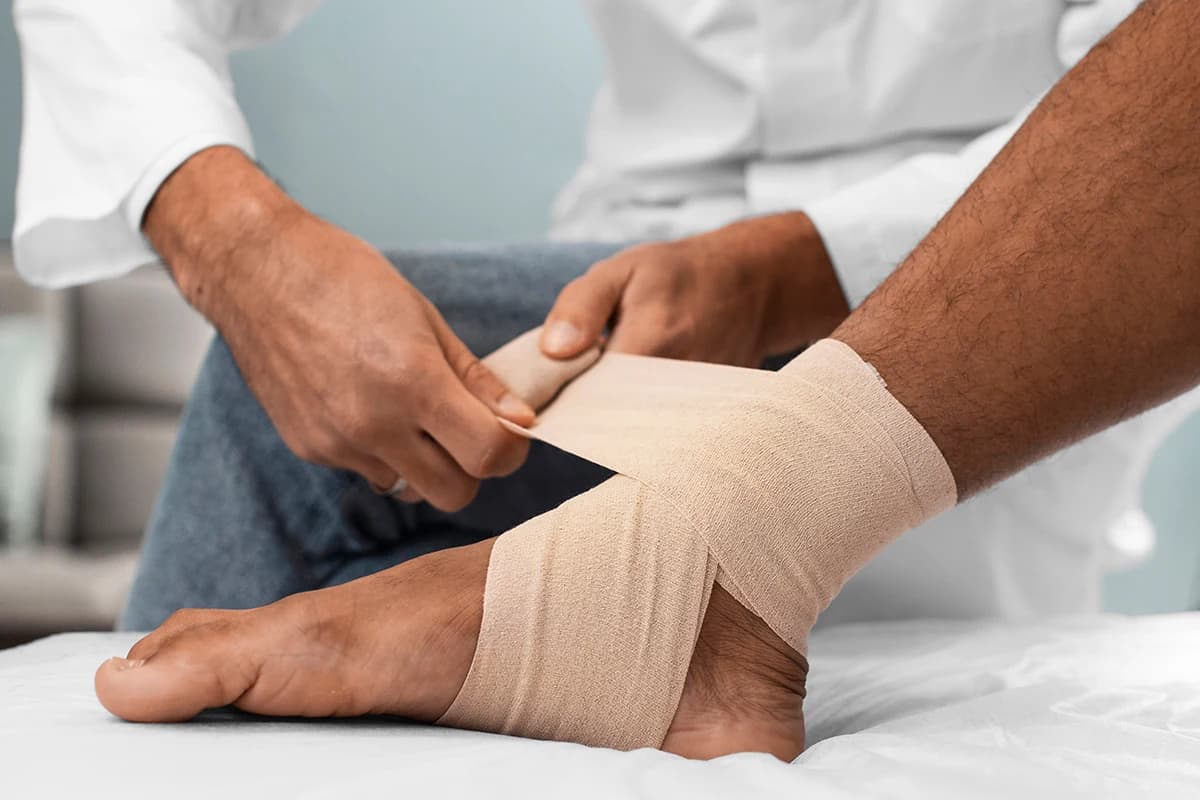
Early controlled movement beats prolonged immobilisation 2. Balance and proprioceptive training reduces the rate of recurrent sprains, and this is one of the better-supported findings in sports rehabilitation. External support — bracing or taping — reduces recurrence during the return-to-sport period.
What is not supported: prolonged rest, routine imaging for a simple sprain, and passive modalities used alone. Ultrasound, laser and similar treatments may ease symptoms but they do not restore control, and control is what prevents the next sprain.
When it is not a simple sprain
Inability to bear weight, bone tenderness over specific landmarks, or a high ankle injury above the joint line all change the plan and need imaging. Persistent pain beyond the expected course raises the question of an osteochondral lesion in the joint surface, which is missed regularly.
Why the first sprain predicts the next one
Ligament injury damages the position sense receptors within it, and that proprioceptive deficit persists after the pain and swelling have gone. The ankle then rolls again on ground that would not previously have caused it.
Balance and proprioceptive training is what interrupts that cycle, and it is the component most often skipped once walking feels normal. Exercise therapy and bracing both help prevent chronic ankle instability, so it is not an inevitable outcome of a sprain 2.
How much does exercise lower the risk of another sprain?
It lowers it, although it does not remove it. A 2022 meta-analysis of 14 randomised trials with 2,182 participants found that people who did exercise-based rehabilitation after an acute sprain had lower odds of having re-injured the ankle at 12 months than those given usual care 3. An overview of systematic reviews rated the evidence for preventing recurrence as moderate for neuromuscular training and strong for bracing 2. What the trials cannot yet say is which exercises are most effective or how much is enough: training volume varied widely between studies and did not change the odds of re-injury 3.
For athletes: when is it safe to go back to sport?
When the ankle passes a set of checks, not simply when it stops hurting. An international consensus of 155 health professionals working in elite field and court sports agreed on five areas to assess before return: pain during sport and over the previous 24 hours; ankle range of motion, strength, endurance and power; the athlete's own confidence in the ankle and psychological readiness; balance and proprioception; and sport performance, including hopping, agility, sport-specific drills and completing a full training session 4. This is expert agreement rather than trial evidence: it structures the decision, but no checklist removes the risk of another sprain entirely.
Frequently asked questions
Do I need an X-ray?
Not always. The Ottawa ankle rules identify who does, based on specific bony tenderness and inability to weight-bear. Most sprains do not need imaging.
How long does a sprain take?
A few weeks for most, longer for severe injuries. Returning to sport before balance and strength have recovered is what produces repeat sprains.
Should I immobilise it?
Brief protection for severe sprains, then early controlled movement. Prolonged immobilisation produces stiffness and weakness without improving healing.
Why does my ankle keep giving way?
Usually residual proprioceptive deficit and weakness rather than a loose ligament. It responds well to balance training, which is why assessment is worthwhile rather than accepting it.
When is it not a simple sprain?
Pain over bone rather than ligament, inability to bear weight, a high sprain above the joint line, or symptoms not improving after several weeks. Each points elsewhere.
Sources
- Ankle Stability and Movement Coordination Impairments: Lateral Ankle Ligament Sprains Revision 2021 — Journal of Orthopaedic & Sports Physical Therapy (2021)
- Doherty C, Bleakley C, Delahunt E, Holden S. Treatment and prevention of acute and recurrent ankle sprain: an overview of systematic reviews with meta-analysis — British Journal of Sports Medicine (2017)
- Wagemans J, Bleakley C, Taeymans J, Schurz AP, et al. Exercise-based rehabilitation reduces reinjury following acute lateral ankle sprain: a systematic review update with meta-analysis — PLOS ONE (2022)
- Smith MD, Vicenzino B, Bahr R, Bandholm T, et al. Return to sport decisions after an acute lateral ankle sprain injury: introducing the PAASS framework—an international multidisciplinary consensus — British Journal of Sports Medicine (2021)
Which therapies would I actually receive?
A therapy is a single method used inside a programme. It is measured in sessions and is not sold separately.


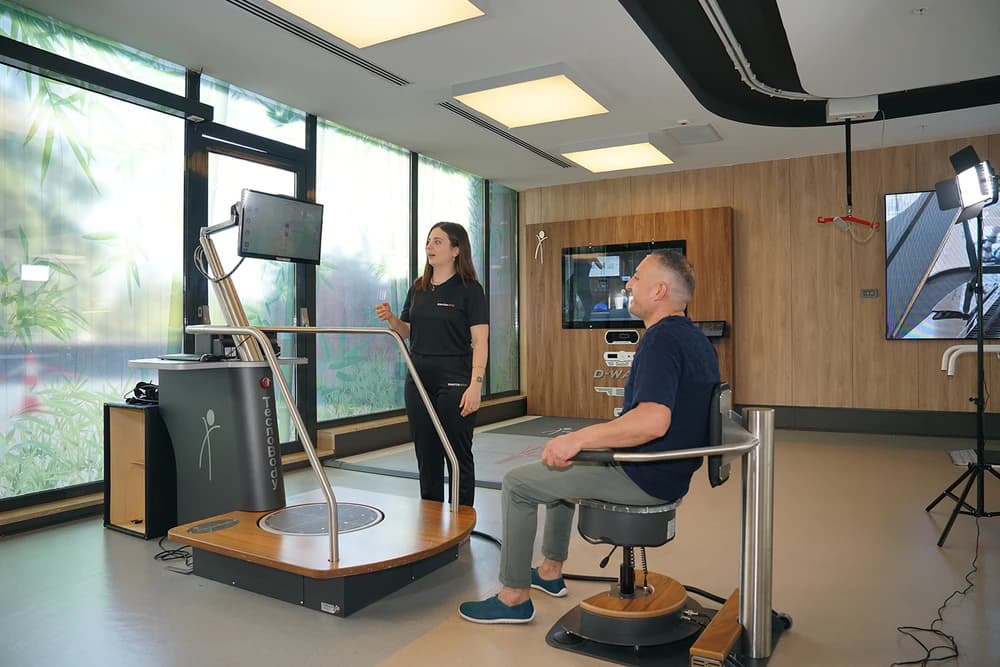
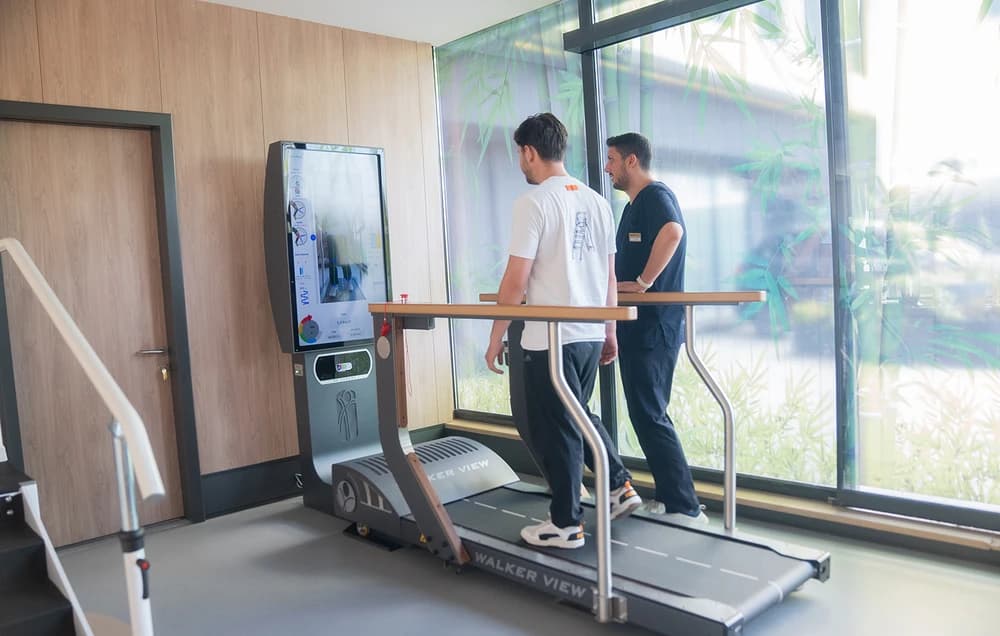
Technologies we use

Locations
Where you can receive this treatment





Related articles
Sports How long does a sprained ankle take to heal?
A mild ankle sprain often settles within a few weeks, while moderate and severe sprains can take considerably longer, sometimes months. Early movement, protected weight-bearing and exercise speed recovery more than prolonged rest. Balance training and, for some people, a brace reduce the risk of spraining the same ankle again.Read moreNeurological How long does it take to recover from a stroke?
Most recovery after a stroke happens in the early months, when the brain is most able to reorganise, and it continues more slowly for a longer period after that. How far someone gets depends mainly on how severe the stroke was, where it happened and how much active therapy follows.Read moreNeurological Can you walk again after a stroke?
Many people walk again after a stroke, including many who cannot stand at first. The chances are highest when some leg movement returns early and when walking practice starts as soon as it is safe. Walking often comes back before full arm recovery, sometimes with a stick, splint or other support.Read more



