
Inpatient
Spinal cord injury programme
A long-horizon programme covering mobility, bladder and bowel management, skin protection, wheelchair skills and the training a family needs before discharge. The level of injury and whether it is complete set what is realistic: recovery below the level for incomplete injuries, maximum independence with what remains for complete ones.
A programme organised around level and completeness
The two facts that determine everything are the level of injury and whether it is complete or incomplete. They set what is realistic, and a programme that does not start from them is guessing.
For incomplete injuries the emphasis is on recovering function below the level. For complete injuries it is on maximising independence with what remains, which is a different programme, not a lesser one.
What the programme covers
Strengthening of preserved muscle groups, transfer training, wheelchair skills, standing and where appropriate robotic or body-weight-supported gait work, and upper limb work in cervical injuries where hand function determines almost everything.
Alongside that: bladder and bowel management, skin and pressure care, spasticity management, respiratory function in higher injuries, and autonomic dysreflexia recognition — which is taught to the patient and family because it is a medical emergency they will need to identify themselves.
Preventing the complications that cause readmission
Pressure injuries, urinary infection, contracture, deep vein thrombosis, respiratory infection and autonomic dysreflexia cause more readmissions after spinal cord injury than the injury itself does.
Education on each is part of the programme rather than a leaflet at discharge, and the family is trained alongside the patient. In our experience this is what most determines the first year after discharge.
Being straight about walking
Patients and families ask about walking first, and they are entitled to a clear answer rather than an encouraging one. In complete injuries above a certain level, functional walking is not a realistic goal, and supported standing and stepping are for the health benefits of upright time rather than for mobility.
In incomplete injuries the picture varies enormously and we assess before saying anything. What we will not do is leave an expectation in place because correcting it is uncomfortable.
Bladder, bowel and skin are the programme, not the extras
These three determine independence, readmission and life expectancy more than walking does, and they occupy a substantial part of the timetable. Catheter technique, bowel routine and pressure relief are trained until they are reliable rather than demonstrated once.
The family is trained alongside, because these are the areas where a gap in knowledge produces an emergency months later.
Equipment and the home you are going back to
Wheelchair setup, cushion selection and transfer technique are matched to the person rather than issued from stock, and a chair that is wrong can lead to shoulder injury and pressure damage.
Where possible we plan against the actual home: door widths, bathroom, steps. A discharge plan built for an idealised home fails in the first week of the real one.
How often do people need hospital care again in the first year?
In a study that followed 951 people after rehabilitation for a new traumatic spinal cord injury, 36.2% were readmitted to hospital at least once within a year of injury, and 12.5% at least twice 2. The commonest reasons were urinary problems such as infection, chest problems such as pneumonia, and skin problems such as pressure ulcers 2.
People who had received more intensive physical therapy during rehabilitation had lower odds of readmission, although an observational study of this kind cannot prove cause and effect 2. It does show where the risk lies: in the same areas that training in bladder management, chest care and pressure relief is aimed at.
Sources
- Autonomic Dysreflexia following Spinal Cord Injury — Asian Journal of Neurosurgery (2022)
- DeJong G, Tian W, Hsieh CH, Junn C, et al. Rehospitalization in the first year of traumatic spinal cord injury after discharge from medical rehabilitation — Archives of Physical Medicine and Rehabilitation (2013)
Conditions this programme treats
The 2 conditions this programme is built for, grouped by area.
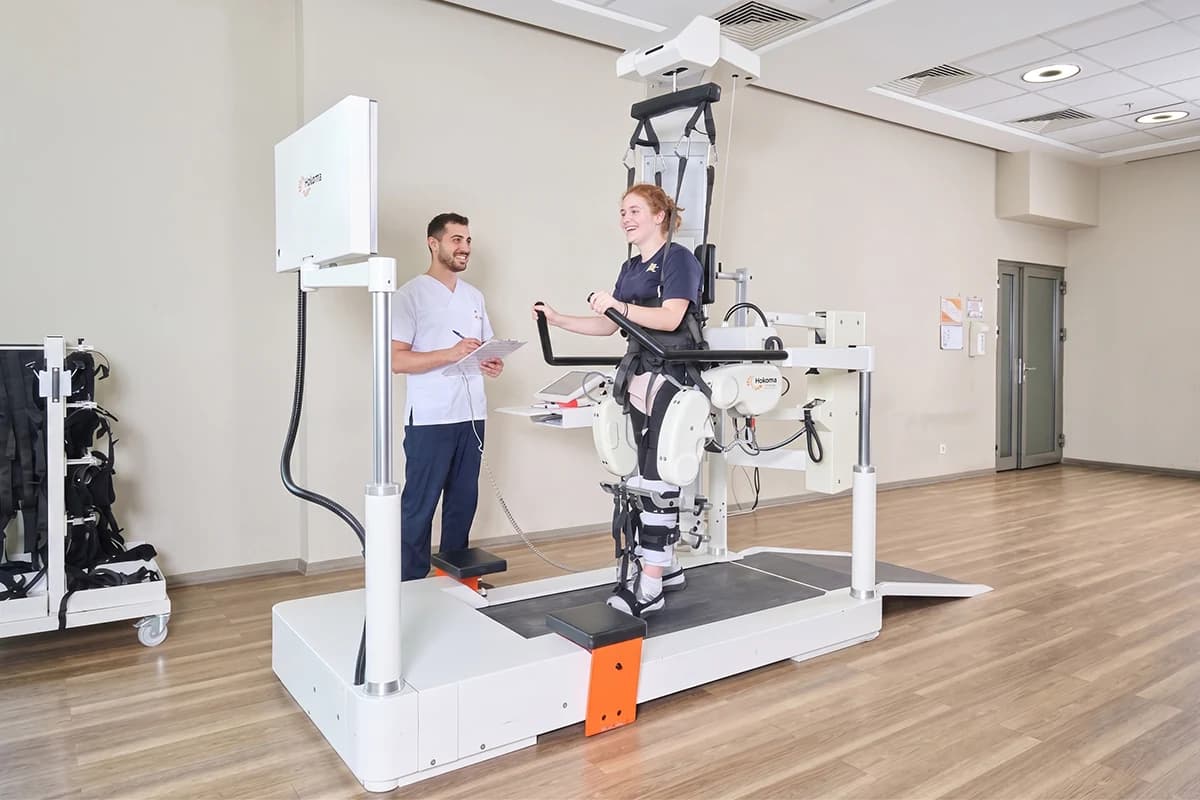
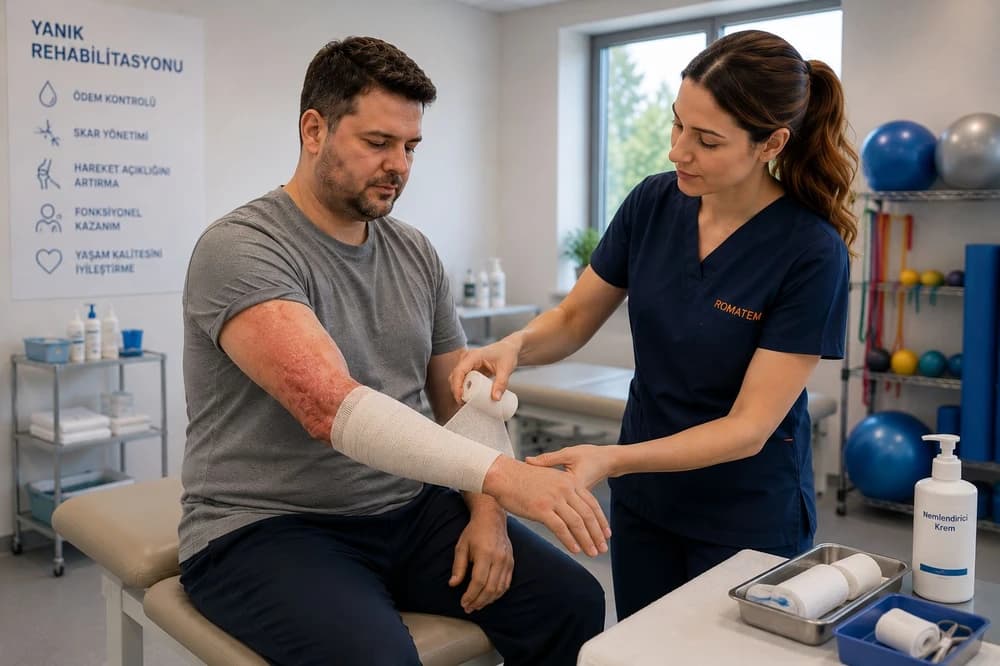
The programme is chosen after a rehabilitation physician has read your records — not from this page.
Your path to this treatment
Nothing here is booked from a page. You send the records you have, a rehabilitation physician reads them, and you get a written answer — including when the answer is that an intensive programme will not help.
4 steps, start to finish
1.Send your records
A discharge summary from the hospital that treated the original event, and any imaging of the affected area — CT, MRI or X-ray.2.A written plan in 48 hours
A rehabilitation physician reviews the case and returns the expected duration, the recommended programme and the centre. Free, no obligation.3.Travel and admission
Where a visa is needed we issue an invitation letter and treatment confirmation naming the dates and the facility. You are met at the airport and driven to the centre by private vehicle or ambulance; a bed for one companion and interpreting during therapy are arranged.4.Treatment, then home
The programme runs, then you leave with a discharge report and a written home exercise plan. Your return journey is organised before you go, with scheduled video reviews so progress does not stop.
In their words
What patients say after a programme
Short videos filmed during therapy: a child’s rehabilitation after a brain tumour, suspended gait training after spinal cord injury, and learning to walk again after a fall. Individual results vary.
Dave Evans on his physical therapy here
Musculoskeletal physiotherapy
Paediatric rehabilitation after a brain tumour
Inside a physiotherapy session
Spinal cord injury — the rehabilitation process
Suspension-assisted gait training
Walking difficulty and restricted movement after a fall
Regaining gait and range of motion
Locations
Where this programme runs — pick a centre.




Questions people actually ask
About this programme
Will I walk again?
That depends on the level and completeness of the injury and on how much recovery has already occurred. We give a realistic answer after assessment rather than an encouraging one before it, and we say when the honest answer is no.
How long is the programme?
Typically four to eight weeks, and often repeated. Spinal cord injury rehabilitation is a long horizon rather than a single admission, and the plan says what the next block should address.
Is a companion required?
Yes, in almost all cases. The training in transfers, skin checks and bowel and bladder routines has to go home with someone, and that person needs the same weeks of practice the patient gets.
What about autonomic dysreflexia?
It is screened for, and the patient and family are trained to recognise and respond to it. For anyone with an injury at or above the sixth thoracic level this is one of the most important things taught during the stay 1.
Can rehabilitation help years after the injury?
Yes. Strength, transfer technique, equipment setup and complication prevention all remain trainable long after the initial recovery period, and many people arrive years later with gains still available.



