
Our approach
Intensity, measurement and the family.
Three principles
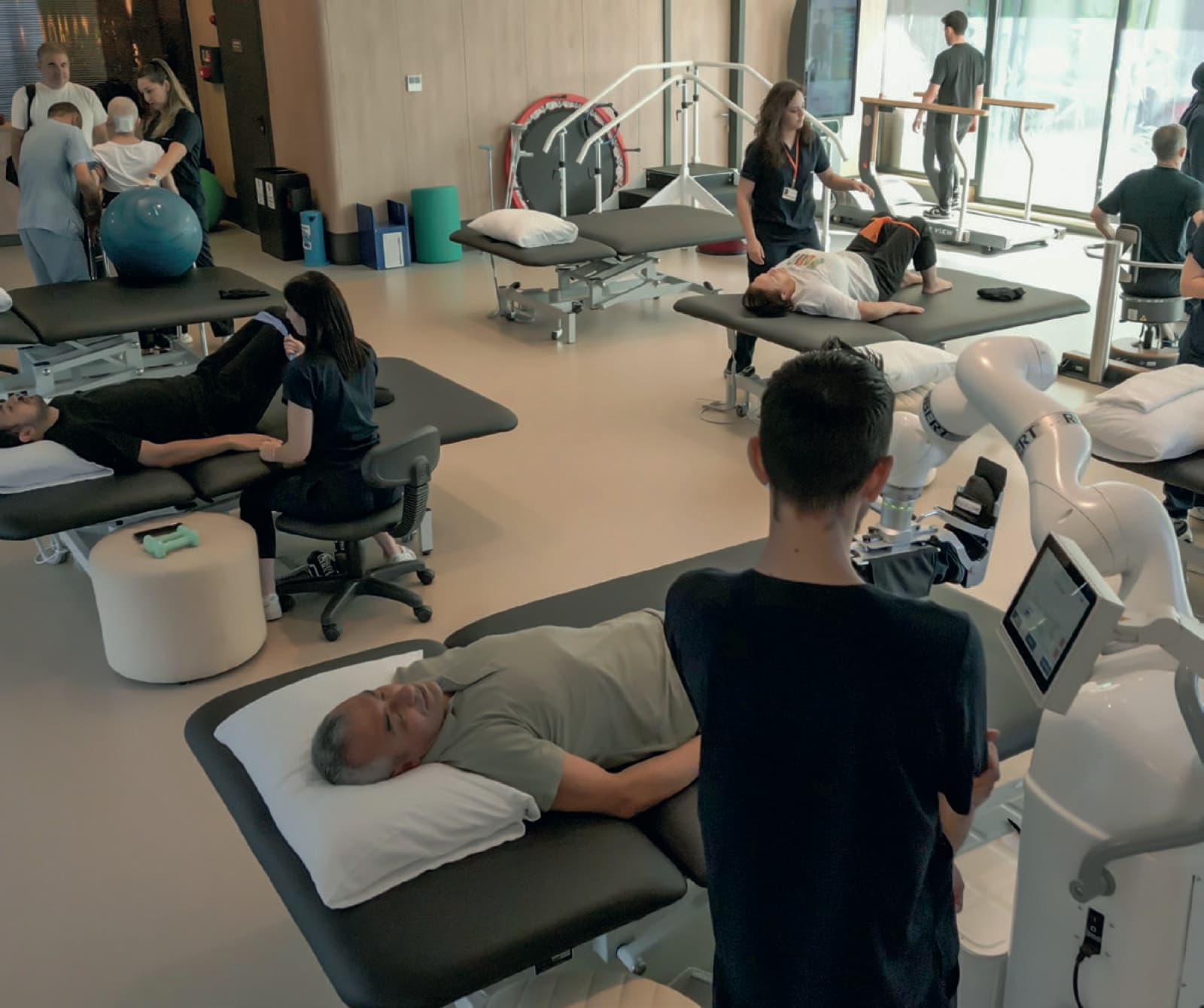
Intensity: four to six hours of therapy a day, because dose determines outcome in neurological rehabilitation more than any single technique. Measurement: the same instrument at admission and discharge, so progress is a number rather than an impression. Family: the person who will support recovery at home is trained during the stay.
Goals are set with you, in words that can be tested
Every programme starts with specific goals agreed with the patient and family — walking a stated distance, transferring independently, managing a named daily task. Vague goals produce vague programmes and make it impossible to say afterwards whether anything worked.
Goals are reviewed weekly and adjusted. A goal that turns out to be unrealistic is changed openly rather than quietly dropped.
Dose is the variable that matters most
Neuroplasticity requires repetition, difficulty and relevance. That makes hours of active therapy per day the number that predicts outcome, more than any individual technique or device.
Technology is used because it increases the number of quality repetitions a session can deliver, not because it replaces the therapist. A device list is the least informative thing on any rehabilitation website, including ours.
Measurement, reported whether or not it flatters us
Standardised measures are recorded at admission, at review points and at discharge, and you receive the numbers rather than a narrative. If a goal was not met, the report says so and explains why.
A provider who cannot tell you what they will measure cannot tell you afterwards whether it worked.
Saying no
We decline programmes where we do not believe the realistic gain justifies the travel and cost, where what is needed is available closer to home, or where the patient is not currently in a state to benefit.
This costs bookings. It is also the only basis on which the rest of what we say is worth anything.
Why a device map matters
Multi-site networks list technology at the group level. A family reads that the group has a paediatric gait robot and books a stay — at the site that has the adult system. A group-level list cannot show which site has which device; a per-centre map can.
What the matrix does
Eleven centres by twenty-nine devices, every cell either filled or empty, each filled cell linking to both the device page and the centre page. If a device is not at a centre, the page says so.
The uncomfortable part
Publishing this means publishing the gaps. Some of our centres do not have some of our devices, and the matrix shows exactly which. We think a family choosing between providers is better served by that than by a group-level list, and we would rather lose a booking to a wrong-site match than complete one.



