
Medical condition
Patellofemoral Pain (Runner’s Knee)
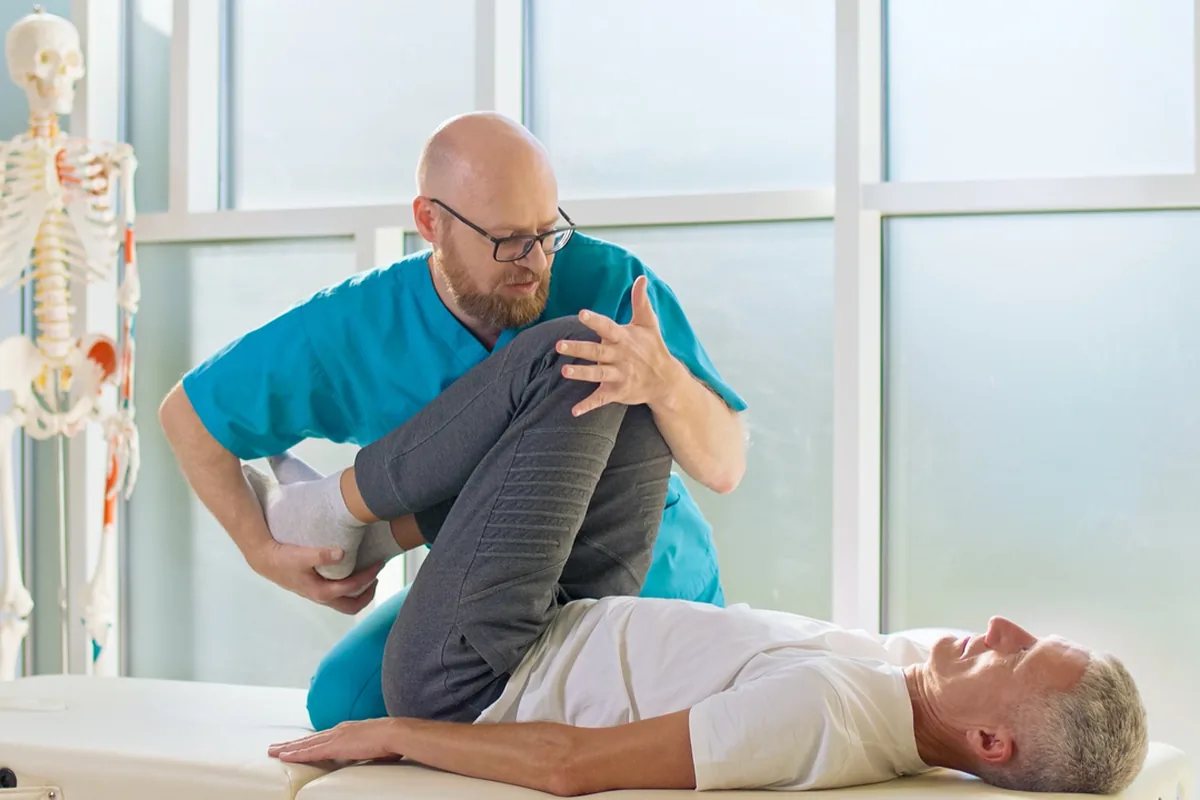
Patellofemoral pain causes aching at the front of the knee, worse on stairs, squatting and after sitting. Hip and knee strengthening is the best-evidenced treatment. Imaging is usually unhelpful because there is often nothing structural to find. Assessment looks above the knee, because weak hip muscles change how the kneecap tracks.
The pattern that identifies it
Diffuse aching around or behind the kneecap rather than a sharp point of pain. Worse going down stairs, squatting, kneeling, and after prolonged sitting. Pain after sitting supports the diagnosis but does not make it: the defining feature is pain around or behind the kneecap brought on by loading the bent knee, and pain on squatting is the most useful single test 6.
It is one of the most common knee problems in active people, accounting for 25–40% of knee problems seen in sports injury clinics 3, and it frequently has no structural finding on a scan. That is not a failure of diagnosis; it reflects that the problem is load distribution rather than damage.
Why the hip matters as well as the knee
Weakness of the hip abductors and external rotators allows the thigh to rotate inwards under load, which changes how the kneecap tracks. Exercise reduces pain whether it targets the hip or the knee, and head-to-head trials have not settled which of the two is better 3.
Programmes that combine hip and knee exercises reduce pain and improve function more than knee exercises alone 3 4, which is why an assessment looks above the knee before prescribing.
What the programme contains
Progressive hip and quadriceps strengthening, movement retraining for the tasks that hurt — stairs, squats, landing — and load management to reduce the volume that provoked it without stopping activity.
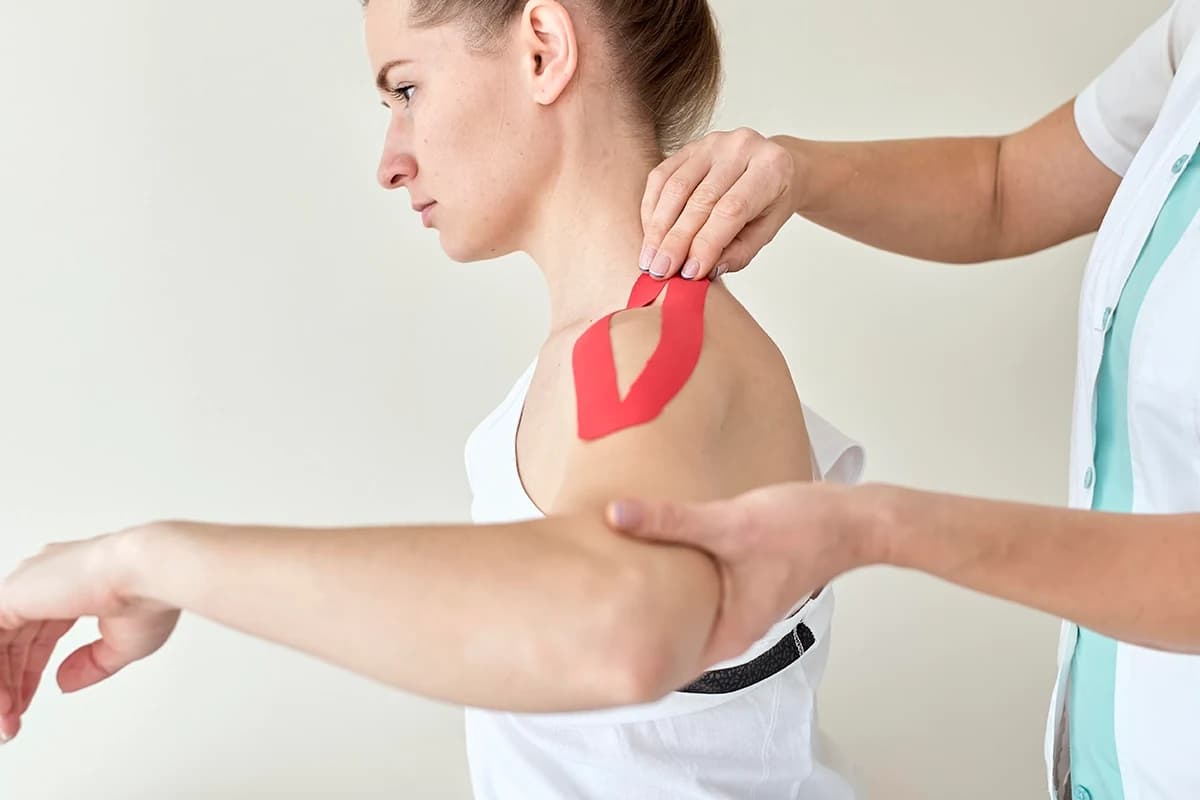
Taping and orthoses can reduce symptoms enough to allow the exercise in the short term. They do not substitute for it, and the evidence for them alone is weak.
What to expect
Recovery is often slower than hoped: in two trials with 310 participants, 55% still reported an unfavourable recovery at three months and 40% at twelve months, whatever treatment they received 5. Symptoms can recur and persist for years 1, which is why the strengthening should not stop the moment the pain settles.
Imaging is not routinely needed. It is indicated where there was a specific injury, where the knee locks or gives way, or where symptoms do not fit the pattern.
What imaging will not settle
Scans in this condition are usually normal or show findings unrelated to the pain, including cartilage changes present in people without symptoms. It is a diagnosis made from the history and the examination.
That matters because a normal scan is frequently taken as meaning nothing is wrong, when the problem is a load and control issue that imaging was never going to show.
Can I keep running with patellofemoral pain?
Usually, if the running is adjusted rather than stopped. In a randomised trial of 69 runners, an 8-week programme of education on managing symptoms and training load improved pain and function as much as the same education combined with exercises or with gait retraining 7. Technique still changes the load on the joint: in a laboratory study of 30 healthy adults, raising step rate by 10% lowered peak patellofemoral force by 14% 8. The trial was small and exercise remains the treatment with the strongest support overall 3, but it puts training-load management at the centre of care for runners 7.
Frequently asked questions
Is this the same as chondromalacia?
Not necessarily. Chondromalacia describes cartilage change; patellofemoral pain describes the symptom pattern. They overlap and are frequently confused, and the treatment is largely the same either way.
Why does it hurt going down stairs?
Stair walking loads the joint to about 3.3 times body weight with the knee bent, against about 1.3 times on level ground 2. It is the classic provoking activity.
Do I need a brace or taping?
They help some people in the short term by changing load or providing feedback. Neither addresses the strength and control that determine the outcome.
How long does it take?
Is running bad for it?
Not inherently. Sudden increases in volume, hills and downhill running provoke it; graded return is part of the treatment rather than something to postpone.
Sources
- Patellofemoral Pain: Clinical Practice Guidelines — Journal of Orthopaedic & Sports Physical Therapy (2019)
- Biomechanics and Pathomechanics of the Patellofemoral Joint — International Journal of Sports Physical Therapy (2016)
- Crossley KM, van Middelkoop M, Callaghan MJ, Collins NJ, et al. 2016 Patellofemoral pain consensus statement from the 4th International Patellofemoral Pain Research Retreat, Manchester. Part 2: recommended physical interventions (exercise, taping, bracing, foot orthoses and combined interventions) — British Journal of Sports Medicine (2016)
- Nascimento LR, Teixeira-Salmela LF, Souza RB, Resende RA. Hip and knee strengthening is more effective than knee strengthening alone for reducing pain and improving activity in individuals with patellofemoral pain: a systematic review with meta-analysis — Journal of Orthopaedic & Sports Physical Therapy (2018)
- Collins NJ, Bierma-Zeinstra SMA, Crossley KM, van Linschoten RL, et al. Prognostic factors for patellofemoral pain: a multicentre observational analysis — British Journal of Sports Medicine (2013)
- Crossley KM, Stefanik JJ, Selfe J, Collins NJ, et al. 2016 Patellofemoral pain consensus statement from the 4th International Patellofemoral Pain Research Retreat, Manchester. Part 1: terminology, definitions, clinical examination, natural history, patellofemoral osteoarthritis and patient-reported outcome measures — British Journal of Sports Medicine (2016)
- Esculier JF, Bouyer LJ, Dubois B, Fremont P, et al. Is combining gait retraining or an exercise programme with education better than education alone in treating runners with patellofemoral pain? A randomised clinical trial — British Journal of Sports Medicine (2018)
- Lenhart RL, Thelen DG, Wille CM, Chumanov ES, et al. Increasing running step rate reduces patellofemoral joint forces — Medicine & Science in Sports & Exercise (2014)
Which therapies would I actually receive?
A therapy is a single method used inside a programme. It is measured in sessions and is not sold separately.
Technologies we use




Locations
Where you can receive this treatment






Related articles
Sports When is it safe to return to sport after an ACL reconstruction?
Not on a date, and not on how the knee feels. The safest published approach combines time and testing: wait until the graft and muscles are genuinely ready, then pass a battery of strength and hop tests before returning to pivoting sport. Waiting longer, up to a point, reduced reinjury risk substantially.Read moreOrthopaedic Why does my knee hurt when going down stairs?
Knee pain going down stairs often comes from the joint behind the kneecap, known as patellofemoral pain, or from knee osteoarthritis. Descending stairs places high load on the front of the knee. Strengthening the hip and thigh muscles, adjusting activity levels and, in the short term, taping or foot orthoses usually help reduce pain.Read moreNeurological How long does it take to recover from a stroke?
Most recovery after a stroke happens in the early months, when the brain is most able to reorganise, and it continues more slowly for a longer period after that. How far someone gets depends mainly on how severe the stroke was, where it happened and how much active therapy follows.Read more



