

Medical condition
Long COVID
Long COVID rehabilitation starts by screening for post-exertional symptom worsening, because it decides the whole approach. Where it is present, activity is paced and increased only when it does not provoke a crash; where it is absent, carefully monitored conditioning can progress. Pushing intensity too early can make symptoms worse.
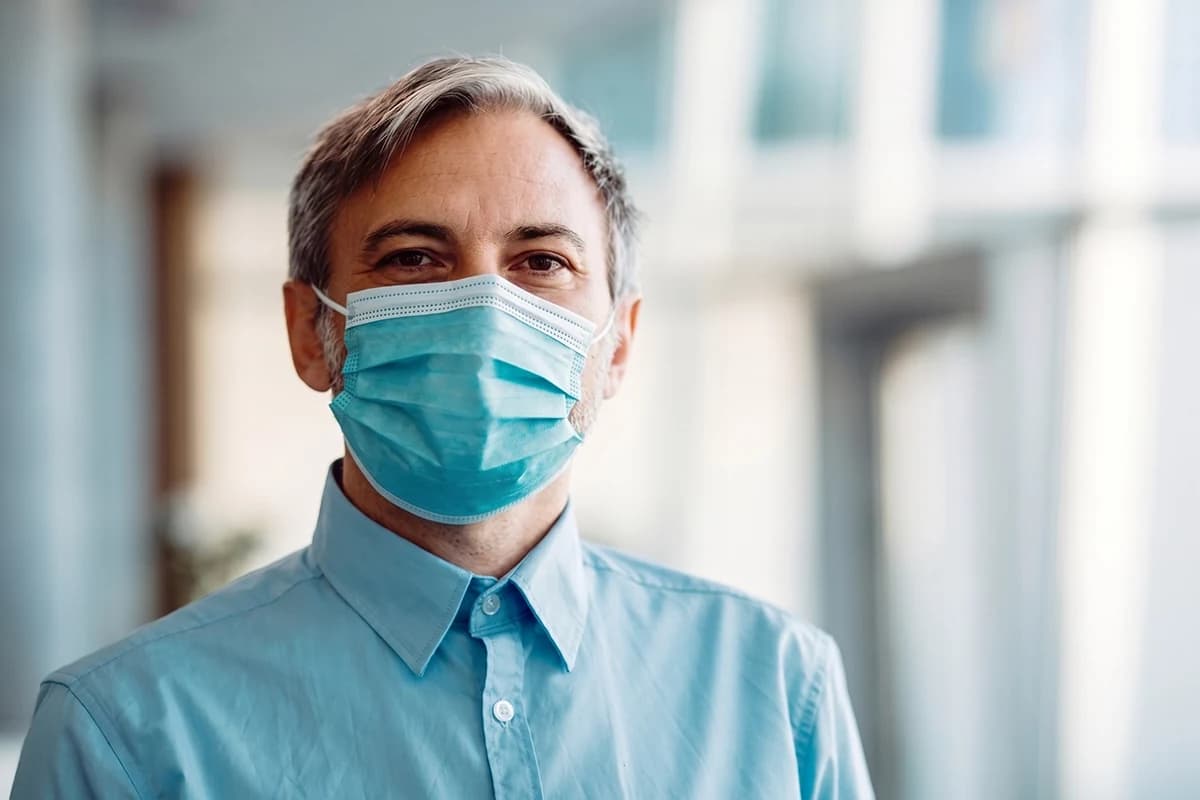
Pacing before progression
A significant proportion of people with long COVID experience post-exertional symptom exacerbation: symptoms worsen substantially in the hours or days after activity that felt manageable at the time. In this group, fixed, quota-based graded exercise programmes can cause harm, and professional guidance advises against them 2.
So the first task is not to build fitness. It is to establish what level of activity can be sustained without triggering a crash, and to hold below it. Progression comes later, slowly, and only if it is tolerated.
Screening comes first
Before any activity programme we screen for post-exertional symptom exacerbation, for orthostatic intolerance, and for cardiac and respiratory complications that need medical rather than rehabilitative management.
This screening determines the entire approach. Someone with breathlessness from deconditioning and someone with post-exertional exacerbation need almost opposite programmes, and they present similarly.
What is treated
Breathing pattern disorders, treated with breathing retraining, although the evidence is limited: in a small randomised trial in young people with long COVID, a programme combining it with psychological support did no better than standard care 7. Orthostatic intolerance, managed with position-based conditioning and practical strategies. Deconditioning, where it is genuinely the problem. Cognitive difficulty. Fatigue, through pacing and activity management rather than through exercise progression.
Where there is no post-exertional exacerbation, conditioning proceeds as it would in any deconditioned patient — carefully monitored, but progressive.
Honesty about the evidence
Long COVID rehabilitation is a developing field and the evidence base is still thin in places. We will tell you where a recommendation rests on good evidence, where it rests on clinical reasoning, and where it is uncertain.
We do not offer protocols that promise resolution, because none has been shown to deliver it. What can be offered is careful management that avoids making things worse and supports gradual improvement where it is possible.
Post-exertional symptom exacerbation changes the rules
Where symptoms worsen substantially in the hours or days after activity, standard graded exercise can cause harm 2. Pacing has to come first and progression only follows once that pattern has settled.
This is screened for at assessment rather than assumed absent, because applying a conventional exercise programme to someone with this pattern is the commonest way these patients are made worse.
Does exercise help long COVID?
In trials, rehabilitation has helped. A 2023 meta-analysis of 14 randomised trials found moderate-certainty improvements in walking capacity and quality of life, although adverse events were reported too poorly to judge safety 3. In a UK trial of 585 adults who had been in hospital with COVID-19, an eight-week online programme of supervised exercise and psychological support modestly improved quality of life 4.
Rehabilitation studies have often not reported how many participants had post-exertional symptom exacerbation 5. It affects about a quarter of people with long COVID in community studies, and more than half in another analysis 56. For people who have it, professional guidance advises pacing and symptom-led activity rather than fixed graded exercise 2.
Frequently asked questions
Should I push through the fatigue?
Not if you experience post-exertional symptom exacerbation — symptoms worsening in the hours or days after activity. In that pattern, pushing causes harm. We screen for it before recommending any activity programme, because the correct approach is opposite depending on the answer.
Is exercise safe in long covid?
It depends on whether post-exertional symptom worsening is present. Where it is, pacing precedes progression and pushing through causes setbacks.
What is screened before starting?
Cardiac and respiratory causes of the symptoms, blood pressure regulation on standing, anaemia and thyroid function 1. Treatable causes are excluded before rehabilitation is assumed.
Will it resolve?
Many people improve substantially over months. Recovery is often uneven, with setbacks, and that pattern is expected rather than a sign of failure.
What helps the breathlessness?
Breathing pattern retraining where the pattern has become dysfunctional, alongside graded activity within tolerance.
Is the evidence strong?
No, and we say so. This is a recent condition and the evidence base is still developing; we describe what is supported and what is being tried.
Sources
- COVID-19 rapid guideline: managing the long-term effects of COVID-19 (NG188) — National Institute for Health and Care Excellence (2020)
- World Physiotherapy. Safe rehabilitation approaches for people living with Long COVID: physical activity and exercise (Briefing paper 9) — World Physiotherapy (2021)
- Pouliopoulou DV, Macdermid JC, Saunders E, Peters S, et al. Rehabilitation interventions for physical capacity and quality of life in adults with post-COVID-19 condition: a systematic review and meta-analysis — JAMA Network Open (2023)
- McGregor G, Sandhu H, Bruce J, Sheehan B, et al. Clinical effectiveness of an online supervised group physical and mental health rehabilitation programme for adults with post-covid-19 condition (REGAIN study): multicentre randomised controlled trial — BMJ (2024)
- Pouliopoulou DV, Hawthorne M, MacDermid JC, Billias N, et al. Prevalence and impact of postexertional malaise on recovery in adults with post-COVID-19 condition: a systematic review with meta-analysis — Archives of Physical Medicine and Rehabilitation (2025)
- An Y, Guo Z, Fan J, Luo T, et al. Prevalence and measurement of post-exertional malaise in post-acute COVID-19 syndrome: a systematic review and meta-analysis — General Hospital Psychiatry (2024)
- Wells C, Christie D, Johnston R, Knight F, et al. The breath and mind connection in young people with post-COVID syndrome: feasibility and acceptability of a pilot randomised co-designed intervention — European Journal of Pediatrics (2026)
Which therapies would I actually receive?
A therapy is a single method used inside a programme. It is measured in sessions and is not sold separately.


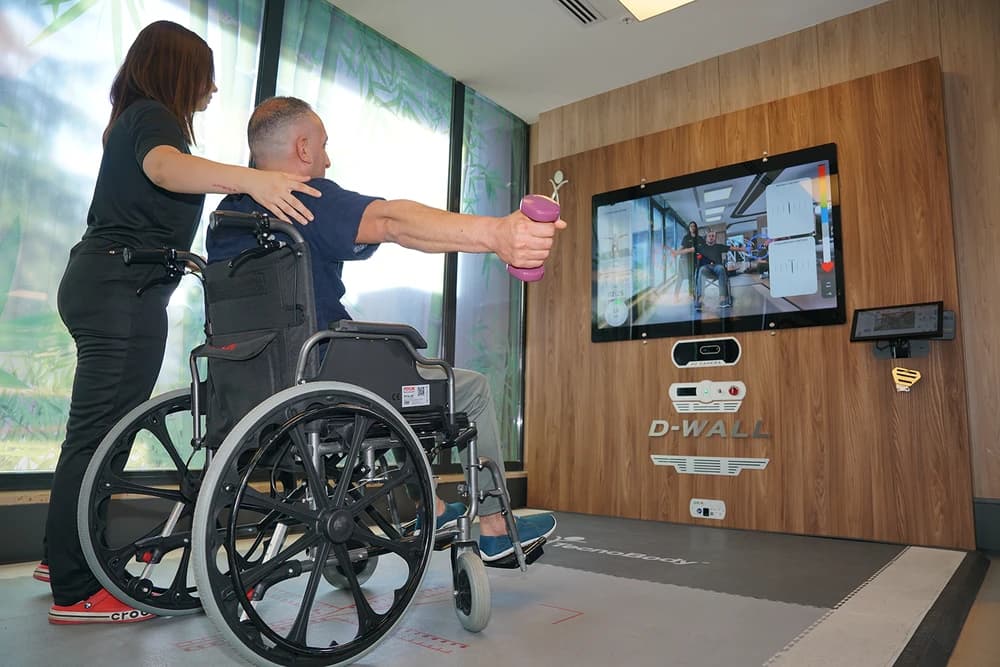
Technologies we use

Locations
Where you can receive this treatment


Related articles
Pulmonary How can pacing help long COVID fatigue?
Pacing means balancing activity and rest to stay within your energy limits and avoid crashes. Many people with long COVID experience post-exertional malaise, a worsening of symptoms after physical or mental effort. Pacing, planning activities, and increasing activity cautiously and only when stable are safer than pushing through fatigue.Read moreNeurological How long does it take to recover from a stroke?
Most recovery after a stroke happens in the early months, when the brain is most able to reorganise, and it continues more slowly for a longer period after that. How far someone gets depends mainly on how severe the stroke was, where it happened and how much active therapy follows.Read moreNeurological Can you walk again after a stroke?
Many people walk again after a stroke, including many who cannot stand at first. The chances are highest when some leg movement returns early and when walking practice starts as soon as it is safe. Walking often comes back before full arm recovery, sometimes with a stick, splint or other support.Read more



