
Assessment and measurement
Digital sensor motion analysis
Wearable sensors that record range of motion and movement quality during therapy, so the plan is adjusted on data rather than impression. The patient sees at the moment of movement whether it was correct, and the sensor record replaces self-reported home exercise, which is routinely overstated.
Movement quality, quantified
Wearable sensors track joint angle, movement speed, symmetry and repetition count during exercise, feeding it back live. The patient sees whether the movement was performed correctly at the moment they perform it, rather than being corrected afterwards.
It also counts. Prescribed exercise adherence is routinely over-reported, and a sensor record replaces self-report with data 1.
Who it is used for
Home exercise programme monitoring, post-surgical range and progression tracking, sports rehabilitation, and any programme where exercise technique determines whether the exercise works — which is most of them.
It is particularly useful in the transition from supervised to independent exercise, which is where most programmes lose their effect.
Why feedback timing matters
Motor learning depends on knowing the result of a movement close to when it happened. Feedback given at the next appointment, a week later, does very little.
Real-time feedback also identifies the patient who is doing the exercise diligently and incorrectly — a common and frustrating pattern that looks like non-response to treatment.
Load, counted rather than assumed
Sensors record how much load was actually applied, how many repetitions were completed and how technique changed as fatigue set in. Self-reported exercise volume is unreliable, and how far it strays from the truth varies widely from person to person 1.
The value is in progression: an exercise programme that is not measurably harder in week four than in week one is not a programme, and the data makes that visible.
What the data changes in practice
Two things, both of which are otherwise guesswork. Whether the prescribed load was actually used — people habitually work below what was set once nobody is watching — and whether technique held as fatigue arrived.
The second matters more than it sounds. Repetitions performed with deteriorating form after the sixth set are not the repetitions that were prescribed, and they load joints and tissues in ways the programme did not intend.
How accurate are wearable sensors?
Accurate enough to track range and repetitions, within limits. A systematic review of 42 studies comparing wearable sensors with laboratory motion capture found that accuracy is higher for simple movements than for complex ones, and better at the joints of the legs; far fewer studies have tested whether readings repeat reliably from one session to the next 2. Sensor readings are therefore most trustworthy when the same exercise is measured in the same way from week to week.
Whether feedback from sensors improves recovery is a separate question. After stroke, a review of 13 randomised trials found moderate-quality evidence that real-time sensor feedback during walking training improves balance and functional mobility, but no benefit for activities of daily living 3. The trials were small, with 304 participants in total 3. The feedback is a training aid; the exercise programme remains the treatment.
Sources
- Nicolson PJA, Hinman RS, Wrigley TV, Stratford PW, et al. Self-reported home exercise adherence: a validity and reliability study using concealed accelerometers — Journal of Orthopaedic and Sports Physical Therapy (2018)
- Poitras I, Dupuis F, Bielmann M, Campeau-Lecours A, et al. Validity and reliability of wearable sensors for joint angle estimation: a systematic review — Sensors (2019)
- Wang FY, Xu Y, Luo LY, Liang HB, et al. Can wearable real-time biofeedback gait training devices improve gait speed, balance, functional mobility and activities of daily living (ADL) in individuals post-stroke? A systematic review and meta-analysis of randomized controlled trials — Journal of NeuroEngineering and Rehabilitation (2025)
Conditions this device is used for
The 5 conditions where this device is part of a routine programme, grouped by area. It is one tool inside the plan, never the plan itself.
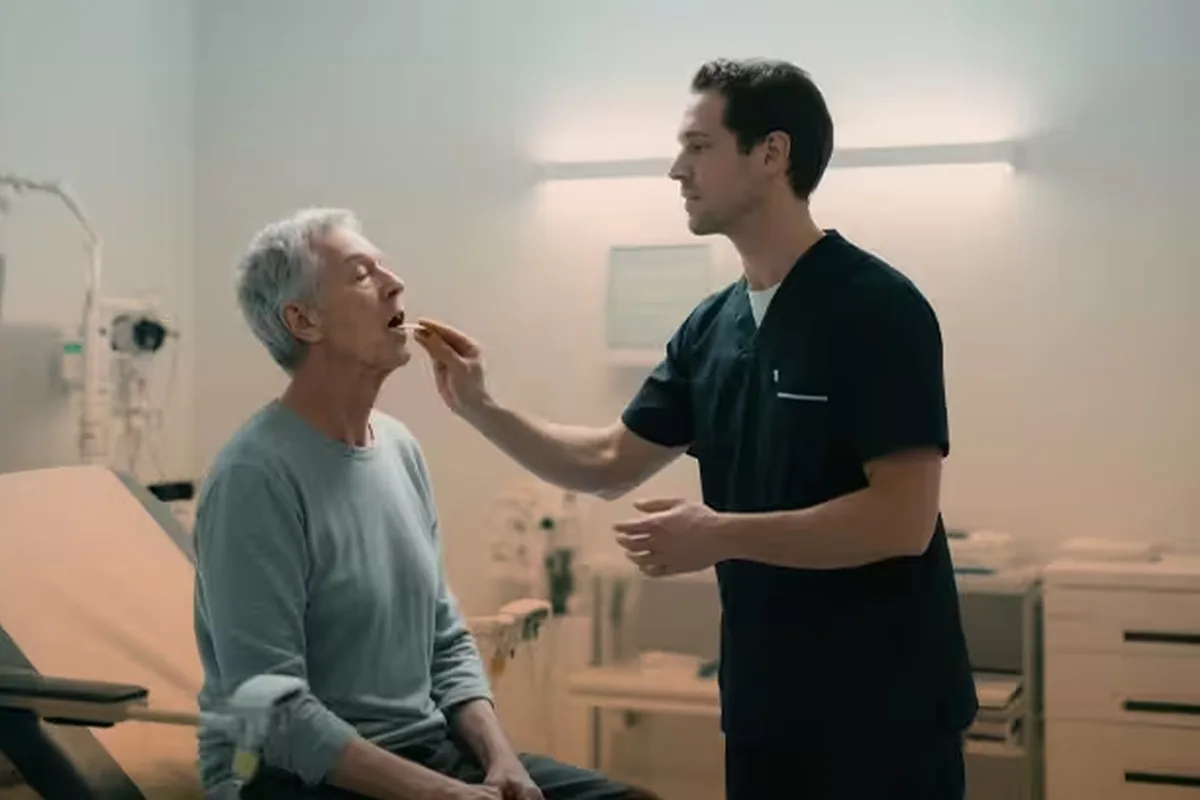
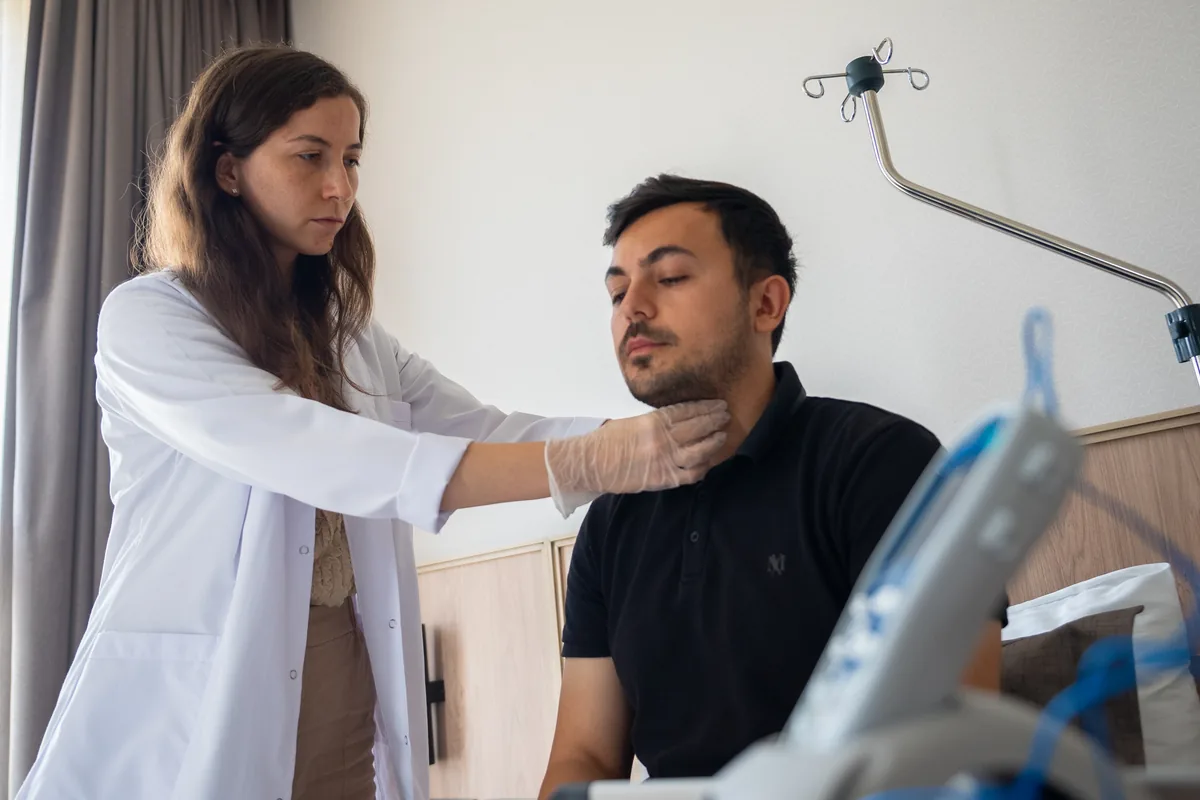

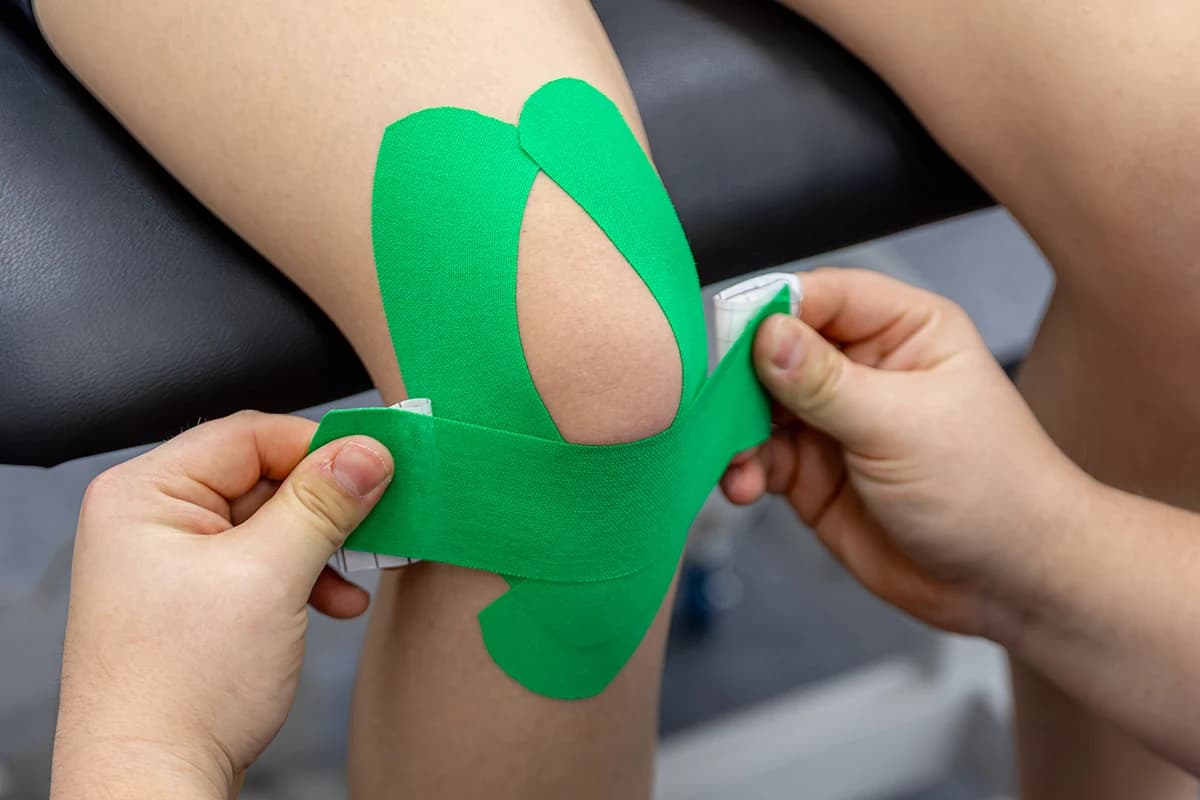
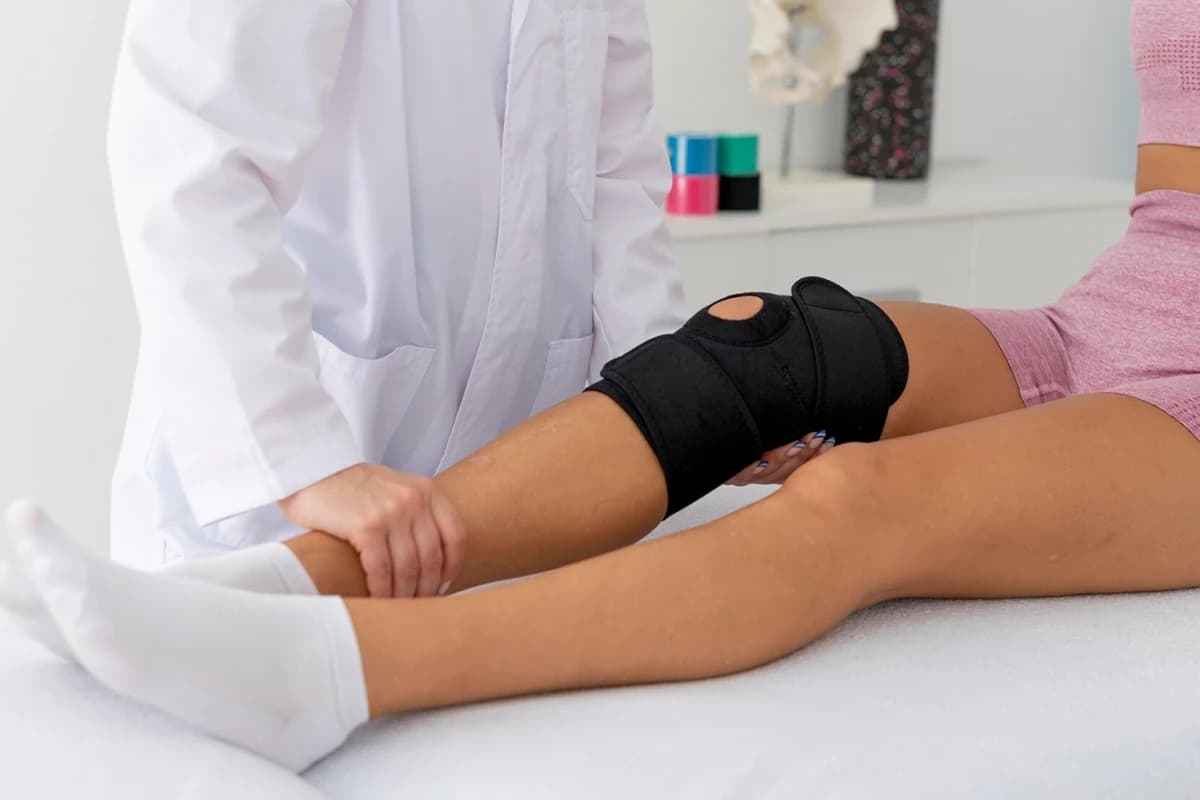
Devices are used inside a programme and chosen after examination — they are not booked separately.
Your path to this treatment
Nothing here is booked from a page. You send the records you have, a rehabilitation physician reads them, and you get a written answer — including when the answer is that an intensive programme will not help.
4 steps, start to finish
1.Send your records
A discharge summary from the hospital that treated the original event, and any imaging of the affected area — CT, MRI or X-ray.2.A written plan in 48 hours
A rehabilitation physician reviews the case and returns the expected duration, the recommended programme and the centre. Free, no obligation.3.Travel and admission
Where a visa is needed we issue an invitation letter and treatment confirmation naming the dates and the facility. You are met at the airport and driven to the centre by private vehicle or ambulance; a bed for one companion and interpreting during therapy are arranged.4.Treatment, then home
The programme runs, then you leave with a discharge report and a written home exercise plan. Your return journey is organised before you go, with scheduled video reviews so progress does not stop.
In their words
What patients say after a programme
Short videos filmed during therapy: a child’s rehabilitation after a brain tumour, suspended gait training after spinal cord injury, and learning to walk again after a fall. Individual results vary.
Dave Evans on his physical therapy here
Musculoskeletal physiotherapy
Paediatric rehabilitation after a brain tumour
Inside a physiotherapy session
Spinal cord injury — the rehabilitation process
Suspension-assisted gait training
Walking difficulty and restricted movement after a fall
Regaining gait and range of motion
Locations
Centres that have this device — pick one.




Questions people actually ask
About this device
Why measure exercise?
Because progression is what produces change, and without measurement it does not reliably happen. People plateau while believing they are progressing.
Does it replace supervision?
No. It informs the therapist and makes remote review possible, which matters after discharge.
Can it be used at home?
Some components can, which is how the home programme is reviewed during remote follow-up.
What is in the report?
Load, repetitions, and the trend over the programme — the figures a therapist in your own country needs to continue.
Is a paper exercise diary not enough?
It is a weak record. In a study of 54 adults doing a home strengthening programme for knee pain, with a sensor hidden in their ankle weight, diaries over 12 weeks recorded a median of 220 exercises against 176 counted by the sensor 1. The participants’ own ratings of their adherence were only weakly related to the sensor record 1.



