

Medical condition
Patellar Tendinopathy (Jumper's Knee)
Patellar tendinopathy is pain at the lower pole of the kneecap in athletes who jump and land repeatedly. The tendon has failed to adapt to the load placed on it. Rest reduces pain but does not restore capacity, so the treatment is graded loading over months rather than time off.
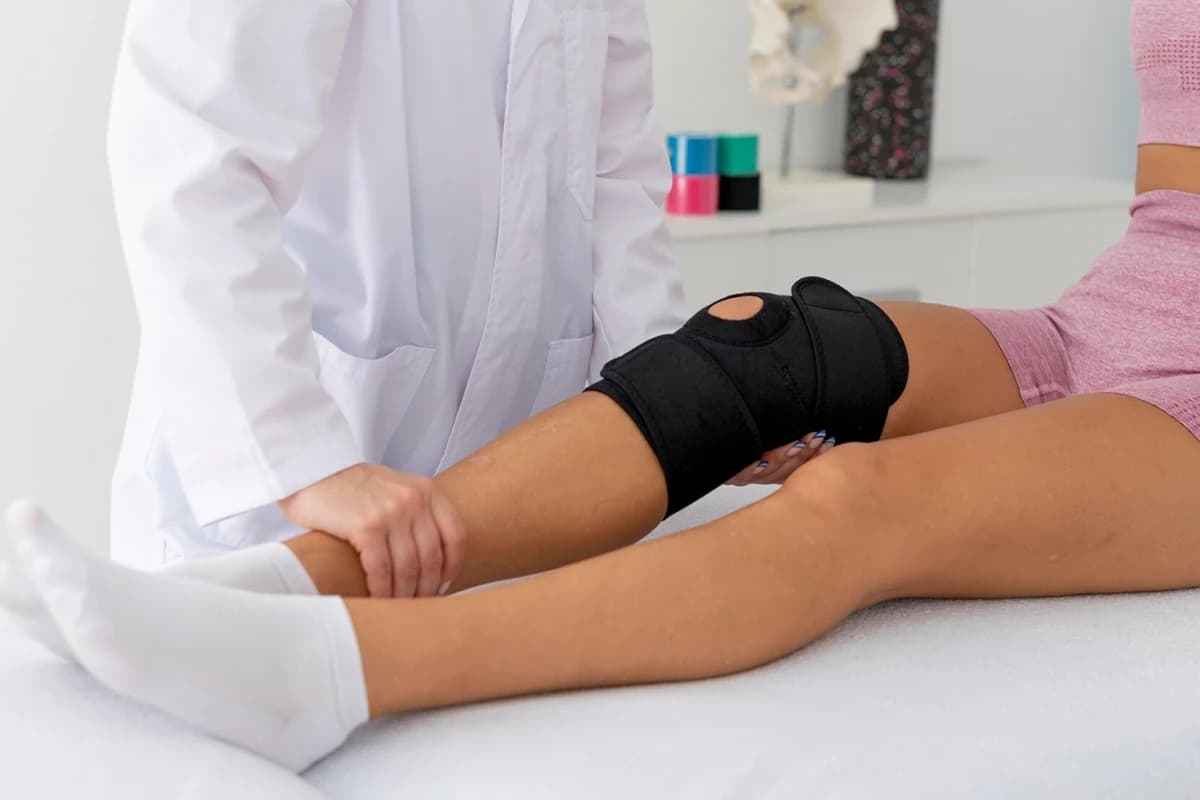
A capacity problem, not an injury
Pain appears when jumping volume increases faster than the tendon can adapt — a new season, a change of surface, a growth spurt. The tendon is not torn; it is under-prepared for what is being asked of it.
Imaging findings correlate poorly with symptoms. Tendons that look abnormal on ultrasound are found in athletes with no pain at all; such changes raise the risk of symptoms later, roughly fourfold in pooled studies 3, but they do not show what the tendon can tolerate today, so scans are not used to decide whether an athlete can play.
The loading programme
It moves through four stages: isometric holds as a well-tolerated first load, slow strengthening against increasing load, energy-storage exercise, and finally return to sport-specific jumping and landing 1. Isometrics were once thought to relieve pain immediately, but well-designed studies have not confirmed that effect 1. Each stage is entered on criteria, not on weeks elapsed.
Some pain during loading is acceptable and expected; the rule is that it settles afterwards rather than building from one day to the next. Training through worsening morning pain is what turns a manageable tendon into a season-ending one.
What we do not recommend
Corticosteroid injection into the patellar tendon: in a randomised trial its early relief had faded by six months 2, and rupture has been reported after repeated injections 5. Complete rest, which reduces capacity further. And passive treatment alone — shockwave and similar modalities may help alongside loading but replace nothing; used on its own during the competitive season, shockwave was no better than a sham treatment 4.
Why it persists in people who keep playing
The tendon is loaded every time the athlete jumps and lands, and pain in this condition often permits continued play. Recovery while competing is slow: in a trial of athletes who kept playing through the season, symptom scores improved only modestly over 22 weeks 4.
Management is therefore about controlling the total load rather than resting: reducing jumping volume while adding heavy slow resistance work, over months rather than weeks.
Which exercise programme has the strongest evidence?
A 2021 randomised trial compared progressive tendon loading with eccentric decline squats in 76 athletes whose symptoms had lasted a median of two years 1. After 24 weeks, the progressive programme improved the VISA-P score, a 0–100 measure of pain, function and ability to play sport, by 28 points against 18, and its exercises hurt less to perform 1. An earlier, smaller trial found that heavy slow resistance training held its benefit at six months, while the early relief from a corticosteroid injection faded 2. Adherence was modest in both arms of the larger trial, and its authors suggested supervision might improve results 1.
When can an athlete return to full jumping?
When loading no longer provokes more than mild pain, rather than on a set date. In the progressive programme above, each stage began only after the previous one had been done for at least a week and a single-leg squat hurt no more than 3 out of 10, and return to competition was advised once sport-specific drills stayed within that limit 1. Activities that caused considerable tendon pain were cut back or avoided for at least four weeks while the programme progressed 1. Expectations need to be realistic: even so, only 43% were back in their sport at pre-injury level after 24 weeks 1.
Frequently asked questions
Can I keep training?
Usually yes, with modified volume. Complete rest relieves pain and leaves the tendon weaker, so symptoms return on the first return to jumping.
What does the loading programme involve?
Heavy slow resistance work — squats and leg press with substantial load and a slow tempo — progressed over months. Pain during the exercise at a tolerable level is acceptable.
Do injections help?
Corticosteroid is avoided in this tendon: in a randomised trial its short-term relief faded by six months while heavy slow resistance training kept its gains 2, and rupture has been reported after repeated injections 5. Other injectables have weak evidence: platelet-rich plasma added to an exercise programme was no better than a saline injection in a randomised trial 6.
How long does it take?
Consistent loading over months. This is slower than most people expect and it is the main reason programmes are abandoned.
Does a scan change treatment?
Rarely. Tendon changes appear on imaging in athletes without symptoms, and the diagnosis is clinical.
Sources
- Breda SJ, Oei EHG, Zwerver J, Visser E, et al. Effectiveness of progressive tendon-loading exercise therapy in patients with patellar tendinopathy: a randomised clinical trial — British Journal of Sports Medicine (2021)
- Kongsgaard M, Kovanen V, Aagaard P, Doessing S, et al. Corticosteroid injections, eccentric decline squat training and heavy slow resistance training in patellar tendinopathy — Scandinavian Journal of Medicine & Science in Sports (2009)
- McAuliffe S, McCreesh K, Culloty F, Purtill H, et al. Can ultrasound imaging predict the development of Achilles and patellar tendinopathy? A systematic review and meta-analysis — British Journal of Sports Medicine (2016)
- Zwerver J, Hartgens F, Verhagen E, van der Worp H, et al. No effect of extracorporeal shockwave therapy on patellar tendinopathy in jumping athletes during the competitive season: a randomized clinical trial — American Journal of Sports Medicine (2011)
- Chen SK, Lu CC, Chou PH, Guo LY, et al. Patellar tendon ruptures in weight lifters after local steroid injections — Archives of Orthopaedic and Trauma Surgery (2009)
- Scott A, LaPrade RF, Harmon KG, Filardo G, et al. Platelet-rich plasma for patellar tendinopathy: a randomized controlled trial of leukocyte-rich PRP or leukocyte-poor PRP versus saline — American Journal of Sports Medicine (2019)
Which therapies would I actually receive?
A therapy is a single method used inside a programme. It is measured in sessions and is not sold separately.

Technologies we use


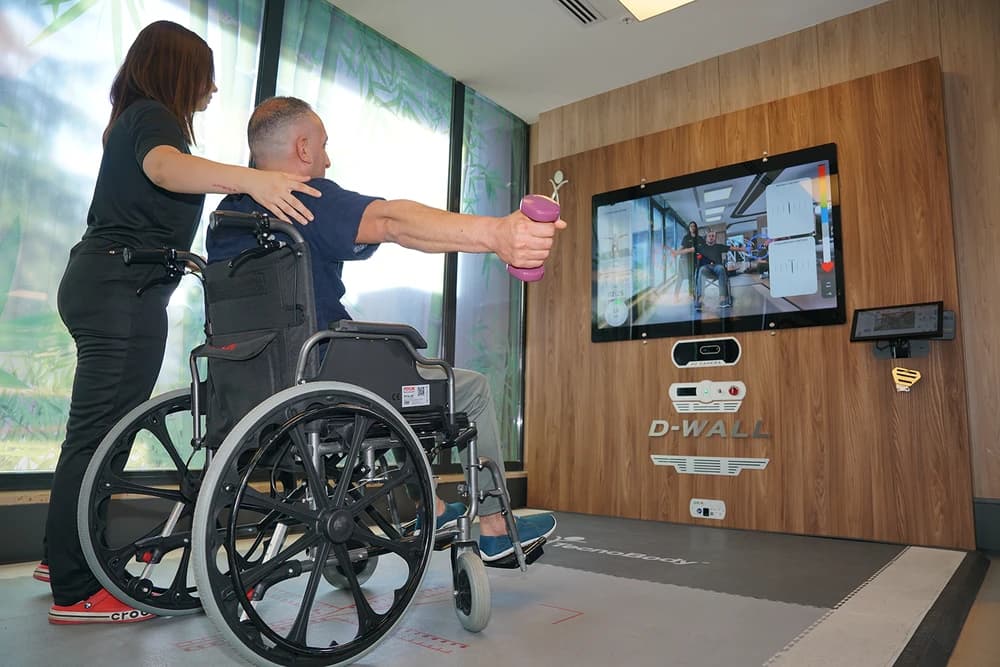

Locations
Where you can receive this treatment




Related articles
Sports How is jumper's knee treated, and when can you return to sport?
Jumper's knee, or patellar tendinopathy, is treated mainly with a progressive loading programme that builds tendon capacity over a period of weeks, alongside adjusting jumping load. Heavy slow resistance training gave lasting improvement in a trial, while steroid injections helped briefly but symptoms returned. Return to sport is guided by pain response and function.Read moreNeurological How long does it take to recover from a stroke?
Most recovery after a stroke happens in the early months, when the brain is most able to reorganise, and it continues more slowly for a longer period after that. How far someone gets depends mainly on how severe the stroke was, where it happened and how much active therapy follows.Read moreNeurological Can you walk again after a stroke?
Many people walk again after a stroke, including many who cannot stand at first. The chances are highest when some leg movement returns early and when walking practice starts as soon as it is safe. Walking often comes back before full arm recovery, sometimes with a stick, splint or other support.Read more



