

Medical condition
Dementia
Rehabilitation in dementia does not restore memory. What it aims to do is maintain physical function, lower the risk of falls, support independence in daily activities for longer, and train the family — all of which change how the years ahead are lived. Regular exercise is among the better-supported interventions, and its main effects are physical.
What rehabilitation can and cannot change
It cannot slow the underlying disease or restore lost memory, and any programme claiming to should be treated with scepticism.
It can maintain walking and balance, reduce falls, preserve independence in specific daily tasks, manage continence, and reduce the physical decline that otherwise compounds the cognitive one. In practice that is a substantial difference to quality of life.
Exercise helps the body more than the memory
Regular physical exercise improves physical fitness in people with dementia, but in a trial of 494 people with mild to moderate dementia it did not slow cognitive decline 3. Pooled trials suggest it may help with daily activities, although that evidence is of very low quality, and they found no clear benefit for depression 2.
It does not reverse cognitive decline. The honest position is that exercise is one of the better-supported interventions available in dementia, and that its main effects are physical and functional.
Reversible causes are worth excluding first
Cognitive decline in an older adult can be caused or worsened by thyroid disease, B12 deficiency, depression, medication effects, sleep apnoea, hearing loss and chronic pain.
Several of these are treatable. Assessment should exclude them before decline is attributed to a progressive dementia, and it is worth asking whether that has been done.
Supporting the family is part of the treatment
Carer training in how to assist safely, how to structure the day, how to manage distress, and how to protect their own health is a core component rather than an add-on.
Carers who report greater emotional stress, or who feel trapped by caring, are more likely to move the person into residential care 4.
What the environment can do that therapy cannot
Consistent routine, visible cues, reduced clutter, good lighting and clear labelling reduce confusion and preserve independence more reliably than most direct interventions.
These are cheap, they are within the family’s control, and they are frequently the last thing anyone suggests. Setting them up early is worth more than starting them once the difficulty is advanced.
The carer’s health is part of the treatment
Carer strain predicts admission to residential care, alongside the severity of the dementia, behavioural symptoms and dependence in daily activities 45. A family that is exhausted and unsupported cannot sustain care at home regardless of how well the person is managed.
So the assessment asks about the carer directly — sleep, health, isolation, and what happens if they become unwell. That conversation is part of the clinical work rather than a courtesy.
Can falls be prevented in dementia?
Partly, and the evidence is weaker than for older people in general. A 2021 meta-analysis of exercise programmes for people living at home with cognitive impairment found a reduction of about 30% in the rate of falls, but the effect came from a few trials, the number of people who fell did not change, and the evidence was rated low quality 6.
In care homes, a 2025 Cochrane review found that exercise may reduce the risk of falling in residents with cognitive impairment (low-certainty evidence), and that fall-prevention programmes tailored to each resident, including those living with dementia, and delivered with care staff probably reduce falls 7. The benefit of exercise does not last once it stops 7. The aim is therefore a routine the family can keep going at home.
Frequently asked questions
Can rehabilitation slow dementia?
What should be excluded first?
Depression, thyroid disease, vitamin B12 deficiency, medication effects and poor sleep, all of which mimic dementia and are treatable. This is worth doing before accepting a diagnosis.
Is exercise really useful?
How do we handle refusal of care?
Usually by changing the approach rather than insisting: timing, the person giving the help, how it is offered. Resistance is frequently a communication problem rather than a behavioural one.
Should we correct mistaken beliefs?
Rarely. Repeatedly correcting produces distress without producing memory. Responding to the feeling behind the statement works better and is kinder.
Sources
- Dementia: assessment, management and support for people living with dementia and their carers (NG97) — National Institute for Health and Care Excellence (2018)
- Forbes D, Forbes SC, Blake CM, Thiessen EJ, et al. Exercise programs for people with dementia — Cochrane Database of Systematic Reviews (2015)
- Lamb SE, Sheehan B, Atherton N, Nichols V, et al. Dementia And Physical Activity (DAPA) trial of moderate to high intensity exercise training for people with dementia: randomised controlled trial — BMJ (2018)
- Gaugler JE, Yu F, Krichbaum K, Wyman JF. Predictors of nursing home admission for persons with dementia — Medical Care (2009)
- Toot S, Swinson T, Devine M, Challis D, et al. Causes of nursing home placement for older people with dementia: a systematic review and meta-analysis — International Psychogeriatrics (2017)
- Li F, Harmer P, Eckstrom E, Ainsworth BE, et al. Efficacy of exercise-based interventions in preventing falls among community-dwelling older persons with cognitive impairment: is there enough evidence? An updated systematic review and meta-analysis — Age and Ageing (2021)
- Dyer SM, Kwok WS, Suen J, Dawson R, et al. Interventions for preventing falls in older people in care facilities — Cochrane Database of Systematic Reviews (2025)
Which therapies would I actually receive?
A therapy is a single method used inside a programme. It is measured in sessions and is not sold separately.
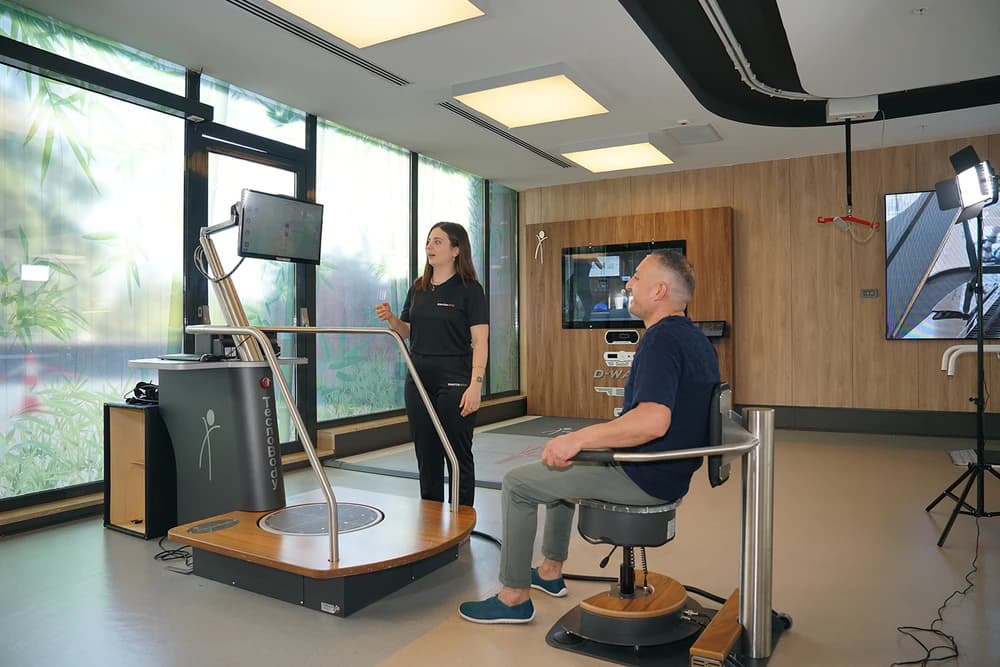
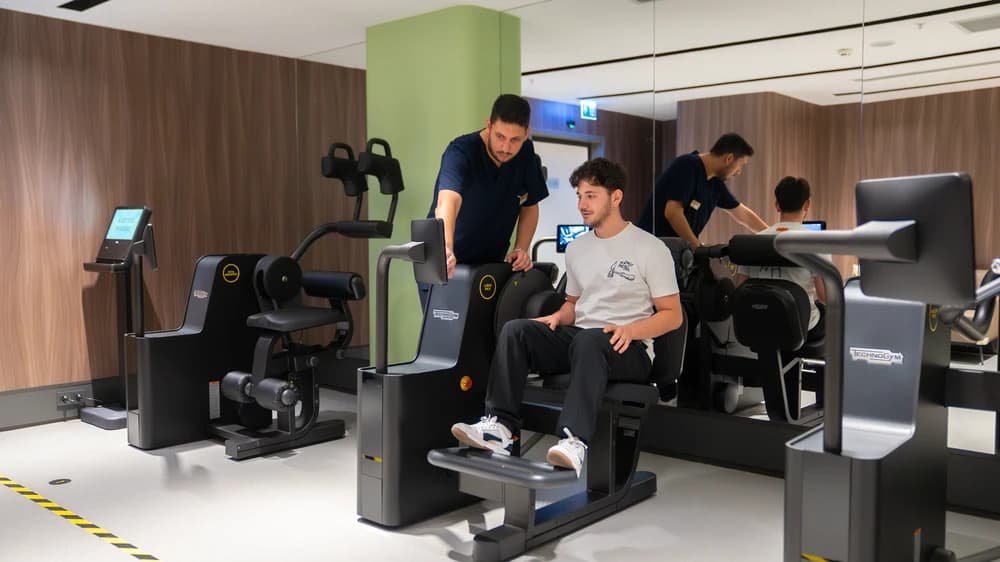
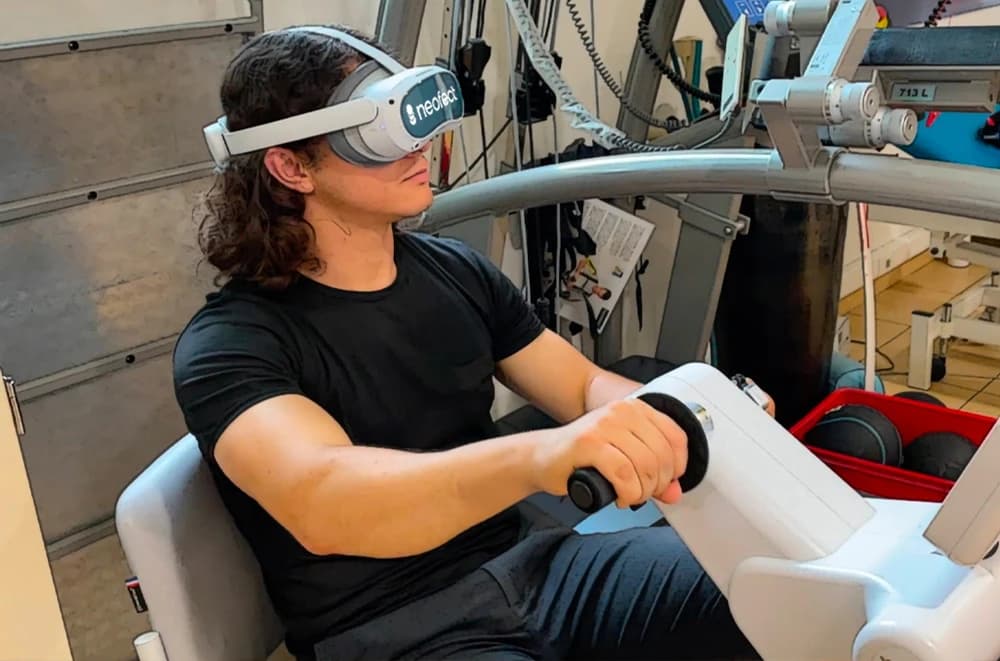
Technologies we use
Locations
Where you can receive this treatment





Related articles
Cognitive Does exercise help people living with dementia?
Exercise may help people with dementia stay more independent in daily activities such as walking, dressing and getting out of a chair. Research has not shown that it slows memory decline or reverses dementia. Regular, adapted activity also supports balance, mood, sleep and fitness, and it can reduce the risk of falls.Read moreNeurological How long does it take to recover from a stroke?
Most recovery after a stroke happens in the early months, when the brain is most able to reorganise, and it continues more slowly for a longer period after that. How far someone gets depends mainly on how severe the stroke was, where it happened and how much active therapy follows.Read moreNeurological Can you walk again after a stroke?
Many people walk again after a stroke, including many who cannot stand at first. The chances are highest when some leg movement returns early and when walking practice starts as soon as it is safe. Walking often comes back before full arm recovery, sometimes with a stick, splint or other support.Read more



