
Other systems
Multi-axis robotic rehabilitation system
A robotic arm that attaches to the patient's arm or leg, learns an exercise from the therapist's hands and repeats it with the same path and force every time, so the number of repetitions goes up from the earliest days of rehabilitation.
The therapist shows the movement once; the robot repeats it
The limb is strapped to the robot's arm while the patient lies or sits on the treatment bed. The therapist guides the leg or arm through the exercise they want — a knee bend, a hip lift, a reach — and the robot records the path. It then repeats that movement, in as many planes as the joint needs, for as many repetitions as the plan says.
The movement can be fully passive, assisted only where the patient's own effort fades, or resisted, and the setting is changed within a session as the patient tires or improves. The robot measures the force the patient contributes on every repetition.
Who it is used for
The early phase after stroke, spinal cord injury and brain injury, when the patient is still largely in bed and the aim is to keep joints moving and to start rebuilding movement before standing is possible. Also after orthopaedic surgery, where the permitted range is fixed and repetitions within it matter.
It is used for the leg more often than the arm, because for the arm the group's dedicated upper limb robots are usually the better tool, and the assessment decides which.
Why repetitions matter this early
Recovery of movement after neurological injury depends on the number of correctly performed repetitions, and in the first weeks that number is limited by what a therapist can physically do by hand. A robot that repeats the movement precisely increases the number of repetitions possible in the same session time, without the therapist's shoulders paying for it.
Consistency is the second gain. The same path and the same force on a late repetition as on an early one, which manual assistance cannot promise.
Programmed limits rather than trusted ones
After surgery the permitted range is set in the device itself, so the joint physically cannot be taken beyond it. The patient is not relied upon to stop at the right point while tired or distracted.
That is why it is used early after ligament reconstruction and joint replacement, where an unintended movement in the first weeks can undo the operation.
What does the research show for this kind of robot?
Direct evidence comes from small studies. In a feasibility study in four people with recent spinal cord injury, hip flexion exercise lying down with this robot was safe and acceptable, though one physiotherapist was needed to set up and supervise each session 2. The participants saw it as a supplement to their usual physiotherapy, not a replacement 2.
In a pilot randomised trial in 12 people with incomplete spinal cord injury and marked weakness, 8 weeks of extra robot-assisted or resisted hip flexion training on one leg did not make that leg stronger than the other 1. The trial was small, but it gives no support to the idea that the robot builds strength on its own.
Sources
- Lillelund Sørensen S, Jønsson AB, Harvey LA, Biering-Sørensen F, et al. A robotic-assisted intervention (ROBERT®) to enhance muscle strength in the hip flexor muscles following spinal cord injury: a pilot within-person randomized controlled trial — The Journal of Spinal Cord Medicine (2026)
- Sørensen SL, Poulsen I, Harvey LA, Biering-Sørensen F, et al. Robotic technology (ROBERT) to enhance muscle strength in the hip flexor muscles following spinal cord injury: a feasibility study — Spinal Cord Series and Cases (2024)
- Harvey LA, Brosseau L, Herbert RD. Continuous passive motion following total knee arthroplasty in people with arthritis — Cochrane Database of Systematic Reviews (2014)
Conditions this device is used for
The 3 conditions where this device is part of a routine programme, grouped by area. It is one tool inside the plan, never the plan itself.

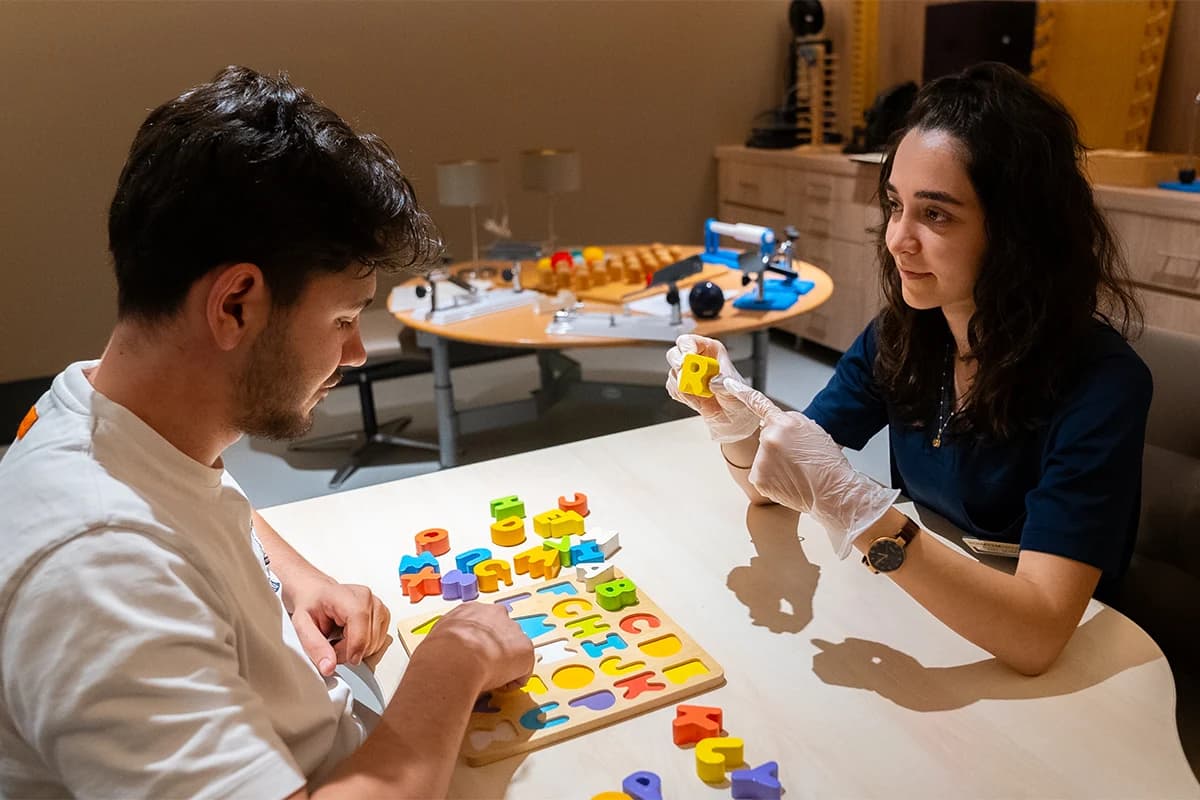
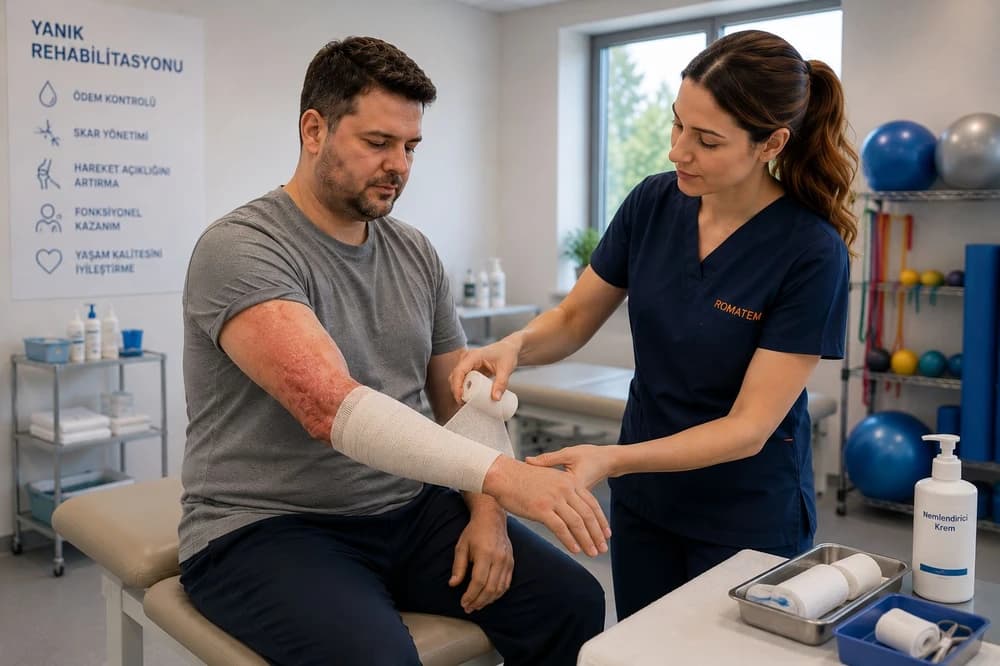
Devices are used inside a programme and chosen after examination — they are not booked separately.
Your path to this treatment
Nothing here is booked from a page. You send the records you have, a rehabilitation physician reads them, and you get a written answer — including when the answer is that an intensive programme will not help.
4 steps, start to finish
1.Send your records
A discharge summary from the hospital that treated the original event, and any imaging of the affected area — CT, MRI or X-ray.2.A written plan in 48 hours
A rehabilitation physician reviews the case and returns the expected duration, the recommended programme and the centre. Free, no obligation.3.Travel and admission
Where a visa is needed we issue an invitation letter and treatment confirmation naming the dates and the facility. You are met at the airport and driven to the centre by private vehicle or ambulance; a bed for one companion and interpreting during therapy are arranged.4.Treatment, then home
The programme runs, then you leave with a discharge report and a written home exercise plan. Your return journey is organised before you go, with scheduled video reviews so progress does not stop.
In their words
What patients say after a programme
Short videos filmed during therapy: a child’s rehabilitation after a brain tumour, suspended gait training after spinal cord injury, and learning to walk again after a fall. Individual results vary.
Dave Evans on his physical therapy here
Musculoskeletal physiotherapy
Paediatric rehabilitation after a brain tumour
Inside a physiotherapy session
Spinal cord injury — the rehabilitation process
Suspension-assisted gait training
Walking difficulty and restricted movement after a fall
Regaining gait and range of motion
Locations
Centres that have this device — pick one.



Questions people actually ask
About this device
What is it used for?
Early leg and arm movement after stroke, spinal cord injury and brain injury, and controlled range work after orthopaedic surgery.
Is it safe after surgery?
Within the surgeon's protocol. Range limits are programmed into the device rather than relying on the patient to stop.
How is progress tracked?
The force the patient contributes and the range achieved are recorded every session, which makes a plateau visible early.
Does it replace the therapist?
No. The therapist teaches the movement and decides the settings; the robot supplies the repetitions. Floor and gym work are where transfer to daily activity comes from.
Does robotic movement help after a knee replacement?
Purely passive movement does little. A Cochrane review of 24 trials with 1,445 people found that continuous passive motion machines after knee replacement had no clinically important effect on knee bending, pain, function or quality of life 3. After surgery, the robot mainly keeps movement within the surgeon's limits, while the patient's own active exercise does the work.



