

Medical condition
Cervical Disc Herniation
Most cervical disc herniations with arm pain improve without surgery, though it can take months. Progressive weakness, or signs of spinal cord compression such as hand clumsiness and unsteady walking, change the situation and need prompt assessment. Severe but stable pain with stable strength is managed without an operation.
Nerve root pain and what it feels like
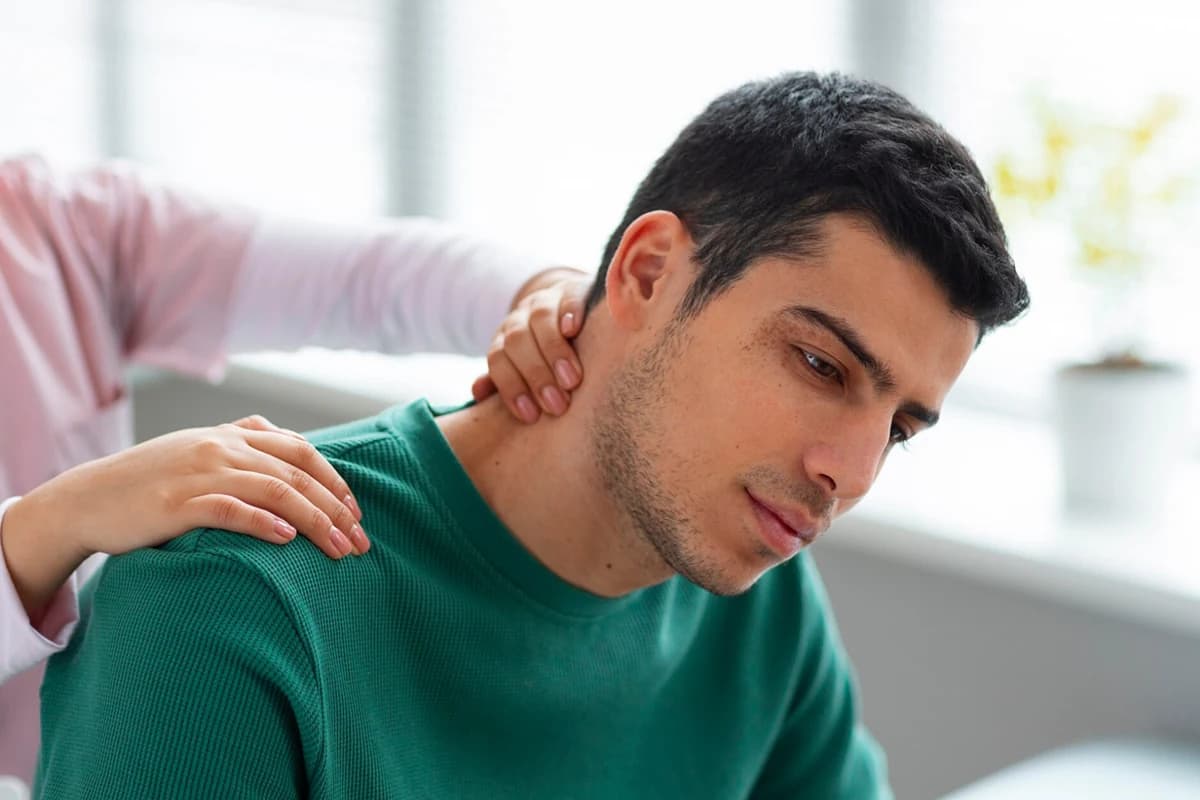
Pain travelling from the neck into the shoulder, arm or hand, often with numbness, tingling or weakness in a specific distribution. The pattern indicates which nerve root is involved, which is why mapping it carefully is worth the time.
It is frequently severe at the start and frequently improves. Most cases settle over weeks to months without surgery, and the natural history is more favourable than the early pain suggests.
The signs that change the plan
Clumsiness in the hands, difficulty with buttons or handwriting, unsteadiness in walking, or changes in bladder function suggest compression of the spinal cord itself rather than a nerve root. This is cervical myelopathy and it needs prompt assessment.
Progressive weakness rather than pain is the other signal. Pain that is severe but stable, with stable strength, is managed conservatively.
What treatment involves
Pain management sufficient to allow movement, graded activity, and a progressive programme for the deep neck flexors and shoulder girdle.
Prolonged collar use and rest are avoided — the neck responds badly to immobility and it prolongs recovery.
What imaging does and does not tell you
Disc bulges and degenerative changes are present on cervical scans in large numbers of people with no symptoms, and their frequency rises with age. Imaging is interpreted alongside the examination, not instead of it.
It is indicated where there are red flags, progressive neurological deficit, myelopathy signs, or where surgery is being considered.
Why the arm hurts more than the neck
When a cervical nerve root is compressed or inflamed, the pain is often felt mainly in the shoulder blade, upper arm or hand rather than in the neck itself. People frequently arrive convinced the problem is in the shoulder or the elbow.
The distribution tells us which root is involved: thumb and index finger points to one level, middle finger to another, ring and little finger to a third. Sensation, reflexes and specific muscle testing confirm it.
Sleeping, driving and screen work
Night pain is common and often the most exhausting part. Pillow height matters more than pillow type — the neck should be supported in neutral rather than pushed into flexion or side-bending, and side-lying with the arm supported usually beats lying flat.
For screen work the aim is not a single correct posture but frequent change, with the monitor high enough that the neck is not held in sustained flexion. Sustained positions provoke this condition more than any particular position does.
What treatment does not include
Cervical traction is not supported by good evidence and is not used routinely. High-velocity manipulation of the neck carries a small but serious vascular risk and is not appropriate where a nerve root is already irritated.
Collars are used briefly for comfort in severe acute pain if at all, and are unhelpful beyond a few days: the neck muscles weaken quickly and the stiffness that follows becomes its own problem.
When surgery is considered
Progressive weakness, pain that remains severe despite an adequate conservative course, or signs of spinal cord involvement rather than nerve root involvement — clumsy hands, unsteady walking, changes in bladder control. That last group needs assessment quickly rather than a rehabilitation programme.
Most cervical radiculopathy does not reach that threshold. Symptoms improve over weeks to months in the majority, which is why time and structured rehabilitation are the first line.
Frequently asked questions
How long does arm pain from the neck last?
Improvement over time is typical, though a minority take considerably longer. Numbness and tingling often outlast the pain and settle more slowly.
Is it safe to exercise with a herniated cervical disc?
Yes, and it is part of the treatment. What is trained is deep neck and shoulder blade control plus general conditioning, progressed within symptom limits. What is avoided is loading the neck into the position that reproduces arm symptoms.
Should I wear a collar?
Not beyond the first few days, if at all. Collars reduce pain briefly and cost muscle strength quickly; the weakness that follows prolongs the problem.
My scan shows several bulging discs — is that serious?
Multiple degenerative findings are usual by middle age and are found in large numbers of people who have no symptoms at all. What matters is whether a specific level matches your examination.
Can neck problems cause hand weakness?
Yes — a compressed root can weaken specific muscles in a recognisable pattern. Weakness that is progressing, or affecting both hands, needs prompt assessment rather than a course of therapy.
Will manipulation of my neck help?
We do not use high-velocity neck manipulation where a nerve root is irritated. Mobilisation, soft tissue work and exercise achieve what is needed without the vascular risk that technique carries.
Sources
- Neck Pain: Revision 2017 — Clinical Practice Guidelines — Journal of Orthopaedic & Sports Physical Therapy (2017)
Which therapies would I actually receive?
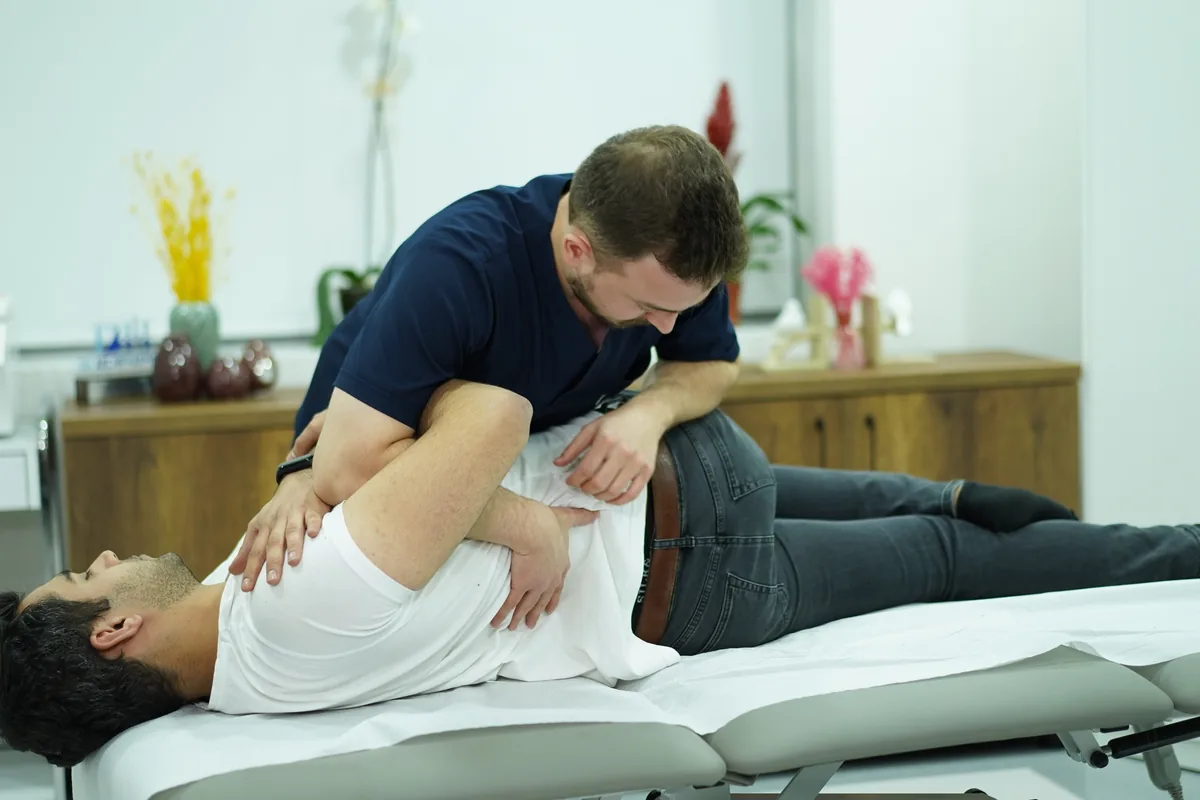
A therapy is a single method used inside a programme. It is measured in sessions and is not sold separately.
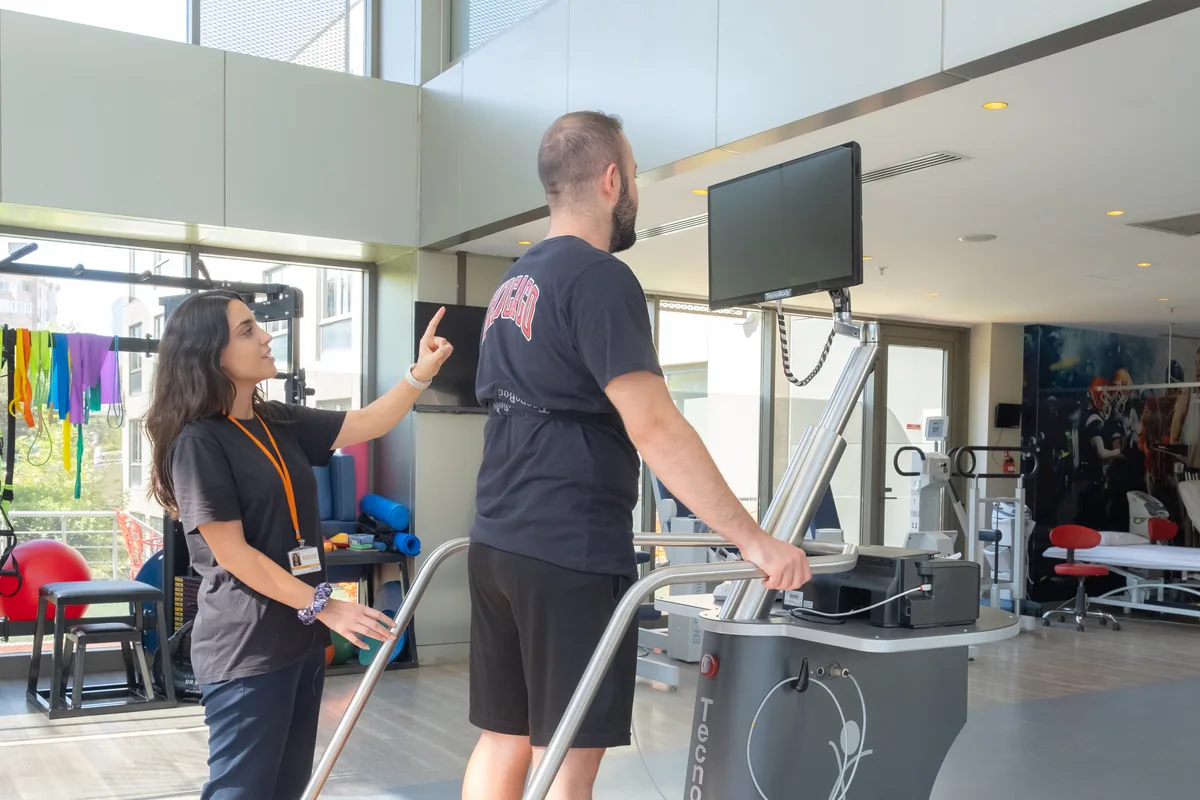

Technologies we use




Locations
Where you can receive this treatment






Related articles
Orthopaedic Can poor posture cause neck pain?
Staying in one position for a long time, such as looking down at a phone or laptop, can contribute to neck discomfort, but no single 'correct' posture prevents neck pain. Moving often, varying positions, building strength and staying active matter more than holding a perfect posture. Exercise and manual therapy are the main treatments for persistent neck pain.Read moreOrthopaedic What does a pinched nerve in the neck feel like, and how is it treated?
A pinched nerve in the neck, called cervical radiculopathy, usually causes pain spreading from the neck into the shoulder, arm or hand, often with tingling, numbness or weakness. Many cases improve over weeks to months without surgery. Physiotherapy, activity and pain management are the main treatments, with injections or surgery considered for persistent or severe cases.Read moreNeurological How long does it take to recover from a stroke?
Most recovery after a stroke happens in the early months, when the brain is most able to reorganise, and it continues more slowly for a longer period after that. How far someone gets depends mainly on how severe the stroke was, where it happened and how much active therapy follows.Read more



