
Medical condition
Plantar Fasciitis and Heel Spur
Plantar fasciitis causes sharp pain under the heel, worst with the first steps in the morning. It resolves in most people but slowly, often taking many months. Calf and plantar fascia loading, footwear and load management are the treatments that change the course.
How it presents and why the morning is worst
Sharp pain under the heel with the first steps after waking or after sitting, easing as you walk, returning after prolonged standing. The fascia shortens overnight and the first loading stretches it abruptly.
It is a load-related degenerative condition of the plantar fascia rather than an inflammation, which is why anti-inflammatory treatment alone helps symptoms and not the course.
What actually changes it
Progressive high-load strengthening of the plantar fascia and calf, plantar fascia and calf stretching, and footwear or orthotic support that reduces the load. Load management — reducing the standing or running volume that provoked it — runs alongside.
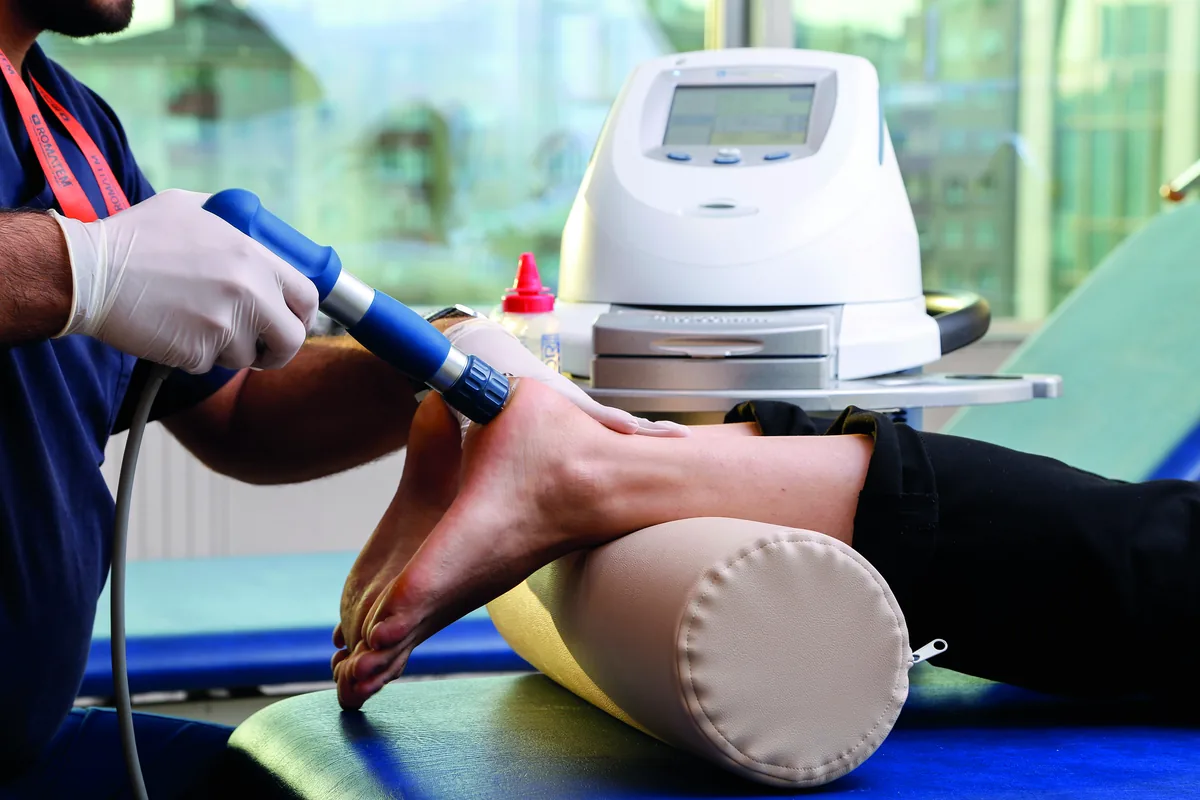
Shockwave therapy has reasonable evidence for cases that have persisted beyond a few months, and it works with a loading programme rather than instead of one.
What to expect
Most cases resolve, and slowly. Six to twelve months is common 1. Knowing this at the start prevents the common pattern of abandoning a programme at six weeks because it has not worked yet.
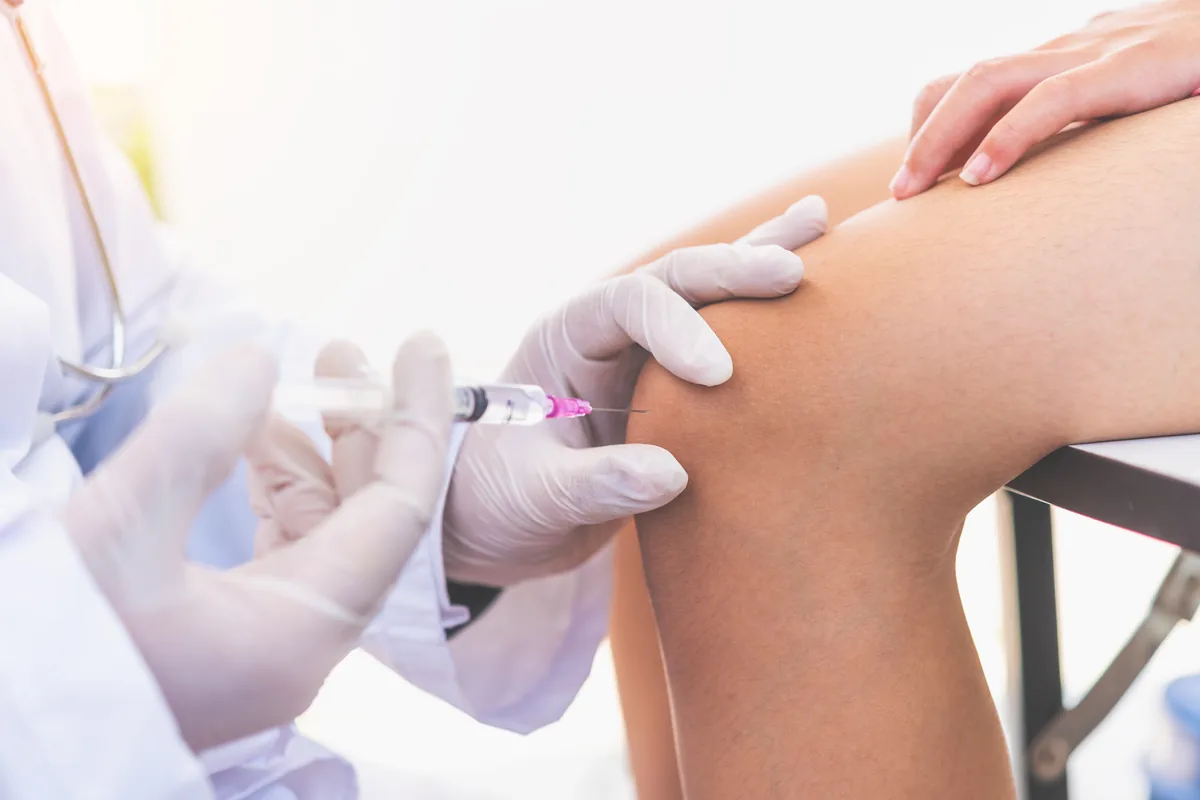
Corticosteroid injection gives short-term relief and carries a risk of fascia rupture and fat pad atrophy, so it is used cautiously and not repeatedly.
When it is not plantar fasciitis
Heel pain with burning or tingling suggests nerve involvement. Sudden heel pain without a clear cause in an older adult or someone with osteoporosis can be a calcaneal stress fracture. Pain at the back of the heel is Achilles rather than fascia.
In children and adolescents during growth, heel pain is usually growth plate irritation and settles with load management.
Loading the tissue rather than resting it
The instinct with heel pain is to rest, and complete rest reliably produces short-term relief followed by return of the pain as soon as walking resumes. The tissue needs graded load to remodel.
The core of the programme is progressive calf and foot loading — slow, heavy, controlled — combined with calf stretching, because limited ankle dorsiflexion increases the strain the plantar fascia takes with every step. This is unglamorous and it is what changes the condition.
Footwear, insoles and what they actually do
Supportive footwear with adequate cushioning reduces symptoms for many people, and going barefoot on hard floors at home is a common and easily fixed aggravator. Orthoses can help in the short term, particularly where foot mechanics are contributing.
What insoles do not do is treat the problem. They reduce the load while the tissue is sensitive, which is useful, but a plan consisting only of insoles leaves the underlying capacity untouched — and the pain returns when they come out.
Shockwave, injections and the order they belong in
Extracorporeal shockwave therapy is used for heel pain that has not responded to a genuine loading programme, and it is reasonable at that point rather than at the start.
Corticosteroid injection reduces pain for a period but carries a real risk of fascial rupture and fat pad atrophy with repetition, so it is used sparingly. Neither of these replaces the loading work; they create room for it.
Why it comes back
Because the pain resolves before the tissue capacity is restored, and people stop. The heel starts to feel normal well before the tissue has fully adapted, the exercises stop, and the same load that caused the problem meets the same unprepared tissue.
The programme therefore ends with a maintenance plan and a clear statement of when it can be reduced — usually months rather than weeks after symptoms settle.
Heel spur: the X-ray finding that is not the diagnosis
A heel spur is a small shelf of bone at the front of the heel where the plantar fascia attaches, and it appears on the X-rays of many people who have no heel pain at all. It is the result of years of traction on the fascia, not the cause of the pain, and removing it does not treat plantar fasciitis.
Patients who arrive with a diagnosis of heel spur are treated for the plantar fasciitis that produced it — loading, calf and fascia work, footwear and, where the tissue has not responded, shockwave. The spur stays where it is and stops mattering once the fascia settles.
Frequently asked questions
Does the heel spur need to be removed?
No. The spur is a consequence of the strained fascia, not the source of the pain, and surgery to remove it is not a treatment for plantar fasciitis.
Why is the first step in the morning the worst?
The fascia shortens overnight and the first loaded steps stretch it abruptly. The pattern is characteristic enough to be diagnostic, and its improvement is a useful measure of progress.
How long does plantar fasciitis take to resolve?
Most cases settle within six to twelve months 1, and a structured loading programme shortens that and reduces recurrence. Anyone promising resolution in two weeks is describing something else.
Is a heel spur the cause?
No. Heel spurs are common in people with no pain and absent in many people with plantar fasciitis. Removing one is not the treatment, and its presence on an X-ray changes very little.
Should I stop running or walking?
Reduce rather than stop. Complete cessation deconditions the tissue further; the aim is to find the load that does not flare symptoms the following morning and build from there.
Do night splints work?
They help some people, particularly where morning pain is the dominant symptom, by holding the fascia at length overnight. They are an adjunct to loading, not a substitute.
When is it not plantar fasciitis?
When pain is in the back of the heel rather than under it, when there is numbness or burning suggesting nerve involvement, when there was a sudden pop during activity, or when night pain is severe and unrelated to weight-bearing. Each of those points elsewhere.
Sources
- Heel Pain — Plantar Fasciitis: Revision 2014 — Clinical Practice Guidelines — Journal of Orthopaedic & Sports Physical Therapy (2014)
Which therapies would I actually receive?
A therapy is a single method used inside a programme. It is measured in sessions and is not sold separately.

Technologies we use




Locations
Where you can receive this treatment






Related articles
Orthopaedic How long does plantar fasciitis take to heal?
Plantar fasciitis, the most common cause of heel pain in adults, often improves over time with simple measures such as stretching, supportive footwear, taping and insoles. Some cases take much longer to settle. Shockwave therapy may help when pain persists despite a sustained period of conservative treatment. Surgery is rarely needed.Read moreTreatments and technology Does shockwave therapy work?
Shockwave therapy uses pressure waves to treat persistent tendon and soft tissue pain. For plantar heel pain that has not improved with conservative care, trials show it reduces pain more than placebo. Evidence for other conditions is more mixed. It is usually considered after exercise and simpler treatments.Read moreNeurological How long does it take to recover from a stroke?
Most recovery after a stroke happens in the early months, when the brain is most able to reorganise, and it continues more slowly for a longer period after that. How far someone gets depends mainly on how severe the stroke was, where it happened and how much active therapy follows.Read more



