
Medical condition
Meniscus Tear
For degenerative meniscal tears in middle-aged and older adults, exercise therapy produces outcomes comparable to arthroscopic surgery. Traumatic tears in younger people, and knees that lock, are a different situation and warrant surgical assessment. Finding a degenerative tear on a scan does not establish that it is causing the pain.
Degenerative and traumatic tears are different problems
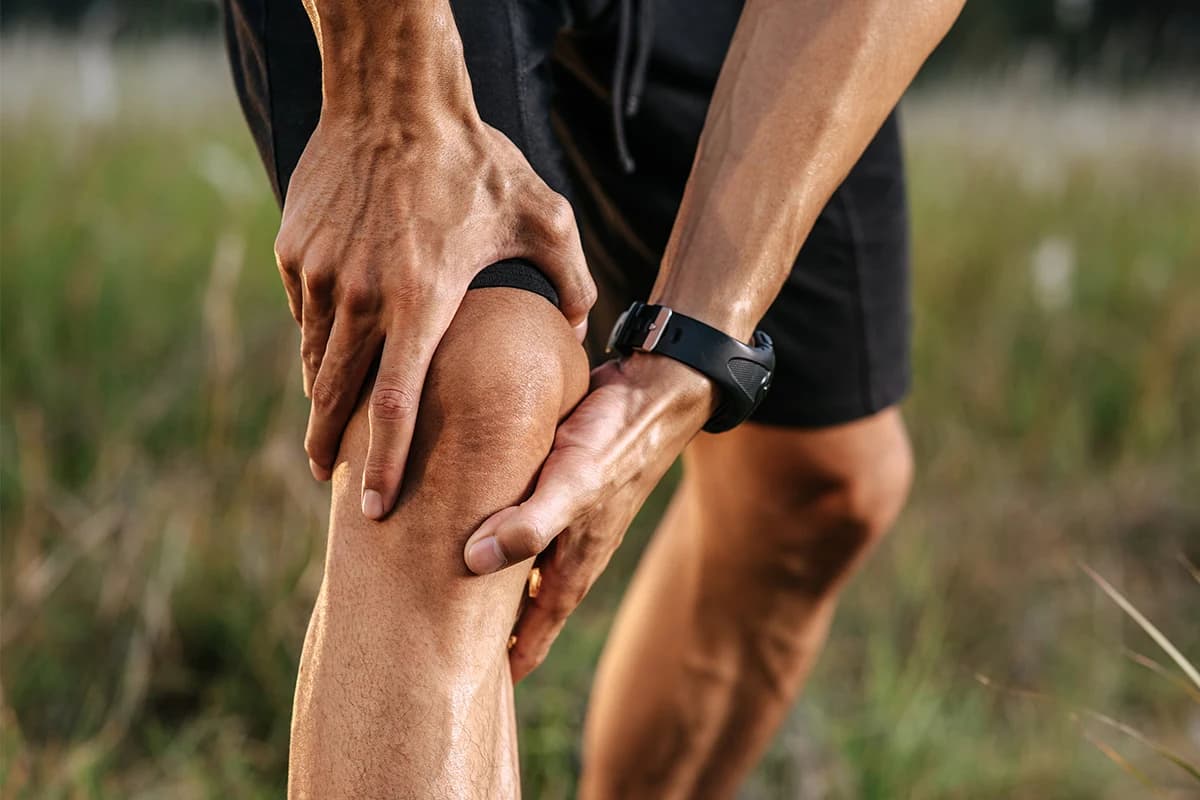
A traumatic tear happens in a specific twisting injury, usually in a younger person, often with immediate swelling and sometimes with the knee locking. A degenerative tear develops gradually in a knee that already has wear, and is frequently found incidentally.
Meniscal tears are common on scans of people with no knee pain: in a population study of 991 adults aged 50 to 90, 61% of those whose MRI showed a tear had had no knee pain, aching or stiffness in the previous month 3. Finding one alongside pain does not establish that it is the cause.
What the evidence shows about surgery
Multiple randomised trials have found that arthroscopic partial meniscectomy for degenerative tears produces outcomes no better than exercise therapy, and no better than placebo surgery, at one and two years 1 2.
This is one of the better-replicated findings in orthopaedics and it has changed guidelines. It has changed practice more slowly, which is why it is worth knowing before consenting to an arthroscopy.
When surgery is appropriate
A knee that is truly locked and cannot be fully straightened. A displaced bucket-handle tear. A traumatic tear in a young active person, particularly a repairable peripheral tear where preserving the meniscus matters for the long term.
Catching or occasional locking on its own is a weaker reason than it sounds: in a sham-controlled trial, partial meniscectomy relieved these symptoms no better than a placebo operation 4.
The rehabilitation programme
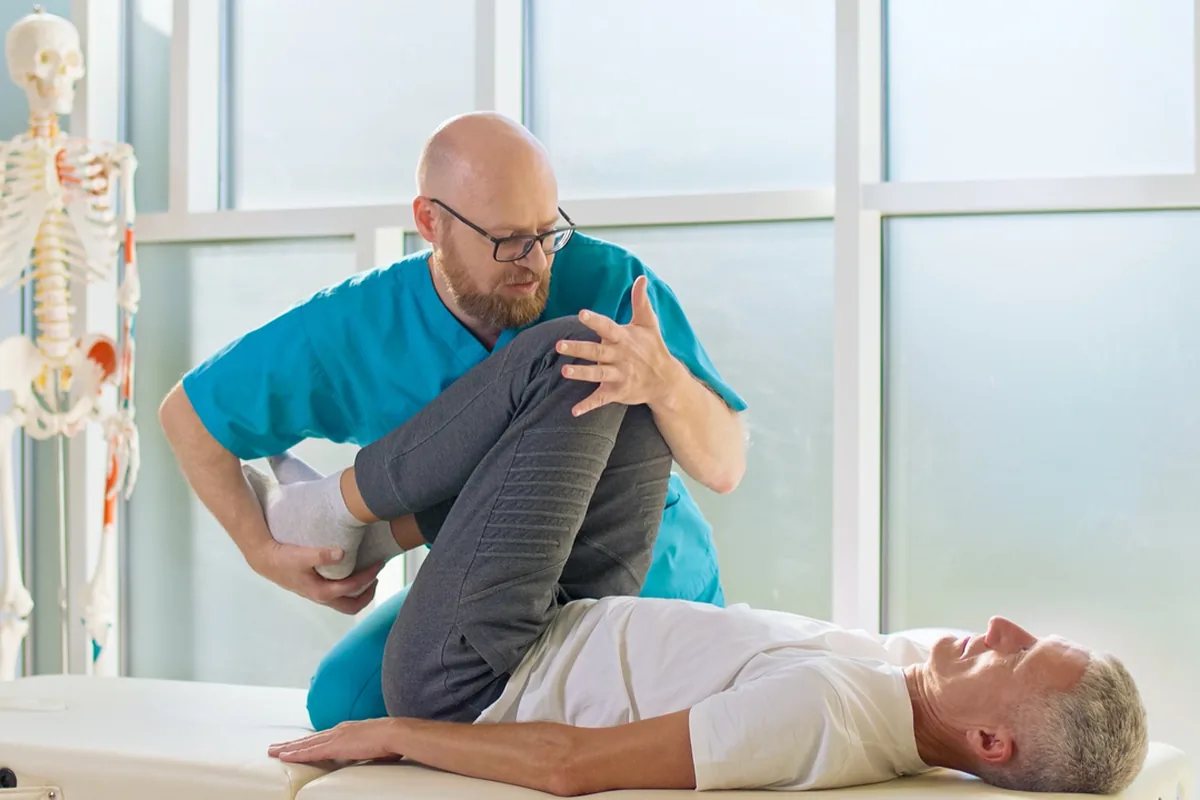
Progressive quadriceps and hip strengthening, range restoration, and graded return to loading. Twelve weeks of consistent work is the usual trial period before any surgical decision in degenerative tears 2 6.
After surgery, the protocol depends on whether the meniscus was trimmed or repaired — a repair needs months of protection where a trim does not. We ask the surgeon for it in writing.
The trial evidence most people have not been told
Randomised trials comparing arthroscopic partial meniscectomy with exercise therapy, and with placebo surgery, have found no meaningful advantage to the operation for degenerative tears without mechanical locking, and a 2022 Cochrane review rated the evidence of little or no benefit over placebo surgery as high certainty 5.
That evidence changed guidelines internationally and it has not reached most patients. Where a scan shows a degenerative tear and the knee does not lock, exercise is the first-line treatment rather than a delay before surgery.
How soon can an athlete play again after meniscus surgery?
It depends on whether the torn part was removed or repaired. In a 2026 meta-analysis of studies in athletes, return to sport took an average of 2.1 months after partial meniscectomy and 5.8 months after repair, and similar proportions got back to their pre-injury level, 84.4% and 81.3% 7. These are averages across studies, not a timetable for an individual knee.
The quicker return after removal has a longer-term cost: clinical and radiological outcomes years later are worse after partial meniscectomy than when the meniscus is preserved 8. That is why a European consensus puts preservation first wherever the tear allows it, and advises that a needed repair be done as early as possible 8.
Frequently asked questions
Does a tear on my scan need surgery?
Usually not. Degenerative meniscal tears are common in people without symptoms and exercise therapy achieves similar results to surgery for most of them.
When is surgery appropriate?
A true locked knee that cannot be straightened, and traumatic tears in younger people, particularly bucket-handle patterns. Those are different situations from age-related degeneration.
Can a meniscus heal?
The outer third has a blood supply and can heal, sometimes with repair rather than removal. The inner portion does not heal and is trimmed if it has to be addressed.
What if the knee locks?
A knee that genuinely cannot be straightened needs assessment reasonably quickly, because a displaced fragment is a mechanical block that exercise will not resolve.
How long does rehabilitation take?
A structured exercise programme over a period of weeks, with meaningful change often appearing well before the programme ends.
Sources
- Arthroscopic partial meniscectomy versus sham surgery for a degenerative meniscal tear — New England Journal of Medicine (2013)
- Exercise therapy versus arthroscopic partial meniscectomy for degenerative meniscal tear in middle aged patients: randomised controlled trial with two year follow-up — BMJ (2016)
- Englund M, Guermazi A, Gale D, Hunter DJ, et al. Incidental meniscal findings on knee MRI in middle-aged and elderly persons — New England Journal of Medicine (2008)
- Sihvonen R, Englund M, Turkiewicz A, Järvinen TL, et al. Mechanical symptoms and arthroscopic partial meniscectomy in patients with degenerative meniscus tear: a secondary analysis of a randomized trial — Annals of Internal Medicine (2016)
- O'Connor D, Johnston RV, Brignardello-Petersen R, Poolman RW, et al. Arthroscopic surgery for degenerative knee disease (osteoarthritis including degenerative meniscal tears) — Cochrane Database of Systematic Reviews (2022)
- Beaufils P, Becker R, Kopf S, Englund M, et al. Surgical management of degenerative meniscus lesions: the 2016 ESSKA meniscus consensus — Knee Surgery, Sports Traumatology, Arthroscopy (2017)
- Bensa A, Piano A, Fumagalli GA, Krych AJ, et al. Return to sport after meniscectomy, meniscal repair, and meniscal allograft transplantation for meniscal lesions in athletes: a systematic review and meta-analysis — Knee Surgery, Sports Traumatology, Arthroscopy (2026)
- Kopf S, Beaufils P, Hirschmann MT, Rotigliano N, et al. Management of traumatic meniscus tears: the 2019 ESSKA meniscus consensus — Knee Surgery, Sports Traumatology, Arthroscopy (2020)
Which therapies would I actually receive?
A therapy is a single method used inside a programme. It is measured in sessions and is not sold separately.

Technologies we use




Locations
Where you can receive this treatment






Related articles
Sports When is it safe to return to sport after an ACL reconstruction?
Not on a date, and not on how the knee feels. The safest published approach combines time and testing: wait until the graft and muscles are genuinely ready, then pass a battery of strength and hop tests before returning to pivoting sport. Waiting longer, up to a point, reduced reinjury risk substantially.Read moreOrthopaedic Can a torn meniscus heal without surgery?
It depends on the type of tear. Degenerative meniscus tears in middle-aged adults often improve with exercise therapy as much as with keyhole surgery. Some tears in younger people, particularly after a twisting injury, may heal or benefit from repair. A knee that locks and cannot straighten needs prompt assessment by a specialist.Read moreNeurological How long does it take to recover from a stroke?
Most recovery after a stroke happens in the early months, when the brain is most able to reorganise, and it continues more slowly for a longer period after that. How far someone gets depends mainly on how severe the stroke was, where it happened and how much active therapy follows.Read more



