
Medical condition
Bursitis and Myofascial Trigger Points
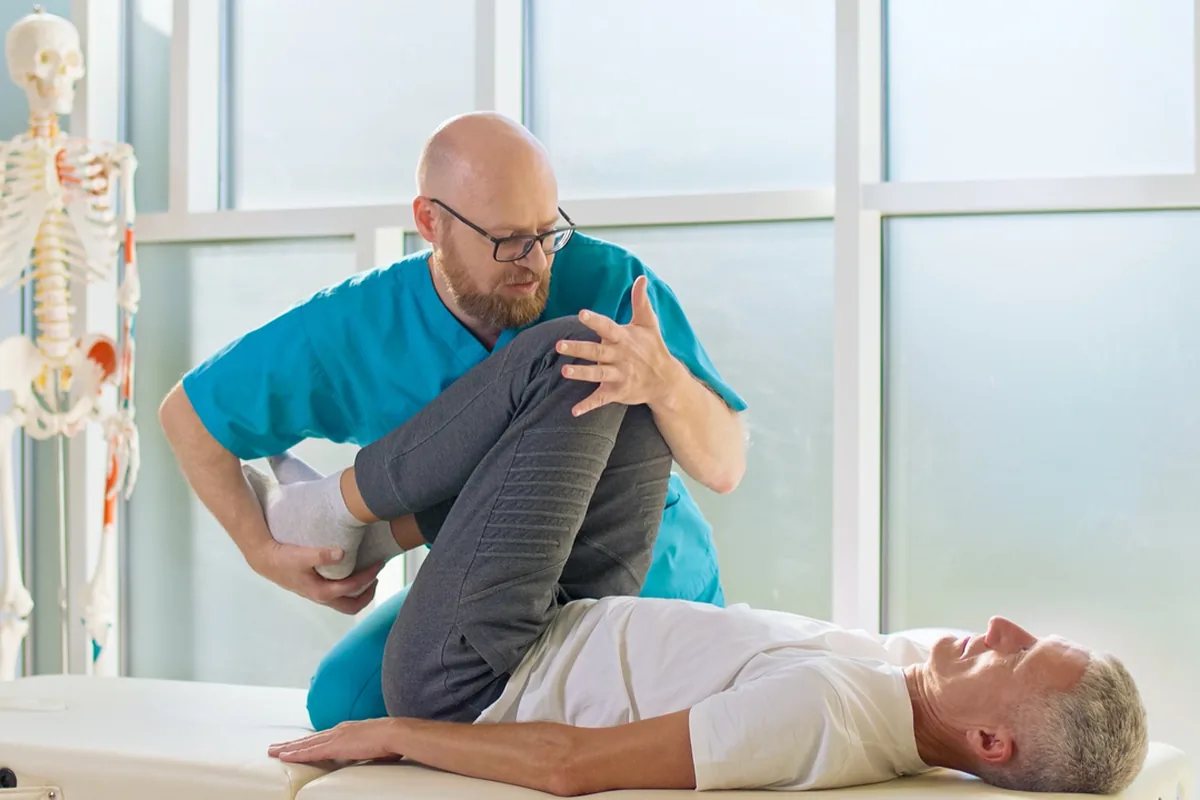
A bursa is a fluid sac cushioning a tendon over bone; when irritated it becomes painful, most often at the shoulder, hip or knee. Trigger points are tender bands within a muscle. Both are usually secondary to how a joint is being loaded, so treating the painful spot without changing the load produces short-lived relief.
The label is often wrong
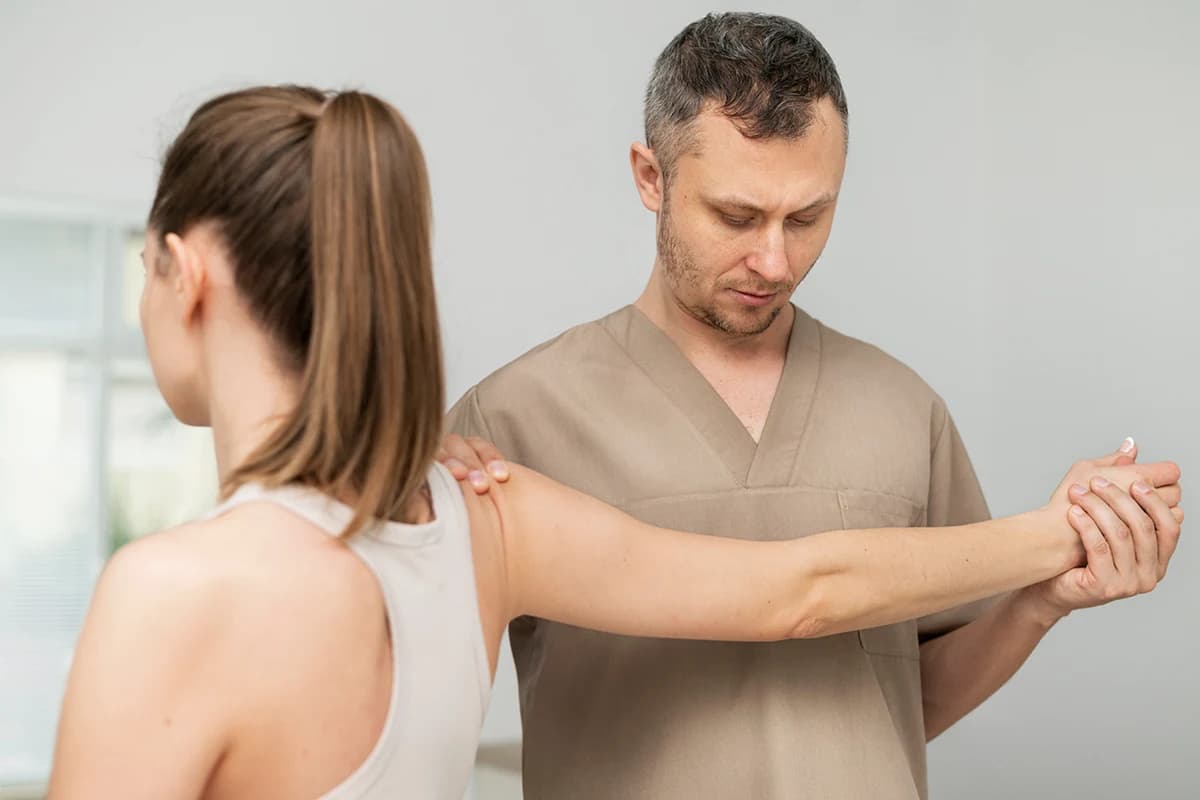
Pain on the outside of the hip is still commonly called trochanteric bursitis, but imaging studies show the bursa is frequently normal and the gluteal tendon is the problem: in an ultrasound study of 877 people with this pain, only one in five had bursitis, while half had changes in the gluteal tendons 1. The same applies at the shoulder, where subacromial pain is rarely the bursa alone.
This matters because the treatments differ. A tendon needs progressive loading; a genuinely inflamed bursa needs offloading first. Getting the diagnosis approximately right changes what the first six weeks look like.
Treatment that holds
Identify and modify the aggravating load — sleeping position, sitting posture, training volume, gait pattern. Then progressive strengthening of the muscle group involved. Manual therapy and dry needling for trigger points reduce pain in the short term and are used to make the loading work tolerable, not as the treatment itself.
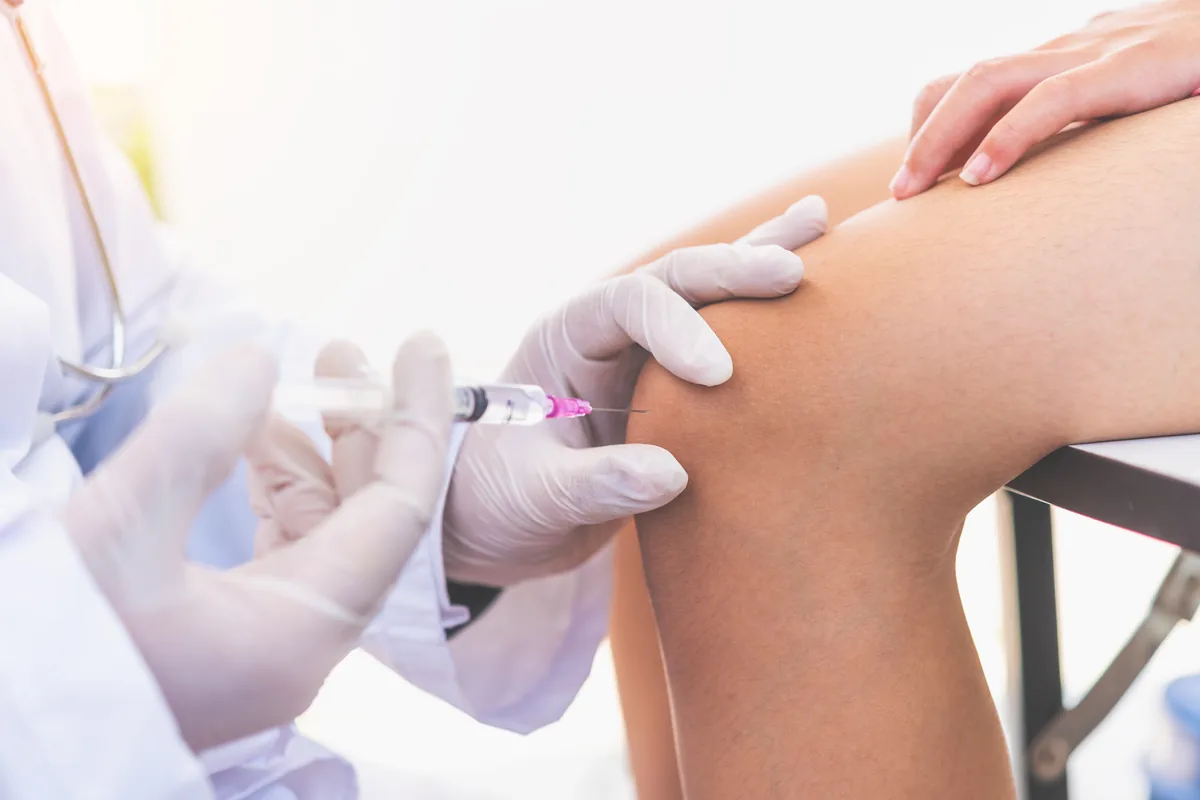
Repeated corticosteroid injections into the same site weaken tendon tissue. Where an injection is genuinely useful we use it once, deliberately, alongside a loading programme.
When to look further
A hot, swollen, exquisitely tender bursa with fever can be septic and needs aspiration, not physiotherapy. Pain that does not vary with position or activity, or that wakes the patient every night, is investigated rather than treated as mechanical.
Why the label is frequently wrong
Pain on the outside of the hip and the point of the shoulder is routinely called bursitis. Imaging and surgical series show the problem is usually tendon rather than bursa, with the bursa inflamed secondarily if at all.
The distinction changes the treatment entirely: a tendon needs progressive loading, whereas treating it as bursitis leads to rest and repeated injection, which is why so many of these problems persist for years.
Is exercise or an injection better for pain on the outside of the hip?
In a randomised trial of 204 people with gluteal tendinopathy, education and exercise did better than an injection 2. The trial compared 14 physiotherapy sessions of education and exercise over eight weeks, a single corticosteroid injection, and a wait-and-see approach 2. At eight weeks, 77% of the exercise group reported success, against 58% after the injection and 29% with waiting 2.
At one year the exercise group was still ahead of both, while the injection group no longer differed from waiting on patients' overall rating 2. The education taught people to avoid positions that press the tendons against the bone at the side of the hip, which is why sleeping and sitting positions are part of treatment 2.
Does dry needling help trigger points?
It can reduce pain for a while. A 2017 meta-analysis of 13 randomised trials found very low- to moderate-quality evidence that dry needling by physical therapists reduced pain more than no treatment, sham needling or other treatments over the following 12 weeks 3. The trials covered a range of painful musculoskeletal conditions rather than one region 3. Evidence of longer-term benefit was lacking, and function improved no more than with other physical therapy treatments 3. That is why needling, like massage and other manual techniques, is used to make exercise and changes in load easier to tolerate rather than as a treatment on its own.
Frequently asked questions
Is bursitis treated with rest?
Rarely successfully. Where the underlying problem is tendinopathy, rest reduces pain briefly and leaves the tendon no stronger.
Do injections help?
Short-term, often. Repeated injections into the same area weaken tendon tissue, and if pain returns each time the diagnosis is worth revisiting.
What is the treatment then?
Progressive loading of the tendon involved, load management for the provoking activity, and addressing what is overloading it — usually weakness elsewhere.
Why does lying on that side hurt?
Compression of the tendon against the bone. Sleeping position changes and a pillow between the knees help while loading does the work.
When should something else be suspected?
Fever with a hot swollen joint, pain that is severe and constant, night pain unrelated to position, or systemic symptoms. Those need medical assessment.
Sources
- Long SS, Surrey DE, Nazarian LN. Sonography of greater trochanteric pain syndrome and the rarity of primary bursitis — American Journal of Roentgenology (2013)
- Mellor R, Bennell K, Grimaldi A, Nicolson P, et al. Education plus exercise versus corticosteroid injection use versus a wait and see approach on global outcome and pain from gluteal tendinopathy: prospective, single blinded, randomised clinical trial — BMJ (2018)
- Gattie E, Cleland JA, Snodgrass S. The effectiveness of trigger point dry needling for musculoskeletal conditions by physical therapists: a systematic review and meta-analysis — Journal of Orthopaedic & Sports Physical Therapy (2017)
Which therapies would I actually receive?
A therapy is a single method used inside a programme. It is measured in sessions and is not sold separately.
Technologies we use




Locations
Where you can receive this treatment






Related articles
Treatments and technology What is the difference between dry needling and acupuncture?
Both use thin needles, but dry needling targets tight, tender points in muscles based on anatomy, while traditional acupuncture uses points along meridians based on Chinese medicine. A meta-analysis found dry needling by physical therapists reduced musculoskeletal pain in the short term. UK guidance considers a single course of either for chronic primary pain.Read moreNeurological How long does it take to recover from a stroke?
Most recovery after a stroke happens in the early months, when the brain is most able to reorganise, and it continues more slowly for a longer period after that. How far someone gets depends mainly on how severe the stroke was, where it happened and how much active therapy follows.Read moreNeurological Can you walk again after a stroke?
Many people walk again after a stroke, including many who cannot stand at first. The chances are highest when some leg movement returns early and when walking practice starts as soon as it is safe. Walking often comes back before full arm recovery, sometimes with a stick, splint or other support.Read more



