

Medical condition
Fracture
Recovery after a fracture is limited more often by joint stiffness, muscle loss and confidence than by the bone, which heals on its own timetable. Weight-bearing status and range restrictions come from the treating surgeon and are followed exactly. Rehabilitation starts during immobilisation, with the joints that are free to move.
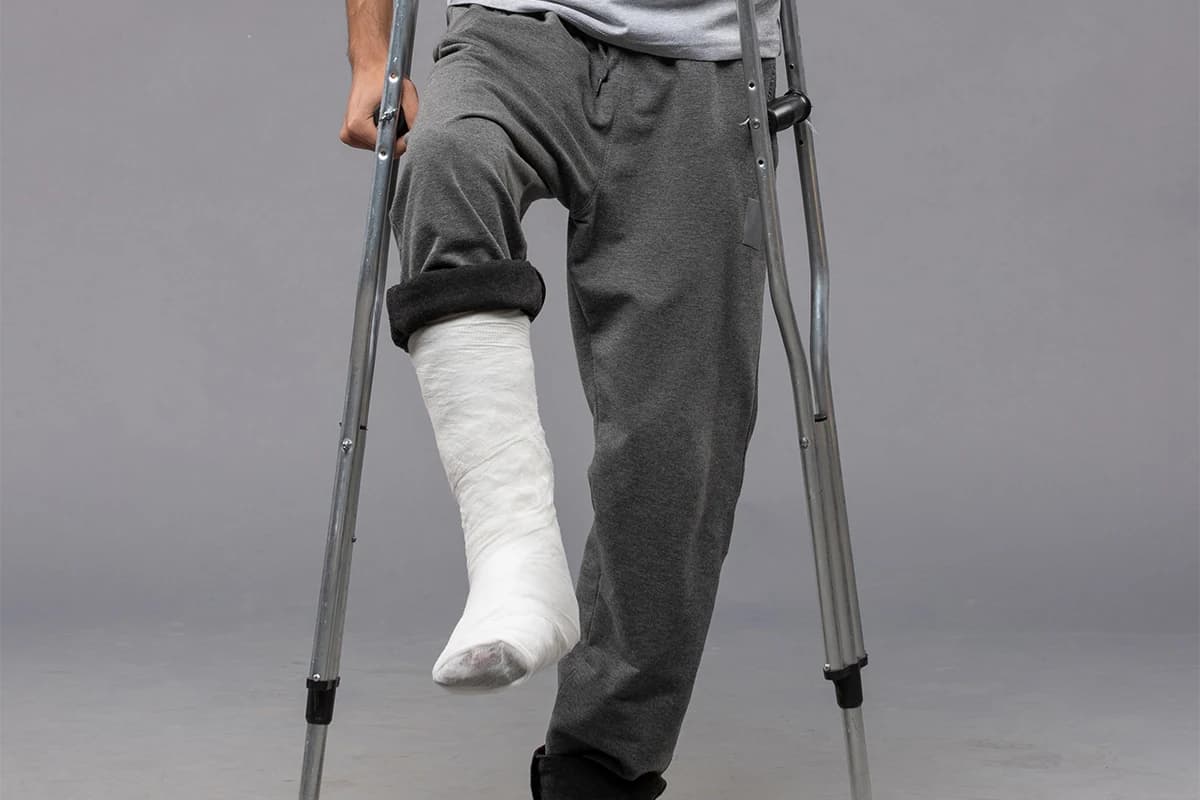
The bone is rarely the limiting factor
Most fractures unite. What determines the outcome is what happened to the joint above and below during immobilisation, how much muscle was lost, and whether the person regained the confidence to load the limb.
This is why rehabilitation starts during immobilisation rather than after it — with the joints that are free to move, the other limb, and general conditioning.
Following the protocol exactly
Weight-bearing status and any range restriction come from the treating surgeon and differ by fracture pattern and fixation. Non-weight-bearing, touch weight-bearing and partial weight-bearing are different instructions and the difference matters.
We ask for the operation note and the protocol in writing. Where a patient arrives without them, we contact the surgeon rather than infer from the fracture name.
The specific risks by region
Wrist fractures commonly leave stiffness and grip weakness, and finger stiffness develops fast if the fingers are not moved from day one. Ankle fractures leave stiffness and calf weakness that limit walking long after union.
Hip fractures in older adults are a different category — they are a marker of frailty and falls risk, and rehabilitation addresses bone health, falls prevention and sarcopenia alongside the hip itself.
What warrants prompt review
Increasing pain rather than decreasing, particularly with disproportionate swelling, burning pain, colour or temperature change and extreme sensitivity to light touch — these suggest complex regional pain syndrome, where early treatment matters.
Numbness, a limb that is cold or discoloured, wound discharge or fever all need same-day assessment.
What is lost while the bone heals
Prolonged immobilisation costs substantial muscle and joint range, and in older adults it costs bone as well. The fracture heals on its own timetable; everything around it deconditions on a faster one.
This is why rehabilitation begins during the immobilisation period rather than after it — the joints above and below, the other limb, and general conditioning are all trainable while the fracture is protected.
What helps walking recover after a hip fracture?
Early mobilisation, then training of walking, balance and everyday tasks. The NICE hip fracture guideline recommends a physiotherapy assessment and, unless there is a medical or surgical reason not to, mobilisation on the day after surgery, followed by mobilisation at least once a day with regular physiotherapy review 3.
A 2022 Cochrane review of 40 randomised trials with 4,059 participants, whose average age was 80, found that mobility training after discharge from hospital led to small but clinically meaningful gains in mobility and walking speed, and it rated that evidence as high certainty 2. Programmes that trained gait, balance and functional tasks were particularly effective 2. Two limits matter: most of the trials excluded people with cognitive impairment, and the training appeared to make little or no difference to mortality or hospital re-admission 2.
Frequently asked questions
When can I start moving it?
That is set by the fracture and the fixation, and the surgeon’s instruction governs. What can almost always start immediately is work on everything else.
Why is my joint so stiff after the cast?
Immobilised joints stiffen within weeks and muscles waste quickly. This is expected and it responds to systematic work, though it takes longer than the immobilisation did.
What is complex regional pain syndrome?
A disproportionate pain response with swelling, colour and temperature change after injury. Early recognition matters because it responds far better to early treatment.
Do I need to worry about my bone density?
After a fragility fracture — one from a fall from standing height — yes. A previous fracture nearly doubles the risk of another one, which is why a fragility fracture warrants a bone-health assessment 4.
How long until I can load it fully?
Set by the fracture type and healing, confirmed clinically and on imaging. Progressing load too early risks the fixation; too late costs function unnecessarily.
Sources
- Fractures (non-complex): assessment and management (NG38) — National Institute for Health and Care Excellence (2016)
- Fairhall NJ, Dyer SM, Mak JC, Diong J, et al. Interventions for improving mobility after hip fracture surgery in adults — Cochrane Database of Systematic Reviews (2022)
- Hip fracture: management (CG124) — National Institute for Health and Care Excellence (2023)
- Kanis JA, Johnell O, De Laet C, Johansson H, et al. A meta-analysis of previous fracture and subsequent fracture risk — Bone (2004)
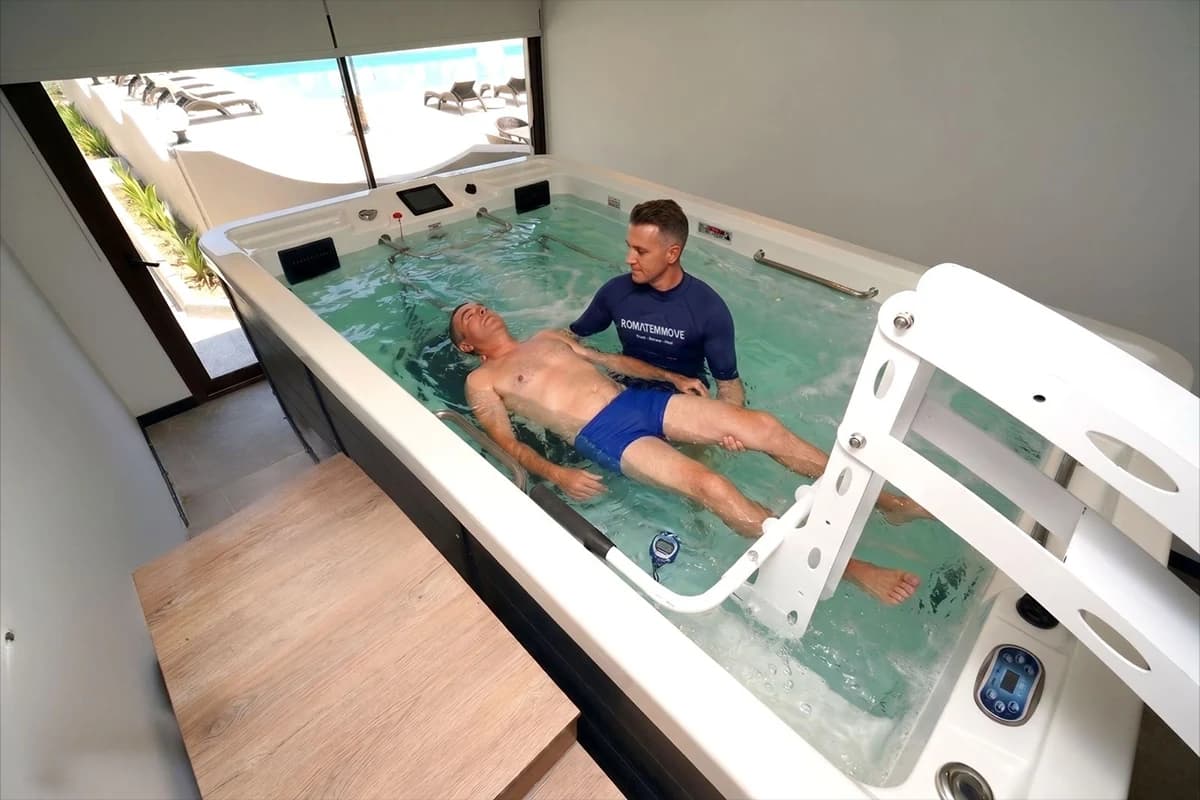
Which therapies would I actually receive?
A therapy is a single method used inside a programme. It is measured in sessions and is not sold separately.

Technologies we use




Locations
Where you can receive this treatment






Related articles
Orthopaedic When can you walk after a broken ankle?
The timing depends on the fracture and whether it was fixed with surgery. Some stable fractures allow walking in a boot within days, while others need weeks of protected weight-bearing. After surgical fixation, trials suggest earlier weight-bearing and removable supports are generally safe. Most people are walking normally again within several months, with gradual improvement afterwards.Read moreGeriatric What is recovery like after a hip fracture in older adults?
Most older adults have surgery soon after a hip fracture and start getting out of bed shortly afterwards. Recovery of walking and independence takes months and continues after leaving hospital. Exercise programmes that include walking, balance and strength training improve mobility, and preventing further falls is a central part of recovery.Read moreNeurological How long does it take to recover from a stroke?
Most recovery after a stroke happens in the early months, when the brain is most able to reorganise, and it continues more slowly for a longer period after that. How far someone gets depends mainly on how severe the stroke was, where it happened and how much active therapy follows.Read more



