

Medical condition
Balance and Vestibular Disorders
Dizziness has several distinct causes that need different treatment. Benign positional vertigo is diagnosed at the bedside and often resolved quickly with a repositioning treatment. Persistent imbalance responds to vestibular rehabilitation, which is a specific programme rather than general balance exercise.
Describing it precisely changes the diagnosis
A spinning sensation triggered by turning in bed, lying down or looking up, lasting under a minute, points to benign paroxysmal positional vertigo 3. Lightheadedness on standing points to blood pressure. Constant unsteadiness without spinning points to sensory loss, weakness or a central cause.
Getting this description right is more diagnostically useful than any scan, and it is the part most often glossed over.
Benign positional vertigo is fixable quickly
It is caused by displaced crystals in the inner ear canals, diagnosed with a positional test at the bedside, and treated with a repositioning manoeuvre. In randomised trials, symptoms resolved completely in 56% of people after the Epley repositioning manoeuvre, compared with 21% after a sham manoeuvre or control treatment 3.
It is common, it is frequently misdiagnosed as a general balance problem, and people live with it for years unnecessarily. If your dizziness is triggered by head position, ask specifically about this.
Vestibular rehabilitation for persistent problems
After vestibular neuritis and in unilateral vestibular loss, a graded programme of gaze stabilisation, habituation and balance retraining produces substantial improvement 1. It is also used in persistent postural-perceptual dizziness, but there the trials are too few to show whether it works 4.
It works by driving central compensation, which requires provoking the symptom in a controlled way. Avoiding the movements that cause dizziness prevents compensation and is the most common reason people do not recover.
What needs urgent assessment
Sudden severe imbalance with double vision, slurred speech, facial weakness, severe headache or numbness can indicate a stroke affecting the balance centers. New unilateral hearing loss with dizziness also needs prompt assessment.
Dizziness alone in an otherwise well person is rarely a stroke, but the accompanying signs are what matter and they are worth knowing.
Why the treatment differs so much by cause
Benign positional vertigo is corrected quickly by a repositioning manoeuvre. Vestibular loss needs weeks of exercises that provoke symptoms deliberately so the brain adapts. Central causes need investigation rather than exercise.
These are three entirely different treatments, which is why the history matters so much. Its most reliable parts are timing and triggers: in one emergency department study, 52% of patients chose a different word for the type of their dizziness when asked again about six minutes later, while their accounts of duration and triggers stayed consistent 2.
Adaptation is uncomfortable by design
Vestibular rehabilitation works by provoking symptoms at a tolerable level so the nervous system recalibrates. Exercises that produce no symptoms produce no adaptation.
People frequently stop because they assume feeling worse means harm. That expectation is set at the start, along with what level of symptom is acceptable and what is too much.
How strong is the evidence for vestibular rehabilitation?
Moderate to strong where one inner ear has lost function. A Cochrane review of 39 studies with 2,441 people found moderate to strong evidence that vestibular rehabilitation is safe and effective for this group, and moderate evidence that it resolves symptoms and improves function in the medium term 5.
For benign positional vertigo, repositioning manoeuvres worked better than exercise-based rehabilitation in the short term, although combining the two helped longer-term recovery of function 5. The guideline evidence applies to peripheral vestibular loss confirmed on testing; it may not apply to central causes or to dizziness without a diagnosed vestibular deficit 1.
Frequently asked questions
Is dizziness the same as imbalance?
No. Imbalance and dizziness can arise from the inner ear, from loss of sensation or strength, from the brain, or from blood pressure and the heart, and each cause needs different investigation. The word a person uses for the feeling is an unreliable guide, while their account of how long it lasts and what triggers it is far more consistent 2.
How quickly does positional vertigo resolve?
Frequently very quickly with a repositioning manoeuvre. It can come back, however: recurrence after successful treatment has been reported in up to 36% of people 3.
Will vestibular rehabilitation make me feel worse?
Temporarily, yes, and that is how it works. Exercises are dosed to provoke mild to moderate symptoms, which typically settle within minutes to a day after the session; a rise in symptoms in the first weeks is common and is not in itself a reason to stop 1.
When is dizziness an emergency?
Sudden severe vertigo with double vision, slurred speech, weakness, severe headache or inability to walk. Those need emergency assessment rather than vestibular therapy.
Can medication help?
Vestibular sedatives help in the acute phase and hinder recovery if continued, because they suppress the very signals the brain needs in order to adapt. They are short-term measures.
Sources
- Vestibular Rehabilitation for Peripheral Vestibular Hypofunction: An Updated Clinical Practice Guideline — Journal of Neurologic Physical Therapy (2022)
- Newman-Toker DE, Cannon LM, Stofferahn ME, Rothman RE, et al. Imprecision in patient reports of dizziness symptom quality: a cross-sectional study conducted in an acute care setting — Mayo Clinic Proceedings (2007)
- Hilton MP, Pinder DK. The Epley (canalith repositioning) manoeuvre for benign paroxysmal positional vertigo — Cochrane Database of Systematic Reviews (2014)
- Webster KE, Kamo T, Smith L, Harrington-Benton NA, et al. Non-pharmacological interventions for persistent postural-perceptual dizziness (PPPD) — Cochrane Database of Systematic Reviews (2023)
- McDonnell MN, Hillier SL. Vestibular rehabilitation for unilateral peripheral vestibular dysfunction — Cochrane Database of Systematic Reviews (2015)
Which therapies would I actually receive?
A therapy is a single method used inside a programme. It is measured in sessions and is not sold separately.
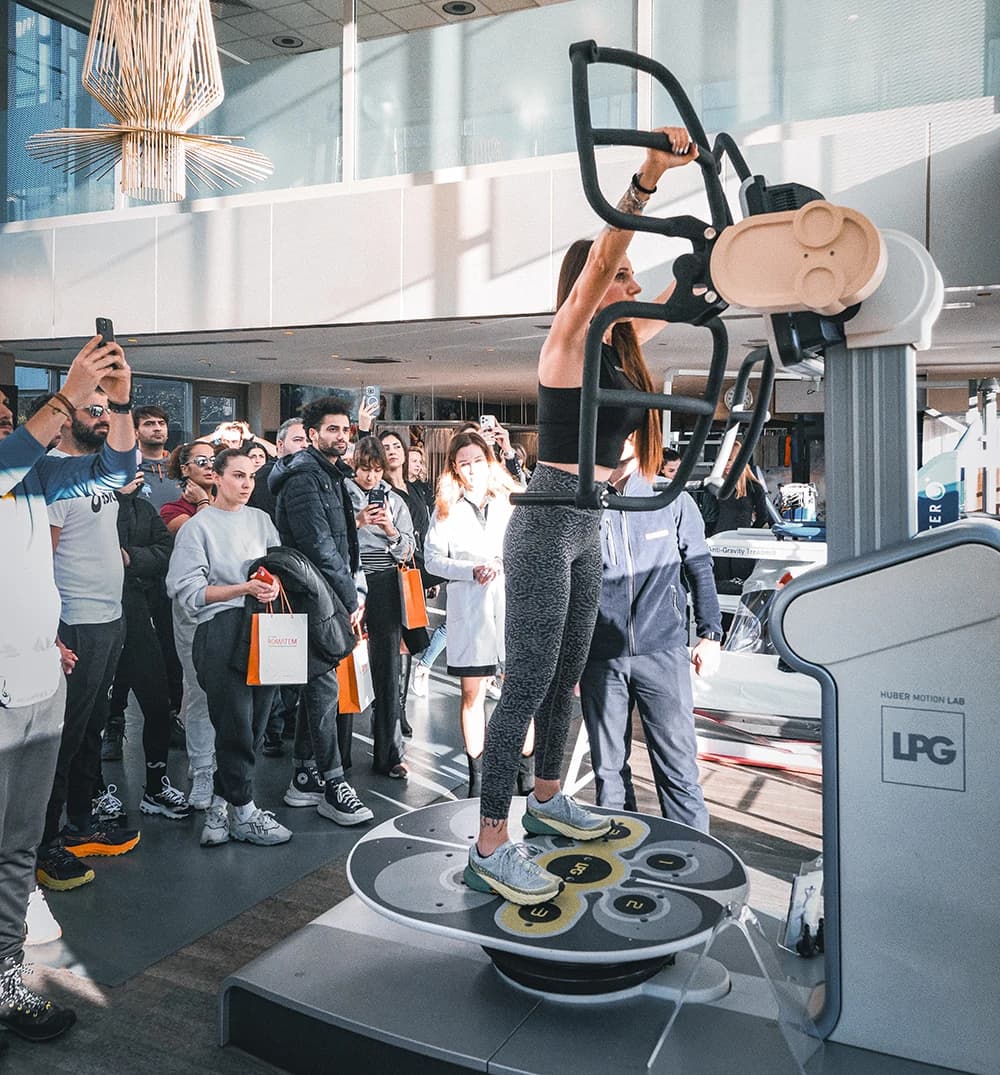
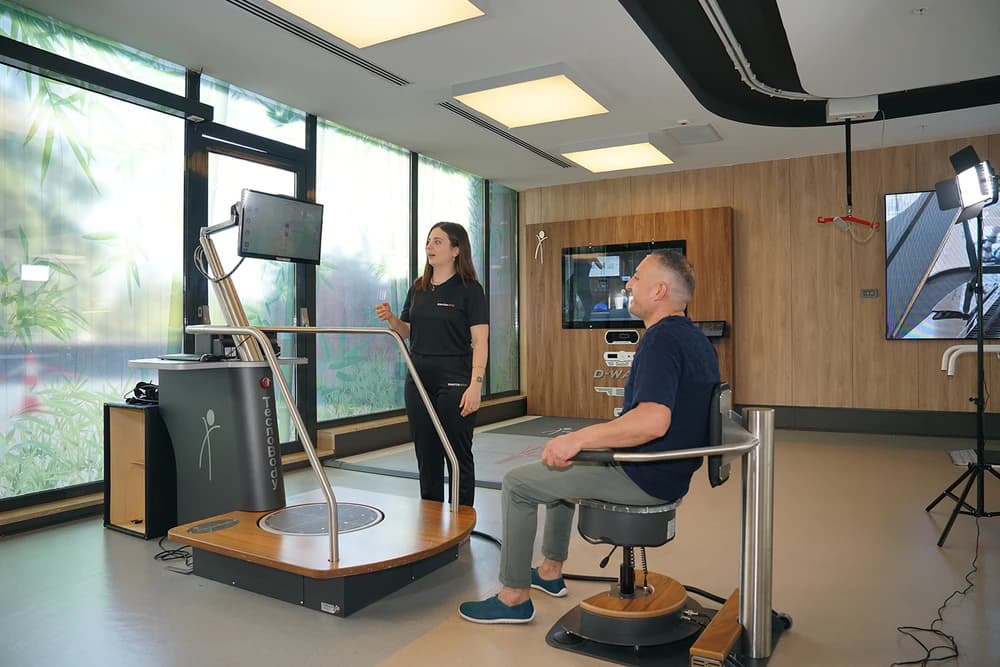
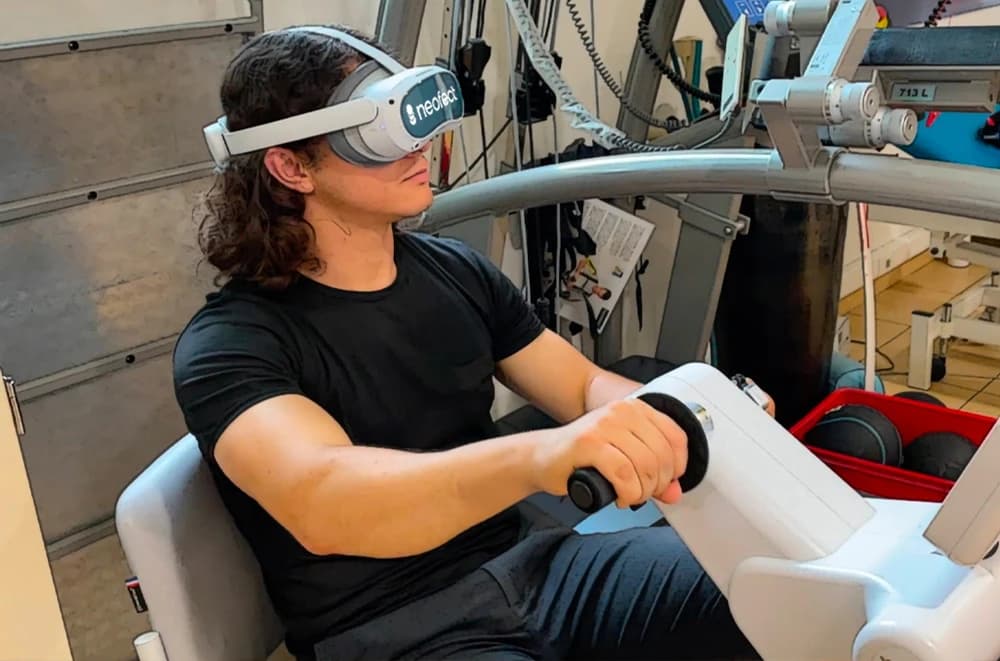
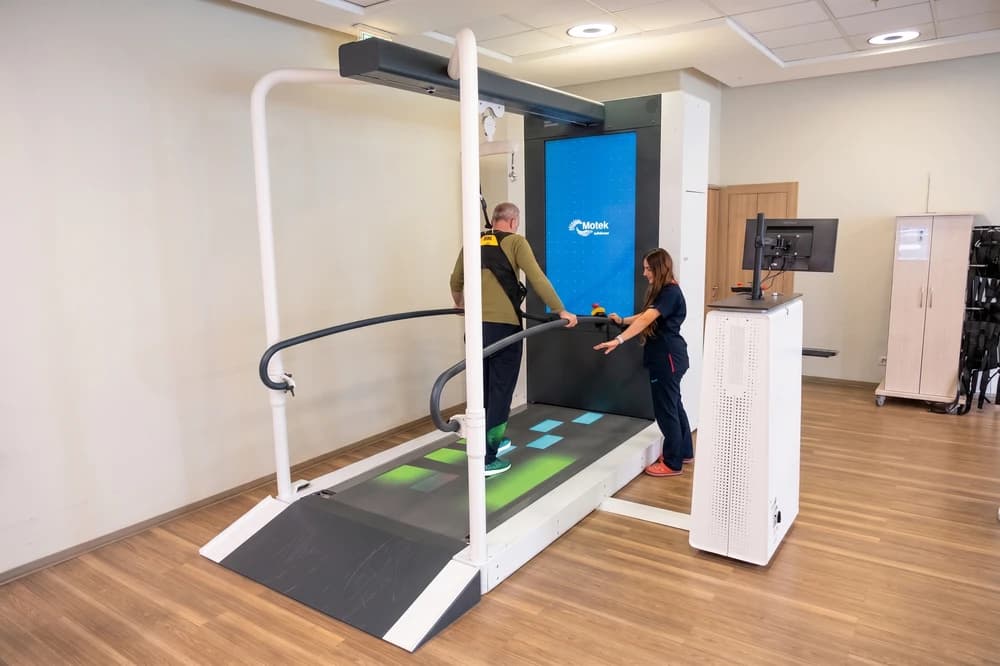
Technologies we use
Locations
Where you can receive this treatment





Related articles
Geriatric What actually prevents a second fall?
Not being careful, and not a grab rail on its own. The interventions with the strongest evidence are challenging balance exercise done several hours a week and sustained, plus a review of medication, vision, blood pressure and the home. A first fall is the signal to start that review.Read moreNeurological What is BPPV, and how do repositioning manoeuvres work?
Benign paroxysmal positional vertigo, or BPPV, causes short bursts of spinning dizziness when the head moves, such as rolling over in bed or looking up. It happens when tiny calcium crystals in the inner ear move into the wrong place. A simple head repositioning manoeuvre carried out by a trained clinician usually moves the crystals back and relieves symptoms.Read moreNeurological How long does it take to recover from a stroke?
Most recovery after a stroke happens in the early months, when the brain is most able to reorganise, and it continues more slowly for a longer period after that. How far someone gets depends mainly on how severe the stroke was, where it happened and how much active therapy follows.Read more



