
Outpatient
Return to sport programme
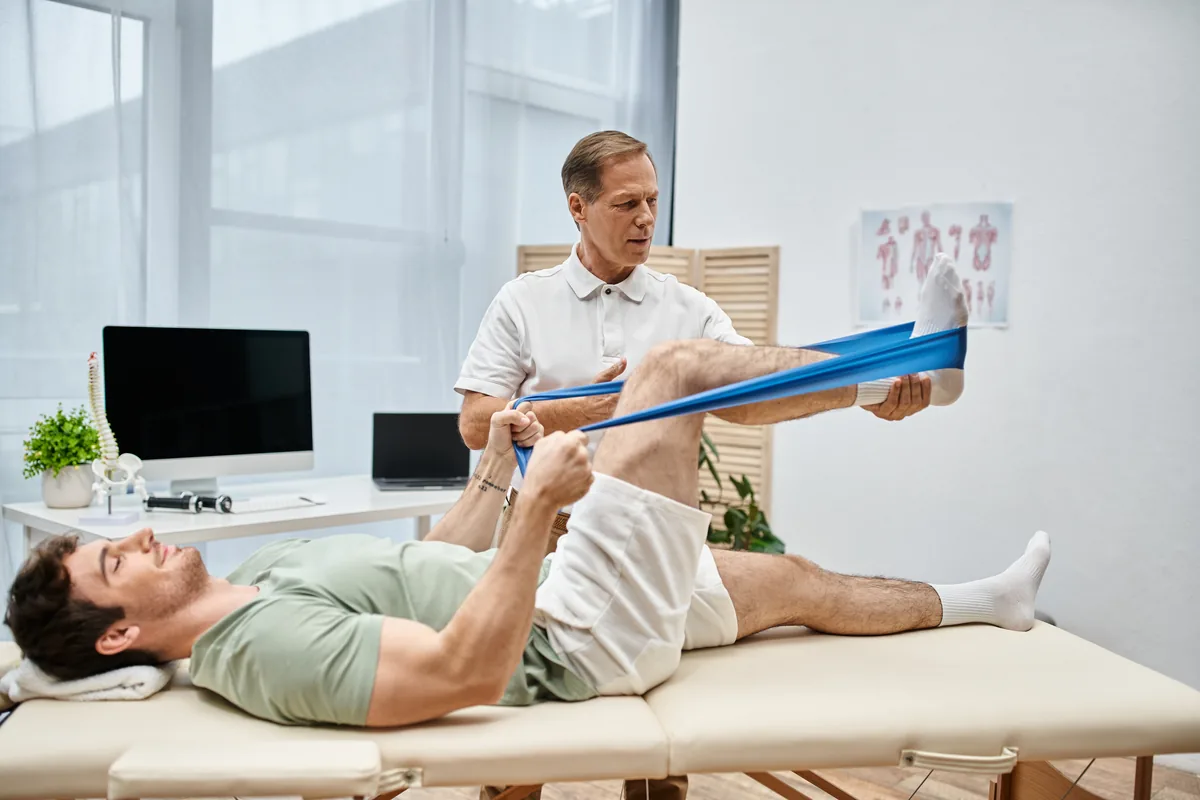
The final phase after an injury or reconstruction: strength symmetry, landing mechanics, sprint and change-of-direction work, with measured criteria before clearance. Clearance is based on measured strength symmetry, hop tests and movement quality under load rather than weeks since injury, and the athlete sees the numbers.
Criteria, not calendar
Clearance to return is based on measured strength symmetry, hop test performance and movement quality under load — not on weeks elapsed since surgery or injury. Two athletes at the same time point are frequently at very different stages of readiness.
We test rather than estimate, and we give you the numbers. If you want to return before meeting the criteria, that is your decision and we document it rather than endorse it.
The phases
Restore range and reduce swelling. Re-establish muscle activation, which after knee surgery does not simply return with use. Progressive strengthening. Plyometrics and landing mechanics. Change of direction. Sport-specific work at increasing intensity. Then graded return to training before return to competition.
Skipping the landing and change-of-direction phases is the most common reason for re-injury, because those are the movements in which injuries actually occur.
What the evidence says about timing
After ACL reconstruction, returning before nine months and returning without meeting strength and hop criteria are each independently associated with substantially higher re-injury rates 1. Meeting the criteria matters as much as the time.
We will give you the figures for your situation rather than an opinion, because this is a decision an athlete should make with numbers in front of them.
Psychological readiness is measured too
A substantial proportion of athletes who are physically ready do not return, and fear of re-injury is the most common reason. It is measurable with validated scales and it responds to graded exposure.
Ignoring it produces athletes who pass every physical test and never play again, which is a failed rehabilitation whatever the strength numbers say.
Why returning on the calendar fails
The date on which tissue has healed is not the date on which an athlete is ready. Strength symmetry, hop performance, landing mechanics and change-of-direction control all lag behind healing, and returning before they recover is what produces second injuries.
The programme therefore discharges against criteria rather than against elapsed months, and it states what those criteria are at the start so the athlete knows what they are working towards.
The second injury risk nobody mentions
After anterior cruciate ligament reconstruction the risk of a further injury — to either knee — is substantially elevated in the first year of return, and it falls with each month of delay and each criterion met.
That trade-off belongs to the athlete, not to us, but it has to be presented with numbers rather than as encouragement. Coaches and clubs push for earlier return; a criteria-based report gives the athlete something to push back with.
Sources
- Simple decision rules can reduce reinjury risk by 84% after ACL reconstruction: the Delaware-Oslo ACL cohort study — British Journal of Sports Medicine (2016)
Conditions this programme treats
The 3 conditions this programme is built for, grouped by area.

The programme is chosen after a rehabilitation physician has read your records — not from this page.
Your path to this treatment
Nothing here is booked from a page. You send the records you have, a rehabilitation physician reads them, and you get a written answer — including when the answer is that an intensive programme will not help.
4 steps, start to finish
1.Send your records
A discharge summary from the hospital that treated the original event, and any imaging of the affected area — CT, MRI or X-ray.2.A written plan in 48 hours
A rehabilitation physician reviews the case and returns the expected duration, the recommended programme and the centre. Free, no obligation.3.Travel and admission
Where a visa is needed we issue an invitation letter and treatment confirmation naming the dates and the facility. You are met at the airport and driven to the centre by private vehicle or ambulance; a bed for one companion and interpreting during therapy are arranged.4.Treatment, then home
The programme runs, then you leave with a discharge report and a written home exercise plan. Your return journey is organised before you go, with scheduled video reviews so progress does not stop.
In their words
What patients say after a programme
Short videos filmed during therapy: a child’s rehabilitation after a brain tumour, suspended gait training after spinal cord injury, and learning to walk again after a fall. Individual results vary.
Dave Evans on his physical therapy here
Musculoskeletal physiotherapy
Paediatric rehabilitation after a brain tumour
Inside a physiotherapy session
Spinal cord injury — the rehabilitation process
Suspension-assisted gait training
Walking difficulty and restricted movement after a fall
Regaining gait and range of motion
Locations
Where this programme runs — pick a centre.



Questions people actually ask
About this programme
When can I return to sport?
When the criteria are met, which is usually later than the timeline the athlete has in mind. Strength symmetry, hop tests, movement quality and psychological readiness each have thresholds, and they are measured rather than judged.
What is tested?
Isokinetic or handheld strength testing for symmetry, a battery of hop tests, landing mechanics on video, sprint and change-of-direction work, and a validated psychological readiness questionnaire.
Why does psychological readiness matter?
Because fear of re-injury predicts both failure to return and re-injury itself, independently of physical recovery. An athlete who is physically ready but not psychologically ready moves differently under pressure.
Can I do this if I was operated on elsewhere?
Yes, and it is common. Bring the operation note; what was done determines what is safe and when.
What if I do not reach the criteria?
Then we say so, and the report states which criteria are unmet and what is needed. That is more useful than a clearance that does not reflect the testing.



