
Day programme
Cognitive rehabilitation
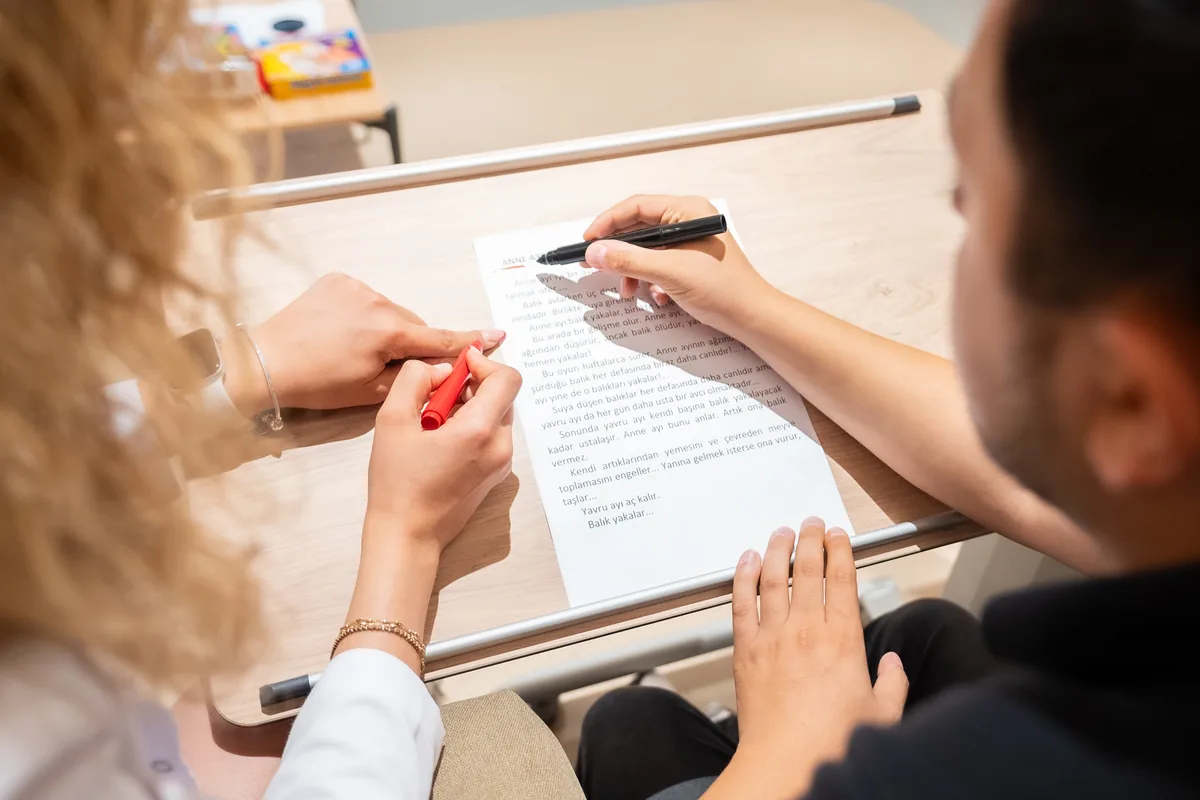
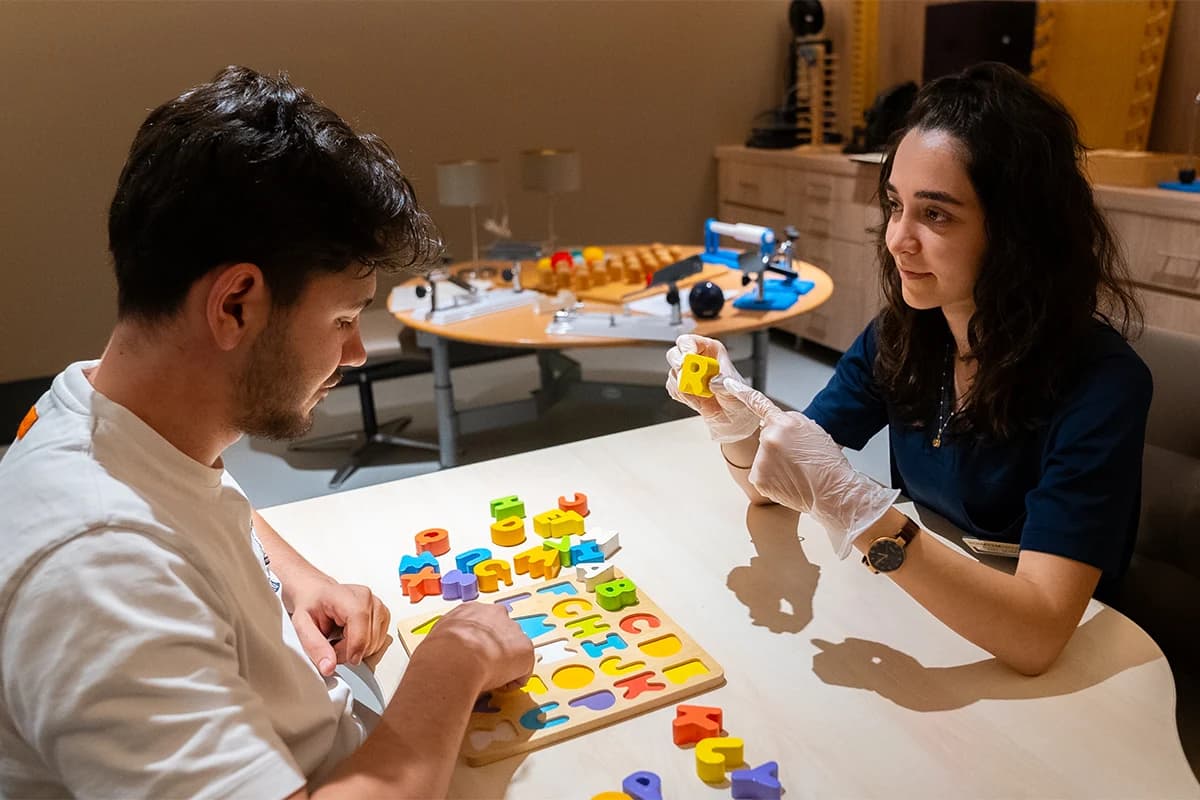
A programme for attention, memory, planning and orientation after stroke, brain injury or neurosurgery. It works on the tasks the person needs to resume rather than on puzzles, and it runs alongside physical rehabilitation rather than after it. Occupational therapy sits inside the programme, because the gains have to reach daily tasks.
Why computer exercises alone are not enough
Improving at an on-screen task reliably improves that task. Carrying the gain into cooking, managing medication or returning to work needs the work to be done in those tasks, which is why occupational therapy sits inside this programme rather than next to it.
The written plan therefore names the activities, not the software.
What is assessed first
Attention, working memory, processing speed, planning and insight are assessed separately, because they fail separately and a single score hides which one is the problem.
The result decides the order of work: attention before memory, memory before planning, because each one rests on the one before it.
What the evidence supports, and what it does not
The evidence here is weaker than the marketing around it. A Cochrane review of cognitive rehabilitation for attention after stroke found that divided attention may improve immediately after treatment (standardised mean difference 0.67, 95% confidence interval 0.35 to 0.98; 4 trials, 165 participants; low-certainty evidence), but no convincing evidence that the gain persists or reaches daily activities, mood or quality of life 1. For memory, a review of 13 trials with 514 participants found a short-term improvement in how patients rate their own memory, and none in objective memory testing 2.
For traumatic brain injury, a review of nine trials with 790 participants found insufficient good-quality evidence that cognitive rehabilitation improves return to work, independence in daily activities or quality of life 3. We state this because a programme sold on the promise of restored memory is selling something the research does not support. What is defensible is narrower and still worth doing: teaching strategies that work around the deficit, and practising the actual tasks the person needs to resume.
Who it suits, and who it does not
People whose attention, memory, planning or awareness is limiting independence after stroke, brain injury or neurosurgery, and who can sustain a structured session. In early dementia the goal changes: not restoring memory, but keeping routine, safety and daily activity in place for longer.
It does not suit someone still in an acute confusional state, or someone whose fatigue means a session cannot be completed — in both cases the programme is deferred rather than delivered badly. Where the main problem is mood rather than cognition, that is treated first, because depression after stroke depresses cognitive test scores as well.
Duration and what to expect
Four to eight weeks, two to four hours a day, scheduled alongside physical rehabilitation rather than after it. The same instruments used at assessment are repeated at the end, so the change is measured on the same scale rather than described.
What usually moves first is the speed and consistency with which a familiar task is completed, not a test score. If neither has moved by the end of the block, the discharge report says so and the recommendation changes rather than the programme repeating unchanged.
The strategies have to leave the therapy room
Most of the real-world benefit comes from compensation rather than restoration: a diary that is actually used, alarms for medication, one task at a time, a kitchen arranged so that the order of work is obvious. These only hold if the household adopts them, so the family is trained alongside the patient.
The written home plan therefore names activities and not software: paying a bill, preparing a meal, planning a journey. Where return to work is the goal, the plan names the specific work tasks, because that is the level at which a gain either transfers or does not.
Sources
- Loetscher T, Potter KJ, Wong D, das Nair R. Cognitive rehabilitation for attention deficits following stroke — Cochrane Database of Systematic Reviews (2019)
- das Nair R, Cogger H, Worthington E, Lincoln NB. Cognitive rehabilitation for memory deficits after stroke — Cochrane Database of Systematic Reviews (2016)
- Kumar KS, Samuelkamaleshkumar S, Viswanathan A, Macaden AS. Cognitive rehabilitation for adults with traumatic brain injury to improve occupational outcomes — Cochrane Database of Systematic Reviews (2017)
Conditions this programme treats
The 6 conditions this programme is built for, grouped by area.

The programme is chosen after a rehabilitation physician has read your records — not from this page.
Your path to this treatment
Nothing here is booked from a page. You send the records you have, a rehabilitation physician reads them, and you get a written answer — including when the answer is that an intensive programme will not help.
4 steps, start to finish
1.Send your records
A discharge summary from the hospital that treated the original event, and any imaging of the affected area — CT, MRI or X-ray.2.A written plan in 48 hours
A rehabilitation physician reviews the case and returns the expected duration, the recommended programme and the centre. Free, no obligation.3.Travel and admission
Where a visa is needed we issue an invitation letter and treatment confirmation naming the dates and the facility. You are met at the airport and driven to the centre by private vehicle or ambulance; a bed for one companion and interpreting during therapy are arranged.4.Treatment, then home
The programme runs, then you leave with a discharge report and a written home exercise plan. Your return journey is organised before you go, with scheduled video reviews so progress does not stop.
In their words
What patients say after a programme
Short videos filmed during therapy: a child’s rehabilitation after a brain tumour, suspended gait training after spinal cord injury, and learning to walk again after a fall. Individual results vary.
Dave Evans on his physical therapy here
Musculoskeletal physiotherapy
Paediatric rehabilitation after a brain tumour
Inside a physiotherapy session
Spinal cord injury — the rehabilitation process
Suspension-assisted gait training
Walking difficulty and restricted movement after a fall
Regaining gait and range of motion
Locations
Where this programme runs — pick a centre.






Questions people actually ask
About this programme
Does brain training software work?
It reliably improves performance at the exercise itself. Carrying that gain into daily activities is where the evidence thins, which is why software is one component here and never the programme.
Can memory be restored after a stroke?
Reviews show a short-term improvement in how people rate their own memory and none in objective memory tests 2. What changes more reliably is how well someone manages with the memory they have.
How soon after the stroke or injury should this start?
As soon as the person can hold attention for a structured session. It runs alongside physical rehabilitation rather than waiting for it to finish, because cognition is usually what decides return to work, not walking.
Is it useful in dementia?
The goal is different. Not restoring memory, which it cannot do, but keeping routine, safety and daily activity in place for longer, and training the family in how to support that.
Can we continue this at home?
Yes, and it should be continued. For brain injury, a Cochrane review found a home programme performed similarly to a hospital-based one for return to work 3, which is an argument for taking the home plan seriously rather than for skipping the assessment.



