
Outpatient
Burn rehabilitation
Rehabilitation after burn injury: preserving joint range, managing scar tissue, preventing contracture and returning to daily activity. Hand and facial burns are handled with particular attention because function there is lost quickly and regained slowly. Positioning, splinting and range work start early, because range lost to a maturing scar is hard to regain.
Contracture is prevented, not corrected
Scar tissue shortens as it matures, and the range lost while it does so is far harder to regain than it is to preserve. Positioning, splinting and daily range work run from the earliest safe point.
This is why burn rehabilitation is scheduled rather than offered once healing is complete.
Scar management is part of the programme
Pressure, silicone, massage and where indicated laser work on the scar itself, alongside the movement work.
The goal is stated in tasks — a hand that closes, a shoulder that reaches, a face that expresses — because those are what the person lost.
What the evidence supports, and what is routine rather than proven
Silicone is the best-supported scar treatment. International scar management guidelines, developed by a group of twenty-four specialists, place silicone sheeting or gel as the first-line option for both preventing and treating hypertrophic scars 1, and an evidence review rated silicone and tension reduction as high-efficacy for prevention 2.
The honest part is what the same review says about the rest: pressure garments and scar massage were rated low-efficacy for preventing hypertrophic scars, although massage is rated effective for treating scars that have already formed 2. Pressure garments remain the standard for widespread burn scarring 1 and we use them for that, but we do not present them as proven prevention.
Who it suits
After a deep partial or full-thickness burn, after grafting, and wherever a scar crosses a joint — the neck, the axilla, the elbow, the hand, the knee. Also for burns treated years ago where a contracture has since developed and movement has been lost.
Open wounds belong to the burn service first; rehabilitation runs alongside wound care rather than waiting for the skin to close, because the range lost during that period is the range that is hardest to get back.
Duration and what to expect
This is the longest programme on the site — twelve weeks to a year or more — because it is tied to scar maturation rather than to a course of therapy. It runs as intensive blocks with home programme between them, not as continuous attendance.
At each block, joint range, a scar assessment and hand function are measured, along with the specific tasks the person named at the start. Those tasks are how the programme is judged: a hand that closes, a shoulder that reaches overhead, a face that expresses.
The hand, the face, and growing children
In the hand, small amounts of range are lost quickly and regained slowly, so splinting and daily range work start earlier and continue longer than anywhere else. The face is treated for the same reason with different tools: expression is function, not appearance.
In children a scar does not grow with the child. A contracture that was released can reappear during a growth spurt, so follow-up is scheduled through development rather than closed at discharge, and the family is told that at the outset rather than at the first relapse.
Sources
- Monstrey S, Middelkoop E, Vranckx JJ, et al. Updated scar management practical guidelines: non-invasive and invasive measures — Journal of Plastic, Reconstructive & Aesthetic Surgery (2014)
- Khansa I, Harrison B, Janis JE. Evidence-based scar management: how to improve results with technique and technology — Plastic and Reconstructive Surgery (2016)
Conditions this programme treats
The 4 conditions this programme is built for, grouped by area.
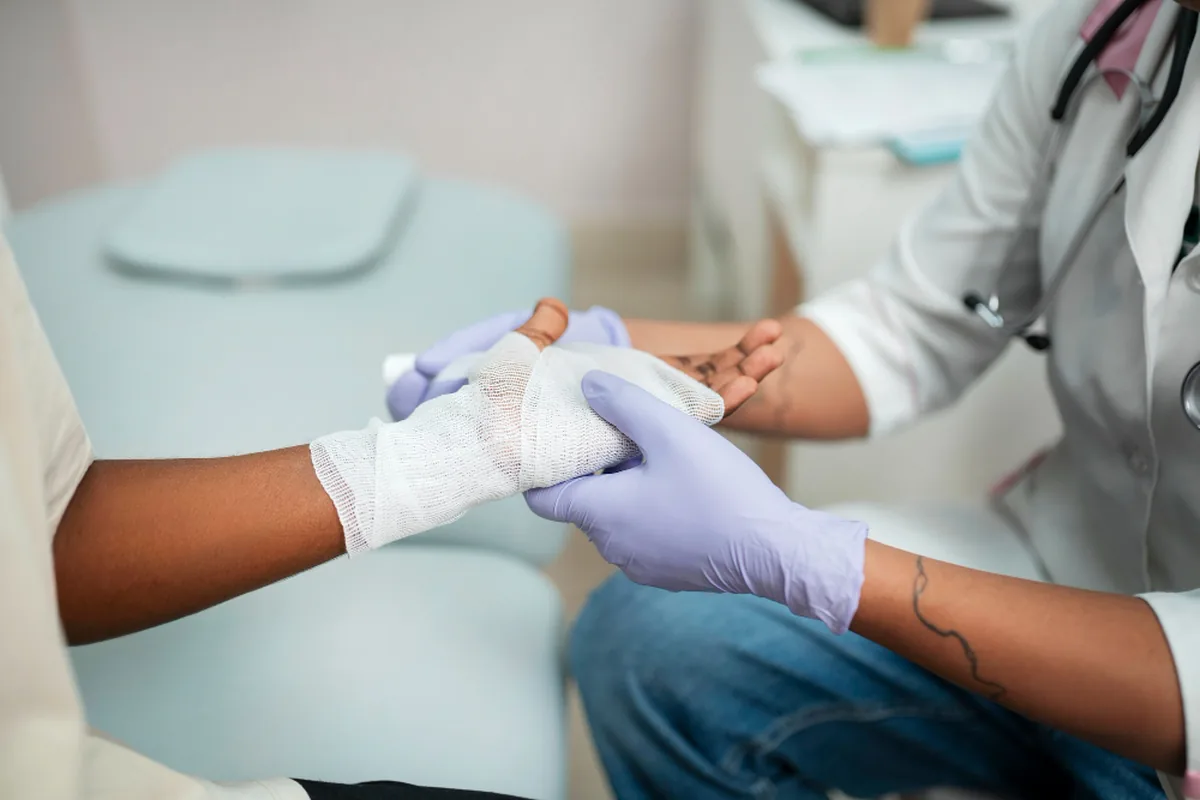
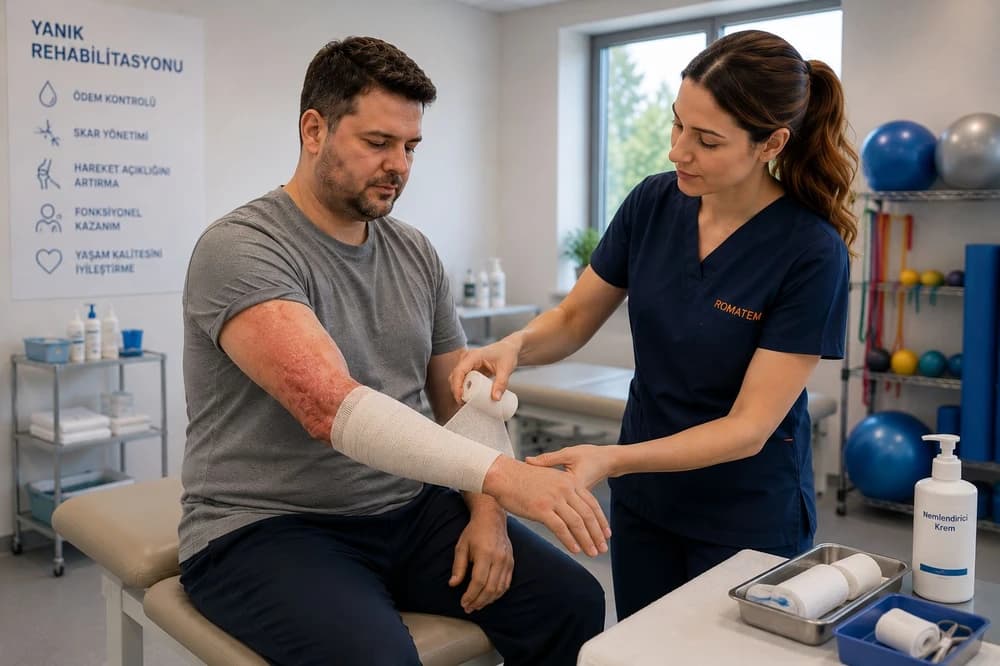
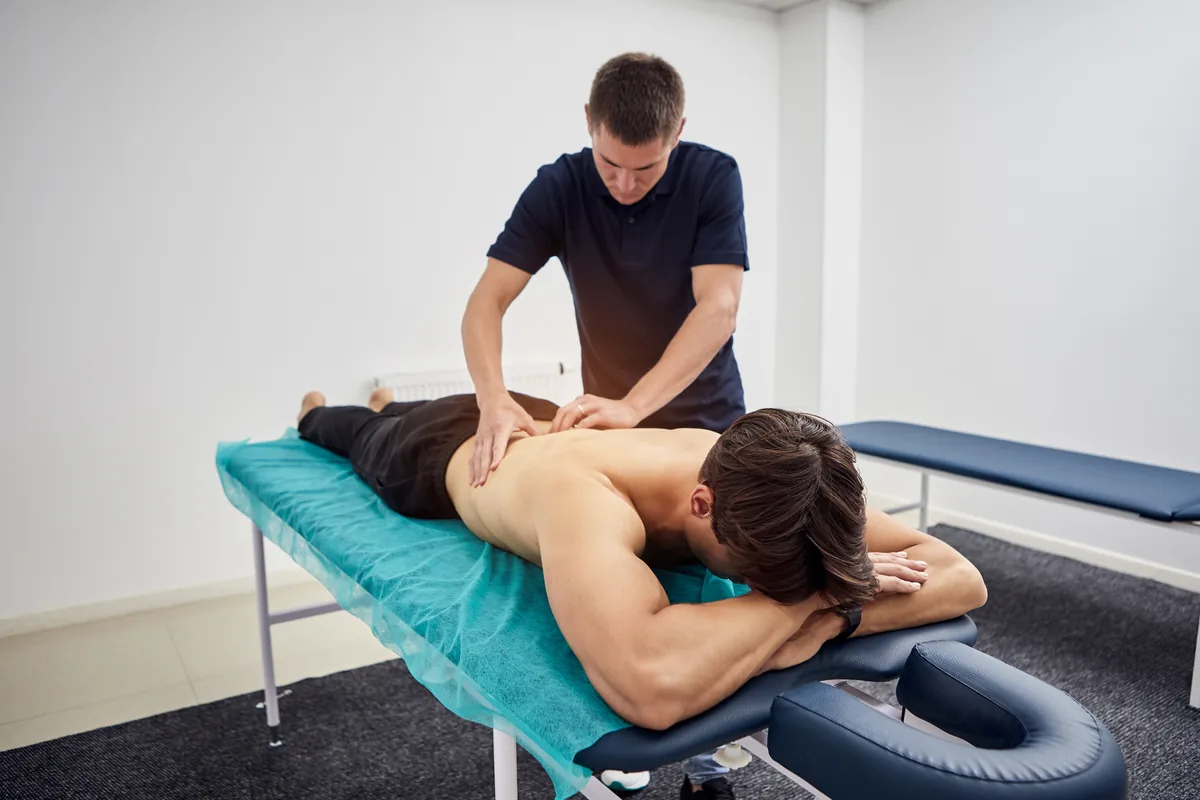
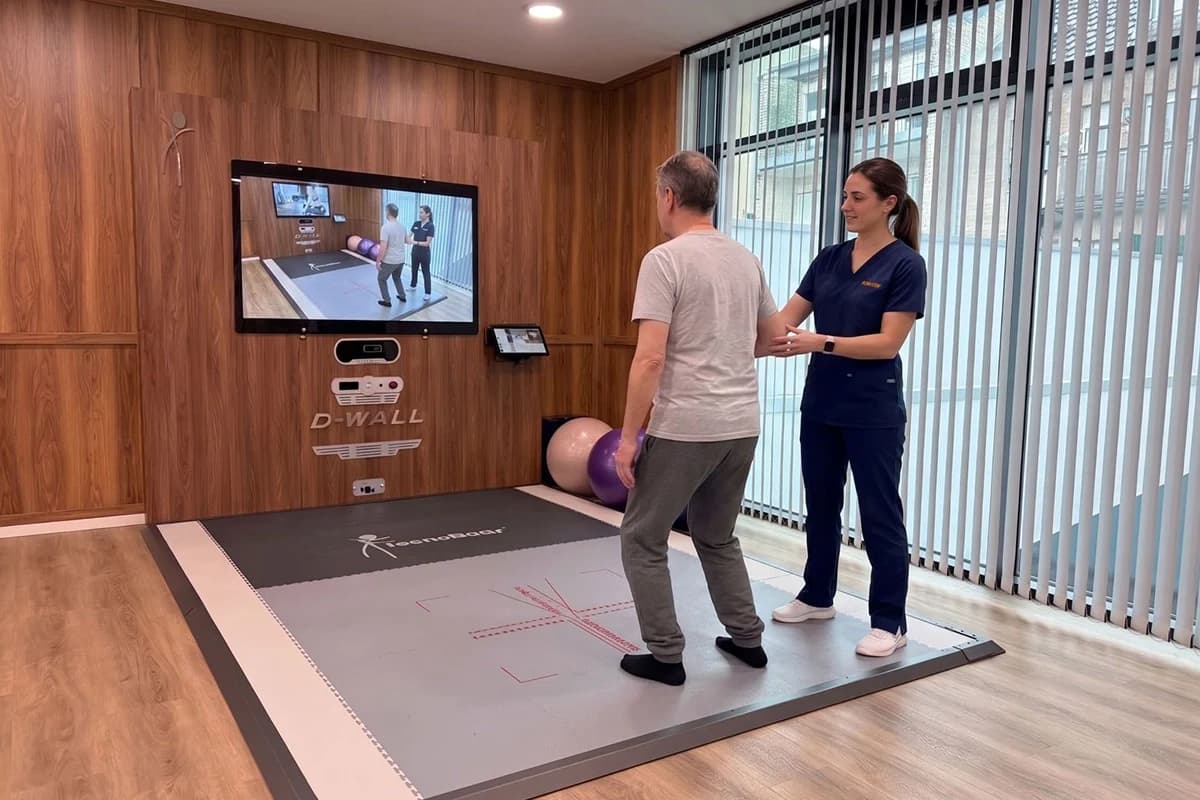
The programme is chosen after a rehabilitation physician has read your records — not from this page.
Your path to this treatment
Nothing here is booked from a page. You send the records you have, a rehabilitation physician reads them, and you get a written answer — including when the answer is that an intensive programme will not help.
4 steps, start to finish
1.Send your records
A discharge summary from the hospital that treated the original event, and any imaging of the affected area — CT, MRI or X-ray.2.A written plan in 48 hours
A rehabilitation physician reviews the case and returns the expected duration, the recommended programme and the centre. Free, no obligation.3.Travel and admission
Where a visa is needed we issue an invitation letter and treatment confirmation naming the dates and the facility. You are met at the airport and driven to the centre by private vehicle or ambulance; a bed for one companion and interpreting during therapy are arranged.4.Treatment, then home
The programme runs, then you leave with a discharge report and a written home exercise plan. Your return journey is organised before you go, with scheduled video reviews so progress does not stop.
In their words
What patients say after a programme
Short videos filmed during therapy: a child’s rehabilitation after a brain tumour, suspended gait training after spinal cord injury, and learning to walk again after a fall. Individual results vary.
Dave Evans on his physical therapy here
Musculoskeletal physiotherapy
Paediatric rehabilitation after a brain tumour
Inside a physiotherapy session
Spinal cord injury — the rehabilitation process
Suspension-assisted gait training
Walking difficulty and restricted movement after a fall
Regaining gait and range of motion
Locations
Where this programme runs — pick a centre.







Questions people actually ask
About this programme
When should burn rehabilitation start?
At the earliest point the wound allows, alongside wound care rather than after it. Range lost while the scar is maturing is far harder to regain than range that was never lost.
Will the scar disappear?
No. It matures, softens and fades over a year or more, and no treatment removes it. What treatment changes is how much movement it takes away and how uncomfortable it is to live with.
Does silicone actually work?
My burn was years ago. Is it too late?
No. An established contracture is treated, and where the scar is too tight for therapy alone, surgical release followed by rehabilitation is the route. What is no longer available is the prevention window, which is why we are blunt about starting early.



