

Medical condition
Burns
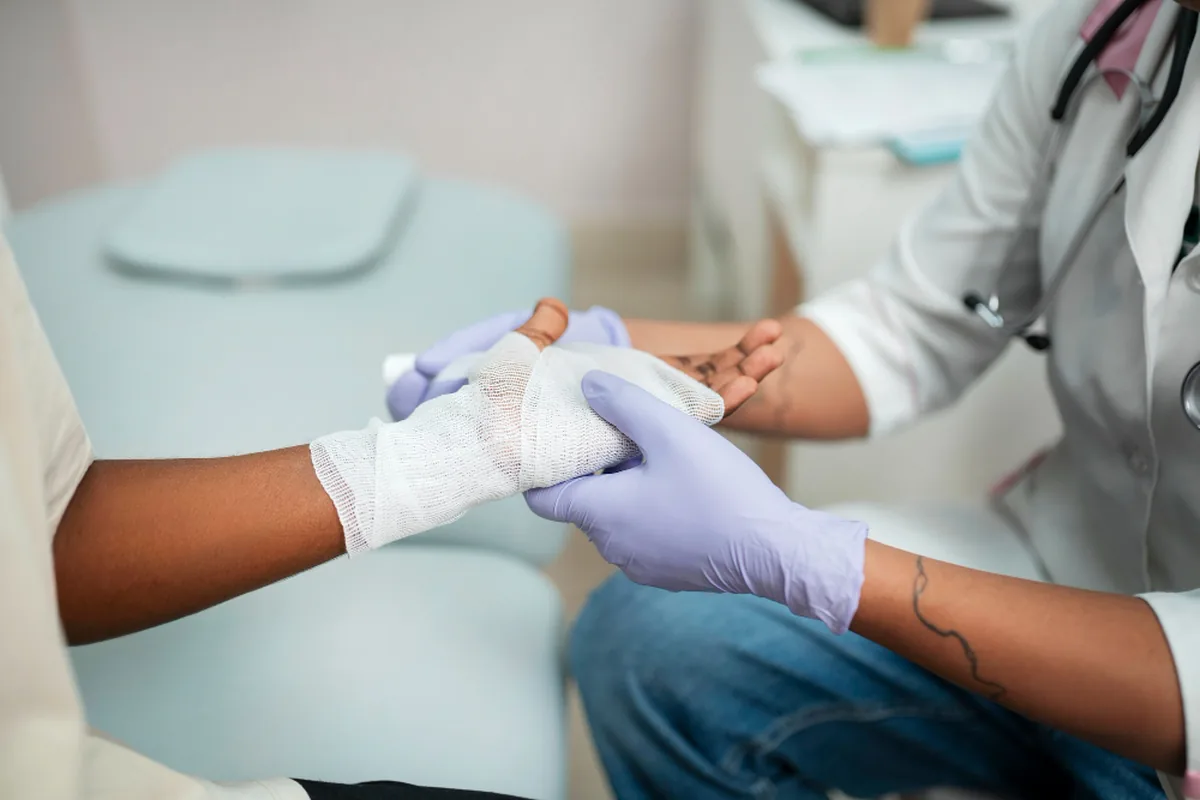
After a deep burn the wound closes but the scar continues to change for a year or more, tightening and pulling across joints. Burn rehabilitation exists to keep that scar from taking movement away: positioning, splinting, sustained stretching and pressure therapy, continued long after the skin has healed.
The scar is the problem, not the wound
A hypertrophic burn scar remains metabolically active for months. It contracts, and across a joint that contraction removes range progressively. A shoulder, elbow, knee or neck can lose function long after the patient was discharged as healed.
This is why burn rehabilitation is measured in months and why stopping when the wound closes is the most common reason a patient ends up needing scar release surgery.
What the programme consists of
Positioning against the direction the scar wants to pull. Custom splinting, often worn at night for months. Daily sustained stretching. Pressure garments and silicone for scar management. And strengthening and conditioning, because a long acute admission leaves substantial muscle loss.
Hydrotherapy is useful once the skin is fully closed and intact — warm water allows movement that is painful on land — but it is not used over open areas or unhealed grafts.
Pain, itch and the parts nobody mentions
Itch is one of the most distressing long-term symptoms and is frequently dismissed. Neuropathic pain from damaged nerve endings is common. Both are treated actively rather than tolerated, because they determine whether a patient can complete the stretching programme at all.
Psychological support belongs in this programme. Visible scarring, altered body image and traumatic memory affect participation directly, and rehabilitation that ignores them progresses badly.
The scar keeps changing for a year and more
Scars keep changing for a year or more: in a study of 326 children whose burns healed without grafting, raised scars were present in 56% at three to six months and still present in 16% at twelve to eighteen months 1. A joint that looks fine at three months can lose range at nine if the programme stops.
This is why splinting, positioning and pressure therapy continue long after the wound has closed, and why discharge at wound healing is the commonest reason burns patients lose function.
Do pressure garments, silicone and splints actually work?
The evidence is weaker than their routine use suggests. A 2024 Cochrane review of 15 trials with 1,179 people found the evidence very uncertain on whether pressure garments prevent raised scarring, alone or combined with silicone, and suggested that patient preference could guide the choice until better trials exist 2.
For silicone gel sheeting, a Cochrane review found weak evidence of benefit in preventing raised scars in people at high risk, and improvements in scar thickness and colour, but in trials of poor quality 3. Static splinting to prevent contractures also rests more on clinical reasoning than on trials; a review found no strong evidence that it works 5.
Contractures themselves are common: in a systematic review they were present in 38–54% of patients at hospital discharge, more often after severe or flame burns, in children, and at the neck and arms 4. That is why positioning and stretching start early, with garments, silicone and splints used where they help an individual patient.
Frequently asked questions
How long does rehabilitation take?
Often a year or more in significant burns, because scars go on changing for that long; a Cochrane review of scar treatment notes that the full effect may not be seen until around 18 months 2. Wound healing is the start rather than the end.
Why do I need splints at night?
Scar contracts continuously and pulls joints into flexion. Night splinting holds position during the hours when nothing else is preventing it.
What helps the itching?
Moisturising, pressure garments, and specific medication where needed. Itch after burns is severe, frequently under-treated and it disturbs sleep more than pain does.
Will the scar improve?
When can I return to work?
It depends on the site, the depth and the job. Return is staged, and heat, sun exposure and manual demands all need planning for.
Sources
- Scar outcomes for conservatively managed children post burn injury: A retrospective study — International Wound Journal (2024)
- Harris IM, Lee KC, Deeks JJ, Moore DJ, et al. Pressure-garment therapy for preventing hypertrophic scarring after burn injury — Cochrane Database of Systematic Reviews (2024)
- O'Brien L, Jones DJ. Silicone gel sheeting for preventing and treating hypertrophic and keloid scars — Cochrane Database of Systematic Reviews (2013)
- Oosterwijk AM, Mouton LJ, Schouten H, Disseldorp LM, et al. Prevalence of scar contractures after burn: a systematic review — Burns (2017)
- Schouten HJ, Nieuwenhuis MK, van Zuijlen PPM. A review on static splinting therapy to prevent burn scar contracture: do clinical and experimental data warrant its clinical application? — Burns (2012)
Which therapies would I actually receive?
A therapy is a single method used inside a programme. It is measured in sessions and is not sold separately.

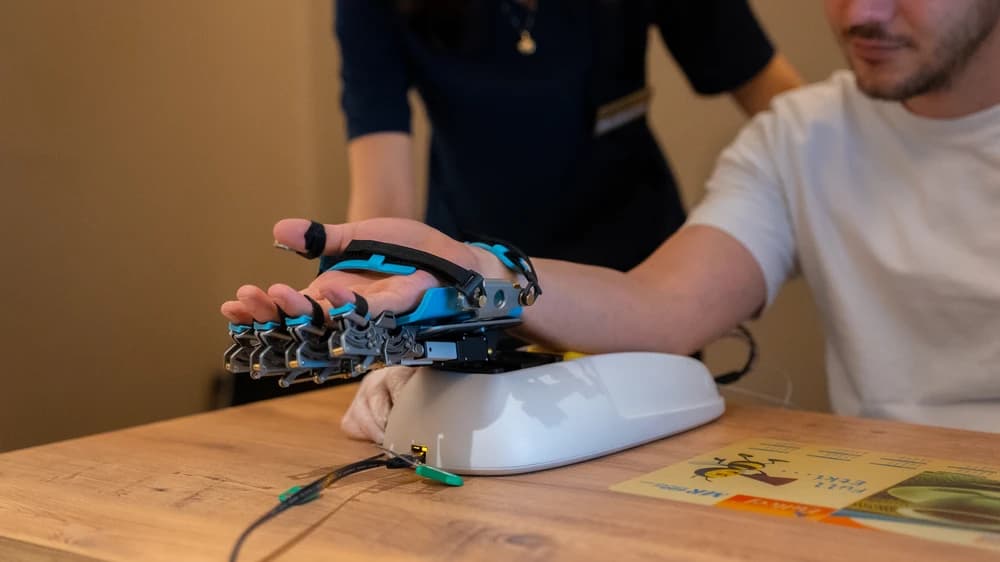
Technologies we use


Locations
Where you can receive this treatment



Related articles
Burn How can scar contractures be prevented after a burn?
Scar contractures, where tightening scars limit joint movement, are common after significant burns, especially around the neck, hands and arms. Positioning, splinting, early and regular movement, stretching and scar management from the first days after injury help prevent them. Rehabilitation often continues for months while scars mature.Read moreBurn Do pressure garments and scar massage help burn scars?
Pressure garments and scar massage are widely used to manage raised burn scars, but the evidence is limited. A meta-analysis found pressure garments slightly reduced scar height without changing overall scar appearance. Scar massage showed preliminary benefits for scar height, pain and itch. Both are usually part of a broader scar management plan.Read moreNeurological How long does it take to recover from a stroke?
Most recovery after a stroke happens in the early months, when the brain is most able to reorganise, and it continues more slowly for a longer period after that. How far someone gets depends mainly on how severe the stroke was, where it happened and how much active therapy follows.Read more



