

Medical condition
Vasculitis
Vasculitis is inflammation of blood vessels, which can damage the tissue those vessels supply — nerves, kidney, lung or skin. Immunosuppressive treatment controls the disease. Rehabilitation begins once it is controlled and targets the nerve damage, muscle loss and reduced exercise capacity that the illness and its treatment leave behind.

One word covering very different diseases
Vasculitis ranges from conditions affecting only small skin vessels to ANCA-associated disease that damages kidney and lung, and giant cell arteritis that threatens sight. The rehabilitation plan depends entirely on which vessels were involved and what they left damaged.
We assess what the disease has actually done — nerve, muscle, joint, lung, exercise capacity — rather than planning from the diagnostic label.
When vasculitis damages a nerve
Mononeuritis multiplex — inflammation cutting the blood supply to individual nerves — produces sudden weakness in one nerve territory, classically foot drop. Recovery is slow and incomplete in some patients, and this is where rehabilitation contributes most.
Work includes strengthening what the nerve still supplies, gait retraining, orthotic assessment for foot drop, and functional electrical stimulation where the pattern suits it. Sensory loss makes skin protection part of the programme rather than an afterthought.
Steroid myopathy and deconditioning
High-dose corticosteroids cause proximal muscle weakness that patients often mistake for continued disease activity. Keeping the steroid dose as low as the disease allows comes first, and resistance and aerobic exercise appear to help, although much of that evidence comes from laboratory and animal studies 23. Distinguishing steroid myopathy from active disease is one of the useful things an assessment achieves.
Bone protection matters at the same time. Long steroid courses reduce bone density and the loading programme accounts for that rather than ignoring it.
When the weakness comes from the steroid
Prolonged high-dose corticosteroid causes proximal muscle weakness that patients and clinicians frequently attribute to the disease itself.
The distinction matters because steroid myopathy responds to resistance training and to dose reduction, whereas treating it as active disease leads to more steroid and more weakness.
How long does treatment last, and why does the steroid plan matter?
For life- or organ-threatening ANCA-associated vasculitis, European recommendations combine high-dose steroid with rituximab or cyclophosphamide to bring the disease under control, then reduce the steroid to 5 mg a day within four to five months 1. Avacopan may be added to cut steroid exposure, and maintenance treatment, usually rituximab, continues after remission 1.
That plan matters for rehabilitation. Steroid-related muscle weakness is common and mainly affects the legs; keeping the dose as low as the disease allows is central, and resistance and aerobic exercise have shown promise 2. Strength work therefore runs through the high-dose months rather than waiting for them to end.
Is exercise safe, and does it help fatigue?
Exercise has been studied far less in vasculitis than in inflammatory arthritis, where aerobic and strength training improve fitness and strength without increasing disease activity 6. European fatigue recommendations for inflammatory rheumatic diseases, a group that includes vasculitis, advise tailored physical activity and/or psychological support 45.
In vasculitis itself, a combined exercise and education programme reduced fatigue in trial data, but the review behind those recommendations rated the evidence in rarer diseases, vasculitis included, as very poor 4. Kidney function, blood pressure, lung involvement and nerve damage all change what is safe, so the programme is built around them.
Frequently asked questions
Is weakness from the disease or the treatment?
Often both, and distinguishing them changes management. Proximal weakness with normal inflammatory markers on prolonged steroid points towards myopathy.
Can exercise help steroid myopathy?
Why does nerve damage occur?
Vasculitis can affect the small vessels supplying nerves, producing mononeuritis multiplex — patchy weakness and numbness in specific nerve territories.
What about bone?
Prolonged steroid causes bone loss and fracture risk. Bone protection and loading exercise are part of the programme rather than an afterthought.
Can I exercise during active disease?
At adjusted intensity, usually yes. Complete inactivity during prolonged treatment produces losses that outlast the disease.
Sources
- EULAR recommendations for the management of ANCA-associated vasculitis: 2022 update — Annals of the Rheumatic Diseases (2024)
- Géfard-Gontier E, Le Quang M, Martin-Négrier ML, Violleau MH, et al. Glucocorticoid-induced myopathy: a comprehensive review — Journal of Neurology (2025)
- Tsetlina V, Stanford RA, Syrkin G, Ibanez K. Steroid myopathy and rehabilitation in patients with cancer — PM&R (2024)
- Santos EJF, Farisogullari B, Dures E, Geenen R, et al. Efficacy of non-pharmacological interventions: a systematic review informing the 2023 EULAR recommendations for the management of fatigue in people with inflammatory rheumatic and musculoskeletal diseases — RMD Open (2023)
- Dures E, Farisoğulları B, Santos EJF, Molto A, et al. 2023 EULAR recommendations for the management of fatigue in people with inflammatory rheumatic and musculoskeletal diseases — Annals of the Rheumatic Diseases (2024)
- Rausch Osthoff AK, Juhl CB, Knittle K, Dagfinrud H, et al. Effects of exercise and physical activity promotion: meta-analysis informing the 2018 EULAR recommendations for physical activity in people with rheumatoid arthritis, spondyloarthritis and hip/knee osteoarthritis — RMD Open (2018)
Which therapies would I actually receive?
A therapy is a single method used inside a programme. It is measured in sessions and is not sold separately.
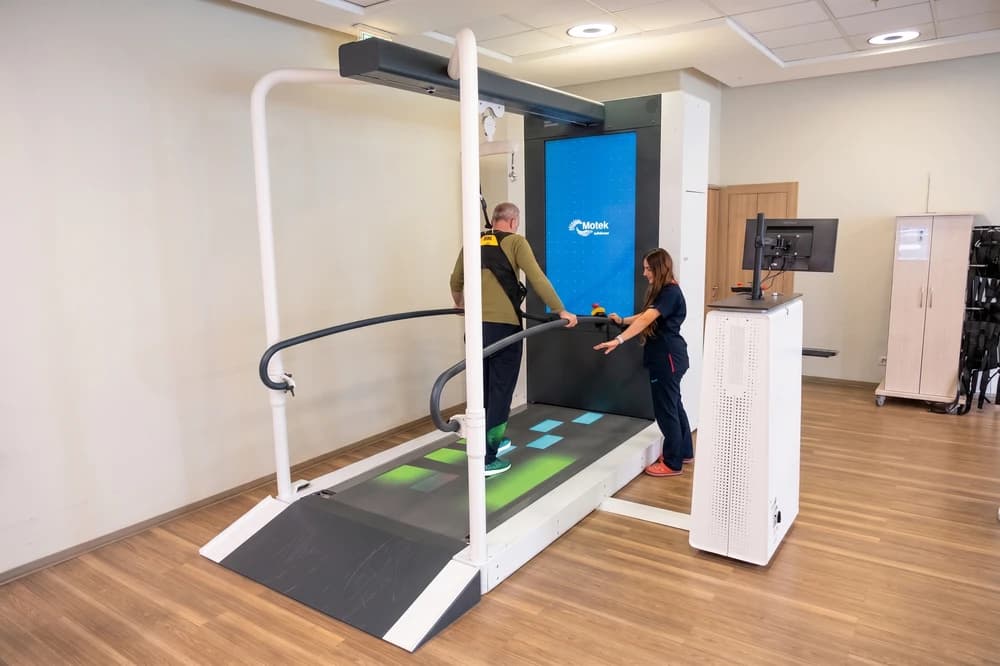
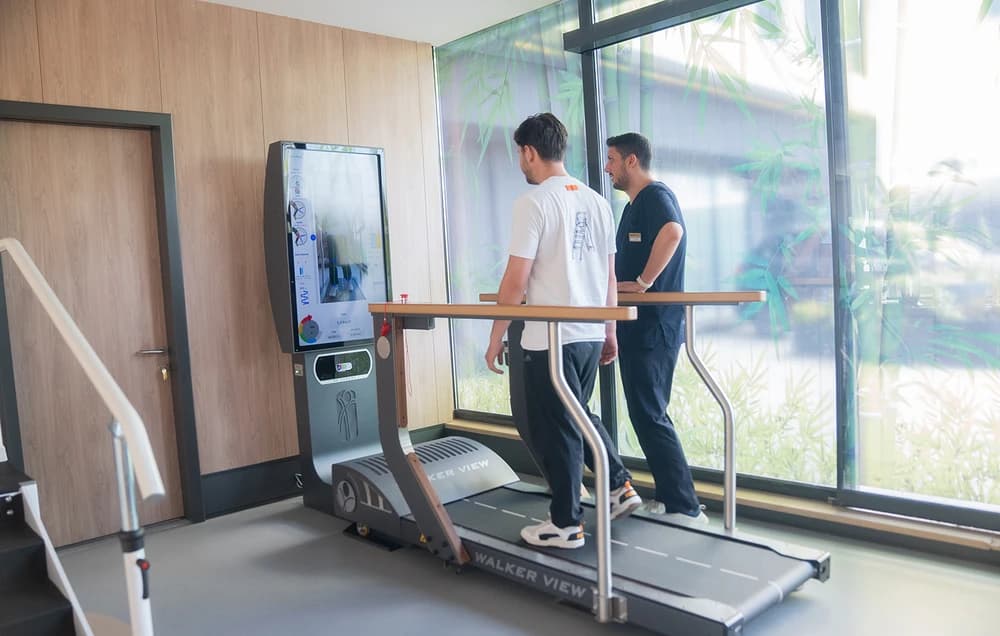
Technologies we use

Locations
Where you can receive this treatment



Related articles
Neurological How long does it take to recover from a stroke?
Most recovery after a stroke happens in the early months, when the brain is most able to reorganise, and it continues more slowly for a longer period after that. How far someone gets depends mainly on how severe the stroke was, where it happened and how much active therapy follows.Read moreNeurological Can you walk again after a stroke?
Many people walk again after a stroke, including many who cannot stand at first. The chances are highest when some leg movement returns early and when walking practice starts as soon as it is safe. Walking often comes back before full arm recovery, sometimes with a stick, splint or other support.Read moreNeurological Will my arm and hand recover after a stroke?
Arm and hand recovery after a stroke varies more than walking recovery. Early return of some shoulder or finger movement makes useful recovery much more likely. Repeated, meaningful practice of reaching, grasping and releasing is what drives improvement, and even a partly recovered hand can be trained to help with daily tasks.Read more



