
Medical condition
Toe Walking in Children
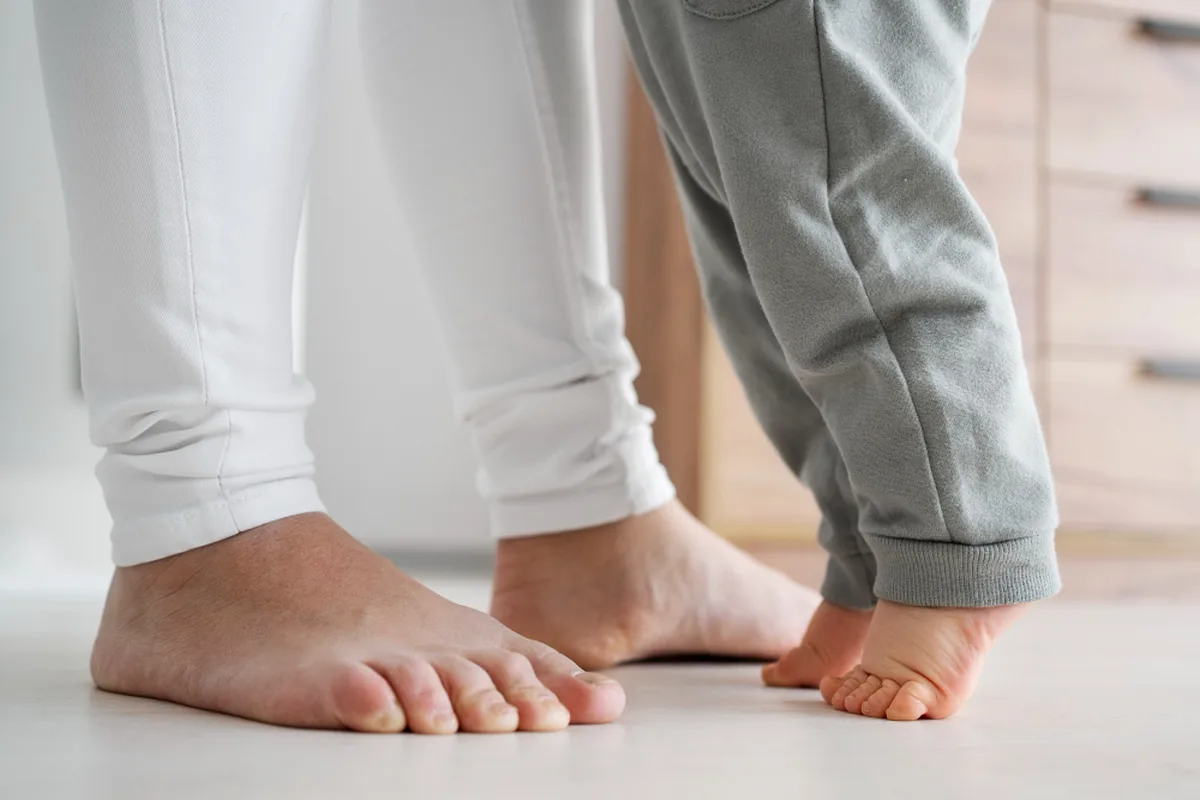
Toe walking is walking on the balls of the feet without the heel touching down. In a young child it is often a habit that resolves; when it persists past the early years, or appears with tight calves, weakness or other signs, assessment separates habit from a neurological or muscular cause, because the treatment is different.
Habit, or something behind it
Many toddlers walk on their toes for a while after they start walking and stop on their own. Toe walking that continues, that is present from the first steps and never varies, that is on one side only, or that comes with delayed milestones, clumsiness, tight calves or stiff legs, needs to be looked at rather than waited out.
The causes that matter are cerebral palsy in its milder forms, muscle disease, tethered spinal cord and, in some children, autism spectrum conditions, where toe walking is common and has a sensory component. Each is treated differently, and the assessment is what tells them apart.
What the assessment covers
The paediatric rehabilitation physician examines calf length and tone, strength, reflexes, the spine and the developmental history. Where the picture suggests a neurological or muscular cause, the appropriate investigation is arranged before any programme is written.
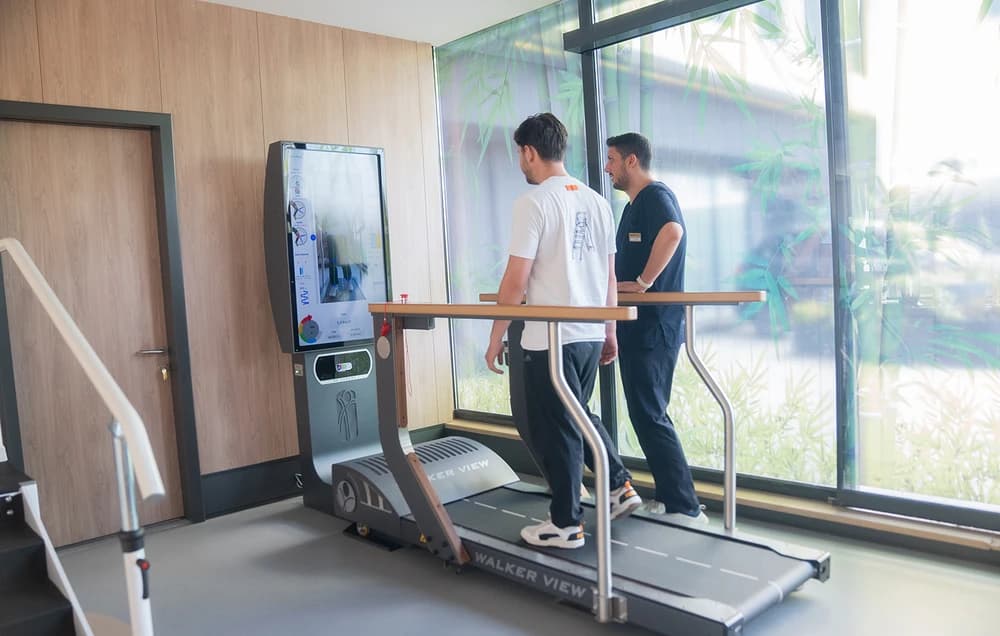
Instrumented gait analysis records whether the heel ever touches down, how the ankle and knee move, and whether the pattern is symmetrical — figures that decide the treatment and that show later whether it worked.
What treatment consists of
For idiopathic toe walking with a calf that is still long enough: stretching, strengthening of the muscles that lift the foot, balance work and gait retraining with visual and sensory cues, delivered as play rather than as drills. Where the calf has shortened, serial casting or night splints restore the length first, and the therapy follows.
Where a neurological cause is found, the programme is the one for that condition — described on its own page — with toe walking as one of the things it addresses. Botulinum toxin and surgery have a place in a small minority and are decided by the physician, not offered by default.
What to expect
Habitual toe walking in a young child often stops without any treatment 1. Where therapy is used, it is built around a home programme the family can keep up. The heel-strike percentage from the gait laboratory is the measure that shows the change, and it is reported at discharge.
Older children with a long-established pattern and a shortened calf take longer, and the outcome depends on restoring the length. We say at assessment which situation applies.
Does treatment make it stop sooner?
The evidence cannot say. A 2019 Cochrane review found only four small trials, with 104 children in total, and the one with usable data gave evidence too uncertain for conclusions 2. In that Swedish trial of 47 children aged 5 to 15, four weeks of below-knee casts improved ankle movement, strength and walking at three and twelve months, adding botulinum toxin did no better, and many children still toe-walked some of the time 3. Because every child in it had casts, the trial cannot show whether casting does better than time alone, and most children stop on their own 1.
Frequently asked questions
My two-year-old walks on tiptoe. Is that a problem?
Usually not, if the child can also walk flat and is developing normally. Persistent, constant or one-sided toe walking, or any delay in other milestones, is the reason to be seen.
Will special shoes fix it?
Shoes alone do not. Where a brace or cast is needed it is to restore calf length, and it works alongside therapy rather than instead of it.
Is toe walking a sign of autism?
It is more common in autistic children, but most toe walkers are not autistic. The assessment looks at the whole child rather than at the feet alone.
Does it need surgery?
Rarely, and only for a calf that has shortened beyond what casting can restore. Therapy comes first in almost every case.
Will my child grow out of it?
Most children do. In a population-based Swedish study, 79% of children who had ever toe-walked had stopped by age 10 without treatment, and toe walking did not cause calf tightness 1. Children still toe walking at 10 more often had a developmental condition, so persistence into school age is a reason for assessment 1.
Sources
- Engström P, Tedroff K. Idiopathic toe-walking: prevalence and natural history from birth to ten years of age — Journal of Bone and Joint Surgery (American Volume) (2018)
- Caserta AJ, Pacey V, Fahey M, Gray K, et al. Interventions for idiopathic toe walking — Cochrane Database of Systematic Reviews (2019)
- Engström P, Bartonek Å, Tedroff K, Orefelt C, et al. Botulinum toxin A does not improve the results of cast treatment for idiopathic toe-walking: a randomized controlled trial — Journal of Bone and Joint Surgery (American Volume) (2013)
Technologies we use
Locations
Where you can receive this treatment




Related articles
Paediatric When is toe walking in children a concern?
Toe walking is common in young children, and most outgrow it. In a Swedish study, a small minority of children had walked on their toes, and most of these had stopped by later childhood without any treatment. It needs assessment if a child cannot stand flat, walks only on one side, has stiffness or developmental concerns, or loses skills.Read moreNeurological How long does it take to recover from a stroke?
Most recovery after a stroke happens in the early months, when the brain is most able to reorganise, and it continues more slowly for a longer period after that. How far someone gets depends mainly on how severe the stroke was, where it happened and how much active therapy follows.Read moreNeurological Can you walk again after a stroke?
Many people walk again after a stroke, including many who cannot stand at first. The chances are highest when some leg movement returns early and when walking practice starts as soon as it is safe. Walking often comes back before full arm recovery, sometimes with a stick, splint or other support.Read more



