
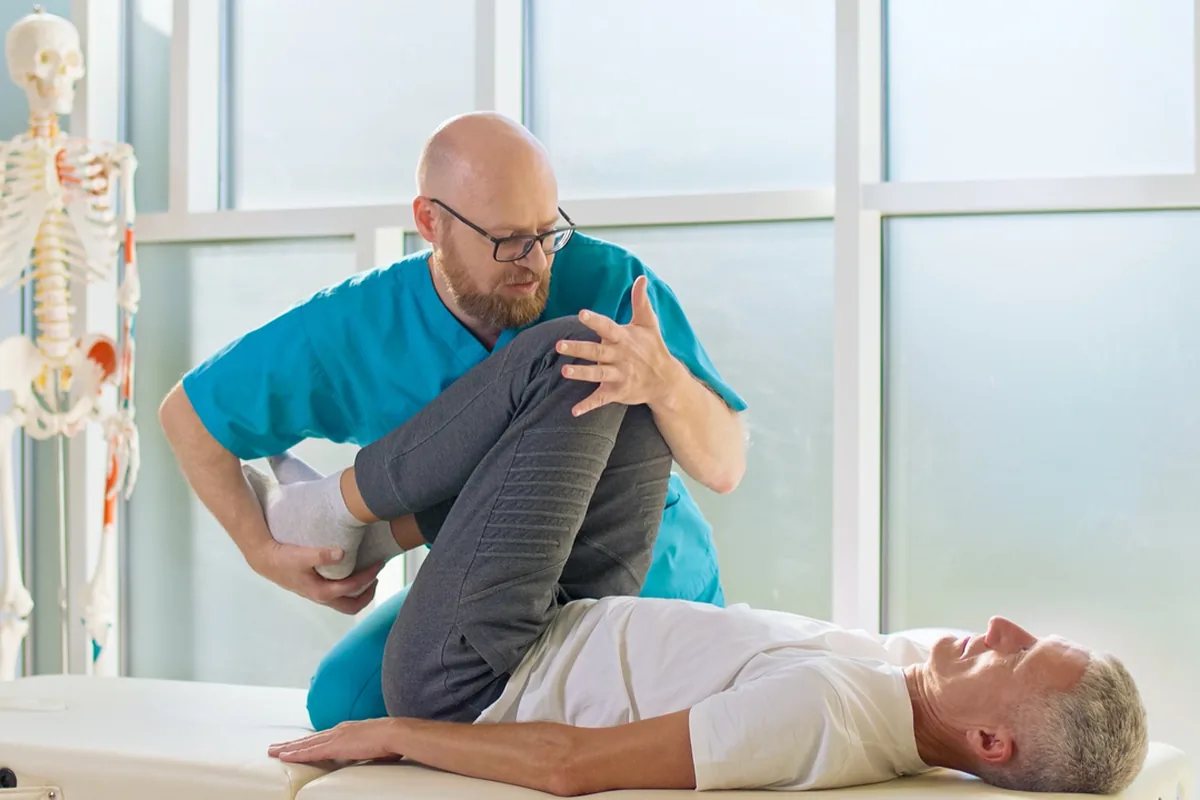
Medical condition
Sciatica
Sciatica is pain travelling down the leg from an irritated or compressed nerve root, most often caused by a lumbar disc. It is a symptom rather than a diagnosis. Most cases improve without surgery over weeks to months, and rehabilitation is aimed at restoring movement and preventing the next episode.

Leg pain, not back pain
The defining feature is pain below the knee following a nerve territory, often with pins and needles, numbness or weakness. Back pain may be present or absent. Pain that stays in the buttock and thigh is usually something else and is managed differently.
Imaging is unhelpful in the first weeks unless there are red flags. Disc bulges are common in people with no pain at all, and an MRI early in the course frequently finds something that was not causing the problem.
What the natural course actually looks like
The majority of disc-related sciatica improves substantially over a period of weeks without surgery. Herniated disc material shrinks over time, and the larger extrusions often resorb best. This is the single most useful thing for a patient in the acute phase to know.
Surgery gives faster relief of leg pain in the first months for patients who are not improving, but by one to two years the difference between operated and non-operated patients narrows considerably 2. That trade-off — speed now against no operation at all — is the real decision.
What rehabilitation does
Early on: keeping moving, positioning that reduces nerve irritation, and pain control that allows sleep. Bed rest makes outcomes worse and is not advised. Later: restoring lumbar and hip movement, progressive loading, and rebuilding the tolerance needed to sit, drive and lift again.
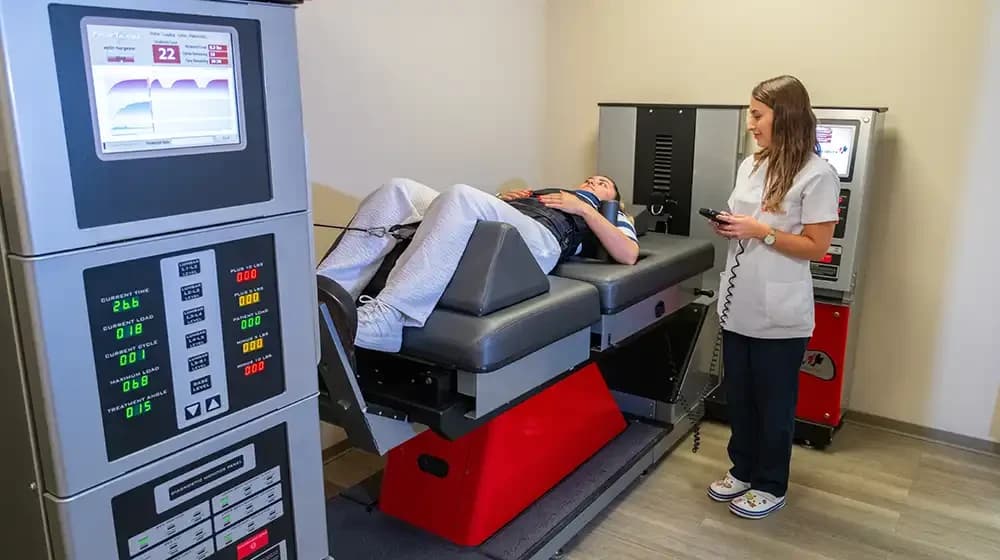
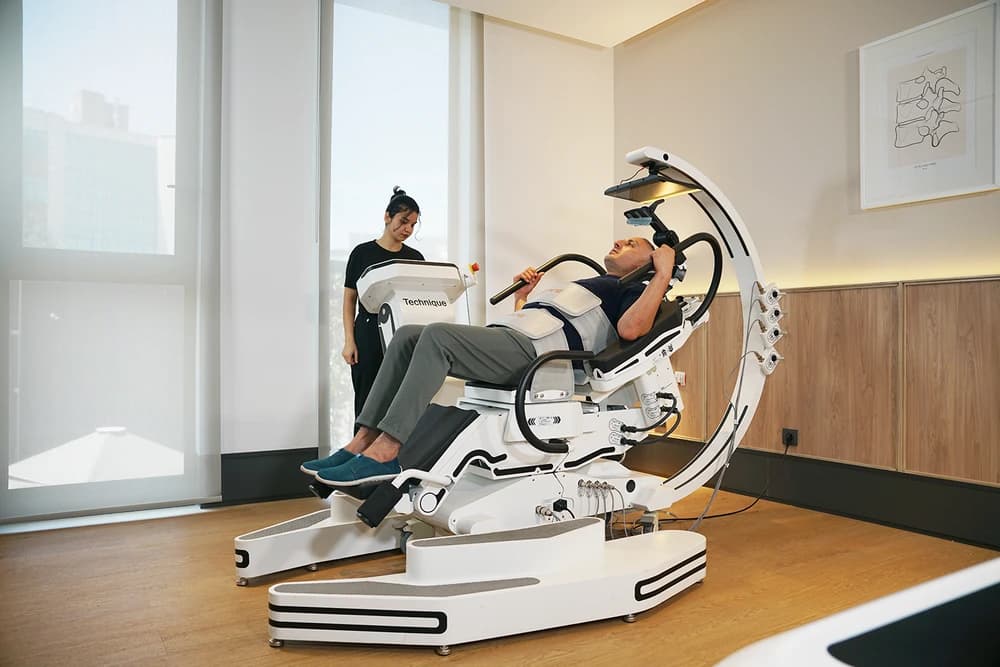
Traction and spinal decompression are available and some patients find them useful for symptom relief. The evidence that they change the course of the condition is weak, and we do not build a programme around them or present them as a cure.
Preventing the next episode
Recurrence is common. The measures with actual support are maintaining general exercise, keeping trunk and hip strength, avoiding prolonged static postures, and managing weight. Back braces, special mattresses and posture gadgets do not prevent recurrence and we do not sell them as if they do.
What we assess before starting
Which nerve root is involved, from the pattern of pain, sensation, reflexes and specific muscle strength. Whether weakness is present and whether it is getting worse, because that changes the urgency. How far you can walk and sit before symptoms stop you, timed rather than estimated.
We also check what the pain is doing to sleep and to mood, because both affect recovery and both are treatable alongside the physical problem.
Medication: what it can and cannot do
Pain relief exists to make movement possible, not to remove the problem. Simple analgesia and anti-inflammatories help some people; neuropathic agents are sometimes used for nerve pain but their benefit in sciatica is smaller than commonly assumed.
Opioids are not recommended for this. They control acute pain poorly in nerve root problems, and the tolerance and constipation that follow make the rehabilitation harder rather than easier.
Injections and surgery: when they enter the picture
An epidural or nerve root injection can reduce severe leg pain enough for rehabilitation to begin. It is a window rather than a cure, and it makes sense only when there is a therapy plan for the weeks that follow.
Surgery is considered when severe leg pain persists despite an adequate conservative course, or when weakness is progressing. It relieves leg pain faster than waiting, though at one to two years the difference between operated and non-operated patients narrows considerably — which is why the decision is about how much longer you can tolerate the current state, not about whether recovery is possible without it 2.
Sitting, driving and getting back to work
Prolonged sitting loads the lumbar discs and is often the position that provokes symptoms most, which makes desk work and long drives the practical problem for most people. The answer is not a special chair but frequent position change — standing and walking briefly at regular intervals does more than any equipment.
Return to work is staged rather than postponed until pain is gone. Waiting for complete resolution before resuming normal activity is associated with worse outcomes, not better ones.
Frequently asked questions
How long does sciatica take to settle?
Most people improve substantially over a period of weeks, and the majority recover without surgery. Some symptoms — a patch of numbness, occasional tingling — can persist longer after the pain has gone, and that is not a sign of failure.
Should I rest or keep moving?
Keep moving within what pain allows. Prolonged rest weakens the muscles that support the spine and is associated with slower recovery. Short periods of relief positioning during the worst days are reasonable; days in bed are not.
Does an MRI change the treatment?
Usually not in the first weeks. Imaging matters when there are warning signs, when weakness is progressing, or when surgery is being considered. Disc findings are common in people without symptoms, so a scan without a matching examination can mislead.
Will it come back?
Recurrence is common enough to plan for. The strongest protection is maintained trunk and hip strength plus general activity, which is why the programme ends with a home plan rather than at the last clinic session.
Can I fly with sciatica?
Usually, but a long flight in one position often aggravates leg pain. If you are travelling for treatment, tell us before booking — aisle seating, planned movement and analgesia timed for the flight make a genuine difference.
Is sciatica the same as a disc herniation?
No. Sciatica describes the symptom — pain along a nerve root into the leg. A lumbar disc herniation is the most common cause but not the only one; spinal stenosis, spondylolisthesis and, rarely, other pathology can produce the same pattern.
Sources
- Low back pain and sciatica in over 16s: assessment and management (NG59) — National Institute for Health and Care Excellence (2020)
- Prolonged conservative care versus early surgery in patients with sciatica caused by lumbar disc herniation: two year results of a randomised controlled trial — BMJ (2008)
Which therapies would I actually receive?
A therapy is a single method used inside a programme. It is measured in sessions and is not sold separately.
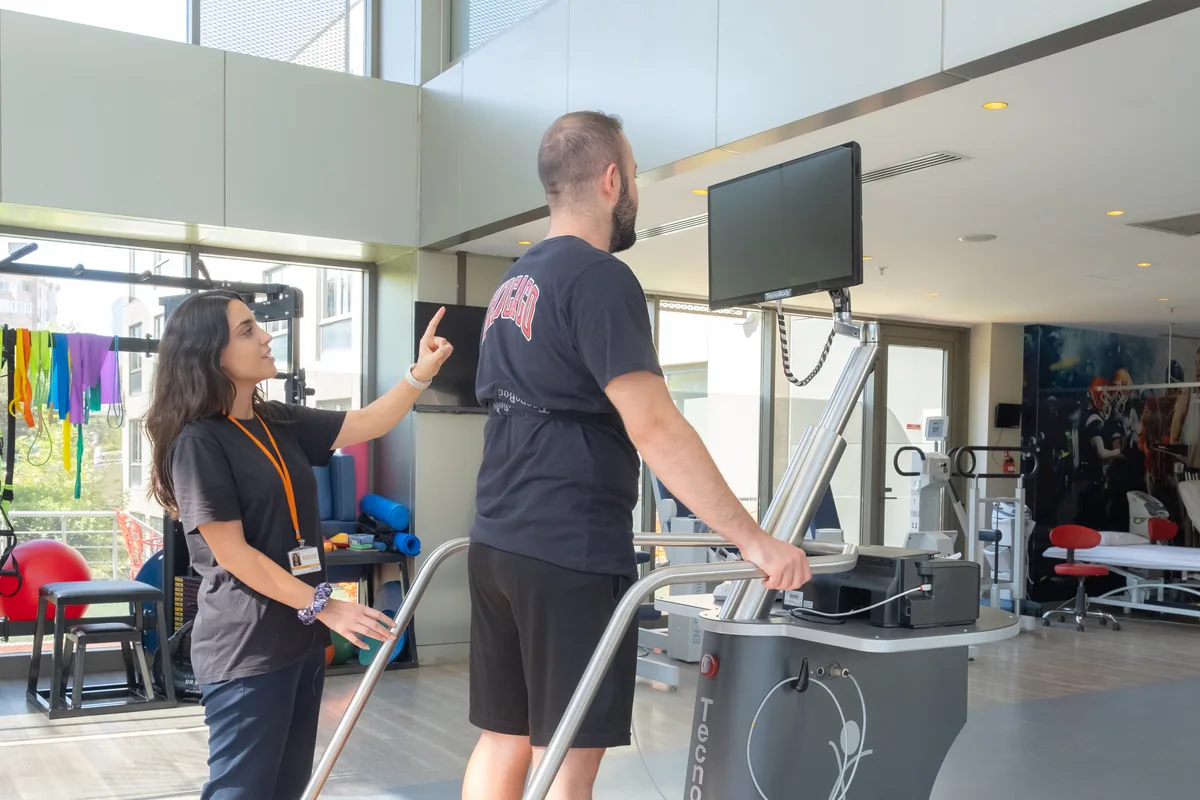
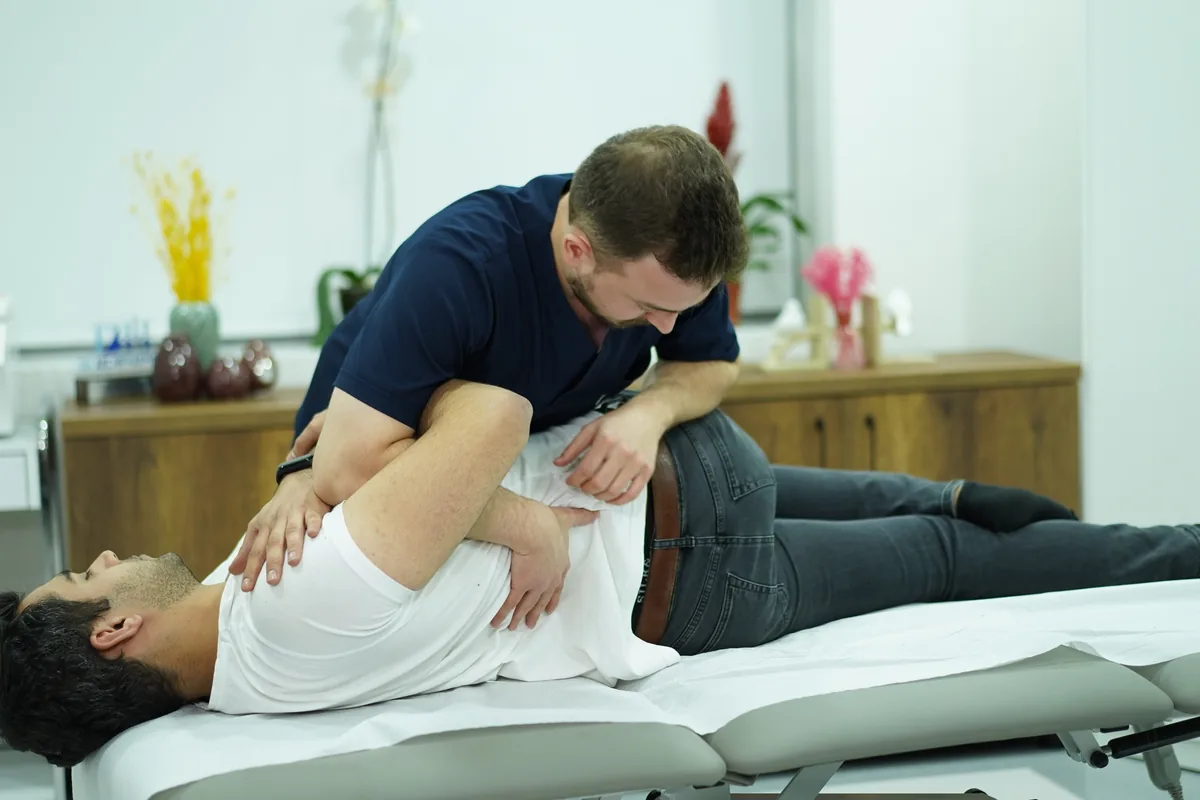

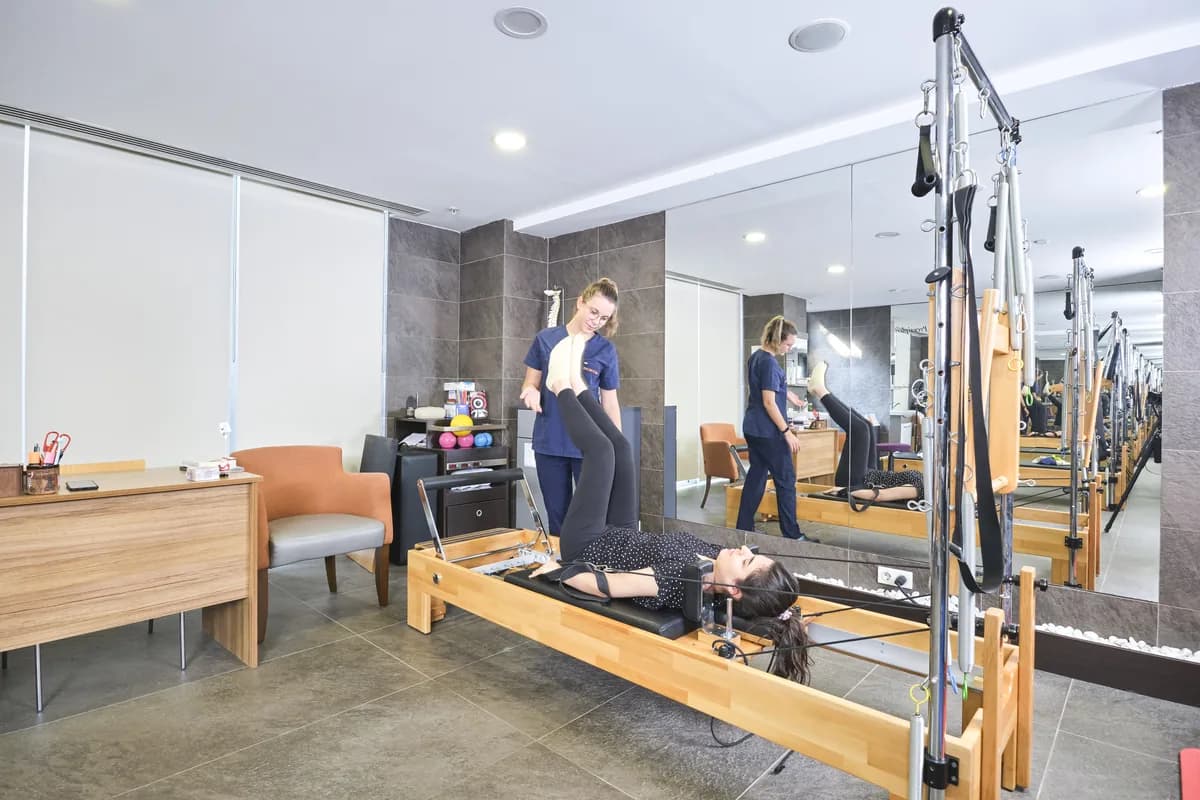

Technologies we use


Locations
Where you can receive this treatment






Related articles
Orthopaedic How long does sciatica last?
Sciatica often improves substantially within a few weeks to a few months, especially when it is caused by a disc pressing on a nerve root, because the disc material frequently shrinks with time. Some people have symptoms for longer or recurrences. Staying active, exercise and targeted pain relief help, while sudden weakness or bladder changes need urgent care.Read moreNeurological How long does it take to recover from a stroke?
Most recovery after a stroke happens in the early months, when the brain is most able to reorganise, and it continues more slowly for a longer period after that. How far someone gets depends mainly on how severe the stroke was, where it happened and how much active therapy follows.Read moreNeurological Can you walk again after a stroke?
Many people walk again after a stroke, including many who cannot stand at first. The chances are highest when some leg movement returns early and when walking practice starts as soon as it is safe. Walking often comes back before full arm recovery, sometimes with a stick, splint or other support.Read more



