
Medical condition
Osteoporosis
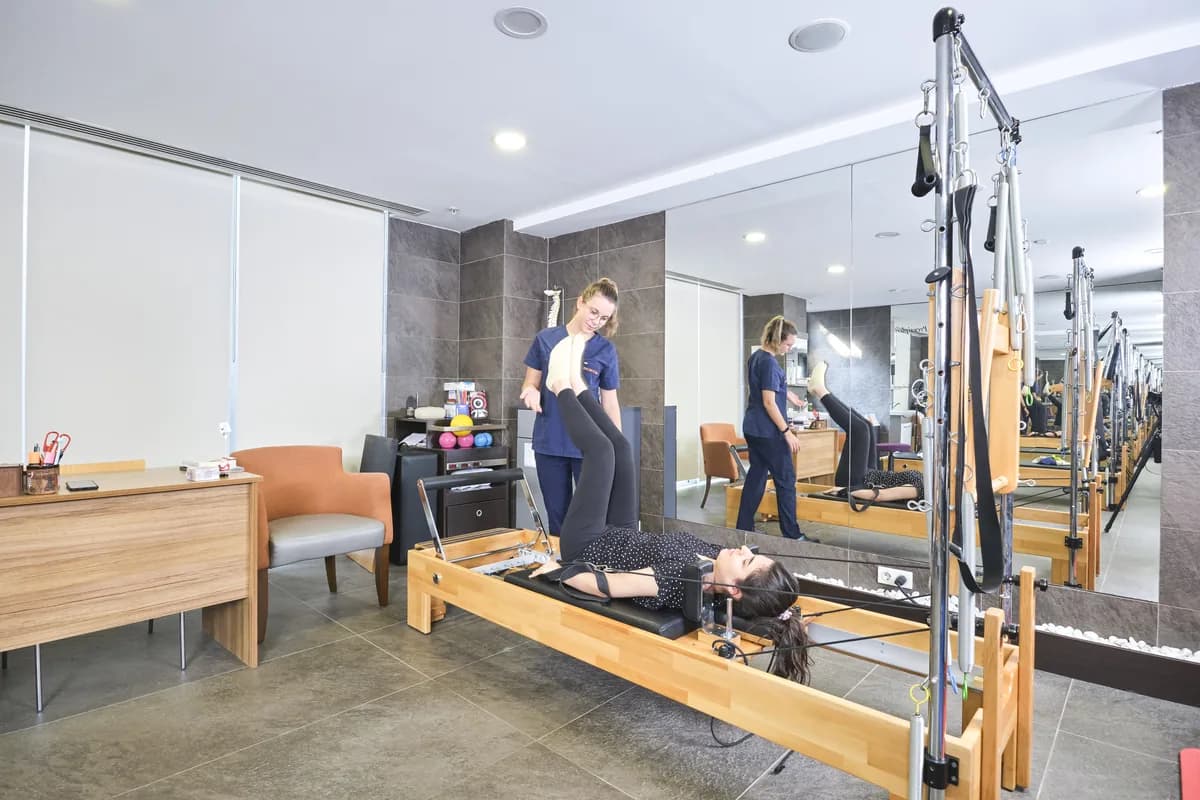
In osteoporosis the priorities are preventing falls and loading bone safely. Programmes combine progressive resistance training, balance work and posture correction, with exercises that are specifically avoided as well as prescribed. Most fractures follow a fall, so strength and balance matter as much as bone density.
A silent disease whose first symptom is usually a fracture
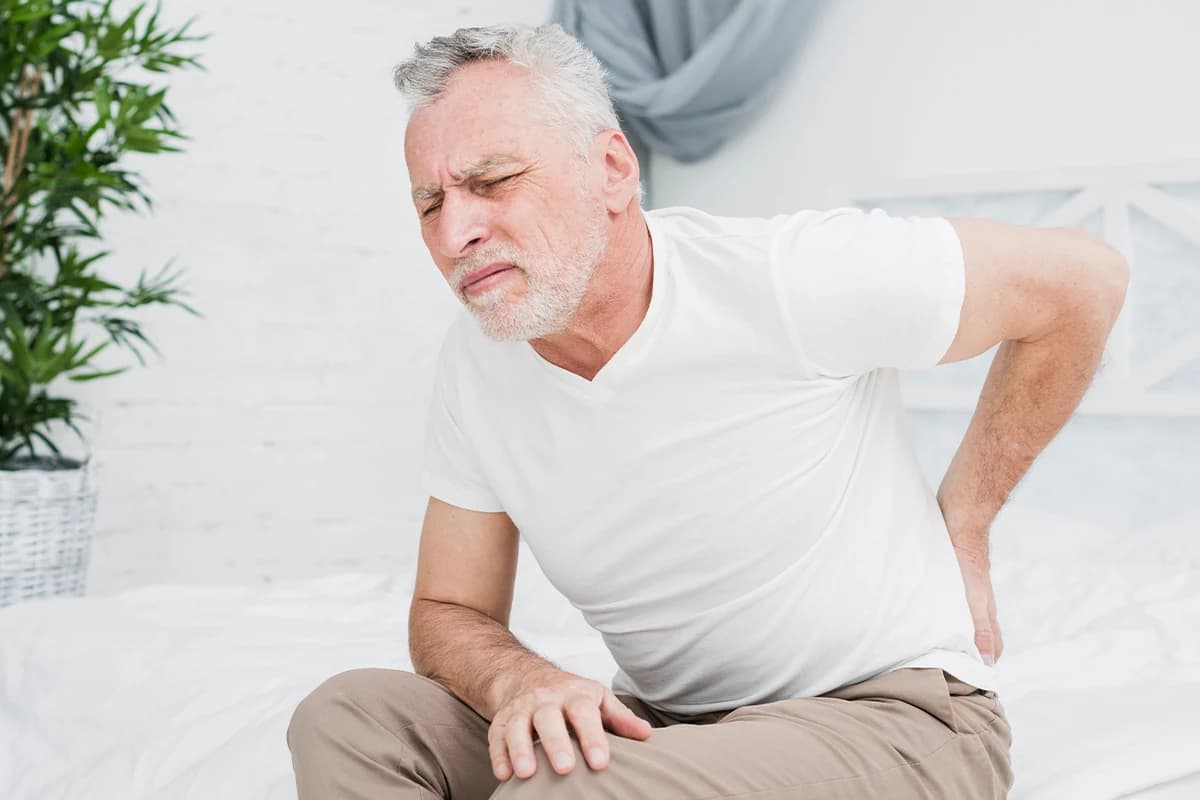
Osteoporosis reduces bone mineral density and disrupts the internal architecture of bone, making it fragile. It progresses without symptoms — there is no pain from thinning bone — so the first indication is very often a fracture of the spine, hip or wrist.
A hip fracture in an older adult is not only an orthopaedic event. It is one of the leading causes of permanent loss of independence, which is why osteoporosis is better understood as a movement and balance problem than as a purely skeletal one.
The cycle that does the damage
Osteoporosis reduces muscle strength, worsens posture, impairs balance and increases fear of movement. Reduced movement then accelerates bone loss. The result is a self-reinforcing loop: inactivity leads to bone loss, which raises falls risk, which produces a fracture, which produces more inactivity.
Breaking that loop is the purpose of rehabilitation, and it is why the programme works on balance and strength rather than only on the bone.
Medication supports density; movement reduces fracture risk
Drug treatment improves bone mineral density and is important. But most fractures happen because someone falls, and what determines whether they fall is strength, balance, vision, medication and the home environment.
Progressive resistance training and balance training are the interventions with evidence for reducing fracture risk. General advice to stay active is not the same thing and does not produce the same result.
What the assessment covers, and what is avoided
Bone density results where available, muscle strength, balance and gait, falls risk and posture. From that we build a programme with the loading the bone needs and the balance work the person needs.
Some movements are specifically avoided in established osteoporosis — loaded spinal flexion and forceful twisting can cause vertebral fracture. Knowing what not to prescribe is as much a part of the plan as knowing what to prescribe.
Which movements are trained, and which are avoided
Progressive resistance training loads bone where it matters — hip and spine — and balance work reduces the falls that turn low bone density into a fracture. Both are trained, and the resistance has to be meaningful rather than token; light weights repeated many times do not provide the stimulus bone responds to.
What is avoided is loaded forward bending and forceful twisting of the spine, particularly where vertebral fractures have already occurred. That rules out a number of common gym and class exercises, which is why supervision in the early weeks matters.
Falls are the other half of the problem
Bone density determines how much force a bone can take; falls determine how much force it meets. Addressing only the first leaves half the risk untouched, and most fragility fractures happen in a fall from standing height.
So the programme includes balance and reaction training, a review of medication that affects steadiness, vision and footwear, and a look at the home environment where relevant.
After a vertebral fracture
Pain from a new vertebral fracture usually settles over weeks, and the priority in that period is enough pain control to keep moving, because immobility costs bone and muscle quickly.
Afterwards the emphasis shifts to posture and back extensor strength. Height loss and increasing thoracic curvature are not inevitable consequences, and extensor training influences both.
Keeping it going
Bone responds to load continuously, and the response reverses when loading stops. This is a condition where the home programme is the treatment and the supervised block is the training period for it.
You leave with the specific exercises, the load, the progression schedule, and a statement of which movements to keep avoiding.
Frequently asked questions
Is exercise safe if my bones are already fragile?
Yes, and it is one of the main treatments — but the type matters. Progressive resistance and balance training reduce fracture risk. Loaded forward bending of the spine and forceful twisting are avoided in established osteoporosis, which is why the programme is prescribed rather than generic.
Is osteoporosis painful?
Not in itself. It is silent until a fracture occurs, which is why it is often diagnosed only after a broken wrist, hip or vertebra. Back pain attributed to osteoporosis usually comes from a vertebral fracture rather than from the low density.
Can exercise rebuild bone?
It can modestly improve density and, more importantly, it substantially reduces fracture risk through better strength and balance. The fracture reduction matters more than the density figure, and the two do not move together.
Should I take medication as well?
That is a decision for the physician managing your bone health, based on your fracture risk. Medication and exercise address different parts of the problem and work best together; neither replaces the other.
Which exercises should I avoid?
Loaded forward flexion of the spine — sit-ups, toe-touches, heavy forward-bending lifts — and forceful rotation, particularly after a vertebral fracture. Everyday bending is not the issue; loaded, repeated flexion is.
Is walking enough?
It is good for general health and for falls risk, but it does not provide the loading stimulus that bone at the hip and spine responds to. Resistance training is the part that does, and it is the part most commonly missing.
I have already had a fracture — is it too late?
No. A previous fragility fracture is the strongest predictor of the next one, which makes it the point at which intervention has the most to offer rather than the point at which it stops being worthwhile.
Sources
- Brooke-Wavell K, Skelton DA, Barker KL, et al. Strong, Steady and Straight: UK consensus statement on physical activity and exercise for osteoporosis — British Journal of Sports Medicine (2022)
- Brooke-Wavell K, et al. Strong, Steady and Straight: UK consensus statement on physical activity and exercise for osteoporosis — British Journal of Sports Medicine (2022)
Which therapies would I actually receive?
A therapy is a single method used inside a programme. It is measured in sessions and is not sold separately.

Technologies we use

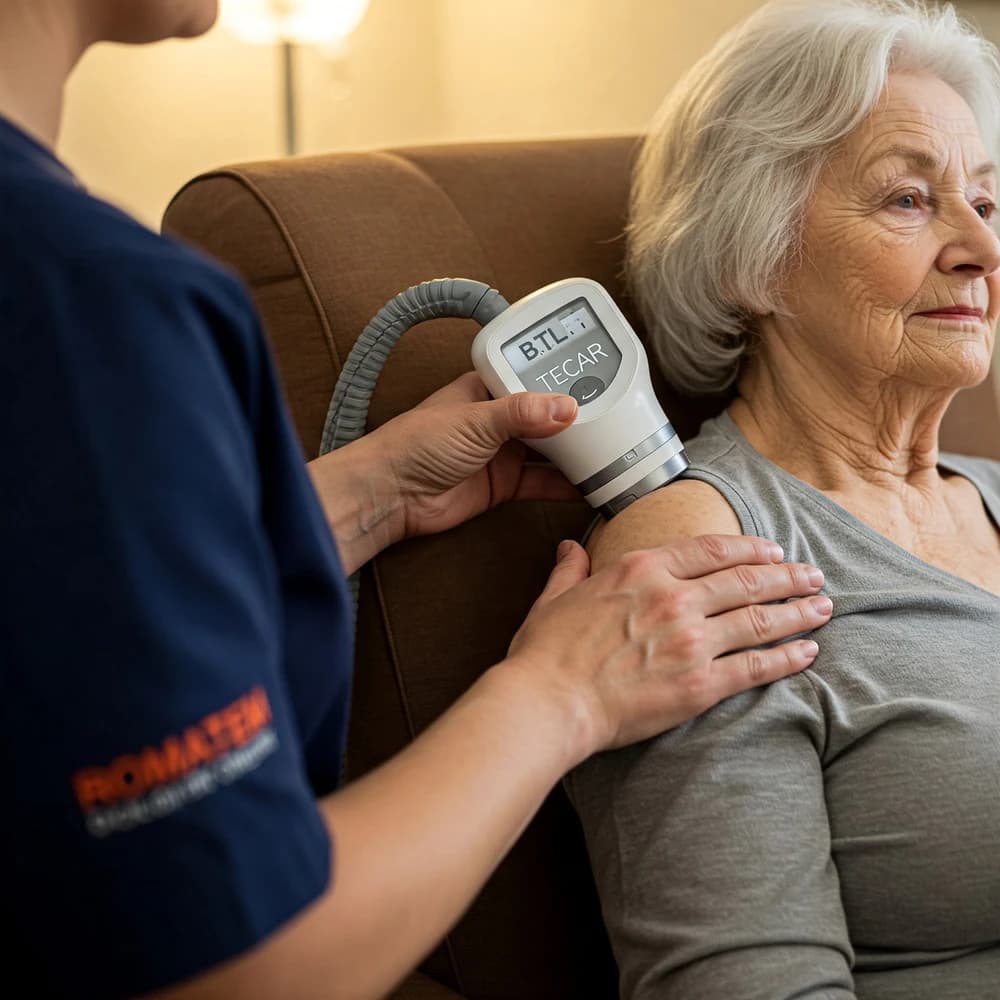
Locations
Where you can receive this treatment



Related articles
Geriatric Which exercises are safe with osteoporosis?
Most people with osteoporosis can exercise safely, and exercise strengthens bones and muscles and reduces falls. A UK consensus recommends resistance and impact exercise for bone strength, strength and balance training to prevent falls, and back extension exercises for posture. People with spinal fractures should keep impact to the level of brisk walking and avoid heavy forward bending.Read moreNeurological How long does it take to recover from a stroke?
Most recovery after a stroke happens in the early months, when the brain is most able to reorganise, and it continues more slowly for a longer period after that. How far someone gets depends mainly on how severe the stroke was, where it happened and how much active therapy follows.Read moreNeurological Can you walk again after a stroke?
Many people walk again after a stroke, including many who cannot stand at first. The chances are highest when some leg movement returns early and when walking practice starts as soon as it is safe. Walking often comes back before full arm recovery, sometimes with a stick, splint or other support.Read more



