
Medical condition
Osteoarthritis
Osteoarthritis rehabilitation is the best-evidenced non-surgical treatment for knee and hip joint wear. Strength, weight management and load modification reduce pain and can defer joint replacement. Pain-relieving physical agents are used only to make the exercise possible, and if the joint is beyond conservative care the assessment says so.
Wear, not inflammation
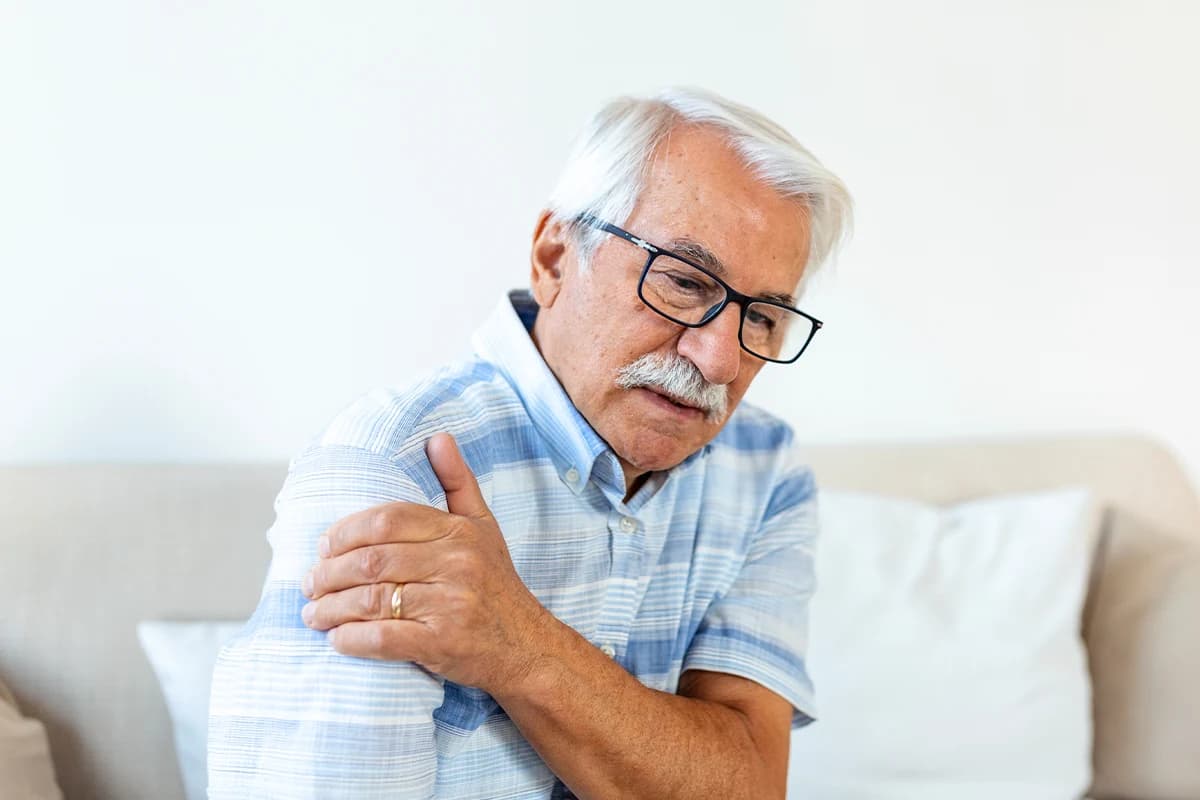
Osteoarthritis is progressive loss of the cartilage surface of a joint, most commonly the knee and hip. Pain is typically worse with activity and better with rest, stiffness after sitting lasts a few minutes rather than half an hour, and the joint may be swollen but is not usually hot.
That pattern distinguishes it from inflammatory arthritis, and the distinction changes the treatment entirely.
Exercise is the best-evidenced non-surgical treatment
For knee and hip osteoarthritis, structured exercise reduces pain and improves function more reliably than any passive treatment. This is well established and it is consistently the intervention patients are least often offered first.
Strengthening the muscles around the joint reduces the load the joint surface has to absorb. Weight management, where relevant, changes joint load directly. Together these can defer or avoid joint replacement.
What the programme includes
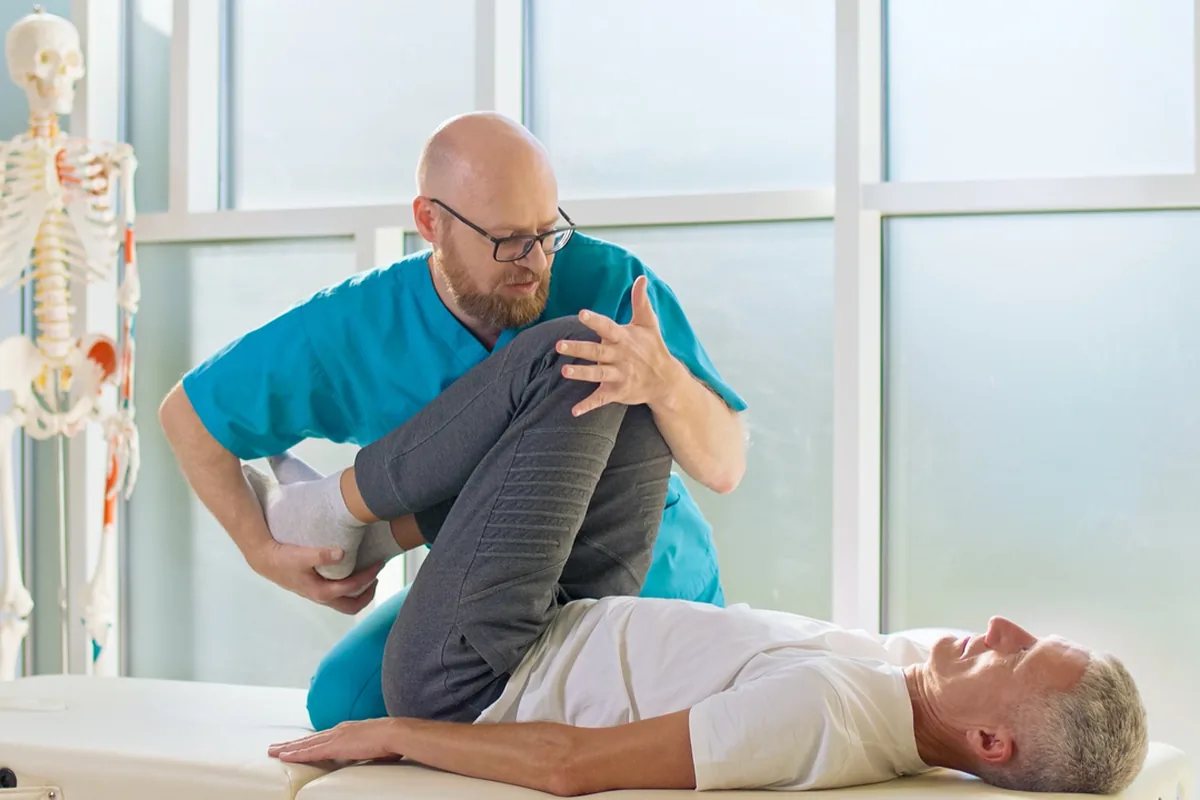
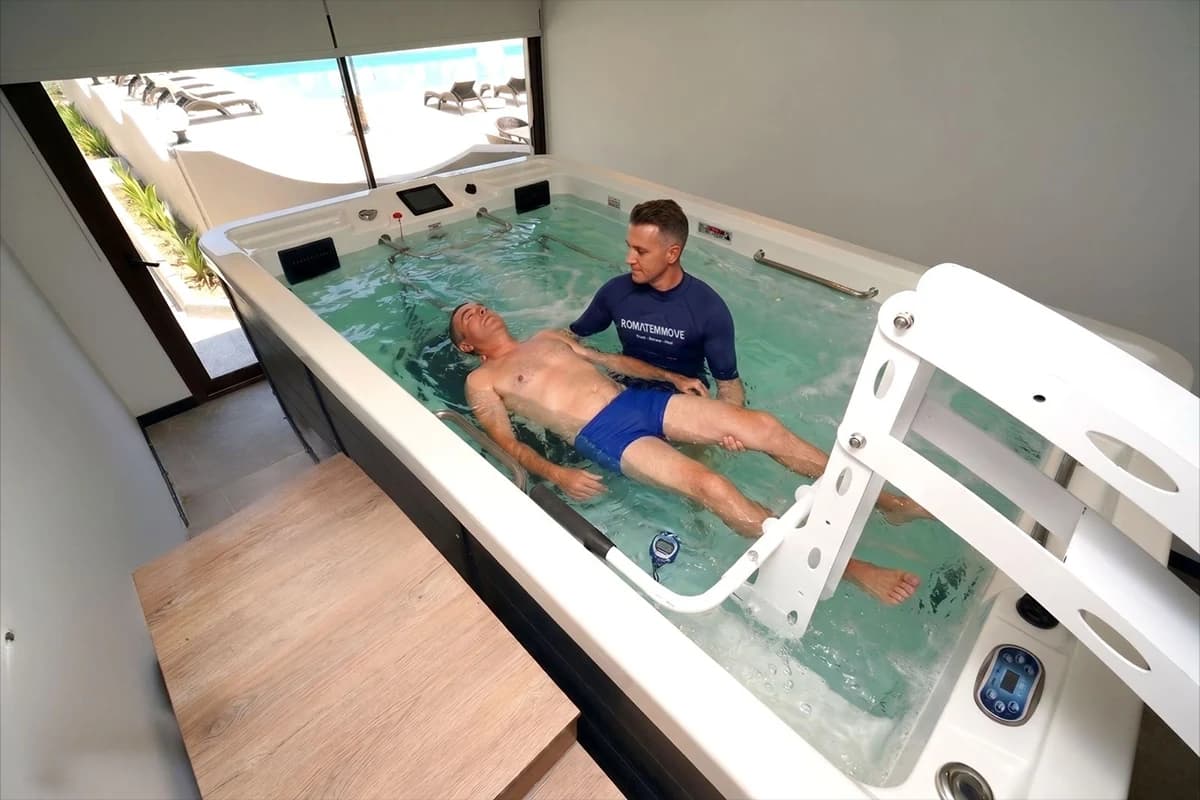
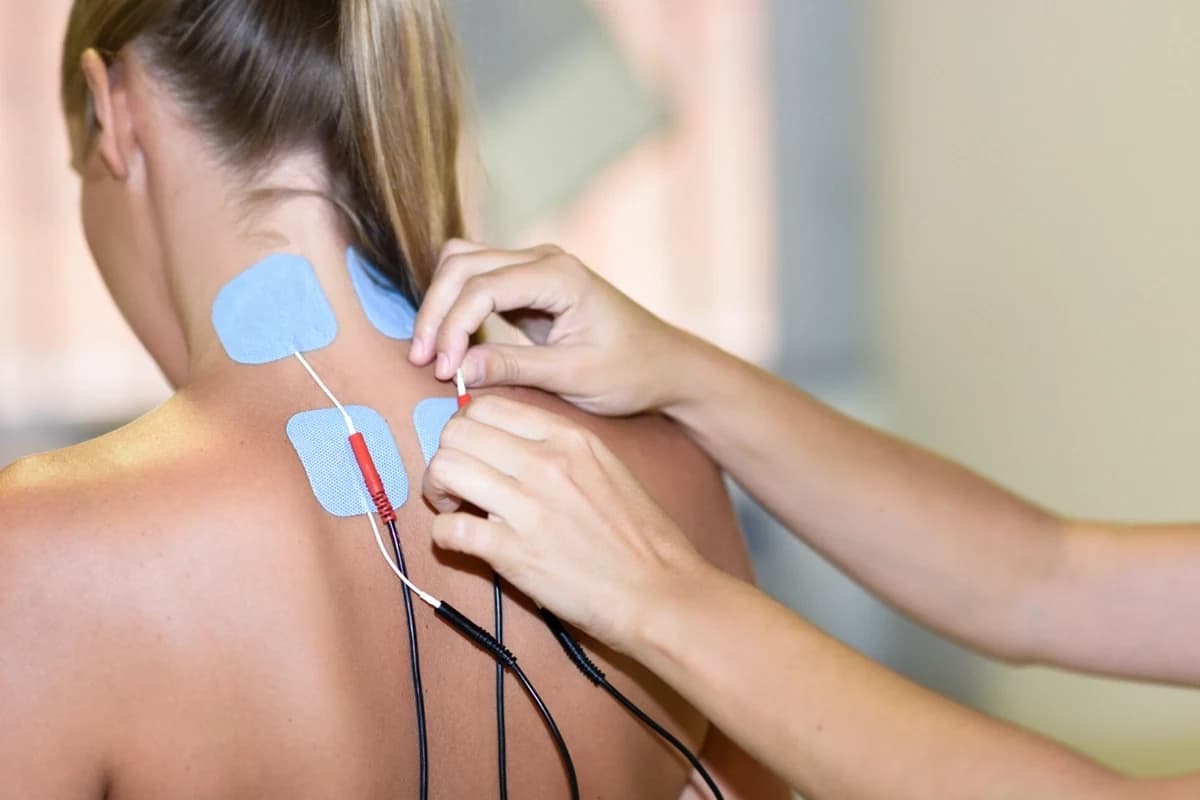
Progressive strengthening, range of movement work, hydrotherapy where land-based exercise is too painful to start with, gait retraining, and advice on load management for daily activities. Physical agents — laser, shockwave, TECAR — are used to reduce pain enough to allow the exercise, not as the treatment itself.
If the joint is beyond conservative management we say so. Rehabilitation before surgery still improves outcomes afterwards, and that is a legitimate goal in itself.
What we assess before the programme starts
Which joints are involved and how the load is distributed, because knee pain that comes from a stiff hip is treated at the hip. Muscle strength around the joint, measured rather than estimated. How far you can walk before pain stops you, timed. And what specifically you cannot do — stairs, getting out of a car, kneeling — because those are the outcomes the programme is aimed at.
We also look at what else limits exercise: cardiac and respiratory capacity, other painful joints, and medication that affects balance. A programme built without those is a programme that gets abandoned in the second week.
What improves, and what does not
Pain, walking distance, strength and confidence on stairs improve for most people who complete a structured programme. These are the outcomes worth committing to.
The cartilage does not regrow. No exercise, injection, supplement or device regenerates a worn joint surface, and anyone who tells you otherwise is selling something. What changes is how much load the joint has to absorb and how well the muscles around it protect it — which is enough to change daily life substantially, but it is a different claim.
When a joint replacement is the right answer
When pain persists at rest and at night despite a genuine course of rehabilitation, when walking distance has collapsed, and when the joint is structurally beyond what load management can compensate for. At that point continuing conservative treatment is not caution, it is delay.
Rehabilitation is not wasted in that case. Going into surgery with stronger muscles and better movement produces a faster and more complete recovery afterwards, and that is a legitimate goal in its own right.
Holding the gains after you go home
Strength gained through training is lost over a comparable period if training stops. This is the single most common reason a good result does not last.
You leave with a written programme, the load it should be done at, and a schedule for progressing it. Where a gym or pool is available at home we build the programme around that rather than around equipment you will not have.
Frequently asked questions
Will exercise wear the joint out faster?
No. This is the most common fear and the evidence points the other way: appropriately loaded exercise reduces pain and improves function in knee and hip osteoarthritis, and inactivity accelerates the muscle loss that leaves the joint less protected. What matters is that the load is progressive and matched to the joint, which is what supervision is for.
Do I need an MRI scan?
Usually not. Osteoarthritis is diagnosed from the history, the examination and, where needed, a plain X-ray. An MRI rarely changes conservative treatment and frequently shows incidental findings that worry people without altering what should be done.
Are injections worth having?
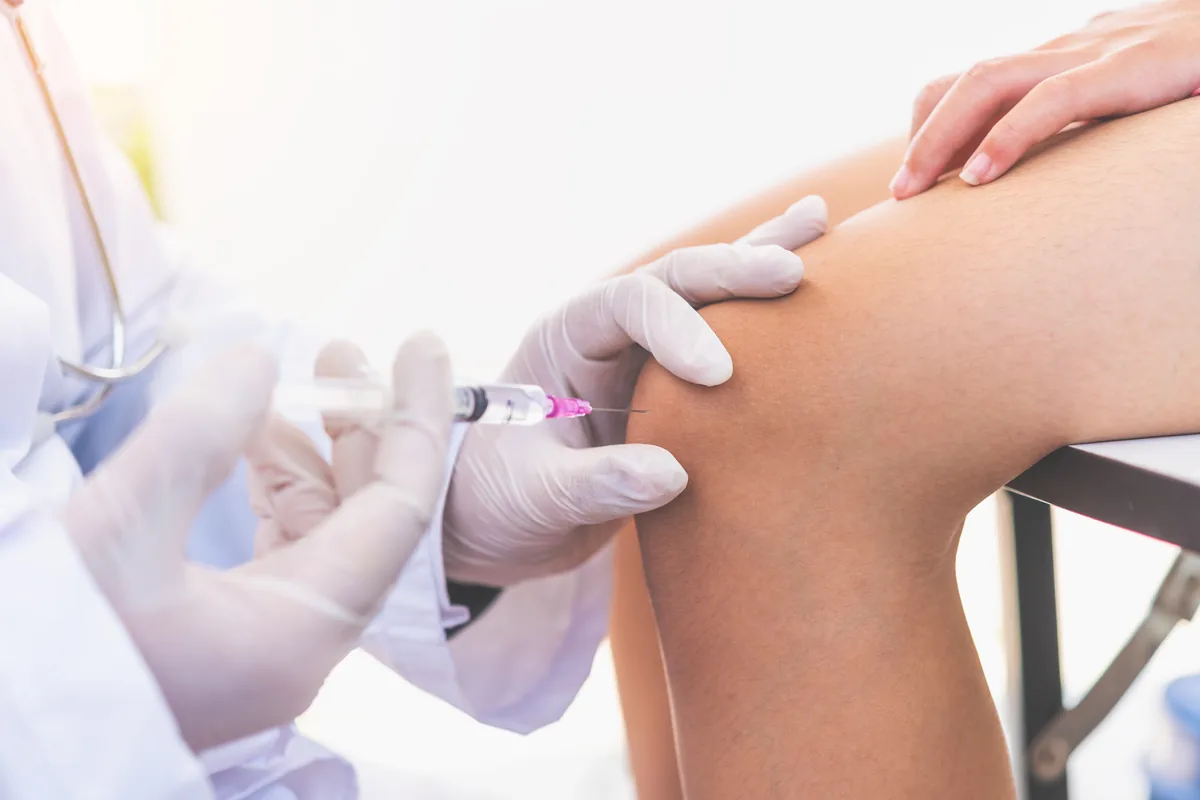
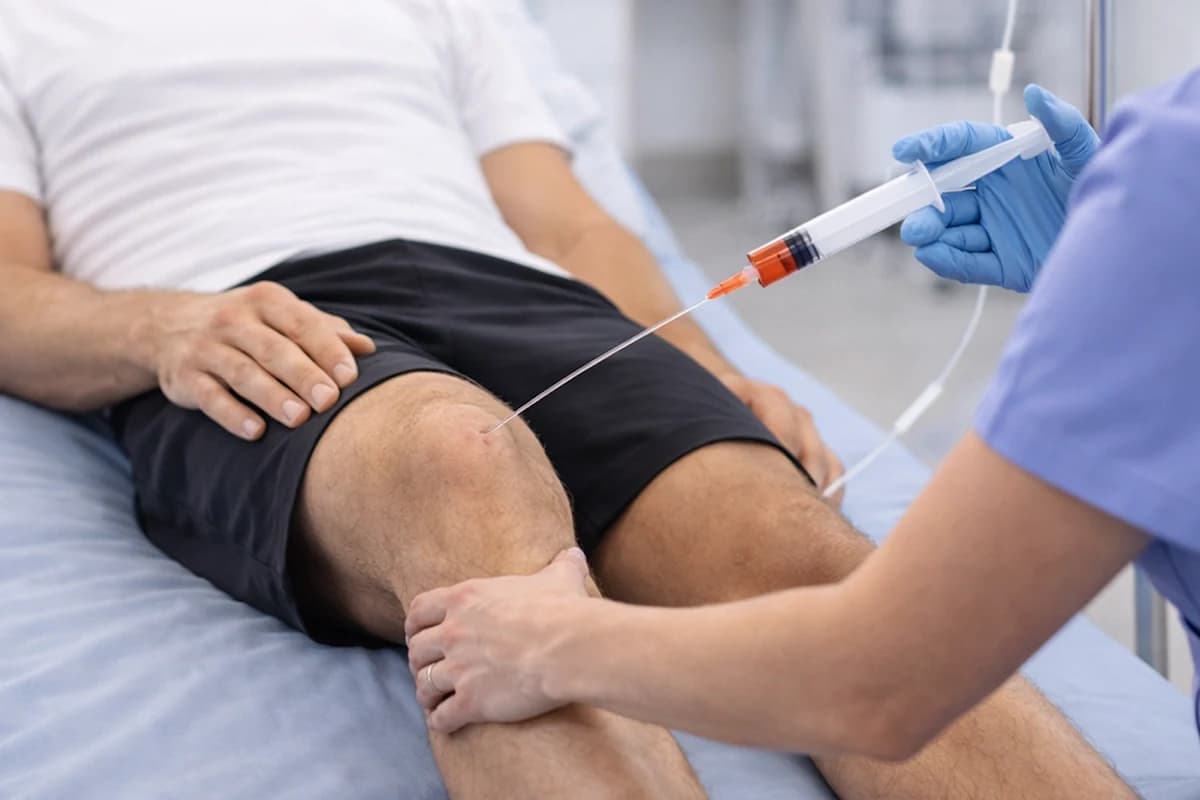
Corticosteroid injection can reduce pain for a period of weeks, which is useful when pain is preventing exercise from starting. It is a window, not a treatment. Hyaluronic acid has mixed evidence and guidelines differ on recommending it; we will tell you which category a proposed injection falls into.
Can rehabilitation avoid a joint replacement?
It can defer one, sometimes for years, and in milder disease it can make surgery unnecessary. It cannot reverse advanced structural change. Which situation you are in is usually clear after assessment, and we say so directly rather than selling a programme that will not deliver.
How long before I notice a difference?
Most people notice less pain with daily activity within the first few weeks, and measurable strength change follows. If nothing has changed by then the programme is wrong and we change it rather than extend it.
I am overweight — does that have to be addressed first?
Not first, but alongside. Weight reduction changes the load the joint carries directly and is among the most effective interventions in knee osteoarthritis. Waiting until weight is lost before starting exercise gets the order backwards, because exercise is part of how the weight comes down.
Sources
- OARSI guidelines for the non-surgical management of knee, hip and polyarticular osteoarthritis — Osteoarthritis Research Society International (2019)
- Osteoarthritis in over 16s: diagnosis and management (NG226) — National Institute for Health and Care Excellence (2022)
Which therapies would I actually receive?
A therapy is a single method used inside a programme. It is measured in sessions and is not sold separately.


Technologies we use




Locations
Where you can receive this treatment






Related articles
 Orthopaedic
How long does recovery take after a knee replacement?
Most people move quickly from a walking frame to managing without an aid indoors. The part patients are rarely told is that strength and confidence keep improving for a long time afterwards, and that the early weeks of the programme set how far that improvement goes.Read moreRheumatologic What helps hand osteoarthritis?
Hand osteoarthritis is managed with a combination of education, joint protection, hand exercises, splints for the base of the thumb and pain relief such as topical anti-inflammatory gels. Exercise can modestly improve pain, stiffness and function. Steroid injections may help individual painful joints, and surgery is considered for the thumb base when other treatments fail.Read moreTreatments and technology Who benefits from exercise in water?
Water-based exercise suits people whose pain, weight, weakness or balance problems make land exercise difficult, including those with knee and hip osteoarthritis and fibromyalgia. Trials show small improvements in pain and function with aquatic exercise, similar to land-based exercise. Warm water can ease stiffness, while people with heat sensitivity may need cooler pools.Read more



