

Medical condition
Hallux Valgus (Bunion)
Hallux valgus is a deviation of the big toe towards the others with a prominence at its base. Non-surgical treatment may ease pain, though the evidence is of low certainty, and it has not been shown to correct the deformity. Surgery is what corrects it, and rehabilitation surrounds that decision.
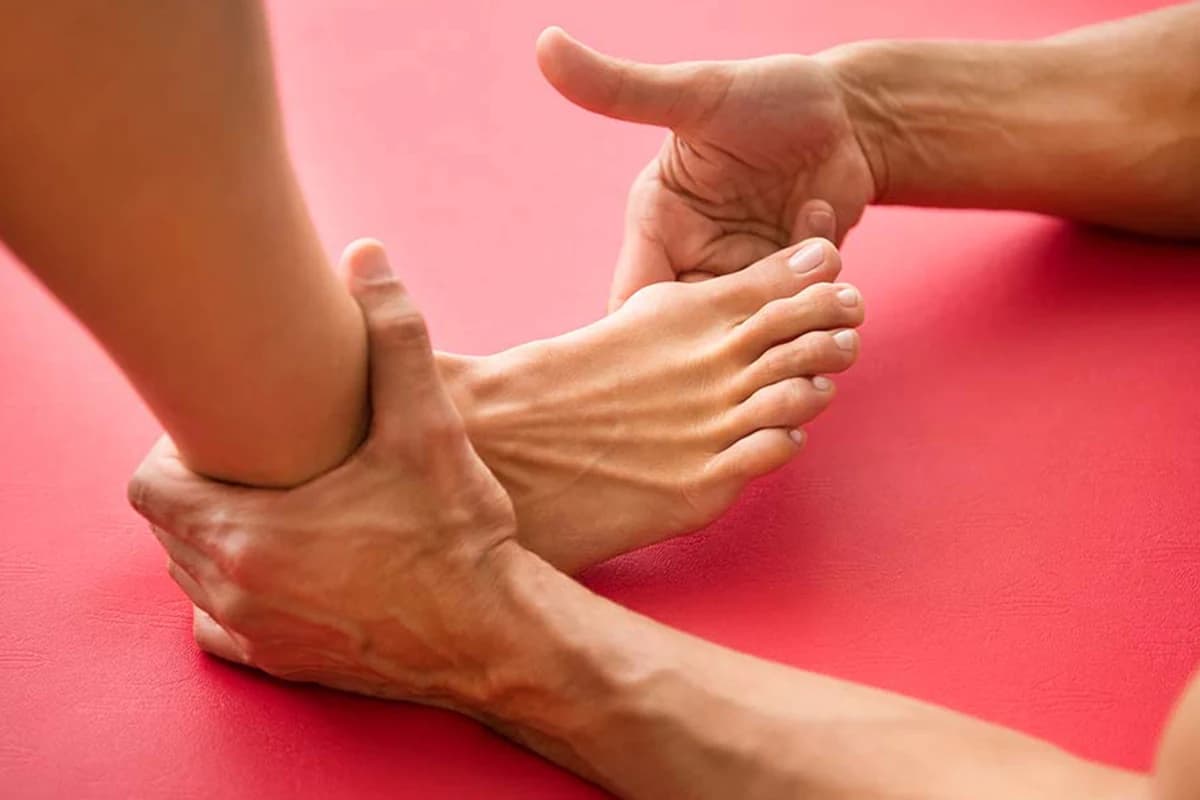
What conservative treatment can and cannot do
Wider footwear, toe spacers, offloading pads and foot strengthening may reduce pain, although across the non-surgical treatments that have been tested the certainty of the evidence is low 1. Patients report this as worthwhile. None of it has been shown to correct the deformity: a few small studies report some reduction in the angle, but pain relief is more likely than a change in the angle 1.
We tell patients this at the assessment rather than after three months of treatment, because the decision about surgery should be made with accurate information about the alternative.
Rehabilitation around surgery
Before surgery: calf and foot strength, gait pattern, and getting the patient used to the post-operative footwear and crutch technique. It makes practical sense to learn these before the operation, although no randomised trial has yet tested exercise or other physical preparation before bunion surgery 2.
After surgery: protected weight bearing to the surgeon's protocol, swelling management, restoring big toe movement at the right time, and returning the push-off phase of walking. Stiffness of the big toe joint is a common late complaint, which is why its movement is restored deliberately rather than left to return on its own.
Why the foot deformed in the first place
What conservative treatment can and cannot achieve
Footwear changes, toe spacers and strengthening may reduce pain and irritation, though the evidence is of low certainty 1. None of them has been shown to straighten the toe: the deformity is structural, and in trials a reduction in pain has been more likely than any change in the angle 1.
This is worth stating plainly because a great deal is sold on the opposite claim. If straightening is the goal, surgery is the only thing that achieves it, and the decision should be based on pain rather than on appearance.
Is surgery better than orthoses or waiting?
For a painful bunion, the one randomised trial that compared all three favoured surgery at one year. In 209 adults with a painful bunion and a toe angle of 35 degrees or less, orthoses eased pain at six months, but at one year surgery had reduced pain more than either orthoses or waiting, and 83% of the surgery group felt improved, against 46% with orthoses and 24% on the waiting list 5. A 2024 Cochrane review rated this evidence as low certainty, because patients knew which treatment they had and only one trial has made the comparison; no trial has compared surgery with a sham operation 6.
Can a bunion come back after surgery?
It can. A 2021 meta-analysis of 23 studies with 2,914 patients put the pooled rate of recurrence at about one in four, with wide variation between studies 7. The factors most strongly linked to it were how large the toe angle still was after the operation and the position of the small sesamoid bones under the joint; a larger angle before surgery was also linked, less strongly 7. These are mainly surgical factors, set in the operating theatre rather than in rehabilitation, which is why rehabilitation after bunion surgery starts from the operation report and the surgeon's protocol.
Frequently asked questions
Can exercises straighten a bunion?
No. They may ease pain; a few small studies report some reduction in the toe angle, but none shows the deformity being corrected, and the certainty of this evidence is low 1.
Do night splints work?
They may reduce discomfort. They have not been shown to correct the deformity: when trials of splints were pooled, they showed no significant effect on pain or on the toe angle, although some individual studies reported benefit 1.
When is surgery worth it?
When pain limits walking or footwear despite conservative measures. Surgery for appearance alone carries recovery time and risks that are hard to justify.
What footwear helps?
A wide toe box and adequate depth. It is a simple, low-risk first step, and it is frequently the one people resist.
How long is recovery after surgery?
Walking becomes comfortable only gradually, and swelling can persist for months. Trials of rehabilitation after bunion surgery are few; early weight-bearing and some splinting approaches appear to help, but the evidence is limited 2.
Sources
- Hurn SE, Matthews BG, Munteanu SE, Menz HB. Effectiveness of nonsurgical interventions for hallux valgus: a systematic review and meta-analysis — Arthritis Care & Research (2022)
- Gumuskaya O, Peterson B, Donnelly H, Unver B, et al. Preoperative and postoperative physical and mechanical rehabilitation interventions in hallux valgus: a systematic review — Journal of Foot and Ankle Research (2025)
- Hannan MT, Menz HB, Jordan JM, Cupples LA, et al. High heritability of hallux valgus and lesser toe deformities in adult men and women — Arthritis Care & Research (2013)
- Zhang G, Ma Y, Zhang S. Determinants and associated factors for hallux valgus: a systematic review and meta-analysis — BMC Musculoskeletal Disorders (2026)
- Torkki M, Malmivaara A, Seitsalo S, Hoikka V, et al. Surgery vs orthosis vs watchful waiting for hallux valgus: a randomized controlled trial — JAMA (2001)
- Dias CG, Godoy-Santos AL, Ferrari J, Ferretti M, et al. Surgical interventions for treating hallux valgus and bunions — Cochrane Database of Systematic Reviews (2024)
- Ezzatvar Y, López-Bueno L, Fuentes-Aparicio L, Dueñas L. Prevalence and predisposing factors for recurrence after hallux valgus surgery: a systematic review and meta-analysis — Journal of Clinical Medicine (2021)
Which therapies would I actually receive?
A therapy is a single method used inside a programme. It is measured in sessions and is not sold separately.
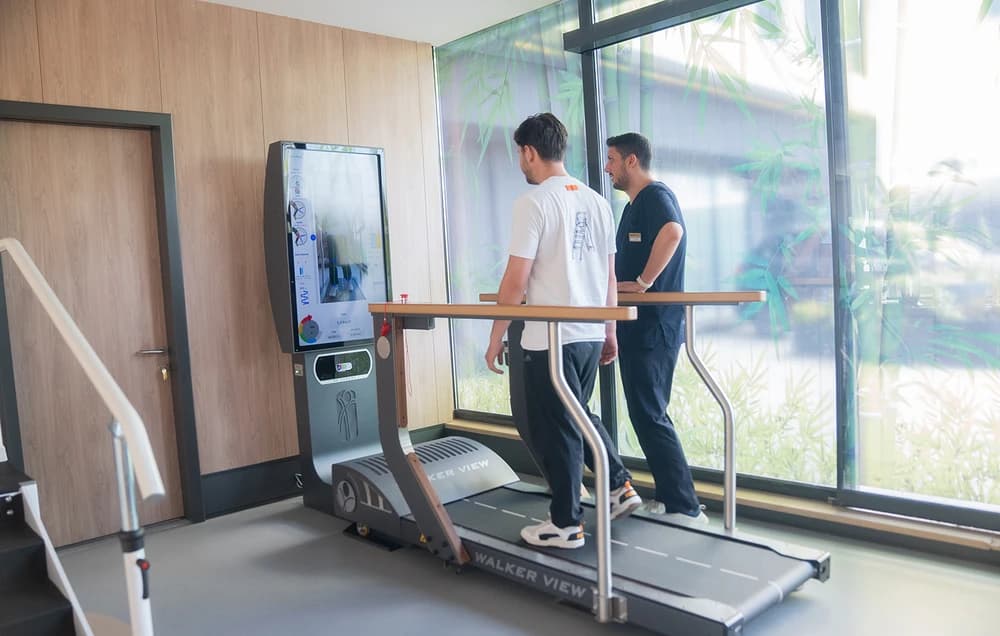
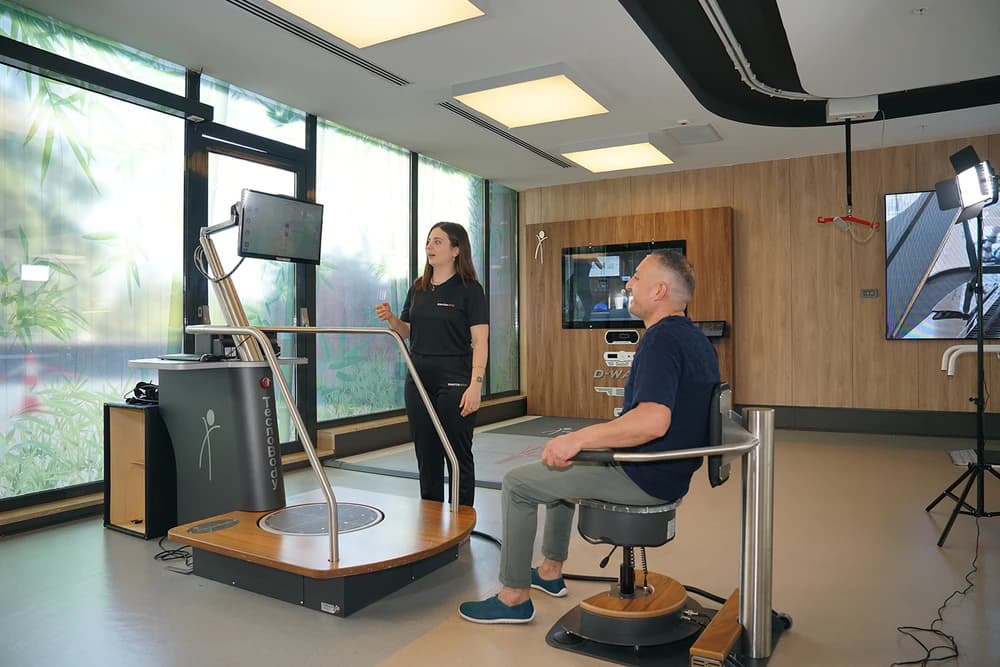
Technologies we use

Locations
Where you can receive this treatment



Related articles
Orthopaedic Can a bunion be corrected without surgery?
Non-surgical treatments cannot straighten a bunion, but wider footwear, padding, insoles and exercises can reduce pain and pressure. Trials comparing conservative treatments with no treatment found no clear difference in outcomes. Surgery is the only way to correct the deformity and is usually considered when pain limits daily activities despite footwear changes.Read moreNeurological How long does it take to recover from a stroke?
Most recovery after a stroke happens in the early months, when the brain is most able to reorganise, and it continues more slowly for a longer period after that. How far someone gets depends mainly on how severe the stroke was, where it happened and how much active therapy follows.Read moreNeurological Can you walk again after a stroke?
Many people walk again after a stroke, including many who cannot stand at first. The chances are highest when some leg movement returns early and when walking practice starts as soon as it is safe. Walking often comes back before full arm recovery, sometimes with a stick, splint or other support.Read more



