

Medical condition
Flat Foot (Pes Planus)
A flat foot is a low or absent arch. Most flat feet are painless, normal variants that need no treatment at all. Treatment is for the foot that hurts, and for the adult whose arch is collapsing because the tibialis posterior tendon is failing — a different problem with a different urgency.
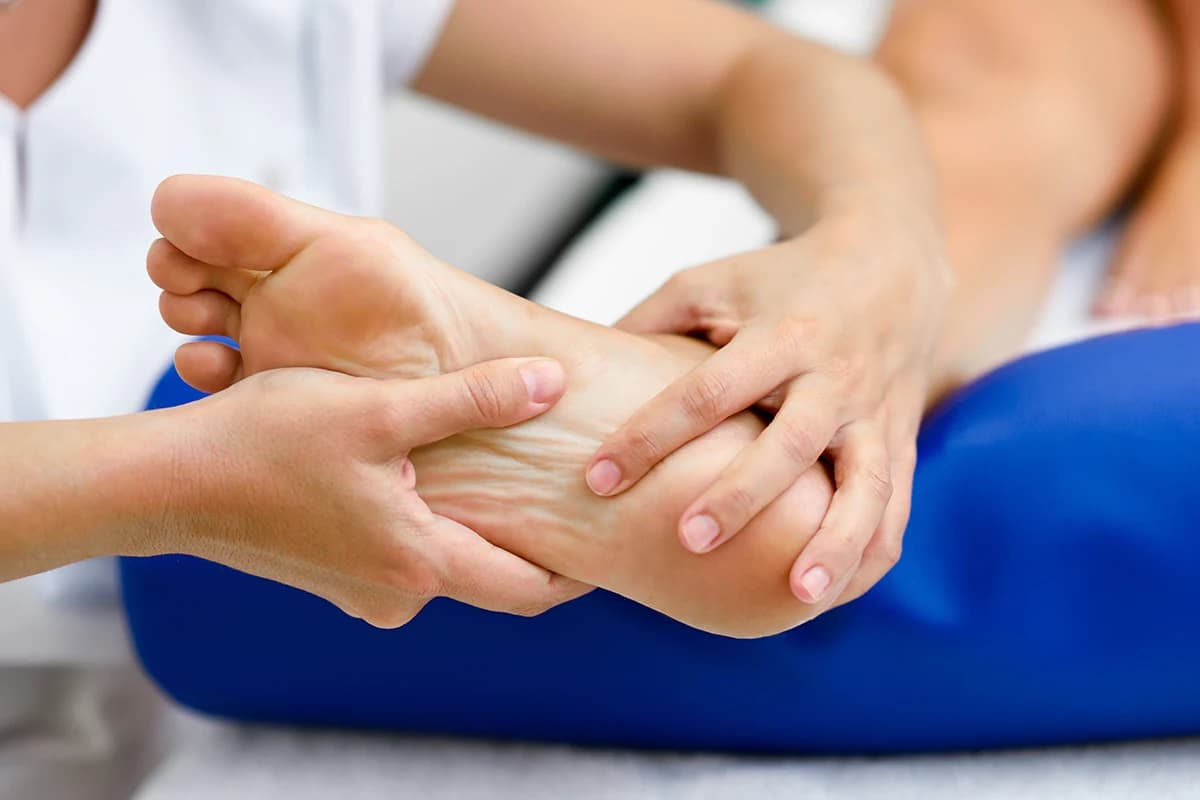
A flat foot is not automatically a problem
A large share of the population has low arches and no symptoms whatsoever. Treating a painless flat foot because it looks wrong on an assessment mat is overtreatment, and we say so before selling anything.
In children, the arch develops through the early years and a flexible flat foot in a child who runs and plays without pain is normal 1. There is no good evidence that insoles create an arch: some studies report changes in foot posture, but they have methodological limitations and the effect remains uncertain 2. A Cochrane review found no support for orthoses in healthy children whose flat feet do not hurt 1.
The one that does need attention
Adult acquired flat foot — a previously normal arch that flattens, usually in middle age, with pain and swelling on the inner ankle and difficulty rising onto the toes on one leg — is tibialis posterior tendon dysfunction. Untreated it progresses from a correctable deformity to a rigid one.
This is the situation where early assessment matters most, because a deformity that has become rigid is a surgical question rather than a rehabilitation one.
What treatment consists of
Progressive strengthening of the tendon and the small muscles of the foot, calf flexibility work, gait retraining, and orthotic support where the foot needs offloading while it is being strengthened. Footwear advice does more than most patients expect.
A rigid flat foot — one that does not correct when the patient rises onto the toes — is a surgical question, and rehabilitation is planned around the operation rather than instead of it.
When a flat foot needs attention rather than reassurance
A flexible flat foot that forms an arch on tiptoe and causes no pain needs nothing. A rigid flat foot, a painful one, or an arch that has collapsed in adulthood is a different matter.
Adult-acquired flatfoot from posterior tibial tendon dysfunction progresses if untreated and is far easier to manage early. The single heel raise test — being unable to lift the heel on that leg alone — is the sign that matters most.
Do exercise and orthoses help tibialis posterior tendon dysfunction?
In the early, flexible stages there is some trial support for them, although it is limited. In a randomised trial of 36 adults with stage I or II disease, all participants wore orthoses and stretched for 12 weeks; pain and function improved in every group, and those who also did progressive resistance exercise improved more 3.
A systematic review of the three available randomised trials, 93 patients in total, found moderate effects on pain and disability when eccentric strengthening was added to stretching and orthoses, and described high-quality research as scarce 4. These trials measured pain and function rather than whether the arch continued to collapse, so they do not show whether exercise slows progression, which is why the shape of the foot and the single heel raise are reassessed as treatment continues.
Frequently asked questions
Does my child need arch supports?
Almost never. Flexible flat feet are normal in children and the arch develops through childhood. There is no good evidence that insoles change that development 2.
Is a flat foot a problem for sport?
Not in itself. Many athletes have flat feet. Pain and function determine whether anything needs doing, not the shape.
What is adult-acquired flatfoot?
Progressive arch collapse, usually from posterior tibial tendon dysfunction, developing in middle age. It progresses if left and is much easier to treat early.
Do orthoses help?
For a painful or progressing adult flatfoot, yes, alongside strengthening. For an asymptomatic flexible foot, there is nothing to treat.
Should I strengthen my arch?
Posterior tibial and intrinsic foot strengthening helps where there is pain or dysfunction. It does not reshape a structurally flat foot.
Sources
- Evans AM, Rome K, Carroll M, Hawke F. Foot orthoses for treating paediatric flat feet — Cochrane Database of Systematic Reviews (2022)
- Dars S, Uden H, Banwell HA, Kumar S. The effectiveness of non-surgical intervention (foot orthoses) for paediatric flexible pes planus: a systematic review: update — PLOS ONE (2018)
- Kulig K, Reischl SF, Pomrantz AB, Burnfield JM, et al. Nonsurgical management of posterior tibial tendon dysfunction with orthoses and resistive exercise: a randomized controlled trial — Physical Therapy (2009)
- Ross MH, Smith MD, Mellor R, Vicenzino B. Exercise for posterior tibial tendon dysfunction: a systematic review of randomised clinical trials and clinical guidelines — BMJ Open Sport & Exercise Medicine (2018)
Which therapies would I actually receive?
A therapy is a single method used inside a programme. It is measured in sessions and is not sold separately.
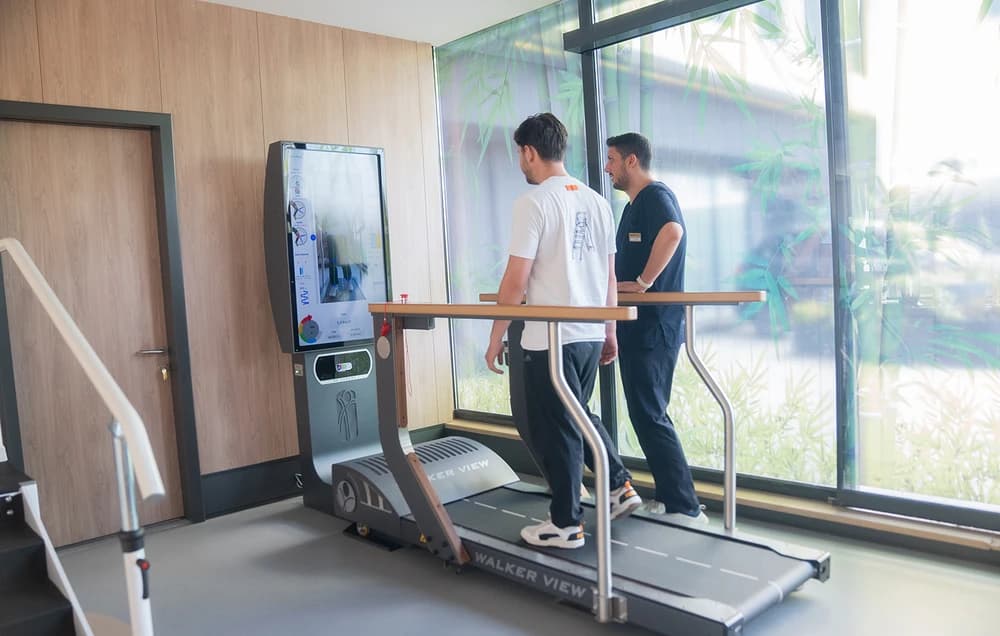
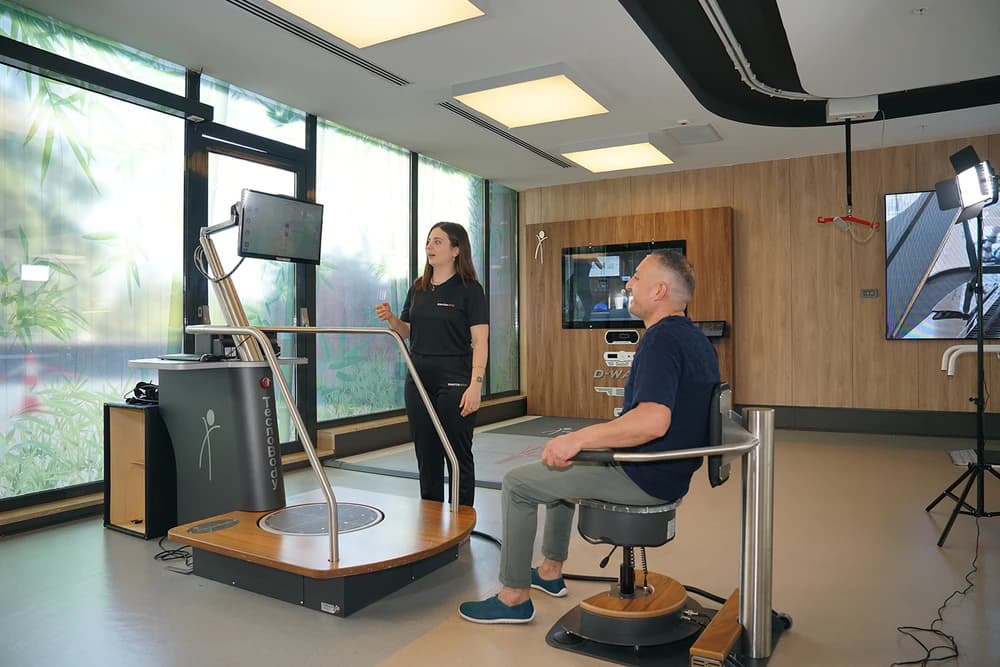
Technologies we use

Locations
Where you can receive this treatment




Related articles
Paediatric Do flat feet in children need treatment?
Most children with flexible flat feet do not need treatment. The arch usually develops through childhood, and in children without symptoms, insoles have not been shown to make a meaningful difference. Assessment is advisable if flat feet are painful, stiff, affect only one foot, limit activity or occur with other conditions such as joint problems or low muscle tone.Read moreNeurological How long does it take to recover from a stroke?
Most recovery after a stroke happens in the early months, when the brain is most able to reorganise, and it continues more slowly for a longer period after that. How far someone gets depends mainly on how severe the stroke was, where it happened and how much active therapy follows.Read moreNeurological Can you walk again after a stroke?
Many people walk again after a stroke, including many who cannot stand at first. The chances are highest when some leg movement returns early and when walking practice starts as soon as it is safe. Walking often comes back before full arm recovery, sometimes with a stick, splint or other support.Read more



