

Medical condition
Sjögren's Syndrome
Sjögren's syndrome is an autoimmune condition in which the glands that produce tears and saliva are attacked, causing dry eyes and dry mouth. Most patients also have joint pain and marked fatigue. Rehabilitation addresses the fatigue, pain and loss of fitness; the dryness itself is managed medically.
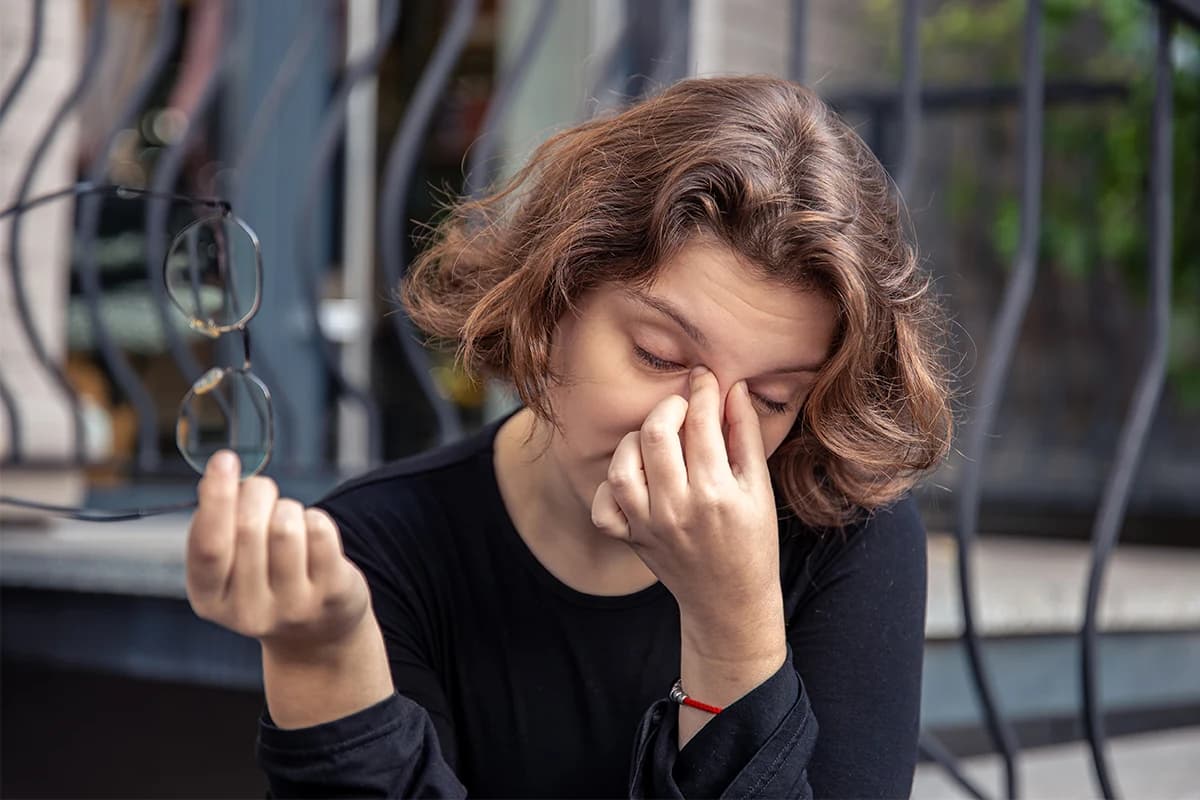
More than dryness
Dry eyes and dry mouth are the defining features, but the symptoms that most affect daily life are usually joint pain and fatigue. Around a third of patients also describe widespread pain that overlaps with fibromyalgia 2.
A minority develop involvement beyond the glands — lung, kidney or nerve. That group is managed by rheumatology first, and rehabilitation is planned around what the organ involvement allows.
Why fatigue is treated as a target in its own right
Fatigue in Sjögren's is not proportional to inflammation and does not respond reliably to immunosuppression. Exercise is one of the few interventions tested against it, but trial results on fatigue itself are inconsistent 345.
The programme starts below what the patient thinks they can manage and increases in small steps. Starting at a level that provokes a two-day crash is the most common reason patients abandon exercise and conclude it does not work for them.
Practical adjustments during therapy
Dry mouth affects swallowing and speech, so sessions include frequent breaks for fluids. Dry eyes make some visual-feedback training uncomfortable and the exposure time is shortened. Dental problems are common because saliva protects teeth, and we ask about dental care rather than treating it as unrelated.
What the evidence does not support
No physiotherapy modality restores gland function. Claims that laser, magnetic field or ozone treatment improve dryness are not supported by evidence we would rely on, and we do not offer them for that purpose.
Practical adjustments that make therapy possible
Dry eyes make prolonged screen-based exercise uncomfortable, dry mouth makes sustained talking difficult during sessions, and both worsen in air-conditioned gyms and heated pools.
These sound minor and they determine whether someone completes a programme. Session timing, frequent breaks and having drops and water available are planned rather than improvised.
What can exercise realistically change in Sjögren’s?
Fitness is the most reliable gain. In a 2026 pooled analysis of six randomised trials with 277 participants, exercise improved cardiopulmonary fitness, functional capacity, vitality and mental health, but not fatigue, pain or disease activity 4. An earlier pooled analysis of five trials did find less pain and fatigue, particularly with resistance training 5. The review behind the European fatigue recommendations, however, found no statistically significant effect on fatigue 3. In short, the evidence on fatigue is inconsistent.
European recommendations still advise tailored physical activity and/or psychological approaches for fatigue in inflammatory rheumatic diseases, chosen with the patient and adjusted to disease activity and other conditions 6. Resistance training gave the clearest benefit in the earlier analysis 5. It can sit alongside walking, cycling or pool work, adapted to dry eyes and mouth. Exercise is worth doing for fitness and function, with realistic expectations about fatigue.
Frequently asked questions
Is fatigue part of Sjogren’s?
Yes, and it is often the most disabling feature. It is treated with pacing and graded activity rather than dismissed as secondary.
Does it affect joints?
Can I use the pool?
Yes, though chlorine can aggravate dry eyes and skin. Goggles, rinsing and drops afterwards usually solve it.
Does it cause neuropathy?
It can — small fibre neuropathy and sometimes larger nerve involvement. New numbness or burning is worth reporting rather than attributing to age.
What can rehabilitation change?
Fatigue, strength, joint pain and function. The dryness itself is managed medically.
Sources
- EULAR recommendations for the management of Sjögren's syndrome with topical and systemic therapies — Annals of the Rheumatic Diseases (2020)
- Prevalence and clinical impact of fibromyalgia in patients with primary Sjögren's syndrome — Clinical and Experimental Rheumatology (2016)
- Santos EJF, Farisogullari B, Dures E, Geenen R, et al. Efficacy of non-pharmacological interventions: a systematic review informing the 2023 EULAR recommendations for the management of fatigue in people with inflammatory rheumatic and musculoskeletal diseases — RMD Open (2023)
- Gao Q, Fan C, Zhang Y, Lian Z, et al. Effects of physical activity on health-related outcomes in Sjögren’s syndrome: a systematic review and meta-analysis of randomized controlled trials — Frontiers in Immunology (2026)
- Nacar NE, Karaborklu Argut S, Unal E. Effects of exercise in primary Sjögren’s syndrome: a systematic review and meta-analysis of randomized clinical trials — Disability and Rehabilitation (2025)
- Dures E, Farisoğulları B, Santos EJF, Molto A, et al. 2023 EULAR recommendations for the management of fatigue in people with inflammatory rheumatic and musculoskeletal diseases — Annals of the Rheumatic Diseases (2024)
Which therapies would I actually receive?
A therapy is a single method used inside a programme. It is measured in sessions and is not sold separately.
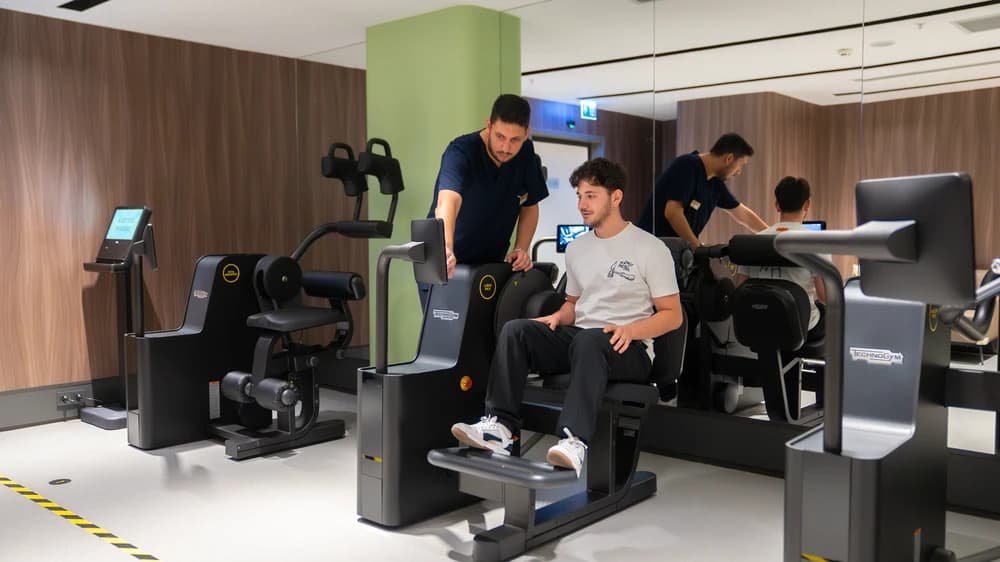
Technologies we use


Locations
Where you can receive this treatment



Related articles
Neurological How long does it take to recover from a stroke?
Most recovery after a stroke happens in the early months, when the brain is most able to reorganise, and it continues more slowly for a longer period after that. How far someone gets depends mainly on how severe the stroke was, where it happened and how much active therapy follows.Read moreNeurological Can you walk again after a stroke?
Many people walk again after a stroke, including many who cannot stand at first. The chances are highest when some leg movement returns early and when walking practice starts as soon as it is safe. Walking often comes back before full arm recovery, sometimes with a stick, splint or other support.Read moreNeurological Will my arm and hand recover after a stroke?
Arm and hand recovery after a stroke varies more than walking recovery. Early return of some shoulder or finger movement makes useful recovery much more likely. Repeated, meaningful practice of reaching, grasping and releasing is what drives improvement, and even a partly recovered hand can be trained to help with daily tasks.Read more



