
Medical condition
Lumbar Disc Herniation
Most lumbar disc herniations improve without surgery. Rehabilitation controls pain, restores movement and rebuilds trunk control, with red-flag signs — progressive weakness, bladder change — checked at every stage. Treatment follows the examination rather than the scan, because disc bulges are common in people with no pain at all.
Most disc herniations improve without surgery
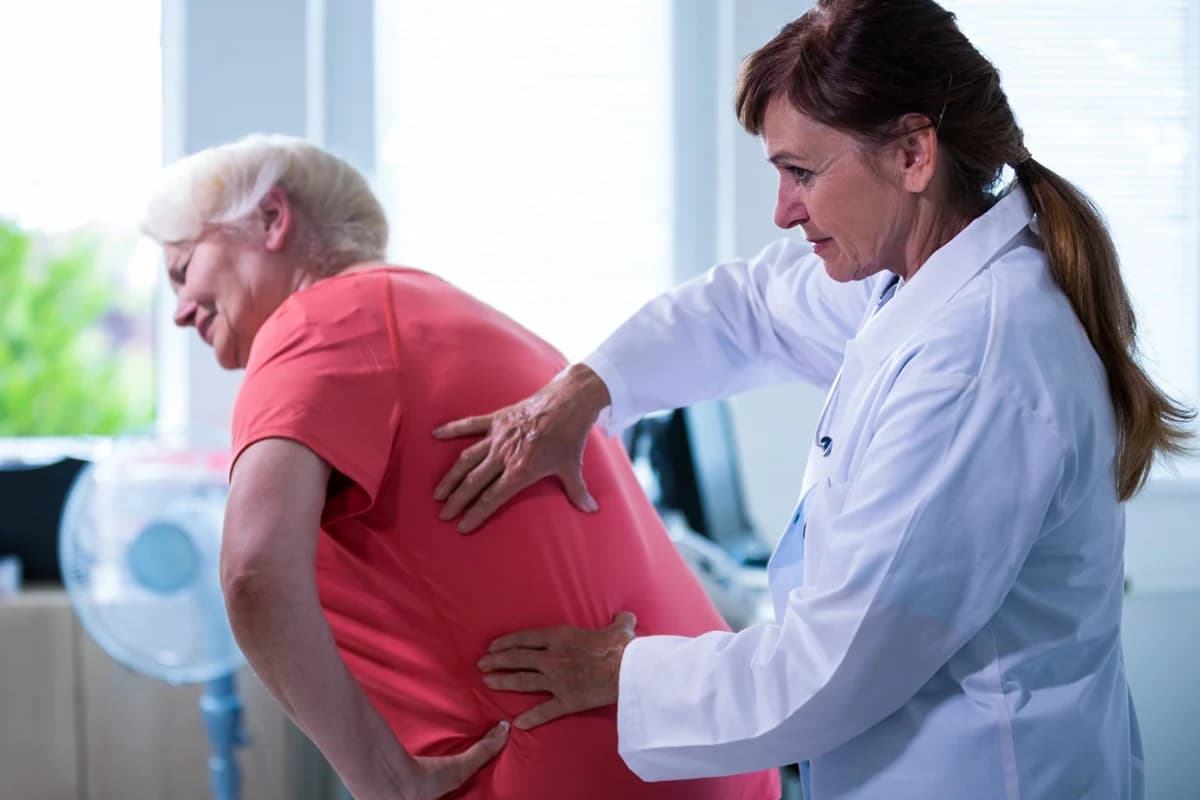
A herniated lumbar disc presses on or irritates a nerve root, producing pain that radiates into the leg, sometimes with numbness or weakness. The majority improve over weeks to months without an operation, and imaging findings correlate poorly with symptoms — many people without any back pain have disc bulges on MRI.
This is why treatment is directed by examination and symptoms rather than by the scan alone.
What the programme does
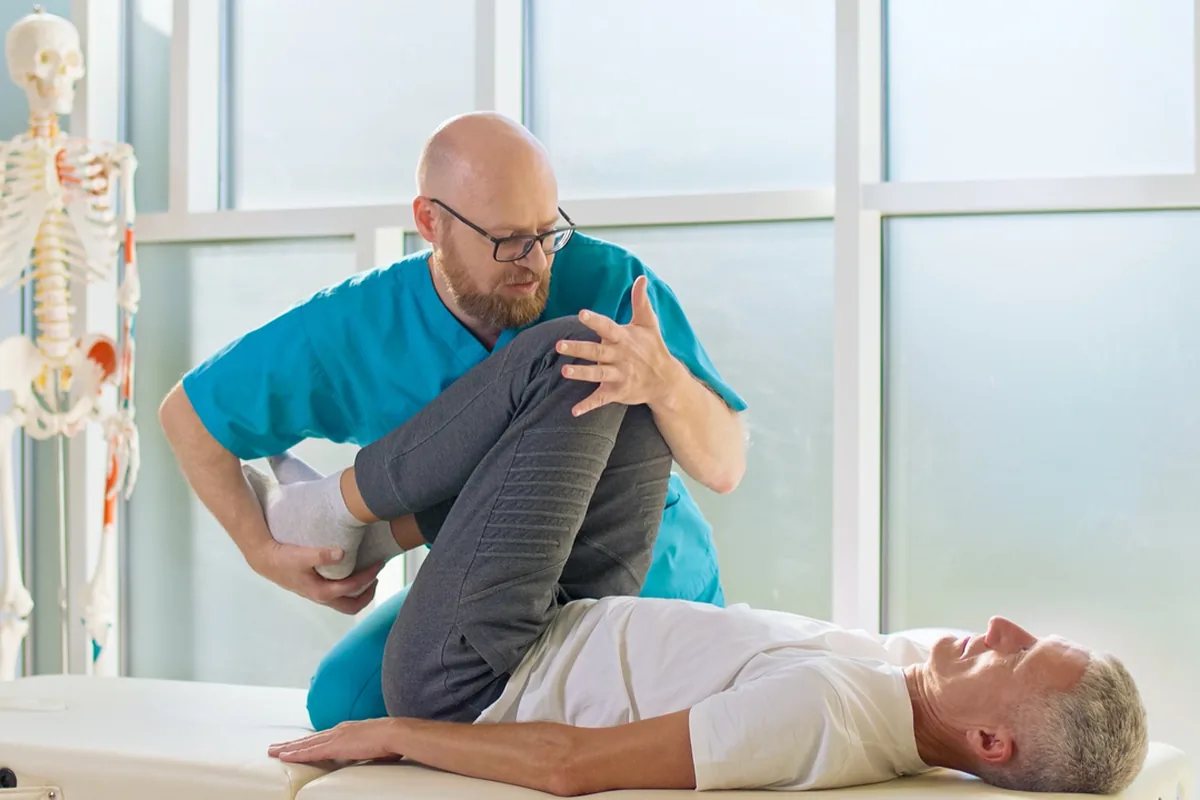
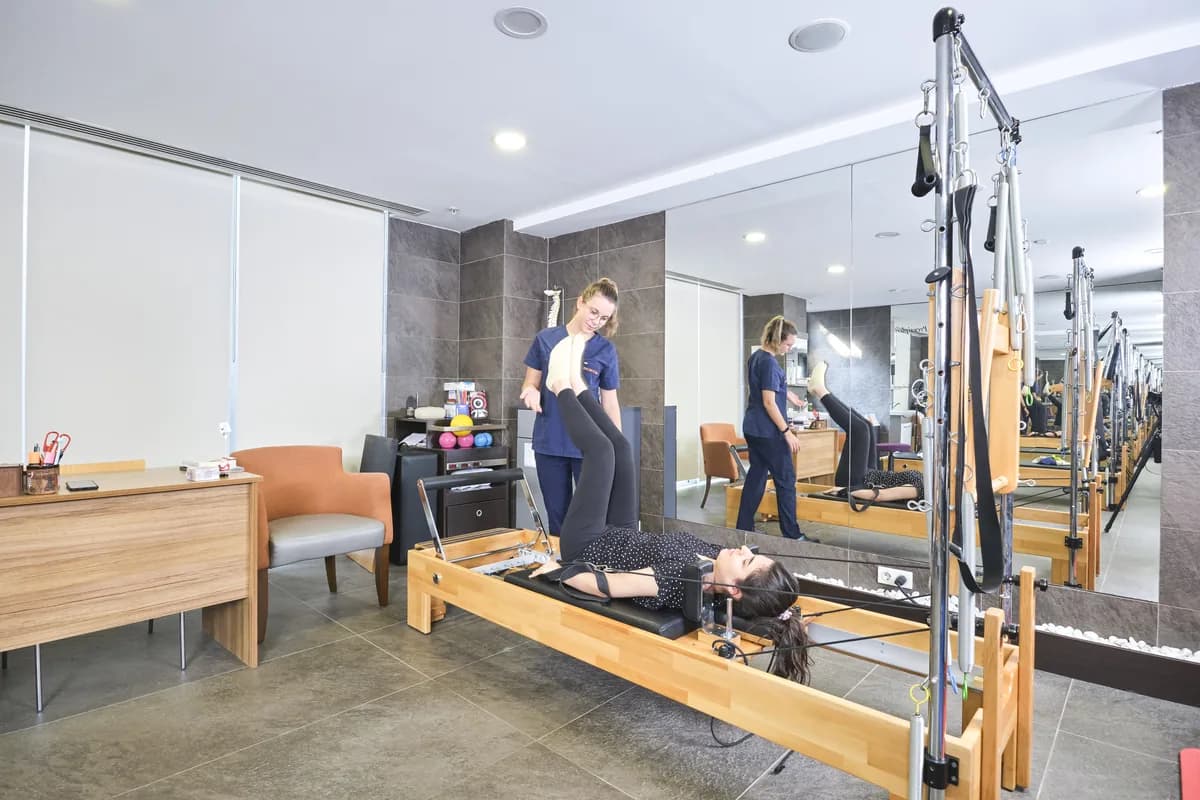
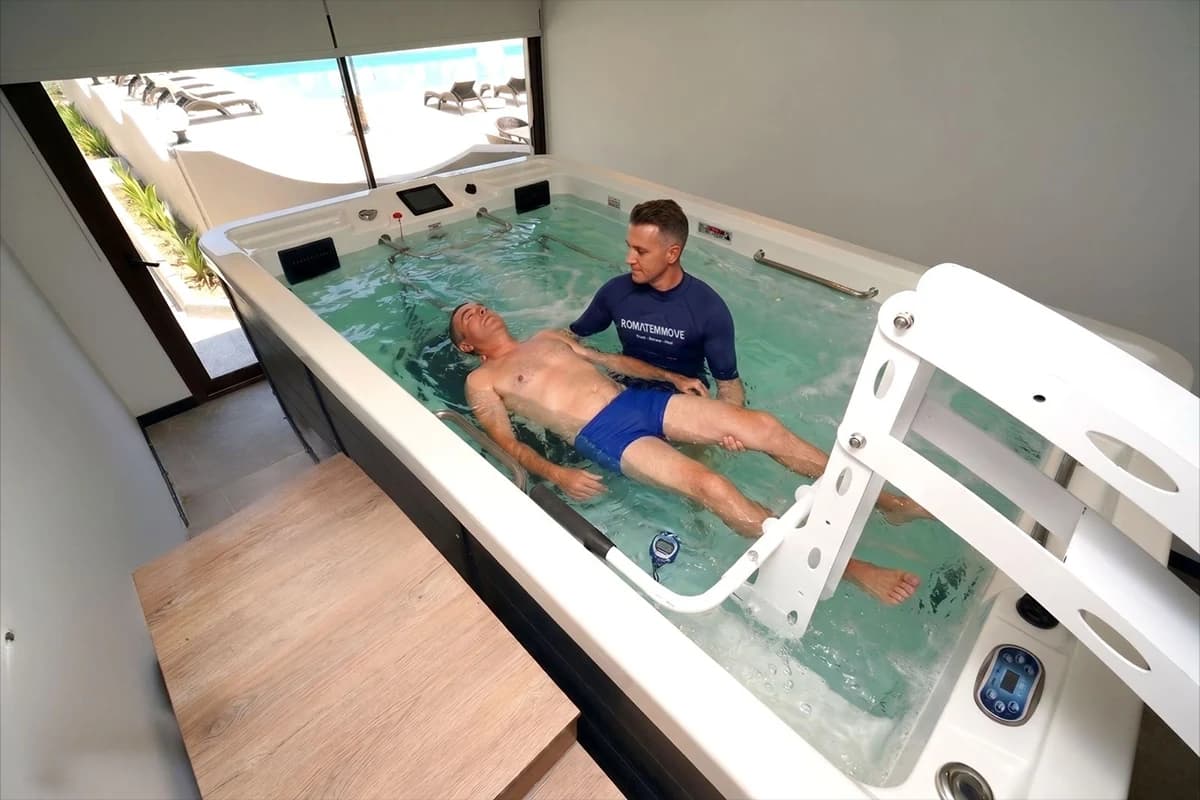
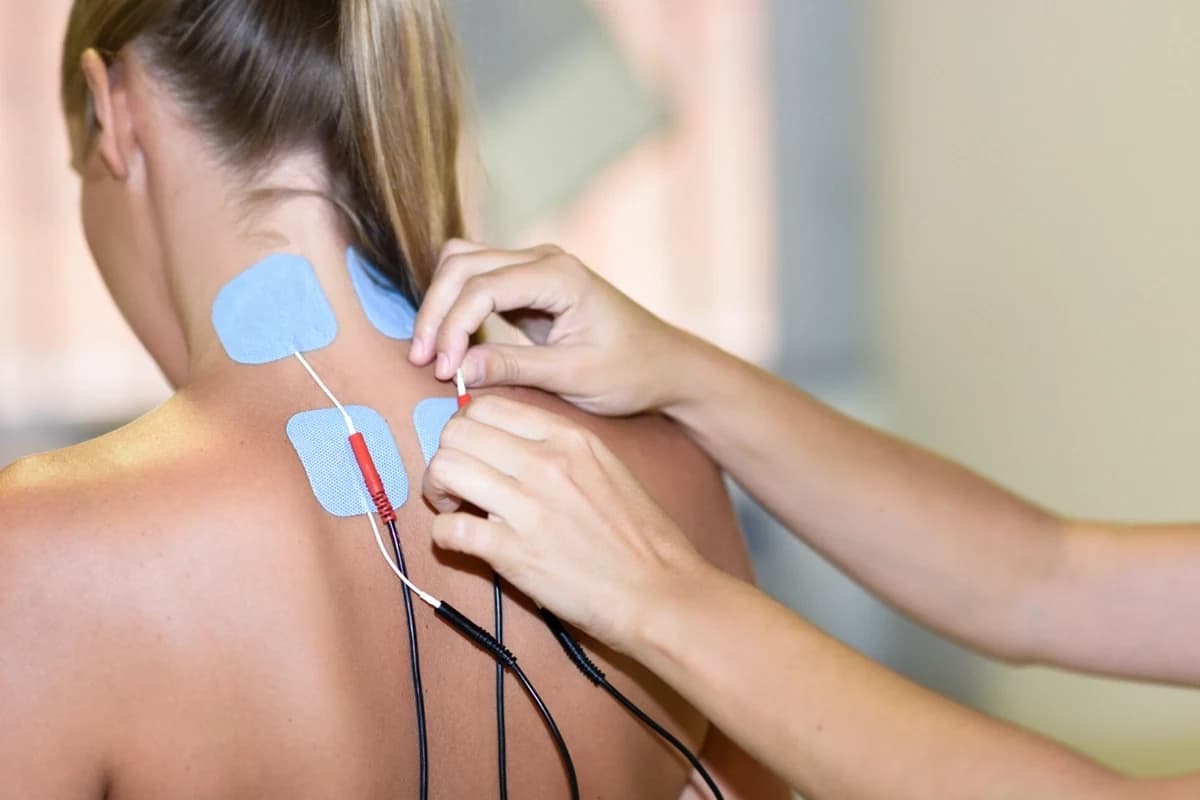
Pain control first, enough to allow movement. Then restoration of movement, then progressive loading and trunk control training to reduce recurrence. Manual therapy where indicated, and hydrotherapy where land-based movement is still too painful.
The recurrence rate is what makes trunk control the important part. Treating the episode and stopping there leaves the person in the same position for the next one.
The signs that change everything
Progressive weakness in both legs, numbness around the groin or inner thighs, or loss of bladder or bowel control can indicate cauda equina syndrome. This is a surgical emergency and it needs immediate hospital assessment, not physiotherapy.
We check for these at every stage of the programme, and we tell patients what to watch for at home.
What the scan shows, and what it does not
Disc bulges and herniations are common findings in people with no pain at all, and they become more common with age. A scan finding on its own therefore does not explain symptoms; it has to match the examination — which nerve, which muscle, which reflex.
This matters because an alarming report read without that context produces fear, and fear produces the guarding and inactivity that make recovery slower. We go through the imaging with you and say which findings are relevant to your symptoms and which are background.
Pain that travels down the leg
Leg pain following a nerve root — sciatica — behaves differently from back pain and is treated differently. It often improves over weeks to a few months as the inflammation around the nerve settles, and the herniation itself frequently shrinks over that period without any intervention.
Rehabilitation during that window is about keeping you moving within tolerance, protecting the nerve from positions that irritate it, and rebuilding what deconditions fast: trunk control, hip strength and walking tolerance.
What we do not use, and why
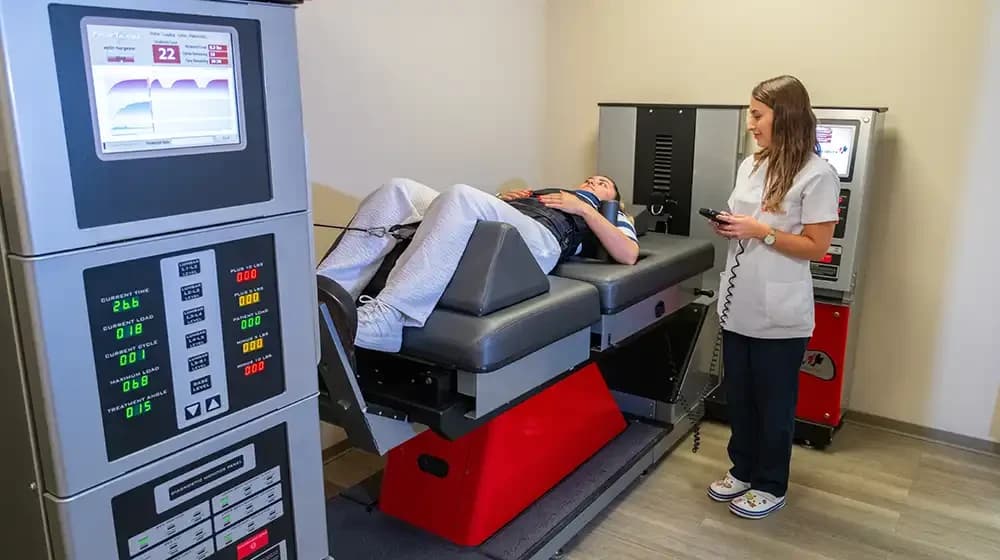
Prolonged bed rest, which makes outcomes worse rather than better. Traction, which is not recommended for low back pain with or without sciatica. Passive treatment given alone with no exercise attached to it.
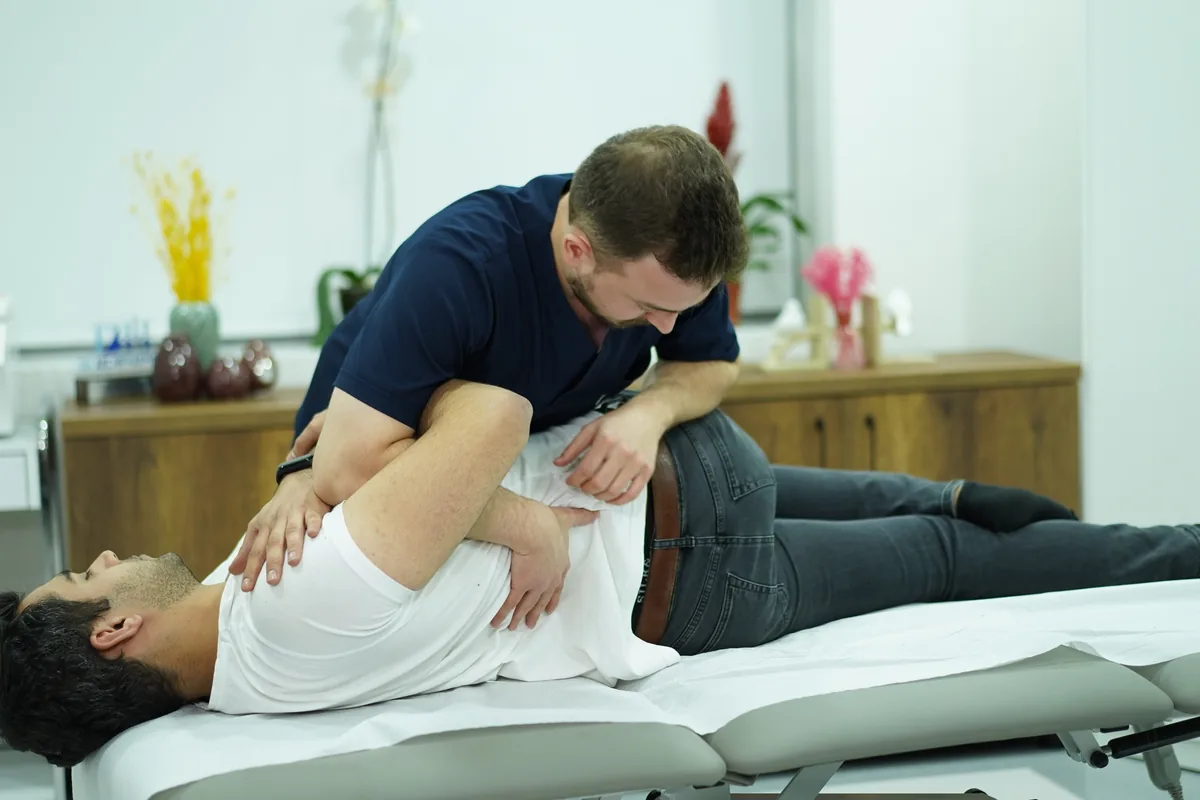
Manual therapy has a place, but as part of a package that includes exercise rather than as a course of treatment in its own right. If a plan consists mainly of passive sessions, it is worth asking what the exercise component is.
Getting back to lifting and to work
Returning to activity is part of the treatment rather than the reward at the end of it. Work and lifting are reintroduced progressively, with the load and the technique trained rather than avoided — because avoidance is what turns an episode into a chronic problem.
Where a job involves heavy manual handling we train that specific pattern before discharge, and the written plan says what you can lift and how the limit should progress.
Frequently asked questions
Will the herniation heal, or is it permanent?
The disc does not return to its original shape, but the herniated material frequently reduces over months and the inflammation around the nerve settles. Most people recover function without surgery, which is why an operation is not the first step unless there are specific warning signs.
When is surgery necessary?
Urgently, if there is loss of bladder or bowel control, numbness in the saddle area, or rapidly progressing weakness — those need immediate assessment, not a rehabilitation programme. Electively, when severe leg pain persists despite an adequate course of conservative treatment, or when weakness is not recovering.
Should I rest until the pain settles?
No. Short-term relative rest during the worst days is reasonable, but prolonged rest worsens outcomes. Staying as active as pain allows, and returning to normal activity progressively, is the better-evidenced approach.
Is my posture the cause?
Rarely in the way people expect. There is no single correct posture that prevents disc problems, and the search for one usually produces more guarding rather than less pain. What does matter is variety of movement, load tolerance and strength.
Can I fly with a disc herniation?
Usually yes, but a long flight in a fixed position can aggravate leg pain. If you are travelling for treatment, tell us before booking — aisle seating, breaks and pain management before the flight make a real difference, and in a small number of cases we would advise treating locally first.
How long does the programme take?
Typically four to eight weeks of structured work, with meaningful change in pain and walking tolerance expected within the first few weeks. Recovery of strength in a weak muscle group takes longer and continues after discharge on a home programme.
Sources
- Low back pain and sciatica in over 16s: assessment and management (NG59) — National Institute for Health and Care Excellence (2020)
Which therapies would I actually receive?
A therapy is a single method used inside a programme. It is measured in sessions and is not sold separately.

Technologies we use


Locations
Where you can receive this treatment






Related articles
Orthopaedic Can a herniated disc heal without surgery?
Yes, many herniated discs improve without surgery. The disc material that presses on a nerve often shrinks or is reabsorbed over weeks to months, and larger extrusions are more likely to regress than small bulges. Most people are treated with activity, exercise and pain relief, and surgery is reserved for specific situations.Read moreOrthopaedic Which exercises help lower back pain, and which make it worse?
Exercise helps chronic lower back pain, and no single type is clearly better than others. Walking, strengthening, Pilates, yoga and tai chi all have evidence. What matters is choosing activities you can keep doing and building up gradually. Prolonged rest, avoiding all movement and exercises that sharply worsen leg symptoms tend to hold recovery back.Read moreNeurological How long does it take to recover from a stroke?
Most recovery after a stroke happens in the early months, when the brain is most able to reorganise, and it continues more slowly for a longer period after that. How far someone gets depends mainly on how severe the stroke was, where it happened and how much active therapy follows.Read more



