

Medical condition
Lipoedema
Lipoedema is a distinct condition from lymphoedema and from obesity, and is often misdiagnosed as both. Conservative management targets pain, swelling and mobility, and establishes an accurate diagnosis first. Unlike lymphoedema it is symmetrical and spares the feet, and unlike ordinary fat it does not respond to diet.
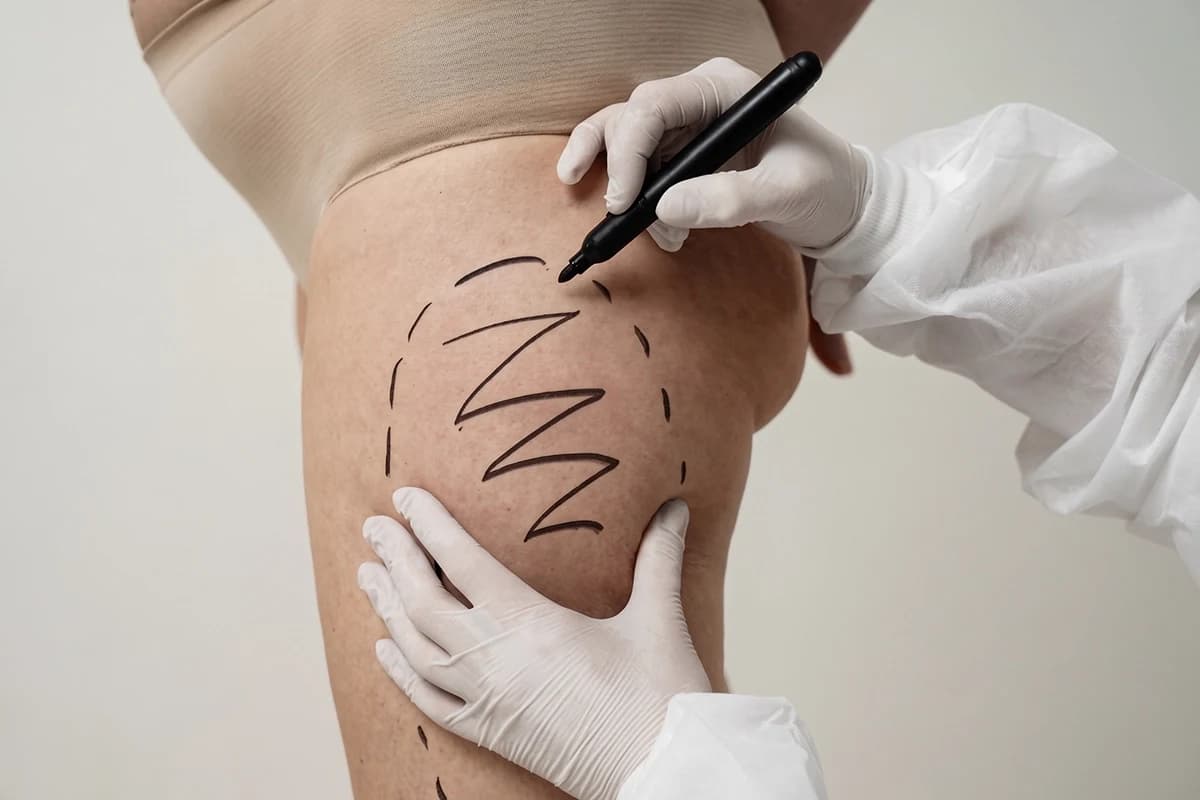
Not obesity, and not lymphoedema
Lipoedema is an abnormal, symmetrical accumulation of fat tissue, almost exclusively in women, affecting the legs and often the arms. It is painful and tender to pressure, bruises easily, and characteristically spares the feet — the swelling stops abruptly at the ankle.
It is most often misdiagnosed as obesity. That misdiagnosis is damaging: women are told to lose weight for years while the condition goes unrecognised, and the abnormal fat of lipoedema is largely resistant to diet 1.
How it is distinguished from lymphoedema
Lymphoedema is a failure of lymphatic drainage causing fluid accumulation; it is usually asymmetrical and it does involve the foot. Lipoedema is a disorder of fat tissue; it is symmetrical and spares the foot. The two can occur together in advanced disease.
The distinction determines treatment. Diagnosis rests on the medical history, a clinical examination and the exclusion of other conditions; no imaging, blood or genetic test is approved to confirm it 1. Getting it wrong means treating the wrong mechanism while the symptoms go on.
What treatment can and cannot do
Conservative treatment — compression, exercise, manual lymphatic drainage and skin care — can ease pain, heaviness and swelling while it is kept up, but it has not been shown to prevent the condition from progressing 1. It does not remove the abnormal fat tissue.
We say this plainly because the alternative is a patient who follows a demanding programme for months expecting a change in limb shape that conservative treatment cannot produce. Where volume reduction is the goal, surgical options are discussed honestly, including what they involve and what they do not solve.
Living with it
Pain, mobility restriction, difficulty finding clothing that fits, and the experience of repeatedly being told to lose weight all take a real toll. This is a physical and a psychosocial condition and treating only the limb misses half of it.
Weight management still matters where relevant, because additional weight worsens the mechanical load. But we do not present it as a cure, because it is not one.
Does exercise help lipoedema?
It appears to, although the studies are small. A 2025 systematic review found six studies with 115 women in total: exercise training seemed to improve pain, quality of life, limb volume or circumference and physical function, with larger effects when compression was worn as well 2. The studies differed widely in design and were too small for firm conclusions 2.
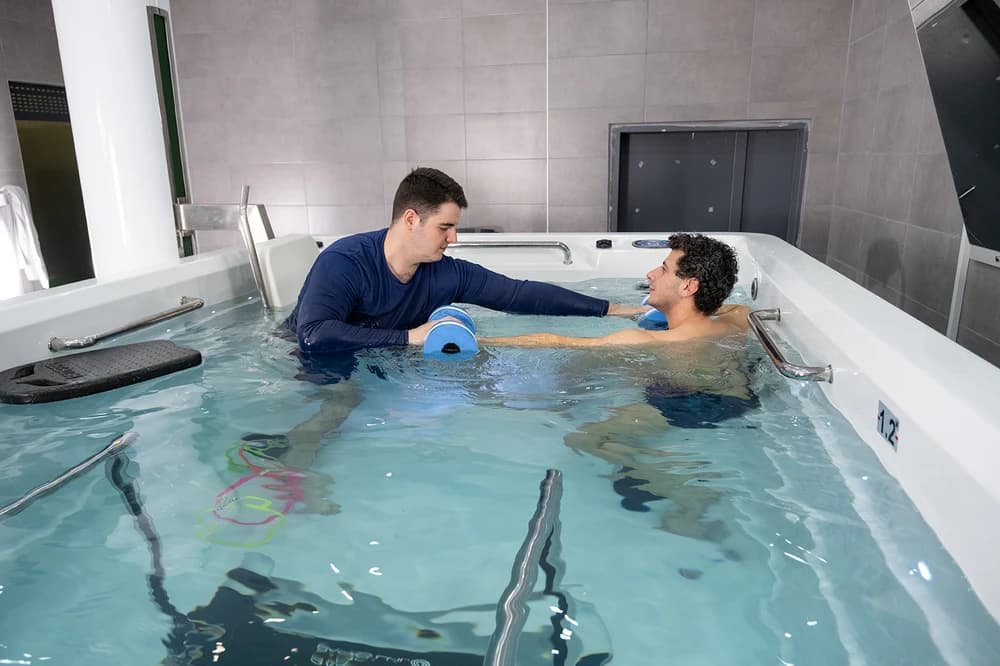
An international expert consensus states that tailored exercise — such as water-based activity, walking and yoga — can help maintain mobility, ease symptoms and support weight management 1. Water-based exercise has shown promise for pain and mobility, possibly because water pressure and buoyancy reduce the impact on the joints 1. The usual starting point is low-impact activity that can be kept up long term.
Frequently asked questions
Will losing weight cure lipoedema?
No. Lipoedema fat does not respond to diet the way ordinary fat does, and being told to lose weight is the most common thing that delays diagnosis. Weight management still matters: where obesity is also present, losing weight may ease symptoms and is part of management, but it does not remove the lipoedema fat itself 1.
Does lipoedema always get worse over time?
Not necessarily. An international expert consensus concluded that progression is not universal: some women's symptoms worsen over time while others stay stable or fluctuate 1. Weight gain and hormonal changes, such as pregnancy, can make symptoms worse in the long term, which is one reason weight management is part of care 1.
Does compression help lipoedema?
Is liposuction an option for lipoedema?
For some people. Conservative treatment cannot remove the abnormal fat; lymph-vessel-sparing liposuction can, and an international consensus supports considering it when symptoms are likely to improve 1. Randomised trials and long-term safety data are still lacking, and where obesity is also present, treating it first is advised 1.
Are there medicines or supplements for lipoedema?
Not with proven benefit. An international expert consensus found no evidence that any medicine treats lipoedema, and the evidence for supplements is limited 1. Management therefore rests on compression, activity, weight management where obesity is also present, and surgery for selected people.
Sources
- Kruppa P, Crescenzi R, Faerber G, Forner-Cordero I, et al. Lipedema World Alliance Delphi consensus-based position paper on the definition and management of lipedema: results from the 2023 Lipedema World Congress in Potsdam — Nature Communications (2026)
- Lanzi S, Porceddu E, Pousaz A, Jaques C, et al. Exercise training in women with lipedema — a systematic review — VASA (2025)
Technologies we use
Locations
Where you can receive this treatment



Related articles
Lymphoedema and lipoedema Lipoedema or lymphoedema: why the diagnosis changes the treatment
They look similar and are managed differently. Lymphoedema is protein-rich swelling from a failing lymphatic system, usually asymmetrical, and it involves the foot. Lipoedema is a symmetrical, painful fat distribution disorder that characteristically spares the feet. Compression helps both; drainage and weight loss do not help them equally.Read moreNeurological How long does it take to recover from a stroke?
Most recovery after a stroke happens in the early months, when the brain is most able to reorganise, and it continues more slowly for a longer period after that. How far someone gets depends mainly on how severe the stroke was, where it happened and how much active therapy follows.Read moreNeurological Can you walk again after a stroke?
Many people walk again after a stroke, including many who cannot stand at first. The chances are highest when some leg movement returns early and when walking practice starts as soon as it is safe. Walking often comes back before full arm recovery, sometimes with a stick, splint or other support.Read more



