

Medical condition
Familial Mediterranean Fever (FMF)
Familial Mediterranean Fever is an inherited condition causing recurrent attacks of fever with abdominal, chest or joint pain. Colchicine taken continuously prevents attacks and protects against amyloidosis, the complication that damages the kidney. Rehabilitation has a limited but real role in the joint problems left by repeated arthritis.
Attacks, not a constant illness
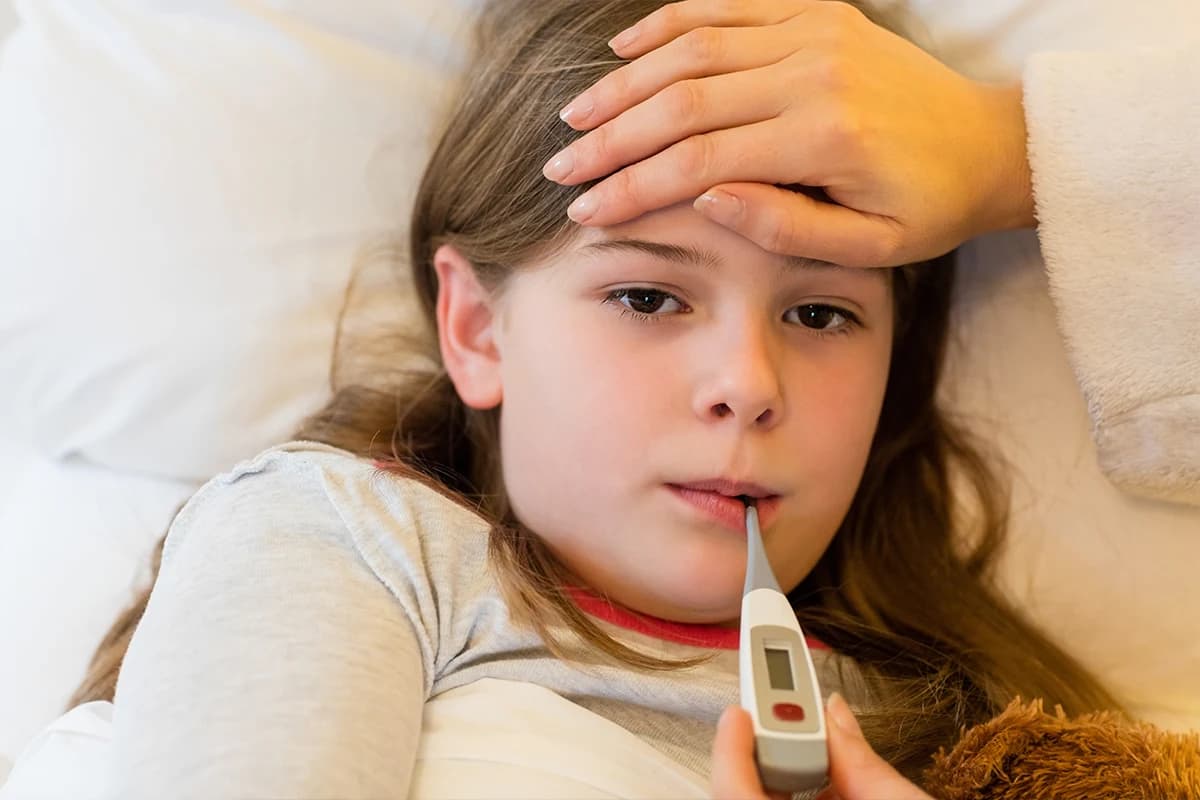
Episodes last one to three days and resolve completely 2. Between attacks most patients feel well. The pain during an abdominal attack is severe enough that many patients have had an unnecessary appendicectomy before the diagnosis was made.
Joint involvement is usually a single large joint, most often the knee or ankle, and it settles without damage. A small number develop prolonged arthritis in one joint that does not settle for weeks.
Colchicine is the treatment; this is not negotiable
Continuous colchicine prevents attacks in most patients and, more importantly, prevents AA amyloidosis. Stopping it because attacks have stopped is the common and dangerous error — the drug is what is stopping them.
We state this plainly because patients travelling for rehabilitation sometimes arrive having paused their medication, and no rehabilitation programme substitutes for it.
What we can help with
Restoring strength and range in a knee or ankle after a prolonged attack of arthritis; managing chronic musculoskeletal pain where it has developed; and reconditioning after a period of reduced activity. Exercise capacity between attacks is often lower than people assume: adults in remission walked a shorter distance in six minutes and had weaker hip and ankle muscles than healthy peers 3.
Where amyloidosis has affected the kidney, exercise is planned with the nephrology team and the programme is built around what renal function and blood pressure allow.
What we can and cannot help with
The attacks themselves are managed medically, and colchicine both controls them and prevents amyloidosis, which is the complication that determines long-term outcome.
What rehabilitation addresses is what accumulates between attacks: joint range after arthritis, deconditioning from repeated episodes, and chronic pain where it has developed.
Why do my legs hurt after exercise?
Pain in the legs after physical effort or prolonged standing is a recognised feature of FMF, not simply a sign of being unfit 3. It affected 36% of 1,290 children in one clinic series, where it went with more severe disease 4. In a series of 135 adults it affected 48% and went with more active disease 5.
It often persists despite colchicine; in a small study of people whose disease did not respond to colchicine, interleukin-1 blocking drugs improved it in about half 6. New or worsening leg pain with activity is therefore worth reporting to the rheumatologist rather than training through it.
Can effort, stress or cold set off an attack?
Many people with FMF believe so. In a survey of 882 adults, the triggers named most often were psychological stress (75.2%) and fatigue (63.6%), followed by seasonal changes and cold exposure, and 51.0% of women reported more frequent or severe attacks around menstruation 7. These are recalled associations, not proven causes 7.
For training, that argues for steady progression rather than exhausting sessions, and for keeping warm during pool and outdoor work. A session is better moved than pushed through when an attack is starting. None of this replaces colchicine, which reduces attacks and prevents amyloidosis 2.
Frequently asked questions
Does rehabilitation stop the attacks?
No. Colchicine does, and taking it consistently also prevents kidney amyloidosis. Rehabilitation addresses what the attacks leave behind.
Should I exercise during an attack?
No. Attacks are self-limiting over days; activity resumes as symptoms settle.
Does it cause permanent joint damage?
Usually not. Arthritis in FMF is typically acute and resolves, though repeated hip or knee involvement occasionally leaves lasting change.
Why does colchicine matter so much?
It prevents amyloidosis, which is the main cause of serious long-term harm. This is the reason it is taken continuously rather than during attacks.
Is exercise safe between attacks?
Yes, and it is encouraged. Repeated episodes cause deconditioning that compounds over years.
Sources
- EULAR recommendations for the management of familial Mediterranean fever — Annals of the Rheumatic Diseases (2016)
- Familial Mediterranean fever: clinical, molecular and management advancements — The Netherlands Journal of Medicine (2007)
- Tore NG, Sari F, Saraç DC, Bayram S, et al. Decreased exercise capacity, strength, physical activity level and quality of life in adult patients with familial Mediterranean fever — Turkish Journal of Medical Sciences (2021)
- Uğur Es Y, Özçelik E, Erdem Torun Ş, Öztürk D, et al. Exertional leg pain in pediatric familial Mediterranean fever: clinical associations and implications for treatment — European Journal of Pediatrics (2026)
- Ösken S, Çetin Ç. Exertional leg pain is associated with increased disease activity and musculoskeletal involvement, but not MEFV genotype, in familial Mediterranean fever — Irish Journal of Medical Science (2026)
- Druyan A, Livneh A, Giat E, Ben-Zvi I, et al. The effect of IL-1 blockers on exertional leg pain in familial Mediterranean fever patients: an exploratory study — Rheumatology (Oxford) (2026)
- Parlar K, Ates MB, Onal ME, Bostancı E, et al. Factors triggering familial mediterranean fever attacks, do they really exist? — Internal and Emergency Medicine (2024)
Which therapies would I actually receive?
A therapy is a single method used inside a programme. It is measured in sessions and is not sold separately.
Technologies we use


Locations
Where you can receive this treatment



Related articles
Neurological How long does it take to recover from a stroke?
Most recovery after a stroke happens in the early months, when the brain is most able to reorganise, and it continues more slowly for a longer period after that. How far someone gets depends mainly on how severe the stroke was, where it happened and how much active therapy follows.Read moreNeurological Can you walk again after a stroke?
Many people walk again after a stroke, including many who cannot stand at first. The chances are highest when some leg movement returns early and when walking practice starts as soon as it is safe. Walking often comes back before full arm recovery, sometimes with a stick, splint or other support.Read moreNeurological Will my arm and hand recover after a stroke?
Arm and hand recovery after a stroke varies more than walking recovery. Early return of some shoulder or finger movement makes useful recovery much more likely. Repeated, meaningful practice of reaching, grasping and releasing is what drives improvement, and even a partly recovered hand can be trained to help with daily tasks.Read more



