
Medical condition
Clubfoot (Talipes Equinovarus)
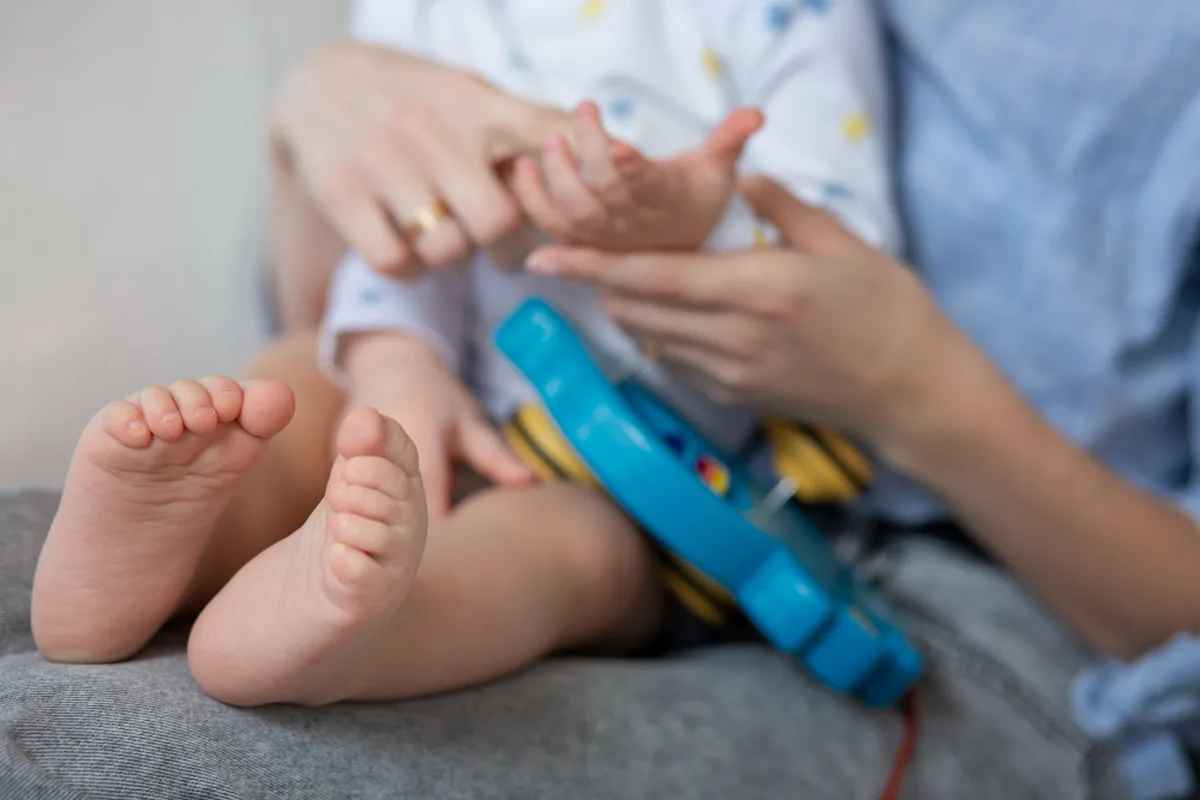
Clubfoot is a foot present at birth that points down and inwards. It is corrected in infancy by serial casting and a small tendon release, then held with a brace worn for years. Rehabilitation supports that bracing, treats the weakness and stiffness that follow, and manages relapse or the late-treated foot in older children.
Where rehabilitation fits in clubfoot treatment
The correction itself is orthopaedic: weekly casts in the first weeks of life, usually a minor release of the Achilles tendon, then a brace holding the feet apart, worn full-time at first and at night until around the age of four 1. That protocol corrects the great majority of feet, and rehabilitation does not replace any part of it.
What rehabilitation adds is everything around it: keeping the family able to continue the bracing, which is where most relapses come from; treating the calf weakness and ankle stiffness that a corrected foot is left with; and retraining walking once the child is on their feet.
The corrected foot that still has problems
A corrected clubfoot is smaller and stiffer than the other and its calf is thinner; some children walk with the foot turned in or on the outer border, tire quickly, or avoid running. Those are the children who benefit from a programme of ankle range work, strengthening of the muscles that lift and evert the foot, balance training and gait retraining.
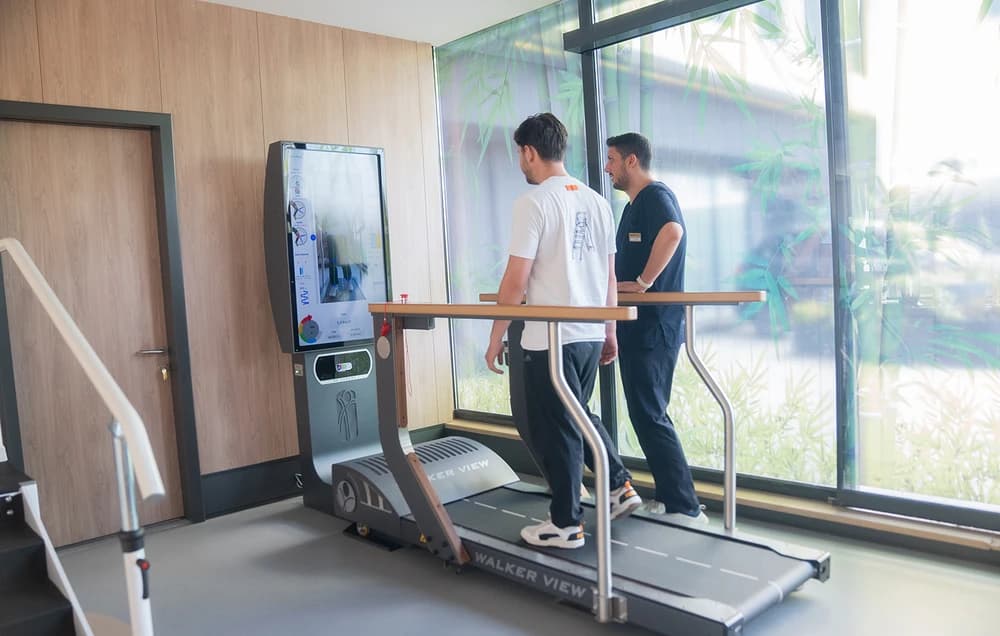
Gait analysis shows exactly what the foot does in walking, which decides whether the answer is therapy, an insole, a brace adjustment or a return to the surgeon.
Relapse and the late-treated foot
A foot that starts to turn in again after bracing stops is a relapse, and it is treated early — repeat casting and sometimes a tendon transfer — rather than watched. Rehabilitation resumes after that treatment with the same aims.
Older children and adolescents whose feet were treated late or incompletely are assessed individually. Some gain a great deal from strengthening and orthotics; some need surgery first, and the programme is then planned around it.
What families take home
A written home programme of stretches and play-based exercises, instruction in checking the brace fit and the foot position, and the measurements — range, strength, walking pattern — that show what changed during the block.
Review is planned rather than left to chance, because clubfoot is a childhood-long condition and the foot grows between visits.
How often does clubfoot come back?
Often enough to plan for. A 2026 systematic review of 25 studies and 1,624 children found relapse after Ponseti treatment in about one child in four (26.4%), with wide variation between studies 2. Children whose brace was not worn as prescribed were far more likely to relapse, which makes brace wear the most important factor a family can influence 2.
In one follow-up study, missed brace wear began after the first year of life and rose sharply after the second 1. Practical help with brace fit and bedtime routines matters most in that period, and planned reviews are there to catch early signs of relapse.
Frequently asked questions
Can clubfoot be treated with physiotherapy alone?
Usually not. The standard correction is casting and bracing under an orthopaedic surgeon. A physiotherapy-based alternative, the French functional method, relies on daily manipulation by specially trained physiotherapists and costs more 4. A systematic review could not show the casting method to be superior to it 3. Physiotherapy supports that treatment and manages what the corrected foot is left with.
Why does my child still walk oddly after treatment?
A corrected foot is usually stiffer and weaker than the other, and some children compensate in their walking. That pattern responds well to targeted therapy, and gait analysis shows exactly what to target.
How long is the brace needed?
Is it too late for an older child?
No, but the options differ. Assessment tells us whether therapy and orthotics are enough or whether surgery has to come first.
Will the treated foot be smaller?
Often, if only one foot was affected. In a study that measured children at 5, 7 and 10 years of age, the treated foot needed a shoe about 1.5 sizes smaller and the calf was about 2 cm thinner on that side; when both feet were affected, the difference between the two sides was small 5.
Sources
- When Does Brace Noncompliance Occur in Patients with Clubfoot Deformity? — Clinics in Orthopedic Surgery (2025)
- Ogutu V, Jacob EE, Vahwere BM, Oviosun A, et al. Global prevalence, patterns, and predictors of relapse following Ponseti treatment for idiopathic clubfoot: a systematic review and meta-analysis — BMC Musculoskeletal Disorders (2026)
- de La Taille E, Sales de Gauzy J, Gaubert Noirot M. Idiopathic clubfoot treatment and heterogeneity of current therapeutic strategies: the Ponseti method versus the French functional method (a systematic review) — Archives de Pédiatrie (2021)
- Elbaum R, Noel B, Degueldre V, Hallez M, et al. 20 years of functional treatment for clubfoot: advantages and limitations compared with the Ponseti method — Journal of Pediatric Orthopaedics Part B (2021)
- Baird GO, Garcia NL, Mader S, Mildes R, et al. Symmetry of shoe size and calf girth in children with treated idiopathic clubfoot: a longitudinal study — Journal of Pediatric Orthopaedics (2022)
Technologies we use

Locations
Where you can receive this treatment




Related articles
Neurological How long does it take to recover from a stroke?
Most recovery after a stroke happens in the early months, when the brain is most able to reorganise, and it continues more slowly for a longer period after that. How far someone gets depends mainly on how severe the stroke was, where it happened and how much active therapy follows.Read moreNeurological Can you walk again after a stroke?
Many people walk again after a stroke, including many who cannot stand at first. The chances are highest when some leg movement returns early and when walking practice starts as soon as it is safe. Walking often comes back before full arm recovery, sometimes with a stick, splint or other support.Read moreNeurological Will my arm and hand recover after a stroke?
Arm and hand recovery after a stroke varies more than walking recovery. Early return of some shoulder or finger movement makes useful recovery much more likely. Repeated, meaningful practice of reaching, grasping and releasing is what drives improvement, and even a partly recovered hand can be trained to help with daily tasks.Read more



