

Medical condition
After Joint Replacement
After an uncomplicated hip or knee replacement, home-based rehabilitation works as well as an inpatient programme, and most people do not need to travel. An intensive programme is worth it for a stiff knee, a revision, bilateral surgery, complications, or when there is no support at home.
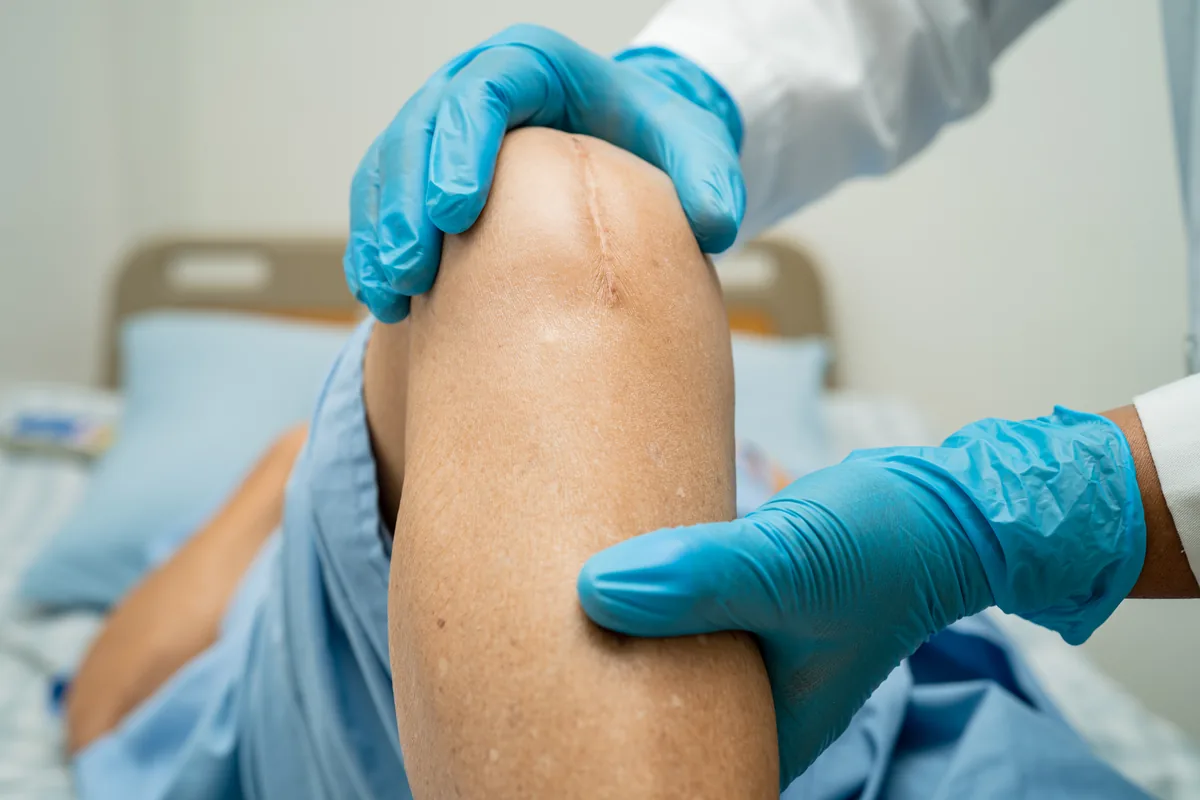
Most people do not need to travel for this
This is not the usual opening for a page like this, and it is what the evidence says. For an uncomplicated primary hip or knee replacement, inpatient or clinic-based rehabilitation produces no clinically important advantage over a home-based programme — not for mobility, not for pain, not for function, not for range of motion, at ten weeks or at a year 1.
So if your operation went well, you are reasonably fit, and you have someone at home, the honest answer is that a good home programme with local physiotherapy is likely to get you to the same place. Flying to another country for it buys convenience and supervision, not a better knee.
We would rather tell you that than take the booking. It costs us a routine case and it saves you the flight — and the people this page is genuinely for are further down.
The stiff knee, and why the clock matters
The group with most to gain is the one whose knee is not bending. Arthrofibrosis — scar tissue restricting the joint, usually defined as less than 90 degrees of flexion — is among the most disabling complications of knee replacement and a leading reason for readmission and revision 5. It affects tens of thousands of people a year, and around a quarter need a further operation 5.
Timing is the part most patients are never told. Where manipulation under anaesthesia is needed, doing it within twelve weeks of the original operation produced an average gain of around 36 degrees and a final range near 119 degrees; after twelve weeks the same procedure gained around 17 degrees and finished near 95 degrees 3.
If your knee is stiff and you are inside that window, this is urgent in a way that most rehabilitation is not. Send the records now rather than waiting to see whether it improves — and if the answer is that you need a surgical opinion rather than a therapy block, that is what the reply will say.
Who an intensive programme is actually for
A stiff knee inside or near the manipulation window. A revision replacement, where the soft tissue and bone are compromised and progress is slower. Bilateral surgery, where there is no good leg to lean on. A complicated recovery — infection, fracture, nerve injury, prolonged non-weight-bearing.
Also: people who live alone or without anyone who can help, people who were frail before the operation, and people who are significantly behind their milestones and losing confidence. Being behind schedule with nobody to supervise you is a real reason to come, and it is not a failure.
If your situation is not on this list, say so in your enquiry and ask directly whether travelling is justified. You will get a direct answer.
The milestones you should be measuring against
For a knee replacement the usual targets are full extension and about 90 degrees of flexion by four weeks, and approaching 130 degrees by twelve weeks 4. Extension matters more than most patients realise — a knee that will not straighten fully changes the whole walking pattern and is harder to recover than flexion.
For a hip replacement the constraints are different: range is rarely the problem, and the work is strength, gait pattern, and confidence, along with any precautions your surgeon has specified for the approach used.
Measure rather than estimate. "It feels stiff" and "it is at 78 degrees at six weeks" lead to different decisions, and only one of them can be acted on.
Why hip and knee are not the same programme
A knee replacement is a range-of-motion problem first and a strength problem second. Time lost early is hard to recover, which is why the first six weeks carry more weight than any later period.
A hip replacement is a strength and gait problem, with precautions that depend on the surgical approach. Patients often feel better sooner and then plateau, because the limp that remains is a muscle and pattern problem rather than a pain problem — and it responds to training rather than to time.
What the programme covers
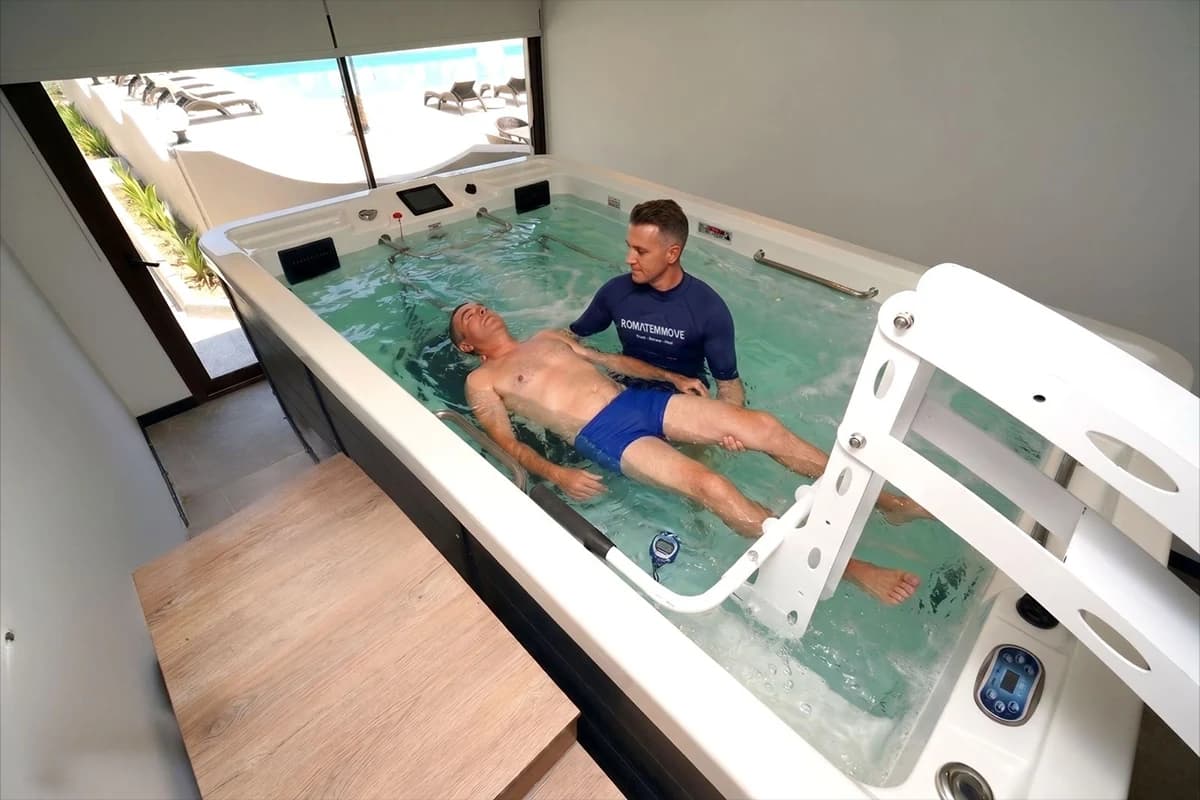
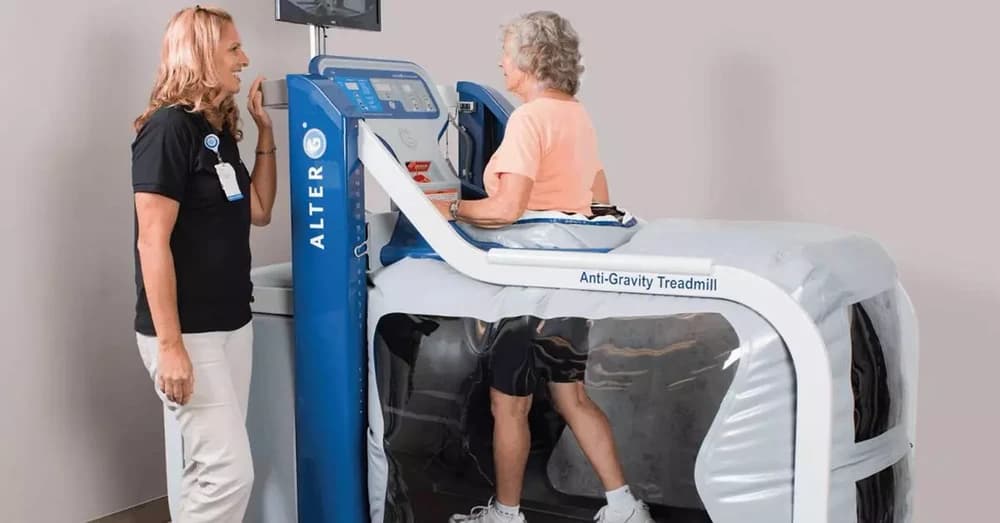
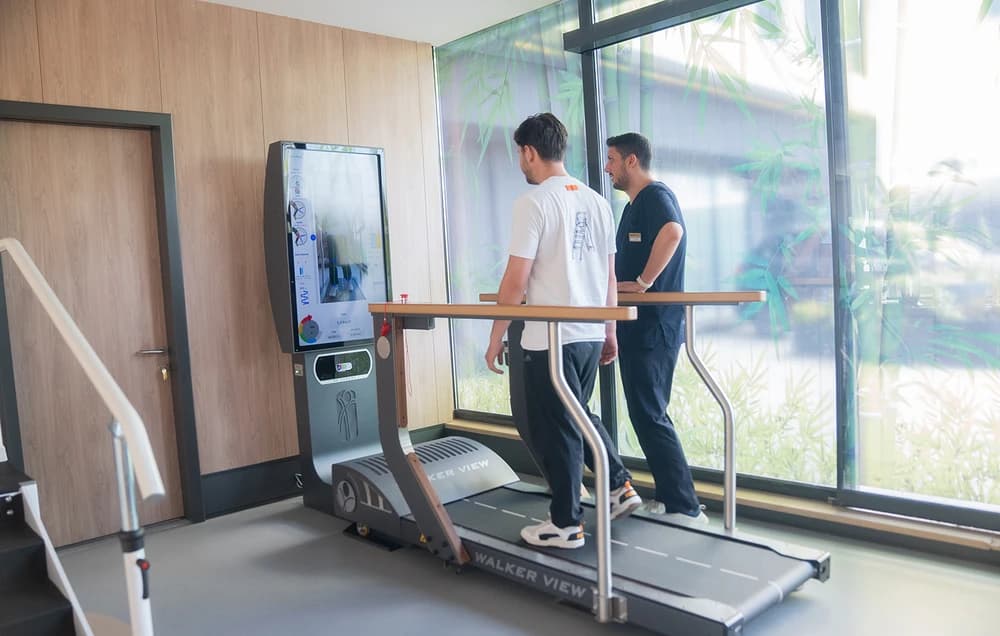
Two to four weeks, three to five hours a day. Range of motion work where that is the constraint, progressive strengthening, gait retraining with analysis, aquatic work to load the joint earlier than land allows, and the anti-gravity treadmill where full weight-bearing is not yet possible or comfortable.
The block ends with a measured re-assessment and a home programme, and the discharge document goes to your surgeon with the numbers in it.
Understanding After Joint Replacement
Before treatment, the questions people actually ask first — what happens, how recovery behaves over time, and whether it is ever too late. Each opens the full article.
- Understanding recovery after joint replacementWhat the weeks after hip or knee replacement actually involve, and what the milestones mean.
- How we treat recovery after joint replacementMeasured, staged, and honest about whether you needed to come at all.
- What to expectA two to four week block — and an honest answer before you book it.
- Questions patients askWhat comes up in the first conversation.
Frequently asked questions
I had a normal knee replacement six weeks ago. Should I come?
Probably not, and we would rather say so. For an uncomplicated replacement with reasonable progress and support at home, the evidence shows no clinically important benefit from inpatient over home-based rehabilitation. If your range of motion is behind the milestones, that changes the answer — send the numbers.
My knee will not bend past about 80 degrees. Is that a problem?
Yes, and it is time-sensitive. Below 90 degrees is the definition of significant stiffness 5. If manipulation under anaesthesia is needed, doing it within twelve weeks of the original surgery produces substantially better results than doing it later — around 36 degrees of gain versus around 17 3. Contact us now rather than waiting.
What is manipulation under anaesthesia?
A short procedure in which the knee is bent under anaesthetic to break down scar tissue restricting movement, followed immediately by intensive therapy to hold the gain. Whether it is indicated is a surgical decision; we can arrange the assessment and we deliver the therapy that has to follow it.
Can I come before the operation instead?
Prehabilitation — strengthening and preparation before surgery — is worth doing, and for most people it is best done at home in the weeks before rather than as a trip abroad. If you are having surgery with us, it is built into the plan.
I had both knees replaced at once. Is that different?
Yes. Bilateral surgery removes the good leg you would otherwise lean on, transfers are harder, and the early weeks are considerably more demanding. It is one of the clearer reasons for a supervised inpatient block.
This is a revision, not a first replacement. Does that change things?
It does. Revision surgery generally means compromised bone and soft tissue, slower progress and more cautious loading. Expectations and timescales are set differently, and a supervised programme is more often justified.
How soon after surgery can I start?
A block can usually begin once the wound is healed and your surgeon is content — often within one to two weeks. For a stiff knee, sooner is materially better; for a straightforward recovery, there is no rush to travel at all.
Do you work with my own surgeon?
Yes, and we ask for the operation note and any precautions specific to the approach used. The discharge document goes back with measured range of motion and function, so your surgeon receives numbers rather than an impression.
What do you need from me before you can answer?
The operation note, the date of surgery, your current range of motion in degrees if it has been measured, whether you are weight-bearing, any complications, and whether you have help at home. That is enough for a direct answer — including "you do not need to come".
Sources
- Assessment of Outcomes of Inpatient or Clinic-Based vs Home-Based Rehabilitation After Total Knee Arthroplasty: A Systematic Review and Meta-analysis — JAMA Network Open (2019)
- Effect of Inpatient Rehabilitation vs a Monitored Home-Based Program on Mobility in Patients With Total Knee Arthroplasty: The HIHO Randomized Clinical Trial — JAMA (2017)
- Timing of manipulation under anaesthesia for stiffness after total knee arthroplasty — Annals of Translational Medicine (2015)
- Total Knee Arthroplasty Rehabilitation Strategies for Avoiding Arthrofibrosis and Other Complications — International Journal of Sports Physical Therapy (2025)
- Arthrofibrosis After Total Knee Arthroplasty: A Critical Analysis Review — JBJS Reviews (2023)
- When does patient function "Plateau" after total joint arthroplasty? A cohort study. — International Orthopaedics (2024)
Which therapies would I actually receive?
A therapy is a single method used inside a programme. It is measured in sessions and is not sold separately.

Technologies we use


Locations
Where you can receive this treatment





Related articles
 Orthopaedic
How long does recovery take after a knee replacement?
Most people move quickly from a walking frame to managing without an aid indoors. The part patients are rarely told is that strength and confidence keep improving for a long time afterwards, and that the early weeks of the programme set how far that improvement goes.Read moreOrthopaedic How long does recovery take after a hip replacement?
Most people walk with an aid soon after a hip replacement and return to most daily activities within a few months. Strength, walking distance and confidence usually continue to improve for a long time afterwards. Early mobilisation, a structured exercise programme and following your surgeon's advice support a steady recovery.Read moreOrthopaedic Which movements should you avoid after a hip replacement?
Movement restrictions after a hip replacement depend on how the operation was done and on your surgeon's advice. Traditionally, people avoided bending the hip past a right angle, crossing the legs and twisting the leg inwards. Evidence for strict precautions is limited, so many teams now tailor advice to the individual.Read more



