
Neuro and cognitive
Visual-cue sensorimotor training
Light and screen cues that trigger and time a movement, used where the problem is initiating or sequencing movement rather than producing force. In Parkinson's disease, a patient frozen in a doorway can often step over a projected line, because the response to external cues is largely preserved.
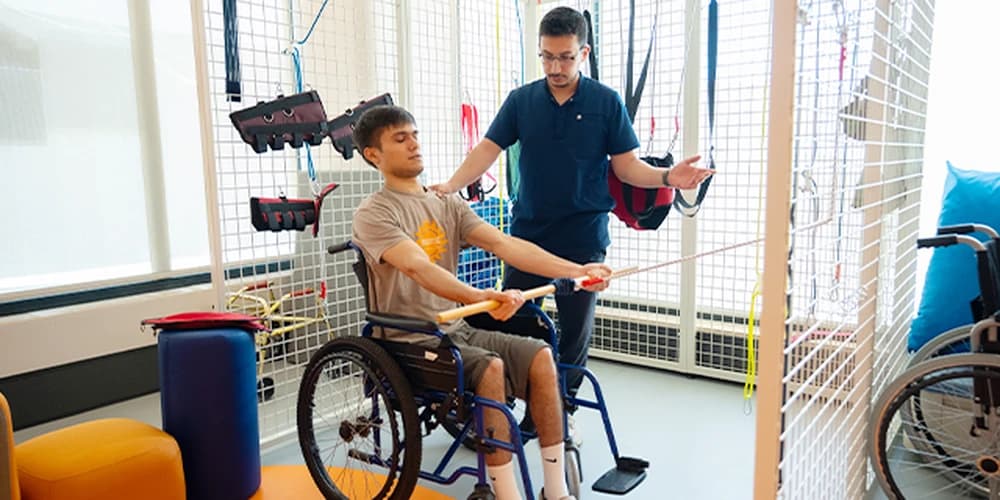
External cues bypass a broken internal timer
The system provides visual targets and rhythmic cues that the patient moves to. In Parkinson's disease in particular this works because the internal movement-initiation system is impaired while the response to external cues is largely preserved — a patient frozen in a doorway can often step over a projected line.
The same principle drives attention, timing and coordination training in other conditions: an external signal supplies the structure the nervous system is not currently generating.
Who it is used for
Parkinson's disease with freezing of gait and reduced step length. Stroke and brain injury with attention or neglect. Coordination disorders. Balance retraining. Also in children with developmental coordination difficulty.
It works well as a bridge: cues are used to establish the movement, then faded so the patient carries it without them.
Fading the cue is the point
A patient who walks well only with the system on has learned to use the system, not to walk. Cue fading is deliberately programmed, and the home programme teaches self-generated cueing — counting, a metronome app, a rhythm — so the strategy travels home.
This is the part most often skipped, and it is the part that determines whether anything lasts.
Cues that bypass a stuck system
External cues — a rhythm, a line on the floor, a visual target — allow movement that internal initiation cannot produce. This is most striking in Parkinson’s disease, where someone frozen in a doorway can step over a projected line.
The training aim is to make the cue portable: a rhythm the person can generate themselves, a strategy they can use at home when no equipment is present.
How strong is the evidence for cue training?
In Parkinson’s disease it is strong enough for a guideline. The American Physical Therapy Association’s clinical practice guideline recommends external cueing — rhythmic sounds, visual targets, spoken or attentional cues — to reduce the severity of motor symptoms and freezing of gait and to improve walking, based on 13 high-quality and 16 moderate-quality studies 1. In those studies cueing was typically practised two to five times a week for three to eight weeks, and the guideline found no study that measured whether it reduces falls 1.
Which kind of cue adds most is less certain. A 2024 review of ten small trials found that adding rhythmic sound cues to walking training increased walking speed slightly more than walking training alone, whereas adding visual cues did not measurably improve speed or stride length; effects on freezing, and whether any gain lasts, remained uncertain 2. The quality of that evidence is low 2. Visual targets are therefore used as one part of gait training, alongside rhythm and self-generated cues, rather than as the whole of it.
Sources
- Osborne JA, Botkin R, Colon-Semenza C, DeAngelis TR, et al. Physical therapist management of Parkinson disease: a clinical practice guideline from the American Physical Therapy Association — Physical Therapy (2022)
- Nascimento LR, Boening A, Rocha RJ, do Carmo WA, et al. Walking training with auditory cueing improves walking speed more than walking training alone in ambulatory people with Parkinson’s disease: a systematic review — Journal of Physiotherapy (2024)
Conditions this device is used for
The 2 conditions where this device is part of a routine programme, grouped by area. It is one tool inside the plan, never the plan itself.
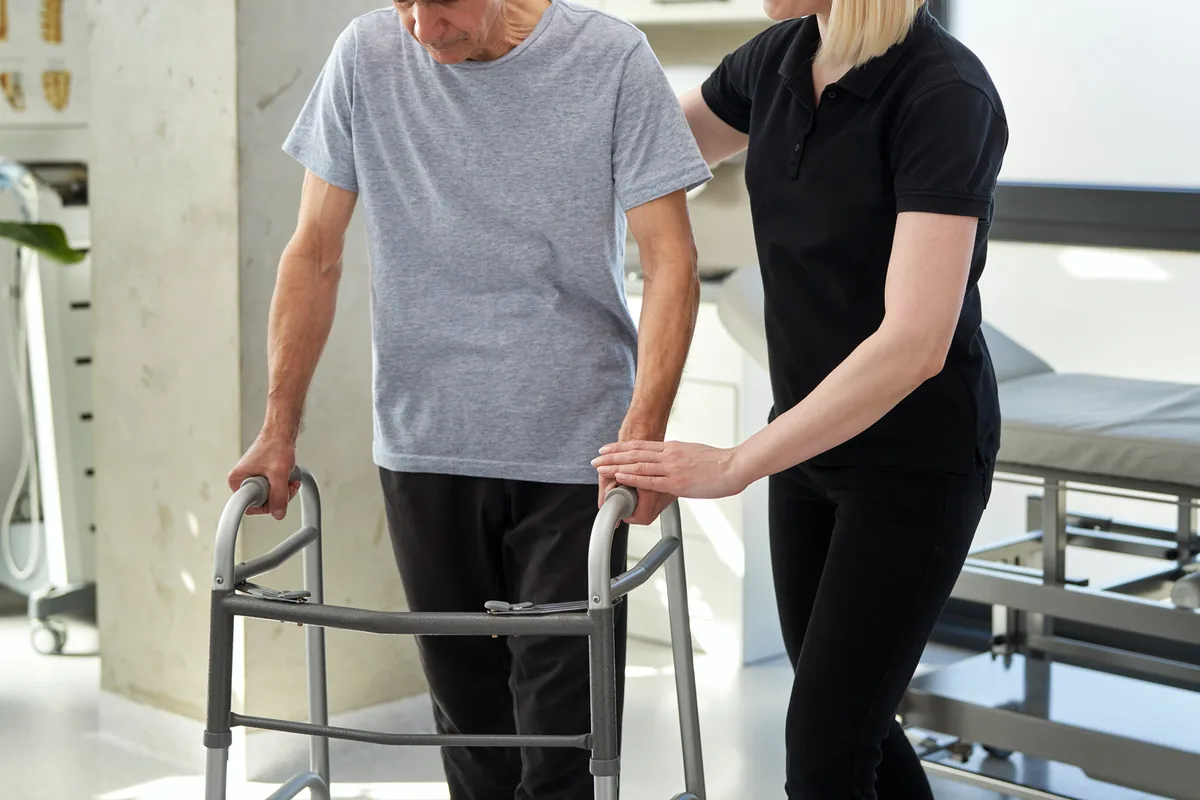
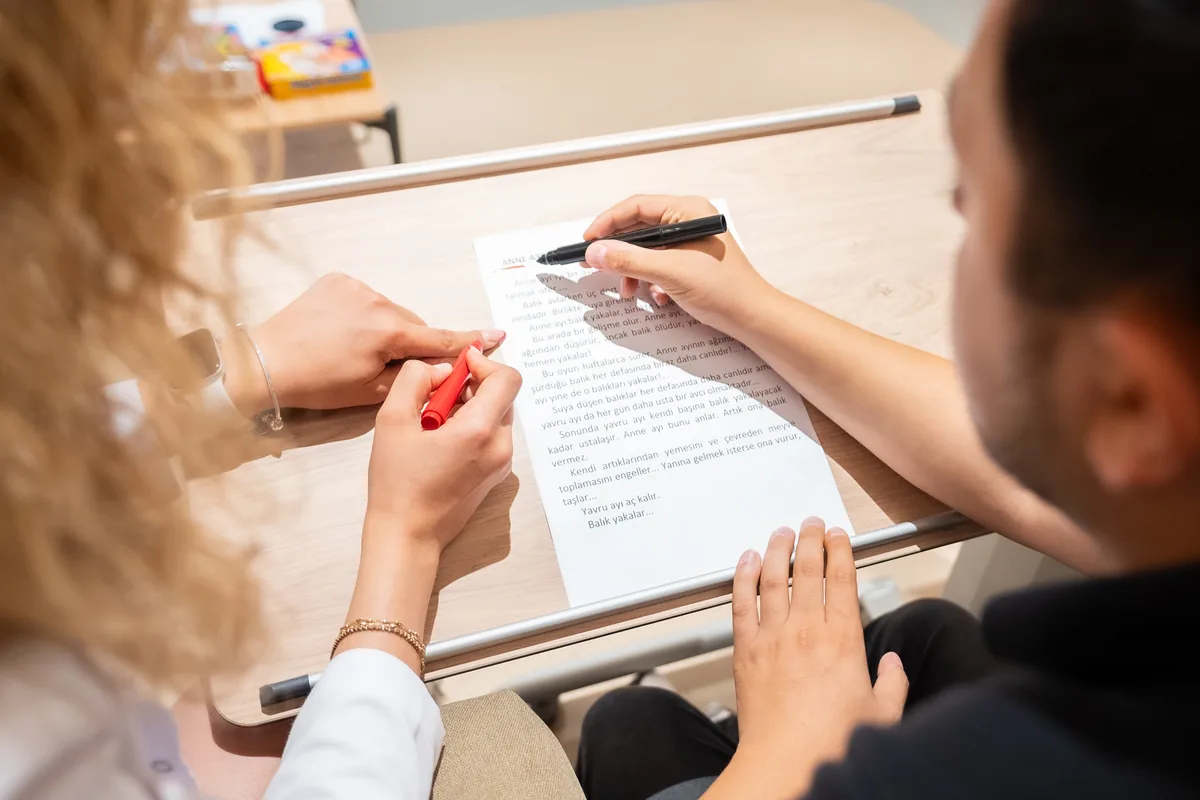
Devices are used inside a programme and chosen after examination — they are not booked separately.
Your path to this treatment
Nothing here is booked from a page. You send the records you have, a rehabilitation physician reads them, and you get a written answer — including when the answer is that an intensive programme will not help.
4 steps, start to finish
1.Send your records
A discharge summary from the hospital that treated the original event, and any imaging of the affected area — CT, MRI or X-ray.2.A written plan in 48 hours
A rehabilitation physician reviews the case and returns the expected duration, the recommended programme and the centre. Free, no obligation.3.Travel and admission
Where a visa is needed we issue an invitation letter and treatment confirmation naming the dates and the facility. You are met at the airport and driven to the centre by private vehicle or ambulance; a bed for one companion and interpreting during therapy are arranged.4.Treatment, then home
The programme runs, then you leave with a discharge report and a written home exercise plan. Your return journey is organised before you go, with scheduled video reviews so progress does not stop.
In their words
What patients say after a programme
Short videos filmed during therapy: a child’s rehabilitation after a brain tumour, suspended gait training after spinal cord injury, and learning to walk again after a fall. Individual results vary.
Dave Evans on his physical therapy here
Musculoskeletal physiotherapy
Paediatric rehabilitation after a brain tumour
Inside a physiotherapy session
Spinal cord injury — the rehabilitation process
Suspension-assisted gait training
Walking difficulty and restricted movement after a fall
Regaining gait and range of motion
Locations
Centres that have this device — pick one.


Questions people actually ask
About this device
Why do cues help in Parkinson’s disease?
The internal timing system for automatic movement is impaired while the response to external cues is relatively preserved. Cues route around the blockage.
Does it help with freezing?
It is one of the better-established strategies for it: a clinical practice guideline recommends external cueing to reduce freezing of gait 1. Training includes what to do when freezing occurs away from the clinic.
Can cueing be used at home?
Yes, and that is the goal. A metronome, counting, or a walking stick used as a visual target all work without equipment.
Is it useful after stroke?
Yes, particularly for gait rhythm and for visual neglect, though the mechanism differs from Parkinson’s disease.
Do the benefits last once the cues are removed?
Often not fully. A clinical practice guideline notes that the effects of cueing tend to fade when the cues are taken away, so ongoing practice with cues may be needed 1. That is why training ends with cues the person can produce themselves — counting, a metronome app, a rhythm — rather than with equipment that stays in the clinic.



