

Medical condition
Peripheral Nerve Injury
Peripheral nerves regenerate at roughly one millimetre a day, so recovery is measured in months and is predictable from the distance involved. Keeping joints mobile and muscles healthy during that wait determines what function is available when the nerve arrives.
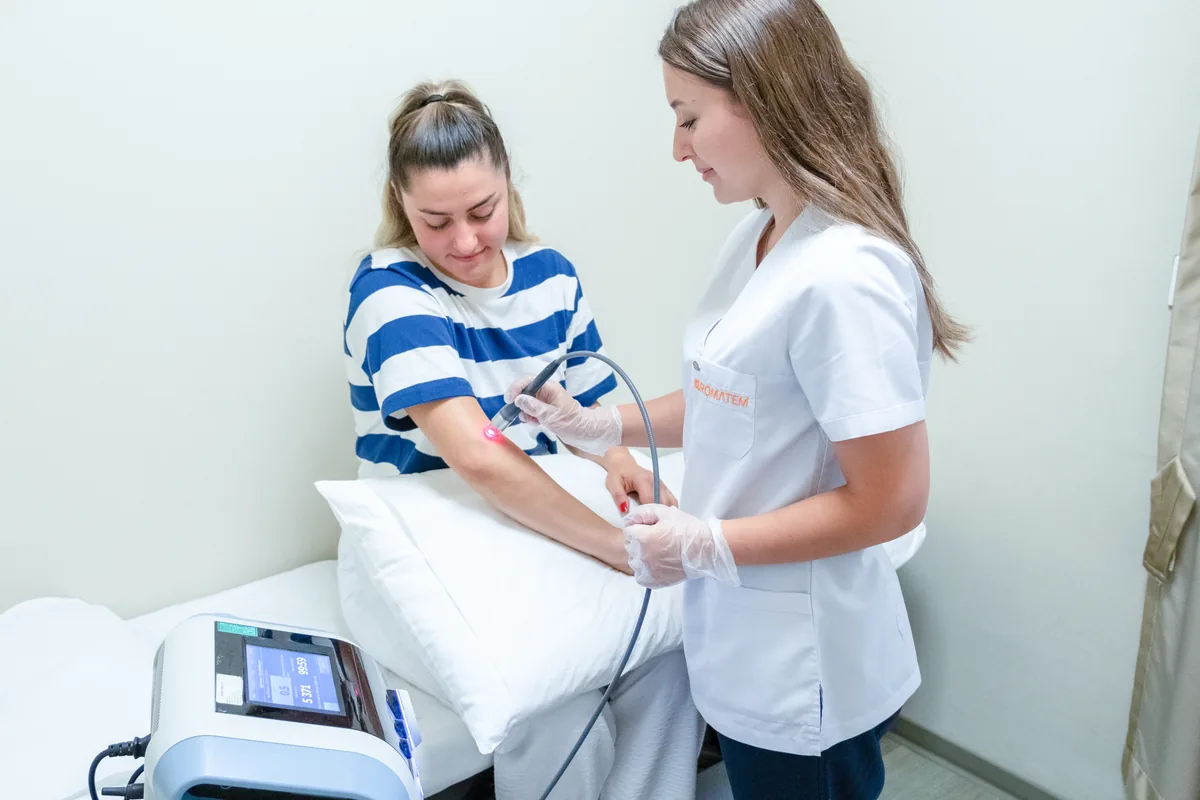
Regeneration is slow and its speed is knowable
An injured nerve regrows at approximately one millimetre a day, or an inch a month 1. From an injury at the wrist, axons must regrow about 100 mm to reach many of the hand muscles, so recovery takes at least 100 days 1.
This makes the timeline predictable, which matters: a family told 'we will see' worries differently from one given a specific expected timeframe for the first signs.
The window that closes
Muscle that has been denervated for too long undergoes irreversible change, and after roughly 12 to 18 months reinnervation produces little useful function even if the nerve arrives 1.
This is why surgical decisions — repair, grafting or nerve transfer — are time-critical, and why a nerve injury that shows no recovery at the expected point needs surgical review rather than continued waiting.
What rehabilitation does during the wait
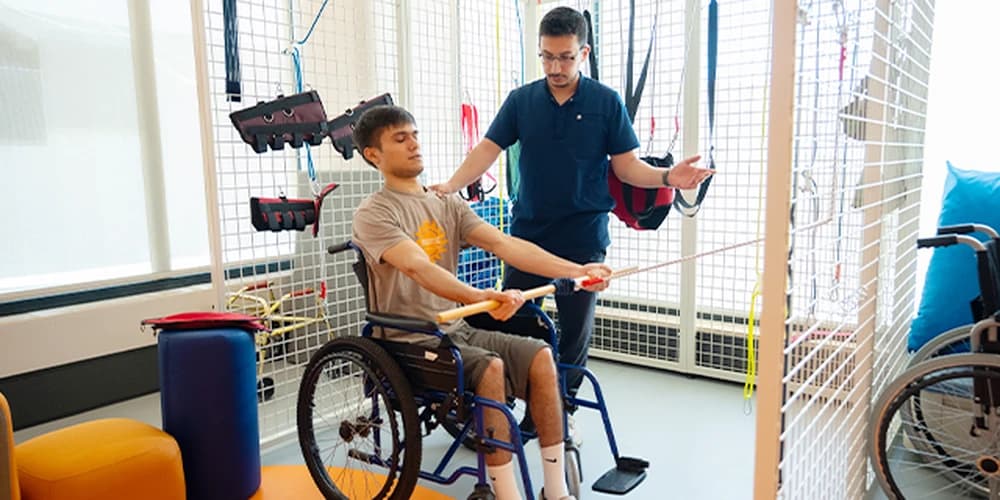
Maintains joint range so contracture does not develop, protects insensate skin from injury and burns, prevents overstretching of paralysed muscles through splinting, and keeps the rest of the limb conditioned.
Electrical stimulation is used to maintain muscle where voluntary contraction is absent. Sensory re-education begins as sensation returns, because a hand that feels inaccurately is used poorly even when it is strong.
Common injuries and their patterns
Radial nerve injury from a humerus fracture causes wrist drop and usually recovers: in a systematic review of 1,045 patients, 88.1% recovered overall, and 70.7% of those managed without surgery recovered spontaneously 2. Ulnar nerve injury at the elbow affects grip and fine control. Peroneal nerve injury at the knee causes foot drop and is managed with an ankle-foot orthosis while it recovers.
Brachial plexus injuries are a larger category and are covered separately, in adults after trauma and in newborns after difficult delivery.
The muscle has a deadline the nerve does not
A regenerating nerve grows at roughly a millimetre a day 1. The muscle it is heading for remains reinnervatable for a limited period — commonly described as around twelve to eighteen months — after which it is replaced by fibrous tissue 1.
This is why the distance from injury to muscle can be measured and turned into a timetable, and why surgical decisions cannot be postponed indefinitely while waiting for spontaneous recovery.
What is protected while waiting
Joint range, because a joint that stiffens during the wait cannot be used when the nerve arrives. Skin, in an area that cannot feel. Muscle bulk, with electrical stimulation where it is appropriate.
And function in the meantime, through splinting and trained compensation — a hand that cannot extend the wrist can still work with the right splint, and waiting passively wastes months.
What decides how much function comes back?
Age, which nerve is injured and the delay before repair all affect the result. In a pooled analysis of individual data on 623 median and ulnar nerve injuries repaired with microsurgery, people under 16 had 4.3 times the odds of a good motor recovery compared with people over 40 3. Each month of delay before repair lowered the odds of a good motor and sensory recovery 3.
Ulnar nerve injuries did worse than median ones: the chance of motor recovery was 71% lower 3. That is why the expected result is discussed openly at the start, and why an injury that needs surgery is not left to wait.
Frequently asked questions
How long does nerve recovery take?
It can be estimated: roughly a millimetre a day from the injury site to the muscle 1. A nerve injured at the elbow reaching hand muscles takes many months, and that timeline is calculable rather than a guess.
Will sensation come back?
Often partially. Protective sensation returns more reliably than fine discrimination, and sensory re-education improves the use made of whatever returns.
When is surgery considered?
Where the nerve is divided, where there is no sign of recovery within the expected window, or where a compression is identified. Timing matters because of the muscle deadline.
Does electrical stimulation help?
It maintains muscle bulk during the wait, which matters because a completely wasted muscle responds poorly when reinnervation arrives. Stimulating the muscle does not make the nerve grow faster. A different technique — one hour of electrical stimulation of the nerve itself at the time of surgery — accelerated nerve regrowth in one small randomised trial and improved sensory recovery in another, although neither showed a clear difference in everyday function 45.
What is Tinel’s sign?
Tapping over a regenerating nerve produces tingling at the point growth has reached. Following it along the limb over weeks is a simple way of confirming progress.
Sources
- Peripheral Nerve Reconstruction after Injury: A Review of Clinical and Experimental Therapies — BioMed Research International (Grinsell D, Keating CP) (2014)
- Shao YC, Harwood P, Grotz MRW, Limb D, et al. Radial nerve palsy associated with fractures of the shaft of the humerus: a systematic review — The Journal of Bone and Joint Surgery. British volume (2005)
- Ruijs ACJ, Jaquet JB, Kalmijn S, Giele H, et al. Median and ulnar nerve injuries: a meta-analysis of predictors of motor and sensory recovery after modern microsurgical nerve repair — Plastic and Reconstructive Surgery (2005)
- Gordon T, Amirjani N, Edwards DC, Chan KM. Brief post-surgical electrical stimulation accelerates axon regeneration and muscle reinnervation without affecting the functional measures in carpal tunnel syndrome patients — Experimental Neurology (2010)
- Wong JN, Olson JL, Morhart MJ, Chan KM. Electrical stimulation enhances sensory recovery: a randomized controlled trial — Annals of Neurology (2015)
Which therapies would I actually receive?
A therapy is a single method used inside a programme. It is measured in sessions and is not sold separately.
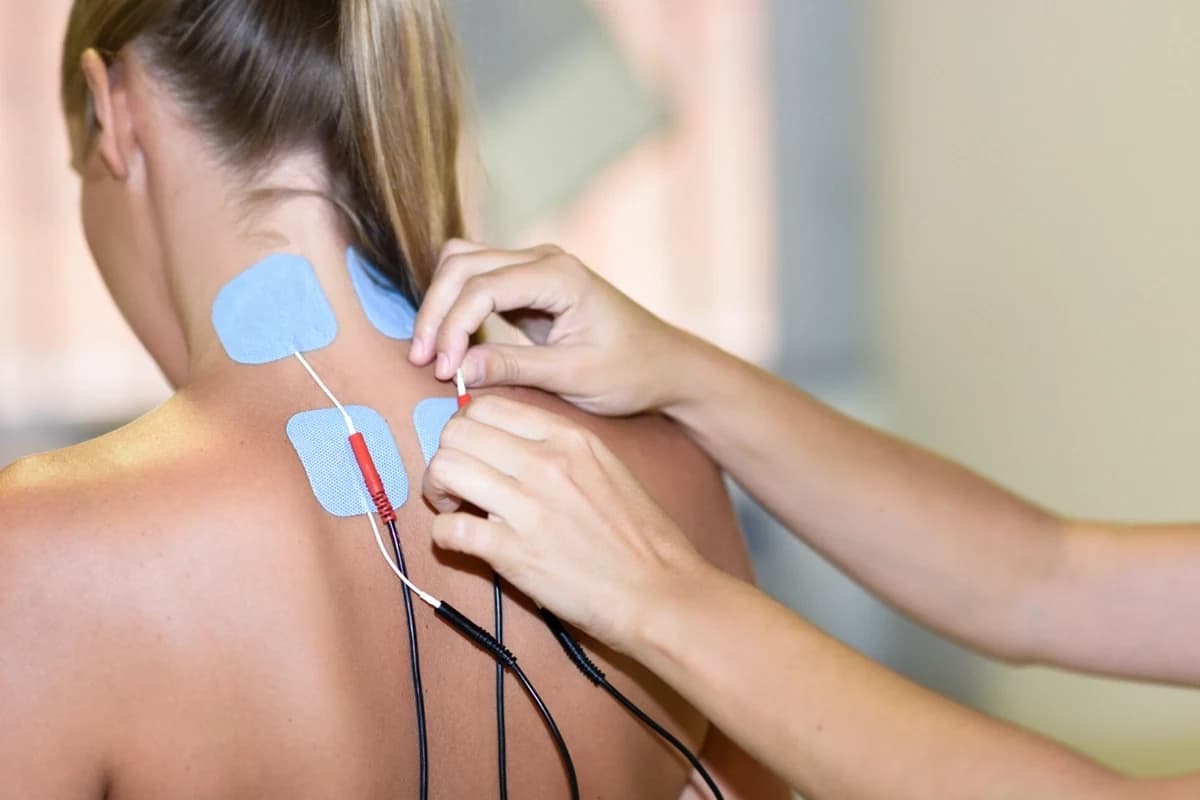

Technologies we use
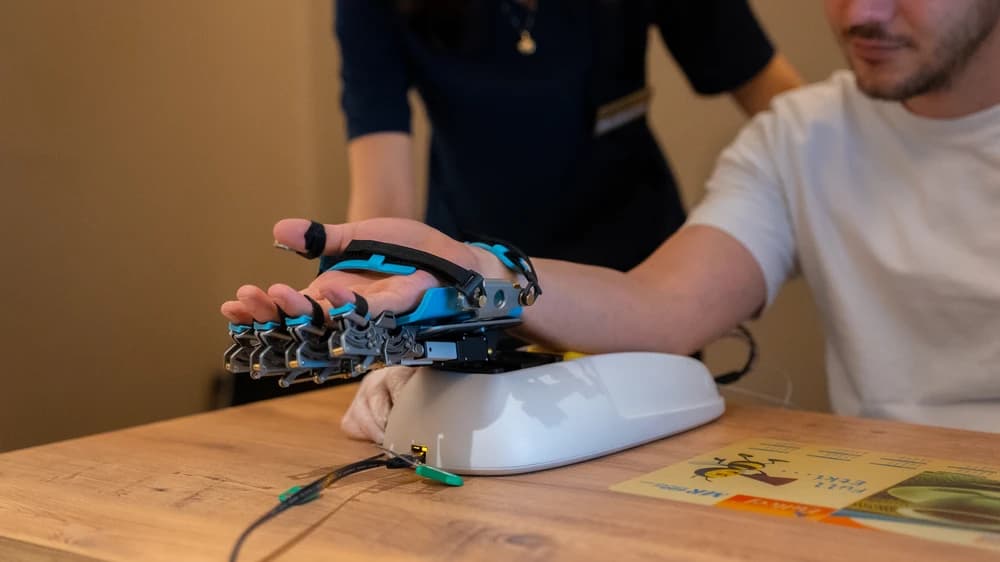
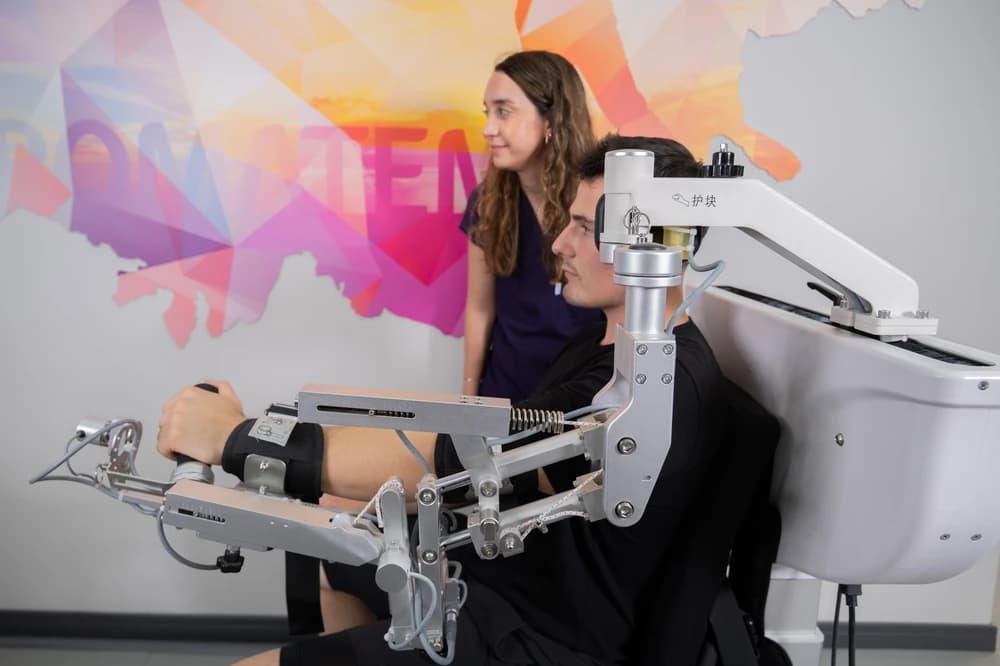
Locations
Where you can receive this treatment





Related articles
Neurological What is foot drop, and can it be treated?
Foot drop is difficulty lifting the front of the foot, so the toes catch the ground when walking. It is a sign rather than a disease, caused by a problem in the brain, spinal cord, spinal nerve roots or the nerve below the knee. Treatment depends on the cause and often combines exercise, an ankle brace or electrical stimulation.Read moreNeurological How long does it take to recover from a stroke?
Most recovery after a stroke happens in the early months, when the brain is most able to reorganise, and it continues more slowly for a longer period after that. How far someone gets depends mainly on how severe the stroke was, where it happened and how much active therapy follows.Read moreNeurological Can you walk again after a stroke?
Many people walk again after a stroke, including many who cannot stand at first. The chances are highest when some leg movement returns early and when walking practice starts as soon as it is safe. Walking often comes back before full arm recovery, sometimes with a stick, splint or other support.Read more



