
Medical condition
Muscular Dystrophy in Children
Muscular dystrophies are inherited conditions in which muscle progressively weakens. Rehabilitation does not slow the underlying disease. What it aims to do is preserve joint range, limit contractures, support posture, protect breathing, and keep a child doing what they can for as long as possible.
What rehabilitation is honestly for
It is not a treatment for the dystrophy. Disease-modifying care is genetic and pharmacological, and it belongs with a neuromuscular specialist. We state this because families travelling internationally are sometimes offered intensive therapy on the implication that it will change the disease course.
What therapy aims for is slower contracture development, better positioning, longer independent function, and equipment that fits the child rather than the other way round. These aims rest on expert consensus rather than large trials, which are rare in this condition 1.
Exercise has to be prescribed carefully
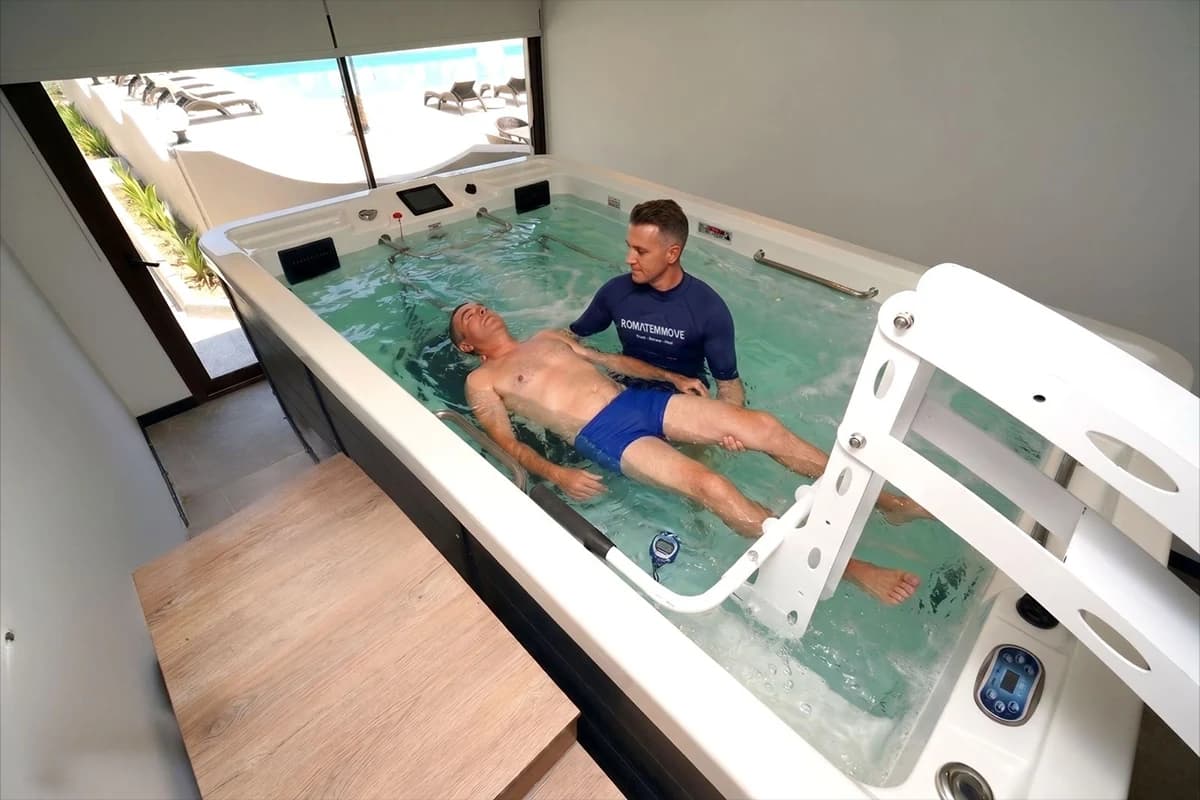
Eccentric and high-resistance exercise can damage dystrophic muscle. Submaximal aerobic activity, swimming and cycling are generally well tolerated and are the mainstay. Exercise to exhaustion is avoided, and increasing weakness or dark urine after a session is a reason to stop and reassess.
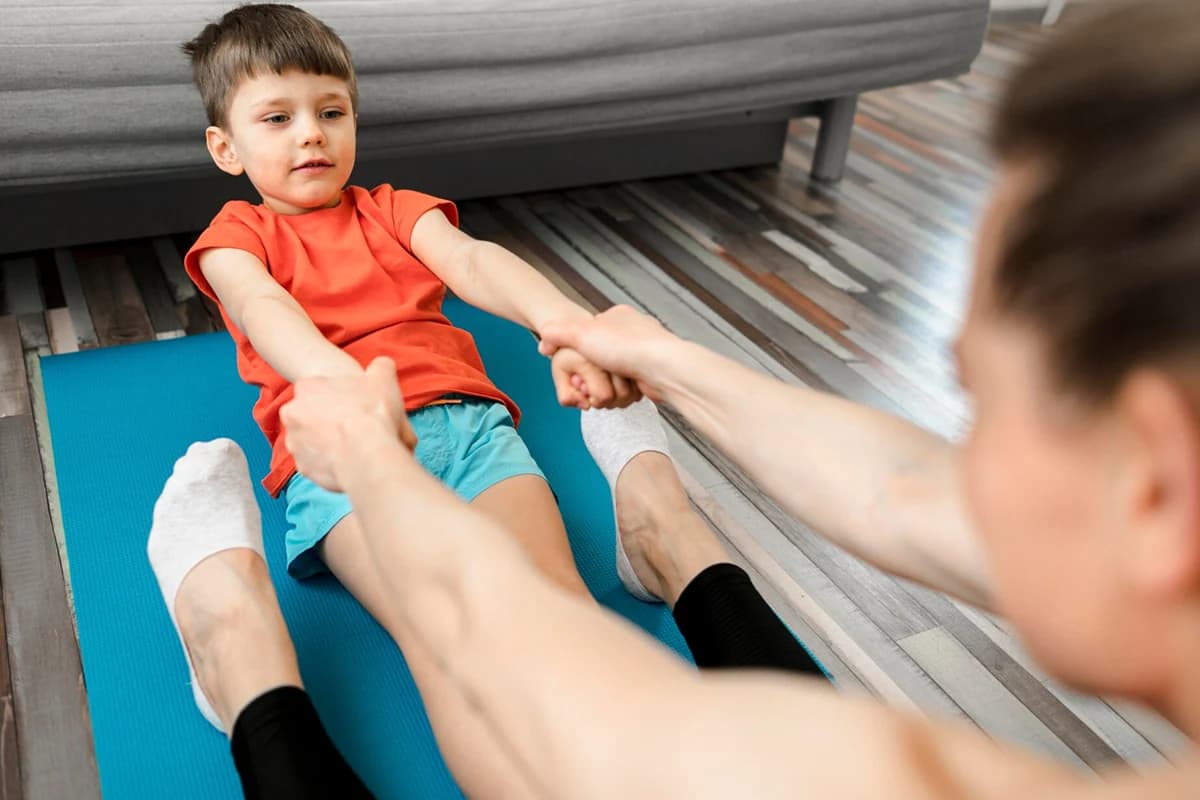
Stretching, night splints and standing programmes address the ankle, knee and hip contractures that otherwise end walking earlier than the muscle weakness alone would.
After walking ends
Seating and posture become the priority, because scoliosis progresses quickly once a child stops walking and it compromises breathing. Powered mobility maintains independence and is introduced as an expansion of what the child can do, not as a defeat.
Upper limb function, communication and access to schooling are the goals that matter to the family at this stage, and occupational therapy leads that work.
Why the exercise prescription is unusual
In dystrophic muscle, eccentric and high-resistance exercise can accelerate damage. Submaximal aerobic activity and range maintenance are what is prescribed instead.
This runs against the usual instinct to strengthen, and getting it wrong causes harm — which is why an unsupervised gym programme is inappropriate here.
Which treatments can slow the disease?
In Duchenne muscular dystrophy, the most common form in childhood, steroid medicines are the treatment with the strongest evidence 1 3. A Cochrane review of randomised trials found moderate-quality evidence that they improve muscle strength and function over the first year and strength for up to two years, while evidence that they prolong walking comes only from non-randomised studies 3. Weight gain and changes in behaviour are common side effects 3.
International care guidance links long-term steroid treatment with walking being lost later, better-preserved arm and breathing function and less need for spinal surgery 1. Newer genetic medicines each target particular mutations, so eligibility depends on the child’s genetic result; these decisions sit with a neuromuscular specialist, and physiotherapy continues alongside them 1.
Why are the heart and breathing checked when my child seems well?
Duchenne affects the heart muscle and the breathing muscles as well as the limbs, and heart and breathing complications are among the main causes of serious illness and death 2. Both can decline without obvious symptoms: breathing capacity can fall without breathlessness, and signs of heart failure are easily missed once a child uses a wheelchair 2.
International care guidance therefore advises an ECG and heart imaging at diagnosis and then at least once a year, and breathing tests from about age 5–6 2. After walking stops, breathing measurements are repeated at least every six months 2.
Frequently asked questions
Should my child exercise?
Yes, but specifically prescribed. Submaximal activity and swimming are encouraged; high-resistance and eccentric work are avoided.
What happens when walking stops?
The focus shifts to spine, upper limb function, respiratory care and equipment. Scoliosis and respiratory decline become the priorities.
Why does the spine matter?
Scoliosis usually appears after walking stops and can affect breathing and sitting comfort. In children on long-term steroids it tends to be milder and less often needs surgery 2. Monitoring is continuous rather than annual.
Is respiratory care part of rehabilitation?
Centrally. Cough assistance and non-invasive ventilation extend both life and its quality, and they are introduced before they are urgently needed 2.
Does physiotherapy slow the disease?
No. It prevents contracture, maintains function and manages complications — which changes daily life substantially without altering the underlying condition.
Sources
- Birnkrant DJ, Bushby K, Bann CM, Apkon SD, et al. Diagnosis and management of Duchenne muscular dystrophy, part 1: diagnosis, and neuromuscular, rehabilitation, endocrine, and gastrointestinal and nutritional management — The Lancet Neurology (2018)
- Birnkrant DJ, Bushby K, Bann CM, Alman BA, et al. Diagnosis and management of Duchenne muscular dystrophy, part 2: respiratory, cardiac, bone health, and orthopaedic management — The Lancet Neurology (2018)
- Matthews E, Brassington R, Kuntzer T, Jichi F, et al. Corticosteroids for the treatment of Duchenne muscular dystrophy — Cochrane Database of Systematic Reviews (2016)
Which therapies would I actually receive?
A therapy is a single method used inside a programme. It is measured in sessions and is not sold separately.


Technologies we use

Locations
Where you can receive this treatment




Related articles
 Paediatric
Intensive blocks or weekly sessions: which helps a child more?
Neither is better in general, and the honest answer depends on the goal. Blocks suit a specific, trainable target within a few weeks. Weekly therapy suits goals that need daily life to change around them. What predicts progress in both is practice of the real task, not the format.Read moreNeurological How long does it take to recover from a stroke?
Most recovery after a stroke happens in the early months, when the brain is most able to reorganise, and it continues more slowly for a longer period after that. How far someone gets depends mainly on how severe the stroke was, where it happened and how much active therapy follows.Read moreNeurological Can you walk again after a stroke?
Many people walk again after a stroke, including many who cannot stand at first. The chances are highest when some leg movement returns early and when walking practice starts as soon as it is safe. Walking often comes back before full arm recovery, sometimes with a stick, splint or other support.Read more



